

 Johny Prima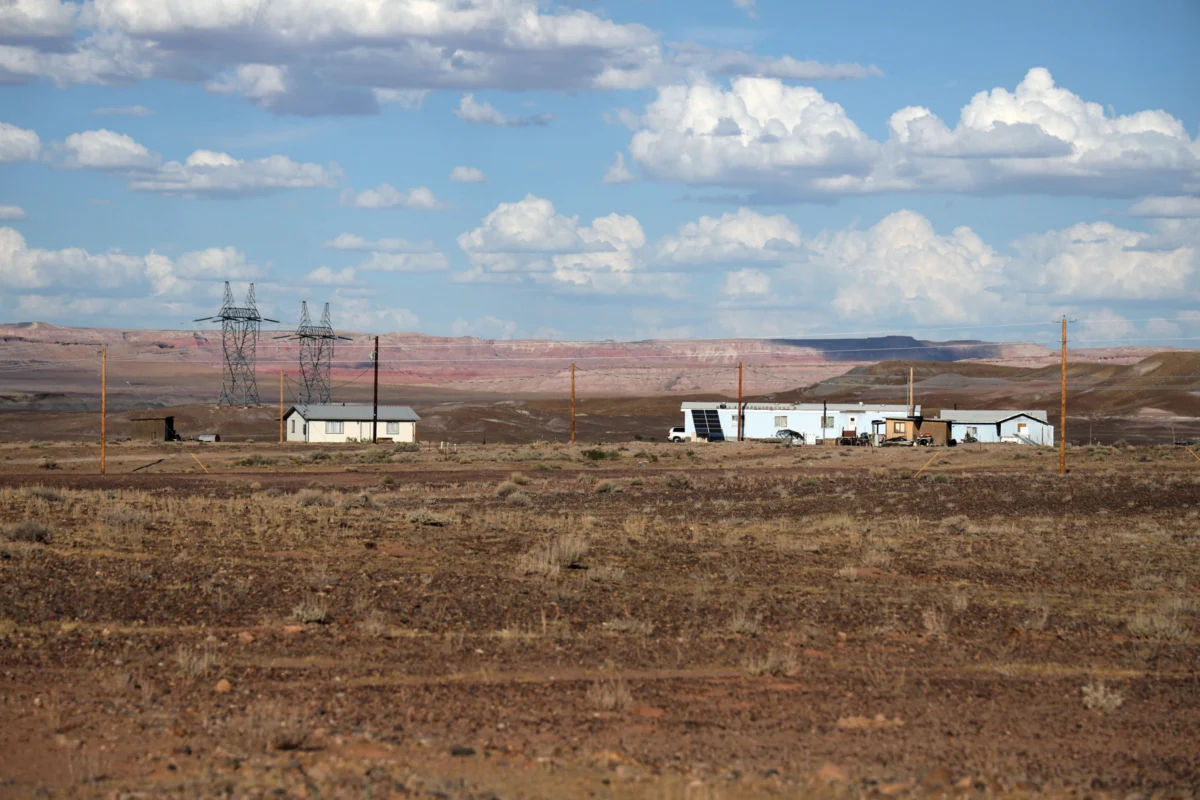
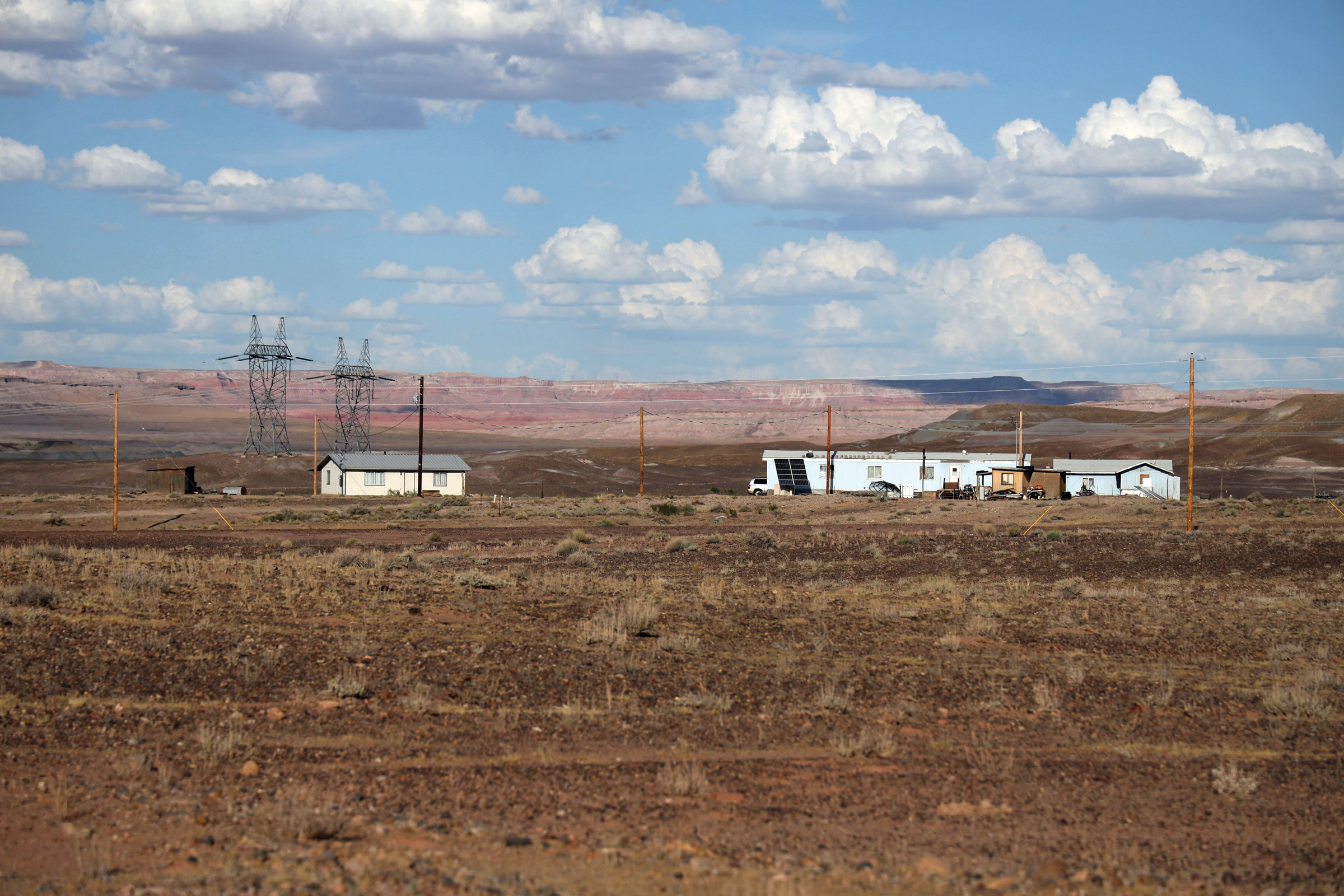
The proposed Painted Desert Power project, poised to become one of the largest solar installations in the United States, has ignited profound skepticism among residents of the Coalmine Canyon Chapter on the Navajo Nation, revealing deep-seated anxieties over tribal governance, equitable resource distribution, and the efficacy of community engagement. Initially planned to encompass approximately 1,000 acres of vital rangeland, the project’s rapid expansion to over 4,000 acres further fueled local distrust, compounding a historical sense of being overlooked by the very government intended to represent their interests. Tyrel Jones, secretary of the chapter’s Community Land Use Planning Committee, articulated this pervasive sentiment, stating that the project’s progression increasingly felt like the community was being "sold down the river" or "taken advantage of," with their voices effectively silenced.
For many local residents, like Freddie Hatathlie, a retired Army veteran, rancher, and lifelong resident of Coalmine Canyon in northeast Arizona, the sheer scale of the proposed development—generating hundreds of megawatts of electricity—remained abstract and difficult to comprehend. Technical presentations and explanations, frequently delivered in English rather than the native Navajo language, created a significant communication barrier for a community where many primarily speak Navajo. Hatathlie highlighted the need for tangible representations, suggesting that developers should "make a model, draw models, build a model, so we can see it," emphasizing that his own understanding stemmed only from his past experience working in a large power plant. This communication breakdown underscores a critical challenge in bridging the divide between large-scale renewable energy ambitions and the lived realities of indigenous communities.
As solar energy development accelerates across the United States and globally, it invariably brings to light systemic deficiencies in existing land lease and tax policies, particularly within sovereign tribal nations. The Painted Desert Power project serves as a microcosm, offering a stark illustration of how external companies navigate the complex landscape of tribal approval processes, raising fundamental questions about ensuring that the economic and social benefits of such monumental undertakings are distributed fairly and transparently across the Navajo Nation. Beyond financial considerations, the case also spotlights the imperative for culturally sensitive and accessible information dissemination to residents, ensuring genuine informed consent.
The Navajo Nation, like many indigenous territories rich in natural resources, faces the complex task of transitioning its economy away from a historical reliance on fossil fuels, particularly coal, which once provided substantial revenue but has seen operations dwindle or cease. This global shift towards decarbonization presents both immense opportunities and significant challenges for tribal sovereignty and economic self-determination. While existing solar projects on the Nation currently occupy about 915 acres, the Painted Desert Power project dramatically escalates this footprint, proposing an additional 4,500 acres. Unlike several earlier projects led by the Navajo Tribal Utility Authority (NTUA), this ambitious endeavor represents a significant collaboration between Navajo Power PBC—a Navajo-owned, non-tribal-affiliated organization dedicated to bringing renewable energy to tribal communities—and Applied Energy Services (AES), a Virginia-based energy giant slated to own and operate the facility. Together, they formed the subsidiary, Painted Desert Power LLC.
Navajo Power PBC, the initial developer, did not respond to inquiries, but AES, on behalf of the project team, asserted its commitment to community engagement. The company stated that it conducted over 70 chapter and community meetings before securing tribal approval for the lease. Furthermore, AES claimed to have obtained four chapter resolutions of support and written consent from affected grazing-permit holders, as mandated by Navajo leasing regulations. In an email, the project team emphasized, "At AES, we understand that our success as a company is only as strong as our partnerships with the communities where we operate. Community consent is at the core of AES and Navajo Power PBC’s approach to development on the Navajo Nation."

However, despite these assurances, many residents living in close proximity to the proposed development remained profoundly unclear about its specifics, operational mechanics, and potential local impacts. Tyrel Jones expressed deep concern over the project’s rapid expansion, which shifted the narrative around who would truly benefit. He voiced apprehension about a "large U.S. global company called AES that has no affiliation ever with the Navajo Nation" asserting control over vast power generation. Jones characterized the situation as "just another example of a Trojan horse after another Trojan horse," suggesting a pattern where external entities gain leverage over tribal assets, ultimately diminishing local autonomy and oversight. The initial project proposal, presented during the early stages of the COVID-19 pandemic, exacerbated these concerns due to a perceived lack of formal documentation, with only general bullet points in pamphlets, further fueling suspicion about the true scale, involved parties, and motivations behind the ever-growing footprint.
A significant point of contention for residents like Freddie Hatathlie revolved around the planned distribution of the generated electricity. The power would not directly serve local homes but instead be fed into the broader regional electrical grid, echoing historical grievances with past resource extraction projects. Hatathlie drew a parallel to the former Navajo Generating Station, a massive coal plant located on the Navajo Nation that primarily supplied electricity to cities outside the tribal lands, not its immediate surroundings. He pointedly remarked, "If you look at the Navajo Generating Station over there in Page, you know that generating station didn’t power Page at all. Zero." This historical context of providing energy for external consumption while local communities often lacked basic services fuels a deep-seated desire for energy justice—the equitable distribution of both the benefits and burdens of energy production.
AES confirmed that the Painted Desert Power project itself would not directly electrify local Navajo homes, explaining that as a high-voltage project, it is not a registered utility in Arizona capable of direct residential service. To address the immediate electricity needs of Navajo households, AES stated that Navajo Power PBC co-created a subsidiary, Navajo Power Home, which installs off-grid solar systems for individual residences. According to AES, Navajo Power Home has installed over 550 such systems across the Navajo Nation, including more than 80 in the Cameron and Coalmine Canyon chapters, with an additional 300 planned for the current year. While this initiative aims to provide some local benefit, its limitations are evident. Arlando Yellowhair, a Coalmine Canyon resident and Navy veteran who received a Navajo Power Home unit, noted that the 8-kilowatt system provided only enough electricity for his refrigerator and a few lights, requiring constant vigilance over consumption. He concluded, "Eight kilowatts is not sufficient for a family to function without being aware of how much you’re using. You really have to pay attention to the amount that you’re using." This highlights a disparity between the massive energy generation of the main project and the comparatively modest, off-grid solutions offered locally.

The Painted Desert Power project is slated for phased construction, with the first phase anticipated to commence in 2027 and operations projected to begin by 2030. Upon completion, AES estimates the facility will incorporate "1,363,635 solar panels and 816 battery enclosures," underscoring its immense scale and the significant land footprint it will occupy.
Beyond the immediate energy supply, further questions persist regarding the equitable distribution of financial benefits, specifically how AES’s lease payments and tax revenues would ultimately reach the Coalmine Canyon community. The chapter’s status as an uncertified chapter significantly complicates this process. Uncertified chapters lack the financial autonomy to manage funds directly, meaning revenues are typically routed through the Navajo Nation Office of the Controller in Window Rock, the Nation’s capital. AES’s lease agreement with the Navajo Nation stipulates annual payments of $545 per acre, escalating by 2% annually over the project’s 40-year lifespan, projected to generate over $310 million in lease and tax payments. AES emphasized a "competitive tax package" and additional community benefits, including a commitment of "$16.7 million per Chapter over project lifetime," claiming annual payments would "more than double the Chapter’s FY26 budget." However, the critical uncertainty remains whether these funds will directly benefit individual residents or the uncertified Coalmine Canyon Chapter, highlighting a structural barrier to local control over project revenues. Shaun Hudson, the Coalmine Canyon Chapter Grazing Official, articulated this concern, noting that certified chapters possess greater freedom to "utilize their money… with outside entities," a privilege denied to Coalmine Canyon.
The communication challenges were further exacerbated by the manner in which information was conveyed. Much of the project’s details, including complex financial arrangements, were presented to residents in a dense, 60-slide PowerPoint presentation over a mere two-day period. Hatathlie reiterated that developers frequently relied on technical jargon and industry terminology, predominantly in English, making it inaccessible to many. Despite ongoing workshops and informational meetings, a growing sentiment emerged that key decisions had already been made by the broader Navajo government, rendering local input largely ceremonial.

This perceived lack of meaningful consultation and the procedural complexities are not isolated issues. Shawna Claw, a Chinle Council delegate and member of the Navajo Nation Resource and Development Committee, acknowledged the confusion sown by legislative complexity. She noted that after the lease approval process, many residents mistakenly linked their concerns about grazing permits and land-use agreements to subsequent discussions on the project’s tax structure, leading to letters requesting the rescission of permits. This confusion highlights the need for clearer, more distinct communication regarding each stage of the approval process and its specific implications. Claw affirmed that residents believing their grazing permits were obtained without consent could appeal through the Navajo Nation Department of Agriculture for an independent review, yet she recognized that many in remote communities might be unaware of such procedures.
The discussions surrounding the Painted Desert Power project have brought into sharp focus the broader need for a comprehensive renewable energy policy framework within the Navajo Nation. Tyrel Jones pointed out that tribal leaders are still navigating how best to tax and govern large-scale solar developments in the absence of a fully established regulatory structure. Former Navajo Nation Council Delegate Thomas Walker Jr., who represented several chapters including Coalmine Canyon, underscored the importance of adhering to the established, multi-stage land-leasing, legislative, and review processes designed to ensure all stakeholders have a voice. He stressed that "if the processes are allowed to be utilized without any shortcuts… if it’s allowed to run its course all the way through, and you know our leaders are there to consider if they’re fully informed and if they have absolutely no questions… then they vote on it." Walker argued that any deviation or "missing steps" warrant public disclosure and accountability, particularly when projects involve such extensive use of tribal land.
However, for local officials like Shaun Hudson, the grazing official, the sentiment of disenfranchisement is so pervasive that questioning the process sometimes feels futile. He concluded with a sobering assessment, stating, "I think a lot of these decisions are already pre-made in Window Rock… So right now, yeah, these developers, they come in just to follow procedure, you know, just to show their place. So, it doesn’t matter." This deep-seated skepticism underscores a critical challenge for the Navajo Nation and other indigenous communities: how to embrace the opportunities of the green energy transition while ensuring that development truly benefits local populations, respects tribal sovereignty, and rectifies historical injustices, rather than replicating past patterns of resource exploitation and marginalization. The Painted Desert Power project thus becomes a crucial test case for the future of sustainable and equitable indigenous-led development in the renewable energy landscape.







