

 Rocky Gerung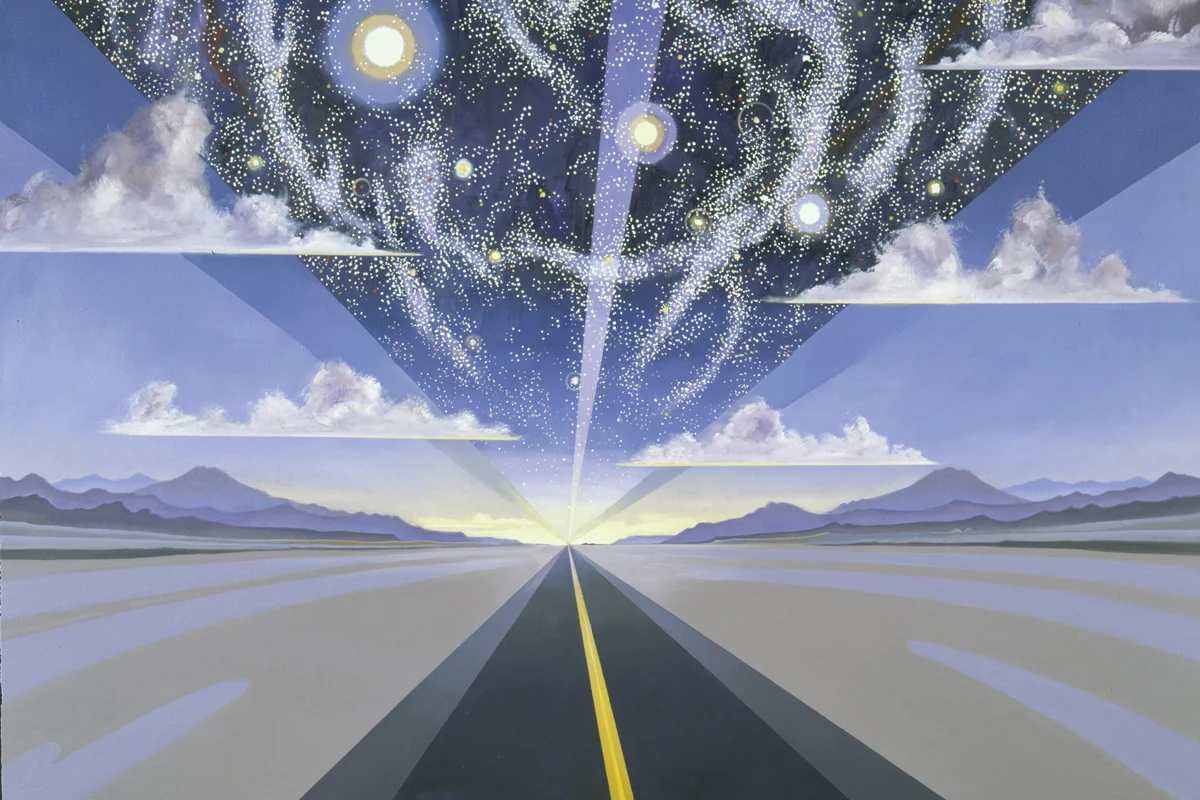
The recent exhibition "A Queer Arcana: Art, Magic, and Spirit" at the Palm Springs Art Museum offers a profound exploration of how LGBTQ+ artists have, for over a century, delved into themes of spirituality, the mystical, and alternative belief systems, presenting their visions through a diverse array of paintings, sculptures, performances, and photography. This exhibition is not an isolated event but rather a significant manifestation of a growing trend that centers on alternative spiritualities, as evidenced by concurrent or recent exhibitions like "QUEER MAGIC" in Santa Fe and "Sci-fi, Magick, Queer L.A." in Los Angeles. These cultural moments highlight a burgeoning interest in spiritual practices that diverge from mainstream traditions, providing spaces for affirmation, community building, and the reimagining of existence, particularly for those who have historically faced oppression.
Many of the artists featured in "A Queer Arcana" share deep connections to the American Southwest and California, regions imbued with a palpable spiritual energy. The exhibition draws inspiration from the distinctive landscapes of these areas – the stark beauty of desert terrains, the imposing presence of boulder fields, and the profound clarity of dark night skies – elements that have long attracted seekers of all kinds to places like Joshua Tree, Sedona, Arizona, and Crestone, Colorado. These spiritual landscapes serve as a backdrop for the artists’ deeply personal and often fantastical imagery, which consistently seeks to dissolve the perceived boundaries between the physical and spiritual realms. This exploration of a "thin veil" between worlds is a recurring motif, suggesting a profound interconnectedness that transcends ordinary perception.
The exhibition showcases a rich tapestry of artistic expression. Ingo Swann’s 1986 painting "Proto Adam," for instance, depicts a vibrant, almost otherworldly figure, a "galactic go-go dancer," emerging from a desert river, evoking themes of creation and transformation within an arid, mystical setting. Clarity Haynes’ 2022 artwork, "Altar for Laura Aguilar," is a moving pastel tribute to the late photographer, incorporating imagery from Aguilar’s powerful and introspective nude desert self-portraits, a body of work celebrated for its raw honesty and connection to the natural world. Eric-Paul Riege’s "chestplate [3]" (2026), a striking black-and-white textile piece, intricately weaves traditional Diné beliefs with his personal experiences of queerness, demonstrating a sophisticated synthesis of cultural heritage and individual identity.

Beyond these specific examples, "A Queer Arcana" extends its reach to encompass a broader spectrum of the esoteric and the imaginative. The exhibition includes artworks that playfully and provocatively explore themes such as "cosmic 69s," evocative of celestial unions and boundless energy, and "occult gatherings," hinting at secret rituals and shared spiritual pursuits. Notably, some pieces feature fantastical beings, including aliens depicted with exaggerated, almost sentient appendages, pushing the boundaries of figuration and inviting viewers to consider alien cosmologies and forms of embodiment. Complementing the visual art, the exhibit also features a collection of magazine archives that document the historical evolution of witchcraft and new age goddess worship, providing valuable context for the resurgence of these practices and their intersection with queer liberation.
Curator David Evans Frantz articulated the exhibition’s core premise in a press release, stating, "Queer artists, activists, and cultural producers have long sought spiritual practices outside the mainstream to affirm their identities, build community, and envision new ways of being in an often-oppressive world." This sentiment resonates powerfully throughout the exhibition, particularly in its prominent referencing of Gloria Anzaldúa, the influential queer Chicana poet and theorist. Anzaldúa, who identified as a "spiritual mestiza," viewed spiritual seeking as an inherently queer endeavor, a method of engaging with the world and the infinite that embraces ambiguity and multiplicity. This perspective frames the exhibition not just as a display of art, but as an ongoing exploration of spiritual liberation and self-definition.
One particularly arresting piece within the exhibition is Edgar Fabián Frías’ 2017 video, "Give Us Home Spider: Ritual 5: TXI Cement Quarry, Bloomington, CA." Upon experiencing this work, viewers are drawn into a mesmerizing portal, a testament to the artist’s ability to evoke deep emotional and spiritual resonance. Frías, who identifies as a brujx – a gender-neutral Spanish term for a magic practitioner – and is a descendant of the Wixárika people, orchestrated a series of rituals across Southern California. These ceremonies were designed to confront environmental racism and address health disparities that disproportionately affect marginalized communities. Frías’ own upbringing in close proximity to the TXI Cement Quarry, a site that exposed his community to the carcinogenic hexavalent chromium, imbues the work with a potent sense of urgency and personal connection. The video captures Frías and thirteen other healers, adorned in vibrant fluorescent attire, engaged in a cathartic ritual. Amidst the hypnotic sounds of a drone pipe accompanying techno music, they performed acts of earth-digging, vocalizations, and the consumption of pomegranates, symbolizing a collective act of healing and reclamation.
This ritualistic performance, enacted nearly a decade prior to the exhibition, feels remarkably prescient, especially in the context of contemporary environmental crises. The pervasive scent of smoke from recent wildfires, such as the Lineage Fire in Los Angeles’ Boyle Heights, which released toxic fumes from a food-storage empire, serves as a stark reminder of ongoing ecological injustices. Frías’ ritual stands as a powerful call to acknowledge and address the historical and ongoing harms inflicted upon both communities and the Earth, advocating for a more conscious and intentional future. The exhibition, through works like Frías’, underscores the vital importance of confronting past traumas and their present-day consequences, fostering a path toward healing and justice. This may manifest in grand gestures of activism or in the quiet contemplation of a brief life, like that of a desert cottontail rabbit.

The emergence of "A Queer Arcana" and similar exhibitions is not a matter of chance but a deliberate act of cultural curation, bringing together ancestral wisdom and contemporary voices. These exhibitions serve as conduits, channeling messages from liminal spaces to remind us of the imperative to connect and to resist not only queer repression but all forms of oppression. In the present moment, these gatherings offer a potent invitation to collective action, urging us to challenge oppressive structures, such as data center approvals by city councils, and to protect our creative spirits from the homogenizing influence of mass-produced content. They encourage the formation of vital coalitions, extending solidarity not only to fellow humans but also to our nonhuman neighbors.
The timing of the exhibition visit coincided with another significant ritual: the observance of the Summer Solstice, the longest day of the year. Within the museum’s displays, queer tarot decks, including those associated with trans activist Rachel Pollack, offered guidance, prompting the contemplation of personal significance on this auspicious day. The narrator’s own spiritual path has been deeply shaped by the natural world, encompassing practices like Milky Way worship, grounding Qi Gong, an appreciation for birdsong, and ceremonial river cleanups. However, as someone with a Libra Sun and Scorpio Moon, the practice of quarterly tarot pulls has proven instrumental in navigating chronic indecisiveness and the lingering effects of past grievances. The MotherPeace deck, a pioneering feminist and queer creation from the 1970s that significantly influenced the trajectory of tarot, stands as another integral element of the narrator’s personal cosmology, a testament to the ongoing process of spiritual assembly.
During a solstice tarot pull, the round, moon-shaped card revealed the "Son of Cups," a card whose creators described as representing "meditative awareness." The imagery on the card depicted a naked man serenely floating on the sea, playing a flute, accompanied by the songs of seagulls. Below him, large datura flowers unfurled like sails, their forms echoing the expansive nature of spiritual awakening and the connection to both the earthly and the ethereal. This powerful visual metaphor encapsulates the exhibition’s broader message: a celebration of queer spirituality as a vibrant, evolving force that connects individuals to themselves, their communities, and the profound mysteries of the universe.









