

 Rocky Gerung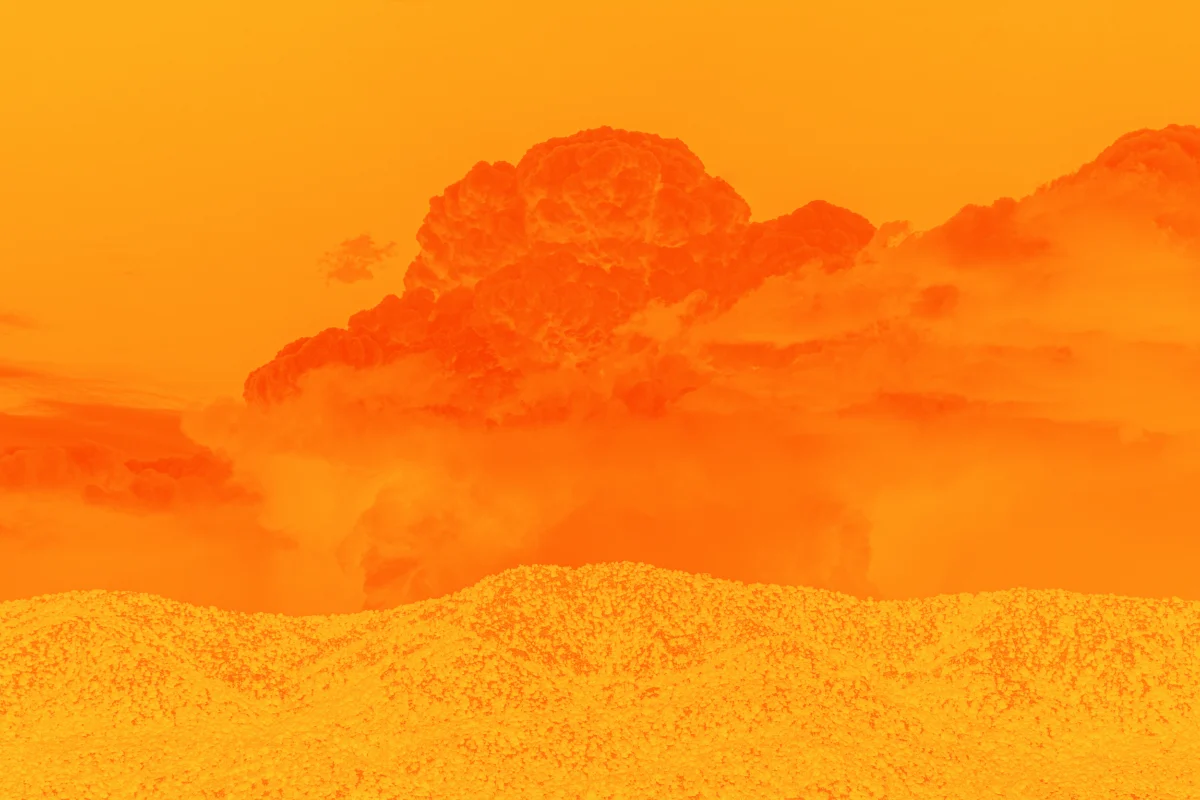
Within the quiet halls of the Georgia O’Keeffe Museum in Santa Fe, a pivotal exhibition titled "Tewa Nangeh/Tewa Country" is actively rewriting the narrative of northern New Mexico’s artistic identity, placing Indigenous voices and perspectives at the forefront. The exhibition features the work of twelve Tewa artists, scholars, and culture bearers, presented in dialogue with the iconic landscape paintings of Georgia O’Keeffe, whose prolific depictions have long defined the region in the popular imagination. A central and compelling element of this redefinition is Jason Garcia’s ongoing series of paintings of Tsí Pín, the Tewa name for Cerro Pedernal, also known as "Flint Hill" in Spanish. Garcia, whose Tewa name is Okuu Pín and who co-curated the exhibition, has rendered this significant mesa repeatedly from a singular vantage point, exploring its various moods through minimalist compositions and masterful plays of light and shadow, even capturing its presence under the cloak of night.

Garcia’s extensive engagement with Tsí Pín is an act of profound reclamation, a deliberate effort to assert Tewa presence and ownership over a landscape that has been historically framed by outsiders. His ambition is to have more of his interpretations of Tsí Pín displayed in the Georgia O’Keeffe Museum than O’Keeffe herself created during her entire career. Currently, nineteen of his works are installed, and he plans to expand this series to over thirty depictions, collectively titled "Our Private Mountain." This project directly challenges the perception of northern New Mexico as an empty, isolated desert paradise, a notion often perpetuated by O’Keeffe’s celebrated landscapes, which notably lacked human figures, creating an impression of a land devoid of continuous habitation. This prevalent vision has solidified into the widely recognized label of "O’Keeffe Country," a framing that overlooks the enduring presence of the Tewa people who have lived on this land for generations, maintaining their ancestral place names for virtually all of Tewa Country and continuing to reside within their four sacred mountains.
O’Keeffe’s powerful connection to the region is undeniable, and her works continue to hold significant cultural sway. In a 1977 interview with Newsweek, she referred to Tsí Pín as "my private mountain," stating, "It belongs to me. God told me that if I painted it enough, I could have it." This proprietary sentiment, though deeply personal to the artist, has had a far-reaching impact, leading to a popular understanding of the entire region through the lens of her work. This influence was evident in a 2021 advertising campaign by the New Mexico Tourism Department, which revived another of O’Keeffe’s declarations: "When I got to New Mexico, that was mine." The commercial featured scenes of women riding horses through the state’s characteristic red-hued bluffs, further embedding the idea of O’Keeffe’s ownership into the public consciousness.

However, the Georgia O’Keeffe Museum itself has taken a critical stance against this narrative of possession. In response to the tourism campaign, the museum issued a statement clarifying that it "did not support the use of Georgia O’Keeffe quotes describing the New Mexico landscape as ‘her country’ or claiming ‘that was mine.’" The statement continued, "While these quotes are from the artist, it is now clear that this is the language of possession, colonization, and erasure." This acknowledgment reflects a sustained period of institutional self-reflection. In 2020, the museum hosted a panel discussion titled "This is Not O’Keeffe Country," moderated by the author, which featured prominent voices such as Corrine Sanchez, executive director of Tewa Women United; Christina Castro, founder of Three Sisters Collective, an Indigenous and Pueblo-women led collective based in Santa Fe; and Jason Garcia.
The "Tewa Nangeh/Tewa Country" exhibition serves as a vital counterpoint, aiming to fill the conceptual voids left by O’Keeffe’s dominant presence and the institutions that have historically amplified her mystique. By showcasing the works of contemporary Tewa artists, the exhibition offers a more expansive and authentic reflection of Indigenous life and connection to the land, reminding viewers that O’Keeffe, for all her renown, was but one individual within the long and intricate history of Tewa Nangeh.

Among the compelling works is "This Land Carries Us," an experimental documentary by Charine Pilar Gonzales, a 2024 Sundance Institute Native Lab Fellow and a community-based filmmaker from San Ildefonso Pueblo. Gonzales’s film masterfully employs rich visual layering and stop-motion animation, opening with a scene of trees adorned with vibrant autumn leaves bathed in the warm glow of a setting sun. Superimposed upon this evocative landscape are Polaroid photographs of elders, children, and traditional ceramics, underscoring the fundamental truth Gonzales articulates in her artist statement: "You cannot speak of Tewa land without also speaking of Tewa people."
Similarly, Eliza Naranjo-Morse, of Kha’p’o Owingeh, contributes "Coming Home," a striking mural painted directly onto the gallery walls. Naranjo-Morse meticulously gathered clay from across the region to create the mural, which depicts the northward view through the badlands and mesas of Tewa Country, a vista she experienced on her drives home from Santa Fe. This personal connection inspired her to contemplate, as she writes, the "understated but significant acts that maintain relationship to land, preserve the Tewa language and the values of respect and reciprocity with all life."

Other artworks in the exhibition confront issues of critical significance to New Mexico, particularly the devastating impacts of climate change and the legacy of nuclear weapons. Michael Namingha, of Ohkay Owingeh and Hopi heritage, presents "Disaster #8," a powerful piece featuring a colossal cloud of smoke looming ominously over a mountainous landscape. While the smoke directly references the 2022 Hermits Peak/Calf Canyon Fire, the largest wildfire in New Mexico’s history, its form also evokes the chilling imagery of mushroom clouds from atomic detonations. Namingha’s work enters into a direct dialogue with O’Keeffe’s 1945 painting, "Red with Yellow," created in the same year the world’s first atomic bomb was detonated in a New Mexico desert area, then erroneously deemed unpopulated by the military. Both artists employ a vibrant palette of fiery oranges and reds, but in Namingha’s rendition, these colors serve as a stark representation of the Air Quality Index chart, a contemporary marker of environmental peril.
Several pieces offer direct critiques of O’Keeffe’s perceived appropriation of the landscape. In Jason Garcia’s "Tewa Tales of Suspense" series, rendered as comic book-style clay tablets approximately the size of an iPad, O’Keeffe herself appears as a character. Created using naturally gathered pigments and fired using traditional Pueblo pottery techniques at his studio in Kha’p’o Owingeh, these works confront the dominant narrative. In one tablet, O’Keeffe stands before Tsí Pín, clad in her signature black wrap dress and hat. A sign behind her, initially reading "Welcome to O’Keeffe Country," has been visibly altered, with "O’Keeffe" scratched out and replaced with "TEWA," a clear visual assertion of Tewa sovereignty and presence.

The exhibition arrives at a critical juncture, coinciding with a broader national discourse surrounding historical narratives and representation. Six years ago, the O’Keeffe Museum initiated its critical evaluation of O’Keeffe’s role in Indigenous erasure. Now, however, the national political climate has seen a discernible shift towards the right, impacting the visual arts landscape. Last summer, the U.S. Department of Homeland Security controversially shared John Gast’s "American Progress," a notorious tableau of Manifest Destiny, accompanied by a quote that echoed white nationalist sentiments: "A Heritage to be proud of, a Homeland worth Defending." Concurrently, political administrations have proposed significant cuts to federal funding for public art institutions that champion diversity, equity, and inclusion initiatives, placing Indigenous and minority-serving higher education programs, such as the Institute of American Indian Arts in Santa Fe, at risk of losing vital financial support.
"We can and should do better and work from a place of care instead of violence, fear or racism," stated Bess Murphy, the O’Keeffe Museum’s Luce Curator of Art and Social Practice and co-curator of the exhibition. She emphasized the collaborative nature of the exhibition’s development, noting that the twelve participating artists were involved in every stage, from selecting O’Keeffe’s works to be featured to writing their own exhibition texts, which were then meticulously copyedited by Dr. Beverly Singer, an Indigenous anthropologist from Santa Clara Pueblo. Garcia further elaborated on this collaborative spirit, highlighting the creation of a map that delineates the six Tewa pueblos and incorporates Tewa place names and ancestral villages as another significant joint effort. This approach champions self-representation, fostering artist and community-led exhibitions that initiate nuanced and instructive dialogues about a region that has been too long defined by external perspectives. The exhibition stands as a powerful testament to the enduring strength and resilience of Tewa culture, offering a vital reinterpretation of place and identity in the American Southwest.








