Rocky Georgio
After more than a decade of legal wrangling, Texas and New Mexico have reached a landmark settlement in a Supreme Court case concerning the management of the vital Rio Grande water resources, ushering in a new era of water allocation and conservation for millions across the arid Southwest. The agreement, approved by the Supreme Court in May, mandates that New Mexico significantly reduce its reliance on groundwater wells that have been depleting the river’s flow to Texas, a move that will necessitate substantial financial investment and a fundamental shift in water usage patterns within the affected regions.
The dispute, which Texas initiated in 2013, centered on allegations that New Mexico was exceeding its allotted water share under the Rio Grande Compact, a 1938 agreement designed to equitably distribute water among Colorado, New Mexico, and Texas. Texas contended that New Mexico’s extensive use of groundwater, particularly for agriculture, was diminishing the river’s flow, impacting downstream users and violating the compact’s provisions. The settlement addresses these concerns by introducing a novel accounting system to precisely quantify New Mexico’s water obligations to Texas and, for the first time, establishing direct measurement of water volume at the state line. This accountability comes with a hefty price tag for New Mexico, estimated to exceed $150 million, with the specter of severe penalties or renewed legal battles looming should the state fail to adhere to the agreement’s stipulations.
New Mexico officials are pinning their hopes on a voluntary program that incentivizes farmers to sell their water rights and permanently cease groundwater pumping. However, the long-term efficacy of these measures is cast into doubt by the escalating impacts of climate change. The Rio Grande basin is already experiencing a pronounced drying trend, with projections indicating a 25% decrease in water availability within the next fifty years due to rising temperatures. Hydrologists and climatologists have identified the Rio Grande as a prime example of a major river system vulnerable to permanent drought conditions exacerbated by climate change, a concern underscored by a 2015 study published in Ecological Applications. The projected increase in temperatures across the basin, ranging from four to ten degrees Fahrenheit this century, will further intensify evaporation and increase agricultural water demands, compounding the existing scarcity.

The prospect of mandatory water reductions now hangs over the region, prompting behind-the-scenes negotiations among major water users, including agricultural producers and municipalities like Las Cruces. These discussions are crucial as the Lower Rio Grande in New Mexico grapples with the complex challenge of fairly allocating dwindling water resources among farmers, industrial users, and residential communities in an increasingly hot and dry climate. Communities that have long been sustained by agriculture, such as those in the Hatch and Anthony areas, are now confronting the uncertain future of fallow fields and contemplating the economic and social ramifications of such a transformation. This critical juncture coincides with the commencement of construction for a hyperscale data center in the basin, adding another layer of complexity to discussions about sustainable water resource management and demanding innovative solutions.
Norm Gaume, former director of New Mexico’s Interstate Stream Commission and head of the nonprofit New Mexico Water Advocates, aptly described the situation as akin to a company in bankruptcy, with the Supreme Court acting as the bankruptcy judge. He characterized the settlement as a "painful recovery plan" that will fundamentally alter how water is perceived and utilized in the Lower Rio Grande, with profound and far-reaching consequences for the region’s economy and way of life.

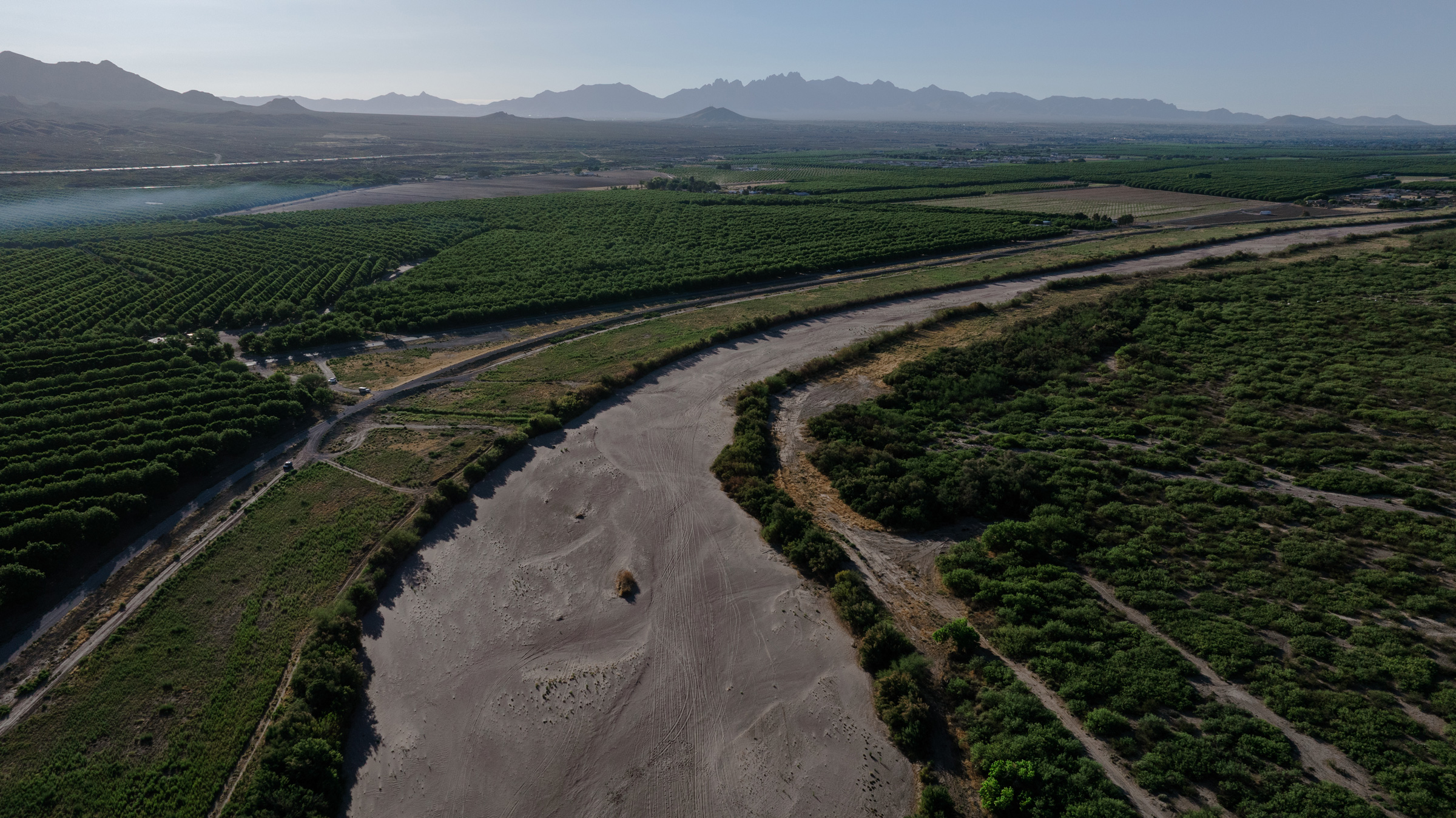
Farmers within the Elephant Butte Irrigation District (EBID), a major water user relying on the Rio Grande’s stored supply, recently celebrated the first irrigation water deliveries in months, a welcome respite after a prolonged dry spell. However, the underlying anxieties surrounding water scarcity were palpable. Phil King, EBID’s water resources consultant, candidly described the current water year as "phenomenal, and not in a good way," highlighting the precarious state of Elephant Butte Reservoir, which serves southern New Mexico, far West Texas, and Ciudad Juárez, Mexico. Decades of drought have left the reservoir at critically low levels, with a winter of insufficient snowpack in the Colorado headwaters pushing its capacity to a mere 13% in May. While a late spring release from Elephant Butte and Caballo reservoirs briefly replenished the downstream riverbed, the reservoir’s level subsequently dropped to a concerning 3% capacity.
The allocation of water for irrigation this year has been drastically curtailed, with farmers receiving only four inches per acre, a stark contrast to the typical entitlement of three acre-feet and the substantial needs of crops like pecans, which require between four and five acre-feet. This deficit has forced farmers to increasingly rely on well water, the very practice that precipitated the protracted legal battle between Texas and New Mexico. The historical context of water disputes in the Rio Grande basin is deeply rooted in the Rio Grande Compact, established in 1938 to manage water sharing. During a severe drought in the 1950s, farmers in the region turned to groundwater, leading to aquifer depletion that eventually replenished with returning precipitation. However, a persistent drought beginning in 2002 has reversed this trend, with current groundwater pumping drawing down the aquifer and siphoning water that should be flowing to Texas.

The settlement mandates that New Mexico reduce its groundwater pumping by 18,200 acre-feet annually in the basin between Caballo Reservoir and the Texas state line over the next decade. This reduction represents approximately 6 to 7% of the basin’s total groundwater usage, equivalent to filling nearly 9,000 Olympic-sized swimming pools each year. A significant portion of this groundwater, over 80% between 2021 and 2024, has been utilized for agriculture. New Mexico has committed $150 million to a voluntary water rights purchase program, aiming to compensate farmers who agree to sell their rights and allow their land to lie fallow. State officials acknowledge that additional costs will be incurred to fully comply with the settlement, but they view this as a prudent investment in the region’s long-term sustainability, especially considering the federal government’s advocacy for even more stringent reductions during the legal proceedings.
In Hatch, a town renowned as the "Chile Capital of the World," the potential for widespread fallowed fields raises significant economic concerns. Victoria Franzoy, CFO of Chile River Farms, expressed apprehension about the settlement’s impact on the local economy, where farming is a deeply ingrained family tradition. While vegetable farmers in Hatch possess more flexibility to shift production annually compared to pecan growers in the Mesilla Valley, who must sustain their orchards for years to reach maturity, the prospect of reduced agricultural activity threatens businesses reliant on the farming community. To address these potential disparities, New Mexico officials are exploring measures such as capping the volume of water rights that can be acquired in the Hatch area.

Josh Smith, general manager of the Elephant Butte Irrigation District, acknowledged that drought has become the "ordinary" in southern New Mexico, now in its 24th year. He anticipates that individual water right holders will need to make difficult decisions about selling their rights, with the state yet to determine the compensation per acre. While the settlement brings a degree of certainty, Smith cautioned that future challenges may arise if the region does not receive sufficient snowpack and river flows.
In the Mesilla Valley, pecan farmer Rafael Rovirosa, whose family has been a pioneer in commercial pecan cultivation, is adapting to the changing landscape by implementing advanced irrigation techniques, such as soil moisture sensors, and experimenting with lower-water-demand crops like pistachios. He emphasizes the need for further research into alternative crops that can thrive in the region’s arid conditions. Rovirosa also points out that not all agricultural water diversions lead to aquifer depletion, as a portion seeps back underground, contributing to groundwater recharge. Despite these challenges, he maintains that agriculture will remain a vital component of the Mesilla Valley’s economy for decades to come, with future water use likely to be constrained by regulatory frameworks rather than the sheer availability of water.

The arrival of a major data center, Project Jupiter, backed by Oracle and OpenAI, in Santa Teresa has added another dimension to the water management discourse. The facility’s substantial water and energy demands have raised concerns among conservation advocates. State officials have reiterated that no new groundwater pumping rights will be issued in the Lower Rio Grande, meaning any new water users must acquire existing rights.
As irrigation canals once again carry water through communities, a sense of apprehension about the future persists. To comply with the Supreme Court settlement and ensure long-term sustainability, New Mexico must curb water consumption in the Lower Rio Grande, potentially necessitating further cuts beyond voluntary purchases. The state’s prior appropriation water rights system, which prioritizes senior water rights holders, could be supplemented by an "alternative administration" approach, allowing for more flexible and stakeholder-driven curtailment plans. New Mexico’s Interstate Stream Commission is actively engaging with major water users, including EBID, the city of Las Cruces, and New Mexico State University, in confidential mediation to develop a comprehensive management plan. This collaborative process, with a deadline of October for an agreement, aims to avoid further litigation and foster a shared approach to water conservation. The 18,200 acre-feet reduction is viewed by some as just the initial step, underscoring the ongoing need for proactive water management and robust stakeholder collaboration in the face of persistent drought and climate change.