Johny Prima

Nestled in the vast, rugged expanse of Interior Alaska, near the Canadian border, the small Alaska Native community of Dot Lake Village faces a profound challenge to its way of life. This tight-knit Athabascan community, home to approximately 180 tribal members, has long sustained itself through traditional subsistence practices, fishing bountiful rivers and lakes and harvesting wild foods during the summer months. Elders, repositories of ancestral knowledge and fluent in the Athabascan language, tirelessly run culture camps, ensuring that future generations are steeped in the traditions that include vibrant potlatches overflowing with salmon, berries, and moose. Yet, beneath this enduring cultural tapestry, a deep apprehension ripples through the community as they prepare for the potentially devastating consequences of a nearby industrial "man camp."
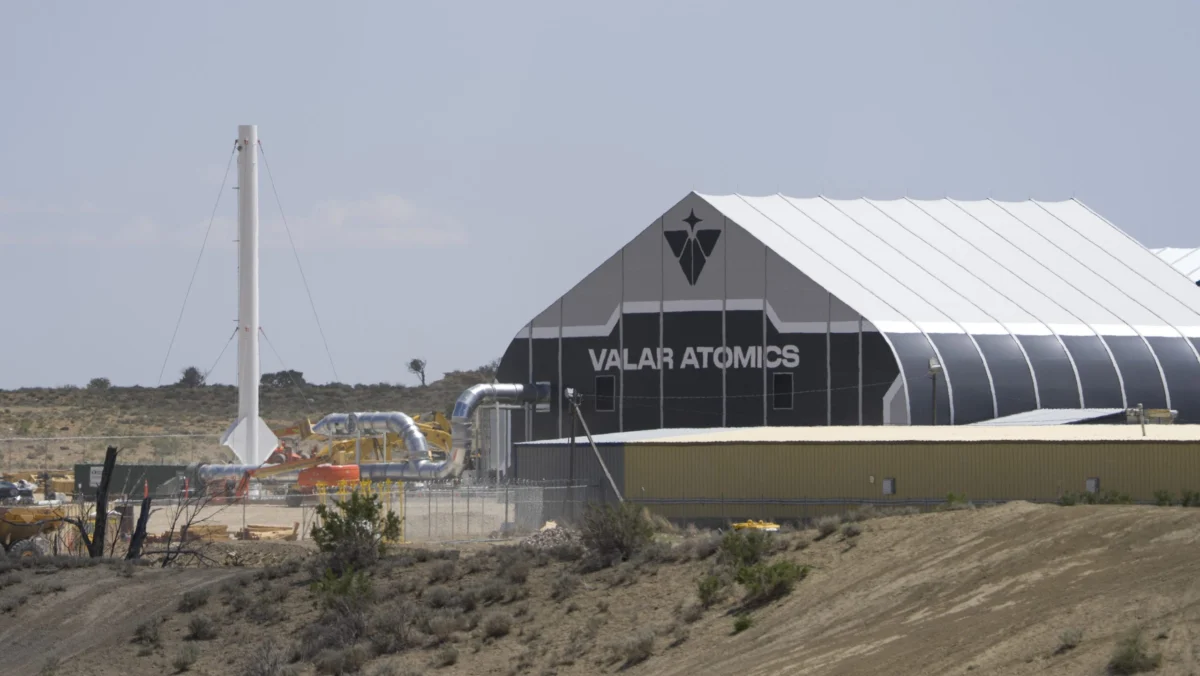
This temporary housing facility is being constructed to accommodate workers for the Manh Choh project, a newly established open-pit gold mine situated roughly ten miles from the town of Tok. The mine’s development is part of a broader push for resource extraction, a policy direction that gained significant momentum under the previous presidential administration with its agenda to prioritize energy and mineral development across the nation, including Alaska’s vast untapped reserves. For Dot Lake Village, however, this economic opportunity carries a heavy and familiar burden of risk.
"When we first heard of the man camp, I just had this sinking gut feeling," recounted Tracy Charles-Smith, president of the Dot Lake Village Council. Her reflection on this visceral reaction revealed a stark and painful truth about the vulnerabilities faced by Indigenous women in resource development zones. "I reflected long and hard about why I’m feeling this way, and I thought: Of all my friends from the nearby villages, of all my siblings and cousins of my generation, I’m the only one that hasn’t been raped. And that’s a harsh reality." Her words underscore a grim pattern of violence that has historically accompanied industrial booms in the region.
Charles-Smith’s personal history is deeply intertwined with Alaska’s cycles of resource development. She vividly remembers the Fairbanks pipeline boom of the 1970s, an era that brought both unprecedented job opportunities for her family and others, alongside a dark undercurrent of social disruption. Later, in the late 1980s, her sister worked on the cleanup crew following the devastating Exxon Valdez oil spill. The remote cleanup sites were teeming with out-of-state workers housed in temporary man camps, and it was during this period that Charles-Smith’s sister endured a harrowing ordeal, abducted and taken to a landfill where two men attempted to assault her, narrowly escaping what could have been a fatal encounter. These experiences are not isolated incidents but rather representative of a broader, systemic issue that Indigenous communities across North America continue to grapple with.
Today, Alaska stands at the precipice of another significant surge in resource development. Major projects, including the Pikka Oil Project and the Alaska LNG Project, are advancing through their early stages and are anticipated to move forward in the coming years. The sheer scale of these endeavors is immense; the Alaska LNG Pipeline alone is projected to cost upward of $46 billion, creating an 807-mile-long conduit and generating an estimated 10,000 jobs. Many of these projects have been subjects of discussion for years, even decades, but have recently received crucial approvals, propelled by executive orders aimed at "Unleashing Alaska’s Extraordinary Energy Potential." This renewed focus on resource extraction has galvanized Alaska Native communities, prompting them to rally in response to the potential impacts.
The social landscape of Alaska underwent a dramatic transformation during the 1970s with the construction of the Trans-Alaska Pipeline System. Beginning in 1974, approximately 70,000 workers, predominantly male, flooded into the state, turning cities like Fairbanks into chaotic boomtowns. While the project undeniably brought employment opportunities and economic prosperity, fundamentally launching Alaska’s modern oil industry, it also ushered in a period of intense social upheaval. Many residents initially welcomed the economic injection, but the accompanying disorder was undeniable.

Former Fairbanks Police Officer J.B. Carnahan, in an account for the PBS series American Experience, described the atmosphere as "a circus every night," fueled by an influx of workers with thousands of dollars in cash. This environment fostered a sharp increase in crime. Within a single year, arrests in Fairbanks surged by 95%, with significant spikes across nearly all major categories, according to a 1976 environmental impact statement for the Alaska Natural Gas Transportation System. Sex offenses, excluding rape, rose by 90%, rape itself increased by 40%, and homicide by 50%. Other crimes also saw alarming upticks: robbery climbed 123%, weapons possession rose 97%, and prostitution and commercialized vice skyrocketed by 700%. While some of these increases were attributed to stricter departmental policies, the overwhelming correlation with the pipeline project was clear.
Beyond the quantifiable crime statistics, a more insidious consequence emerged. Local newspapers from 1974 to 1976 bore an unsettling number of headlines about missing girls and women, their stories haunting communities across the state, particularly Indigenous populations. "We know there was trafficking of women here," Charles-Smith affirmed, adding, "We know that there were serial killers in the neighborhood." These periods of rapid development often attract individuals with criminal intent, exploiting the anonymity and transient nature of boomtowns.
Disturbing reports of human trafficking also surfaced in connection with prominent figures like Bill Allen, co-founder and long-time CEO of Veco Corporation, a major oil field services company. Rumors of sexual assault and trafficking shadowed Allen for years, culminating in investigations by the Anchorage Police Department and the FBI by 2004 regarding multiple allegations of sexual abuse of underage girls. In 2008, the Anchorage Police Department opened a specific case alleging Allen solicited sex with a minor under 16. These cases starkly illustrate the type of resource development-related crimes that deeply concern Alaska Native communities today.
Despite the gravity of these allegations, the 2008 federal investigation was abruptly halted in 2009 by the Federal Department of Justice, without a public explanation. The state of Alaska subsequently attempted, for a second time in 2016, to pursue charges against Allen under the Mann Act, a federal law criminalizing the transport of individuals across state lines for prostitution or other sexual activity. In 2014, Paula Roberds, a Yup’ik woman from Goodnews Bay, who was later identified as the minor in the 2008 case, filed a civil lawsuit against Allen, accusing him of sexual assault and abuse over a two-year period. These protracted legal battles and the systemic challenges in achieving justice highlight the enduring vulnerability of Indigenous women and girls within these contexts.
The problem of human trafficking in Alaska extends beyond historical incidents. Research conducted in 2017 by Loyola University New Orleans, which examined trafficking rates in ten cities where the issue was deemed most severe, shockingly ranked Anchorage highest among selected U.S. and Canadian cities with a Covenant House location, surpassing even more populated urban centers like Los Angeles and New Orleans. This finding underscores the unique dynamics at play in Alaska.
Human trafficking researchers, such as Victoria Sweet, have identified a confluence of characteristics that create conditions ripe for exploitation in areas experiencing resource booms: a large influx of transient men, rural or remote locations with limited law enforcement presence, and the proximity to vulnerable populations. These factors are frequently found near large-scale resource development projects and, critically, near Indigenous communities, a description that perfectly fits much of Alaska. While extractive industry development projects are not intentionally designed to victimize women, Sweet notes in a study on human trafficking in the Arctic that "violence against women has been the by-product of numerous development projects." The vast majority of workers may be law-abiding citizens, but a significant increase in transient male populations has historically been linked to a rise in various forms of violence, including human trafficking.
Sweet further elaborates that the likelihood of violent crime escalates when individuals arrive with no prior allegiance or connection to the local community. Their anonymity can foster a sense of impunity, making individual crimes and offenders significantly harder to trace amidst a constant flux of people. It is important to acknowledge that not all man camps pose the same level of threat; many camps on Alaska’s North Slope, for instance, are rigorously regulated and situated miles from local communities, often accessible only by bush plane. These camps frequently implement stringent security protocols, with only authorized personnel permitted on-site and strict tracking of all movement, measures that industry experts suggest could substantially mitigate trafficking risks. However, other man camps, like the one associated with the Manh Choh project, are established near public roadways that connect directly to Alaska Native villages, leaving these communities justifiably on edge.

Recognizing the imminent threat posed by the Manh Choh Mine, which commenced operations in late 2023, Alaska Native advocates began preparing local communities well in advance during the permitting process. Tracy Charles-Smith, leveraging her experience and deep concern, initiated contact with tribal leaders near similar camps in neighboring Canada and the Lower 48, consulting sexual assault prevention coalitions and meticulously reviewing studies focused on the nexus between man camps and violence against Native communities. "There were horrific stories coming out… of Canada in relationship to mining man camps in proximity to tribes," she revealed, highlighting the shared global struggle Indigenous communities face with extractive industries.
In a remarkable display of self-determination and proactive community care, Dot Lake Village immediately mobilized. They established the state’s first Native-led sexual assault response team, a groundbreaking initiative designed to provide on-site medical care and connect survivors with essential services. Community members underwent extensive training to recognize and respond to human trafficking indicators, and the village launched a dedicated hotline for victims. Alan Faulkner, Chief Operating Officer for Dot Lake Village, emphasized the team’s readiness: "We’ve got our number ready for anybody that is a victim — they can call, and we can respond and get them access to services." This community-led approach has already yielded tangible results. Last summer, the village received a report of two teenage girls being trafficked near the Manh Choh man camp. Community members swiftly alerted village leaders, who then engaged law enforcement, leading to a rapid intervention. "We have tried to make our tribal members aware of the dangers — to keep our staff updated and to know what the signs and symptoms are," Faulkner added, underscoring the critical role of public awareness.
Kinross Alaska, the company operating the Manh Choh Mine, issued a statement to the media outlining their preparatory measures. According to the company, "Since the early planning stages of the Manh Choh Mine, and as is standard practice at all projects and operations, Kinross met with and listened to nearby villages and communities to better understand their perspectives about potential social impacts associated with large industrial developments. This included increased alcohol-related crime, pressure on local law enforcement resources, and the social impacts that can accompany a predominantly male workforce operating near rural communities." The statement further specified that the Manh Choh man camp operates as an alcohol- and drug-free facility, with only authorized personnel allowed on-site and strict procedures for tracking all personnel. Kinross also stated its support for events raising awareness of the Missing and Murdered Indigenous Women (MMIW) crisis. However, Faulkner of Dot Lake Village stated that, to his knowledge, neither the mine itself nor Kinross had directly reached out to Dot Lake, Charles-Smith, or him for consultation, highlighting a critical gap between corporate claims and community experience.
Dot Lake Village’s decision to take matters into its own hands stems from the stark realities of its rural location, which leaves residents particularly vulnerable to external threats. Law enforcement resources in remote Alaska are notoriously limited, with many villages relying on a single regional state trooper, if any. This often translates into exceptionally long response times, further exacerbated in villages situated off the road system, where inclement weather can ground bush planes for days. The complex, often overlapping jurisdictions between state, federal, and tribal authorities can also create confusion and delays, allowing perpetrators to exploit these systemic gaps. As Gwen Adams, founder of the nonprofit Priceless, which supports sex-trafficking survivors, observes, "It’s easy to hide. It’s easy to get away with stuff up here, just because of how vast our land is." While Adams notes a growing understanding of trafficking among law enforcement in recent years, the challenges remain immense.
Despite the daunting landscape, Tracy Charles-Smith remains hopeful that community-wide initiatives can prevent further trafficking cases and that Dot Lake Village’s proactive measures will inspire other tribes. "We’re in a position to help tribes do everything that we are, because, you know, we’re not going to sit there," Charles-Smith declared, embodying the spirit of resilience and self-determination. "We want to empower other tribes, and we have the capability to." The village’s efforts stand as a powerful testament to the strength of Indigenous communities in safeguarding their people and culture against the pervasive risks associated with extractive industries, offering a beacon of hope and a model for community safety in an increasingly complex world.