Rocky Gerung
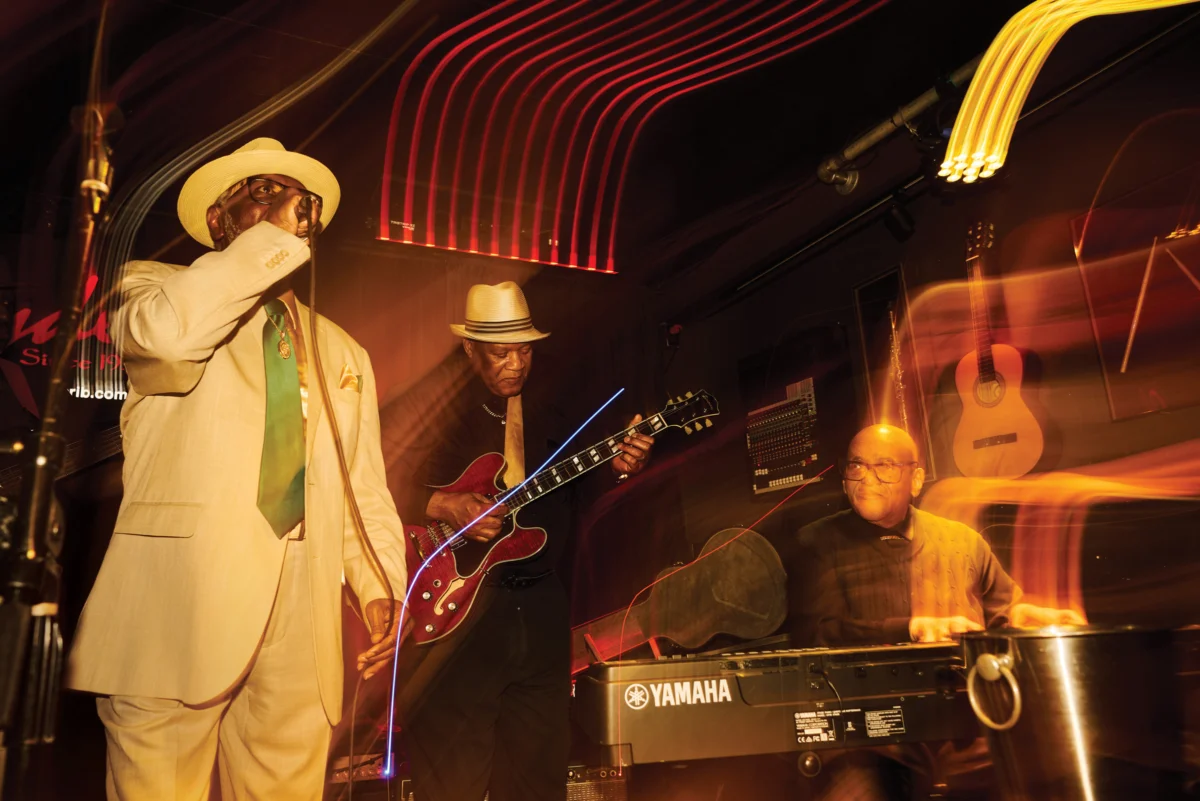
When Norman Sylvester, later known as "The Boogie Cat," was just 12 years old, he left the familiar embrace of rural Louisiana for Portland, Oregon, a journey that transported him from a childhood steeped in bayou fishing and gospel melodies to a city with a deeply complex history concerning Black residents. In the fall of 1957, his father had sought better opportunities in the Pacific Northwest, a state that, for decades, had maintained a stance of exclusion toward African Americans. From 1844 to 1926, Oregon enacted laws specifically barring Black people from residency, and even the promise of the 15th Amendment was initially rejected by the state. By the time Sylvester arrived, the Black population constituted less than 1% of Oregon’s residents, a stark contrast to his Southern upbringing, and Portland’s Black community was the smallest among major West Coast cities, despite the historical presence and activism of groups like the Portland chapter of the NAACP, the oldest operating west of the Mississippi River. Stepping off the train at Union Station, Sylvester encountered not the vibrant, welcoming community he would come to know, but a palpable culture shock.

His initial destination was a barbershop near the intersection of North Williams Avenue and North Russell Street, a pivotal corner that would soon reveal itself as the vibrant heart of Portland’s Albina neighborhood. This area, even in 1957, offered a surprising echo of home. Sylvester observed African Americans actively engaged in business, driving quality cars, and exuding confidence, a scene reminiscent of Harlem and the Southern communities he had left behind. The very air seemed familiar, carrying the aromas of Southern cooking and the distinct rhythms of gospel and jazz. "The place just embraced me," Sylvester recalled, describing a sense of belonging that transcended the thousands of miles separating him from his childhood.
The concentration of Black residents in Albina had roots in the early 20th century, when many Black Portlanders, often employed as railcar attendants, settled in the neighborhood due to its proximity to Union Station. Discriminatory housing practices and landlord policies, such as a 1919 Portland Realty Board ruling that deemed it unethical to sell homes in white neighborhoods to non-white buyers, further confined Black families to Albina. By 1940, over half of Portland’s Black population, then numbering under 2,000, resided in this district. The influx of African Americans during World War II, seeking employment in the city’s burgeoning shipyards, significantly increased the Black population, with many settling in the massive wartime housing development of Vanport. This community, home to nearly a quarter of Vanport’s 40,000 residents, became Oregon’s largest Black community by a considerable margin.

The tragic flood of Vanport on Memorial Day in 1948, when the Columbia River breached its embankment, displaced thousands, a third of whom were Black. Like most of the flood’s victims, Sylvester’s family found refuge in Albina, the only neighborhood where they were welcomed. By the time Sylvester settled in Portland, four out of five Black Portlanders lived in Albina. While redlining, limited public investment, and neglectful landlords led to overcrowded and sometimes dilapidated housing, the neighborhood fostered a strong sense of community, with Black-owned businesses, churches, and gathering places flourishing. Music, in particular, was a vital thread in the fabric of Albina. Gospel choirs filled churches, while soul bands electrified venues like the Cotton Club, then the Pacific Northwest’s premier soul music destination. Jazz, blues, and funk could be heard nightly in various clubs and all-ages spaces, with bands often forming in basements, backyards, and churches.
Sylvester’s own musical journey began at age 13 when his father, working two jobs, purchased him an acoustic guitar. His father’s promise of an electric guitar upon learning three songs spurred his dedication. Mentored by a Creole neighbor and a fellow student, Sylvester quickly found his voice through music. He recalled that while shyness and a stutter often hindered his verbal expression among urban youth, his guitar allowed him to communicate freely. This early passion led to the formation of his first band, Rated "X," one of Portland’s pioneering soul groups. Though their local success was cut short by his work schedule, Sylvester continued to play, eventually establishing himself as a prominent blues musician with the Norman Sylvester Blues Band, performing for 40 years and sharing stages with legends like B.B. King and Buddy Guy, earning him a place in the Oregon Music Hall of Fame.

Sylvester’s story is emblematic of a broader narrative: Albina served as a fertile ground for a rich and interconnected community of Black musicians, educators, and arts advocates who transformed the region into a Western music hub during the latter half of the 20th century. Until recently, however, this vibrant musical history was largely confined to the memories of its participants, a generation now facing the passage of time.
Bobby Smith, a white schoolteacher and music journalist, moved to Albina in the early 2000s, long after its demographic shift. Intrigued by the neighborhood’s jazz and R&B past, a period documented in Robert Dietsche’s book Jumptown, Smith sought to understand what happened to Black music in Portland after the 1950s. His search for commercial recordings from the 1960s, 70s, and 80s proved challenging, yielding only a few gems like Sylvester’s Rated "X" 45. Engaging with neighbors and frequenting local venues like Clyde’s Prime Rib, where elder Black performers still played, Smith began to piece together a more comprehensive picture.

In 2014, Smith started DJing at XRAY-FM, a community radio station broadcasting from Albina. He began inviting local musicians to discuss their recordings and share their life stories. Calvin Walker, a drummer, bandleader, and self-proclaimed "child of Albina," became a pivotal figure. His initial 30-minute interview expanded into a three-hour conversation, mapping out an entire ecosystem of musicians and educators who had shaped Albina’s cultural landscape. Walker’s willingness to share his extensive network and knowledge opened doors for Smith, transforming his weekly radio show into a crucial platform for elder Black musicians to share their narratives and the wealth of unreleased recordings they had preserved. This growing collection of demos, reel-to-reels, cassettes, and video tapes revealed an extraordinary legacy of Black arts and culture in Portland, an untold chapter of Oregon’s history.
Recognizing the urgency of preserving these fragile media, Walker, Smith, and local musician and community leader Ken Berry founded the Albina Music Trust (AMT) in 2015. Their ambitious goal was to digitize and make accessible thousands of obsolete and decaying media items. With the help of elder engineers who donated equipment and shared their expertise, volunteers painstakingly converted these materials into a categorized digital database. In 2024, AMT launched the Albina Community Archive, believed to be the only community archive in the United States dedicated to restoring and celebrating a Black community’s music culture. The archive now houses over 13,000 items from 180 sources, including music, film, newsprint, posters, handbills, and oral histories. This archive serves not merely as a repository but as a catalyst for projects that breathe life into historical artifacts, such as the art installation "Wall to Wall Soul," the record label of the same name releasing previously unheard music and new work from contemporary artists, and the immersive audio tour, "The Albina Soul Walk," which guides listeners through the physical landscape of Albina, connecting them to its musical past.

AMT’s work is part of a broader national movement of community archives dedicated to preserving histories often overlooked by mainstream institutions. These archives, numbering over 300 across the United States, are vital in broadening the authorship of history, creating a more inclusive and representative narrative of American life, especially in the face of efforts to control historical discourse.
In a modest office in northeast Portland, Smith, Walker, and Berry spoke with a palpable sense of camaraderie, their conversation flowing with the ease of a seasoned band. Ken Berry, who moved to Albina as a child after facing racial discrimination in another part of Portland, recounted his musical beginnings playing piano in church and later at The Upstairs Lounge, a prominent jazz club, where he met trumpeter Thara Memory. Memory, captivated by Albina’s community, stayed in Portland, and he and Berry formed Shades Of Brown, a group that significantly influenced Albina’s music scene. Walker also met Memory at the Albina Arts Center, another vital community hub, leading to collaborations that shaped their musical paths.

Their shared experiences, including an uninvited but impactful performance at the 1970 Vortex 1 festival, highlight how much of Albina’s history resided within the community itself, often absent from official records and mainstream retellings. AMT’s efforts have unearthed these stories, becoming a crucial resource for understanding Portland’s Black arts and culture.
The fabric of Albina began to fray with the advent of "urban renewal" policies in the post-World War II era. These federally funded programs, intended to clear "slums," disproportionately targeted Black and minority neighborhoods for demolition, displacing hundreds of thousands of residents nationwide. Portland was no exception. The construction of Interstate 5 and the Memorial Coliseum in the late 1950s led to the demolition of hundreds of homes in Albina. Later, in the late 1960s, the city secured federal funds to expand Legacy Emanuel Hospital, razing 76 acres that included residences, community spaces like the Seven of Diamonds teen club, and the commercial heart of Albina at Williams and Russell.

Despite organized resistance from Black leaders who advocated for rehabilitation over demolition, projects like the hospital expansion proceeded. The intersection of Williams and Russell was condemned and bulldozed, with only the onion-shaped cupola of a building surviving to be relocated to Dawson Park. This displacement affected 171 households, three-quarters of them Black. The promised hospital expansion never materialized, leaving the land vacant for decades. In total, "urban renewal" destroyed over 1,100 housing units and numerous businesses and community hubs in Albina. Compounded by subsequent redlining practices that denied residents access to mortgages and home improvement loans, the neighborhood faced further disinvestment, leading to widespread abandonment and blight by the 1980s.
As Albina’s physical spaces diminished, racial tensions escalated across Portland following the assassination of Martin Luther King Jr. Black bands faced exclusion from downtown venues, and competition from new entertainment forms, coupled with stricter drunk driving laws and police actions, made earning a living through music increasingly difficult. Yet, music remained a vital source of connection and spiritual resilience. Musicians, educators, and community leaders redoubled their efforts to sustain Black music culture. Ken Berry co-founded the World Arts Foundation in 1976, dedicated to promoting African American culture through various musical ensembles and programs, including the annual "Keep Alive the Dream" tribute. Thara Memory initiated the TimeSound concert series to bring musicians back to the stage and introduce new audiences to Black music traditions.

Inspired by TimeSound, a youth program called YouthSound emerged, bringing together hundreds of students for weekly practices at the New Hope Missionary Baptist Church. This intergenerational and genre-spanning program provided music education to underserved children, many of whom became accomplished musicians, including five-time Grammy winner Esperanza Spalding. The creators of these programs aimed for more than just musical skill development; they fostered a sense of community, connection, and social justice, as articulated by Berry: "Each person in the choir is an individual, and when we sing, we’re making sure to let one another know that, even though we’re different individuals, we’re all connected. We have to deal with the same things together. I’m talking about social justice. I’m talking about peace, joy, happiness. That’s what the music did for all of us that were in the choir."
The Albina Music Trust’s work is fundamentally future-oriented. "In another 50 years, we don’t want a couple of guys like me and Ken sitting around talking about the good old days," Walker stated, emphasizing the trust’s commitment to expanding arts education and connecting students with Albina’s Black music legacy. Events like "Rhythms of Tomorrow," a collaboration with Portland Public Schools, aim to celebrate Black Music Month and introduce contemporary youth to the history and cultural significance of Albina’s musical heritage.

Despite the demographic shifts in Albina, with gentrification pushing many long-term Black residents to other parts of the city, the spirit of the community endures. The "Rhythms of Tomorrow" event, held within the very school district headquarters built on razed neighborhood land, brought together a vibrant mix of generations and genres. Norman Sylvester, still rooted in the blues, shared his dedication to carrying forward the legacy of perseverance embodied by blues pioneers. His performance underscored the idea that music itself is an archive, preserving life experiences within its melodies and lyrics.
The event concluded with performances that spanned generations and genres, including contemporary remixes of archival recordings by producers like Tony Ozier and Jumbo. Their work on the album Soul Assembly, named after a 1968 Black Student Union production addressing racial tensions, aims to bridge past and present, passing the torch to younger generations. Ozier, who discovered Portland’s deep-rooted Black music scene through Janice Scroggins, emphasizes the impact of music on shaping cultural identity, noting the difference between early hip-hop anthems and contemporary popular music. The music played that day, such as Shades Of Brown’s "Searchin’ for Love," a poignant "cry for decency," and Jumbo’s remixed version, layered with his own coming-of-age influences, collapsed time, resonating within the space that bore witness to both historical displacement and enduring cultural vitality.

The revival of the TimeSound concert series at the expanded Albina Library marked a significant moment, symbolizing a return and reclamation. Calvin Walker’s impassioned declaration, "Is this not a miracle?… There was a time when nobody wanted to live in Albina… Now, it’s going to come back, and it’s going to come back with all of us," resonated deeply. The concert, directed by Arietta Ward, showcased an intergenerational ensemble performing works by Albina’s Black composers, with a special focus on female artists. Ward’s direction honored her mother, the legendary pianist Janice Scroggins, and highlighted the often-underrepresented contributions of women in music. Despite facing systemic challenges and discrimination, these artists, like Ward herself, demonstrated remarkable tenacity, drawing strength from the Albina community and instilling a sense of freedom and self-worth in their students.
The performance of gospel songs, like Walter Hawkins’ "Be Grateful," filled the space with a palpable sense of unity and shared memory. The crowd, predominantly Black families spanning multiple generations, experienced the music as a powerful connection to their heritage and a testament to their resilience. As Ken Berry reflected on the enduring nature of community and wholeness in the face of efforts to divide, the music spoke volumes, embodying the spirit of Albina’s enduring legacy. The sounds drifting from the library that day offered a glimpse of a past that continues to shape the present, a vibrant echo of a culture that, against all odds, continues to thrive.