

 Johny Prima
The pristine headwaters of the Klamath River, emerging directly from the earth in southern Oregon, represent the ancestral heartland of the Klamath Tribes, an alliance comprising the Klamath, Modoc, and Yahooskin peoples. Tribal Chairman William Ray Jr. vividly articulates this profound connection, stating, "It comes right out of the ground. I know this because I see it. I’ve lived it. And I know where it comes out of." These vital springs coalesce to form Upper Klamath Lake, from which the Klamath River embarks on its journey, flowing south through Northern California before ultimately emptying into the Pacific Ocean. Throughout this vast watershed, these waters have historically sustained the rich biodiversity, particularly the anadromous fish species, which form the irreplaceable core of the economies, spiritual practices, cuisine, and traditional medicine for Indigenous communities, including the Yurok Tribe situated downstream where the river meets the sea.
In eras past, when the Klamath River flourished in its natural state, salmon alone constituted a remarkable third of the Klamath peoples’ diets, underscoring their integral role in sustenance and survival. Chairman Ray reverently describes salmon as a creation of unparalleled power, capable of navigating both freshwater and saltwater with extraordinary resilience, a testament to its design "for all the Indians to enjoy." The historical significance of the Klamath River extended far beyond its immediate basin; it was once recognized as the third-largest salmon producer in the world. An intricate network of trade routes, notably the Klamath Trail, traversed what is now Oregon, linking these communities to distant hubs like Celilo Falls, an ancient and expansive fishery on the Columbia River that served as a vital international trade nexus before its submergence by dams. The deep, holistic connection to the river’s bounty permeated every aspect of life, including healing. When an elder fell ill, traditional practice dictated the careful selection of a specific type of fish from a precise location—perhaps a c’waam or koptu from a particular bend in the lakeshore, or a certain kind of anadromous fish from the river—whose gills would be consumed or heads boiled to concoct a potent medicinal broth, reflecting a profound Indigenous ecological knowledge.
However, this age-old harmony was tragically disrupted by the construction of a series of hydroelectric dams along the Klamath River during the 20th century. These formidable barriers irrevocably altered the river’s hydrology, blocked the vital migration pathways of anadromous fish like salmon and steelhead, and degraded water quality, leading to severe declines in fish populations. Lake-dwelling species also suffered dramatically, forcing the Indigenous peoples of this land to confront agonizing choices. Chairman Ray recalls the early signs of distress: "We knew that there was something wrong beginning in the ’70s and especially the ’80s. It didn’t take Western science to tell the Indian (with) Indigenous knowledge that something was drastically wrong." After emotionally charged gatherings and deep deliberations, the Klamath Tribes made the heart-wrenching, unilateral decision in 1986 to cease fishing, a profound sacrifice aimed at allowing the dwindling fish populations a chance to recover. "It hurt us," Ray emphasized, articulating the cultural wound, "This was another issue that pecked away at our culture, the viability of it." The imposition of these dams and the subsequent environmental degradation represent a painful chapter in the broader history of industrial development in the American West, where economic imperatives often superseded ecological and Indigenous rights, leading to irreversible cultural and environmental losses.
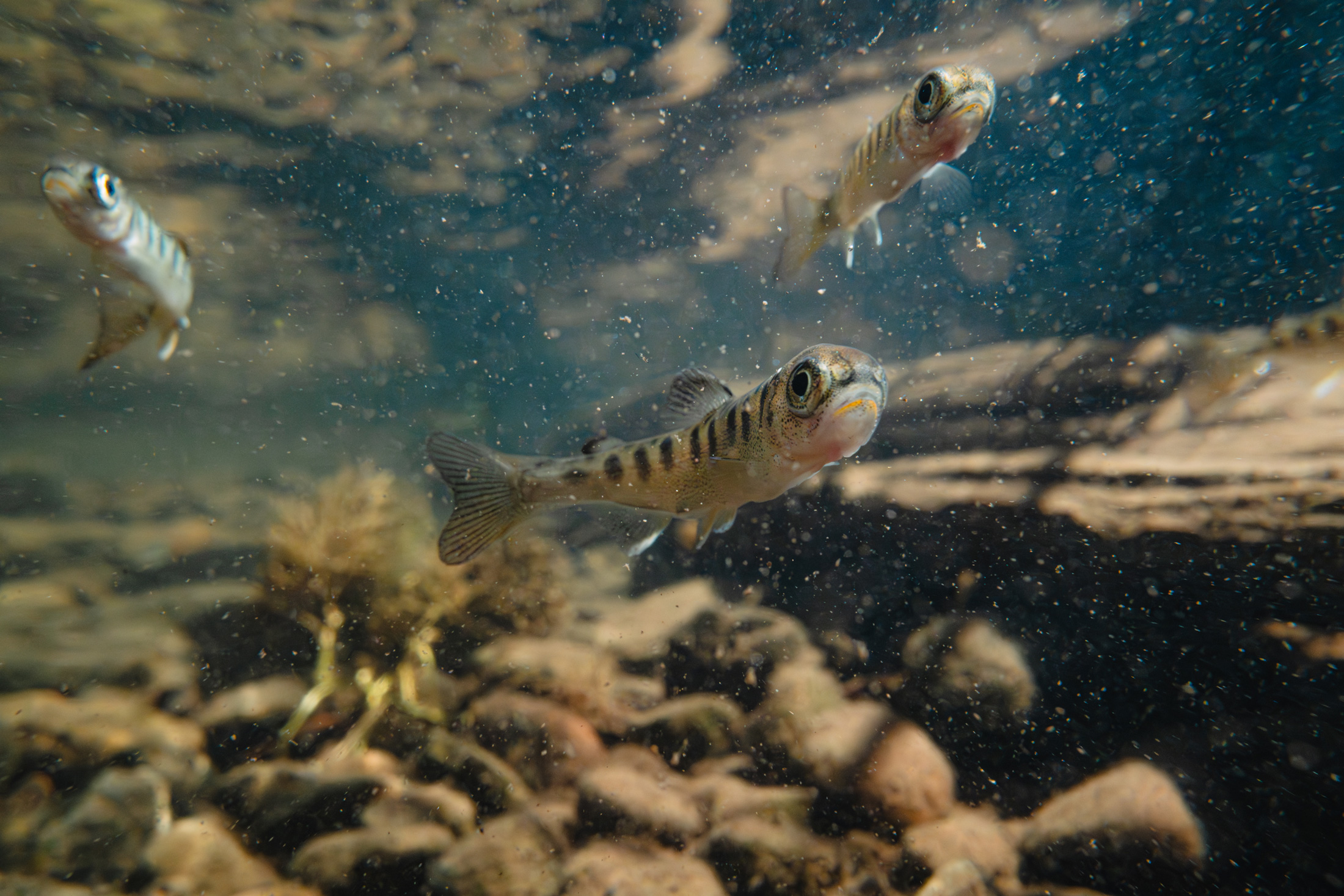
The chairman poignantly paraphrases a Umatilla elder, whose words encapsulate the modern dilemma faced by tribal nations: "How can you build a tribal traditional economy on species that are endangered?" This is not an abstract philosophical query but a stark, daily reality. Ray describes the profound difficulty of having to inform a sick elder that they cannot perform the centuries-old ritual of retrieving a fish from the river for healing. The inability to access these culturally and nutritionally essential resources represents an ongoing erosion of Indigenous sovereignty, cultural identity, and traditional healthcare systems, underscoring the deep human cost of environmental degradation and the ongoing struggle for environmental justice.
Today, however, a beacon of hope illuminates the Klamath Basin, signaling a promising trajectory for the river’s fish and the vibrant tribal cultures intertwined with their fate. A landmark river restoration project, recognized as the largest in US history, saw the removal of four outdated and underperforming hydroelectric dams on the lower Klamath River in October 2024. The response was immediate and remarkable: Pacific lamprey, steelhead, fall Chinook salmon, and other anadromous fish, blocked from their ancestral spawning grounds for over a century, began migrating back to the upper basin with astonishing speed. Jordan Ortega, an anadromous fish specialist for the Klamath Tribes, reported that "almost all the anadromous species are responding favorably to dam removal," noting that approximately 20 coho salmon had already reached Oregon by the end of that year. While two dams, the Kino Dam and the Link River Dam, still remain in the upper Klamath River, both are equipped with fish ladders, which, though not ideal for all anadromous species, offer a crucial improvement over complete obstruction.
Earlier this year, in a significant step towards supporting these restoration efforts, the Bureau of Indian Affairs (BIA) and the National Oceanic and Atmospheric Administration (NOAA) jointly announced a competitive $5.9 million grant specifically designated for tribal salmon restoration initiatives. The Klamath Tribes learned of this crucial funding opportunity through their downriver relatives, the Yurok Tribe. Chairman Ray immediately mobilized, contacting the governor’s office and the Oregon Department of Fish and Wildlife (ODFW), an agency with whom the Klamath Tribes had already collaborated on a comprehensive post-dam-removal plan for fish reintroduction and monitoring natural repopulation.
Despite this proactive engagement, the Klamath Tribes encountered an unexpected and frustrating bureaucratic roadblock. Chairman Ray was informed that the BIA and NOAA grant was primarily intended for "salmon restoration tribes." Due to the complete extirpation of salmon from Klamath ancestral territory for over a century, the federal government’s narrow interpretation deemed them ineligible to apply, as they were not officially recognized as a "salmon restoration tribe" within the funding parameters. Ray’s incredulity was palpable: "We’re trying to put salmon back into our territory, right? So how couldn’t we be a salmon tribe?" This bureaucratic inflexibility highlighted a common challenge for Indigenous communities, where historical injustices and the success of environmental destruction inadvertently disqualify them from accessing critical support for restoration. The BIA, in an email, later clarified that the funding opportunity "prioritized certain hatcheries that raise stocks of Pacific salmon," without further detailing its criteria for classifying "salmon restoration tribes."

Fortunately, the powerful bonds of inter-tribal solidarity prevailed. Mike Belchik, the Yurok Tribe’s senior water policy analyst, swiftly moved to assist his relatives upstream. "First thing I did was contact Bureau of Indian Affairs and said, ‘Can you add Klamath Tribes to the list?’" Belchik recounted. However, the BIA responded that it was too late in the application process for such an amendment. Undeterred, the Yurok Tribe devised a strategic solution: they applied for the grant themselves and extended an invitation to the Klamath Tribes to "piggyback" on their application. This collaborative effort bore fruit, with the BIA ultimately awarding the grant jointly to the Yurok Tribe, the Klamath Tribes, and the Oregon Department of Fish and Wildlife. Belchik confirmed that the Yurok Tribe would serve purely in an administrative capacity, acting as a pass-through to ensure the funds reached the Klamath Tribes directly. This act of profound generosity and strategic partnership powerfully dispels any notion of rivalry between the Yurok and Klamath Tribes, often perceived as competitors over water rights—the former advocating for salmon restoration in the lower basin, the latter for the survival of c’waam and koptu in the upper reaches. Belchik emphatically stated, "Our council, our leadership, pledged to help the Klamath Tribes in any way they could. We made a promise to them. When this funding opportunity came up, that’s who we thought of." He underscored the shared benefit, noting that both tribal nations would gain significantly from an expanded run of spring Chinook salmon. "We have pushed, as have the Klamath Tribes, for the treatment of the entire basin as an ecosystem of which all parts are important," Belchik explained, adding, "It’s heartfelt. My direction from council is to make that real." This collaboration stands as a powerful testament to Indigenous leadership in holistic ecosystem management and a model for effective resource stewardship.
The grant funding is now actively supporting the expansion and innovative use of remote site incubators, a cutting-edge approach to fish reintroduction. Jordan Ortega described these incubators as sets of panels, each roughly the size of a natural salmon redd (nest), carefully placed in the river. These devices are engineered to mimic the optimal environmental conditions necessary to support the development of several thousand fertilized eggs, providing crucial protection from predation and other environmental threats during their most vulnerable stage. The overarching goal is to deploy these remote site incubators across a diverse array of thermal and flow regimes within the river system. This strategic placement aims to foster "life-history diversity," a critical evolutionary strategy of Chinook salmon where different populations adapt unique behaviors and timing to achieve the same objective of successful reproduction, thereby enhancing the overall resilience and adaptability of the species.
The river’s inherent capacity for recovery has been dramatically demonstrated. After the removal of the dams, an extraordinary number of fish defied typical migratory patterns. Out of an estimated 60,000 to 70,000 returning fish, an astonishing 13,000 migrated past the former dam sites, a fraction far exceeding the typical 5% observed in scientific literature for fish venturing into new or previously blocked territories. This remarkable surge underscores the urgent need and profound potential for river restoration. Furthermore, the efficacy of the remote site incubators has been unequivocally proven: when the Klamath Tribes tested them with 10,000 fertilized eggs obtained from the Trinity River Hatchery, they achieved an exceptional hatch-success rate of over 99%, validating the technology’s promise in accelerating natural repopulation.
Just last month, a moment of profound historical significance unfolded as the first spring Chinook salmon in over a century returned to the upper basin of the Klamath River. While most of the returning salmon observed so far have been fall Chinook, the return of "springers," widely celebrated for their superior flavor, is particularly noteworthy. Spring Chinook typically have a more geographically confined distribution, with strongholds primarily in the lower basin, specifically in the Trinity River and the Salmon River, which are closer to the ocean. Additionally, their population size is generally smaller than that of fall Chinook, making their journey to the upper basin a more challenging feat, for which the incubators are specifically designed to provide a crucial "boost."

Chairman Ray has steadfastly challenged a narrative long perpetuated by some non-Native locals who denied the historical presence of salmon in the upper basin. "There’s a lot of naysayers all over the place saying that we trucked them around the dams and that they were never here. Well, they’re here," Ray declared with conviction, emphasizing that the return of the fish makes it "undeniable." He recently overheard a conversation in a restaurant that underscored a profound irony: "They said, ‘Do you know how awesome it is to have these salmon back? We can’t wait to fish them.’ Well, wait a minute. Let’s back up here a minute. This is a treaty protected resources under the Treaty of 1864," Ray reminded, asserting the foundational rights of his people. "We’re the one that’s been harmed here." This poignant observation highlights the ongoing tension between historical Indigenous rights and contemporary public perception, emphasizing that while the return of salmon is a blessing for all, the primary beneficiaries and stewards are the tribal nations whose culture and livelihood were most directly impacted by their absence.
Looking to the future, Phil Milburn, a wildlife biologist at the Oregon Department of Fish and Wildlife, cautions that while "everybody’s excited about the return of the fish and what that could ultimately mean," discussions about harvesting are likely "years away" as the immediate goal remains the robust re-establishment of these species in Oregon. The Klamath Tribes plan to install the new remote site incubators next year, with the first adult springers from these efforts anticipated to return as early as 2030, marking a tangible milestone in the long road to recovery. Mike Belchik of the Yurok Tribe articulates a broader vision, emphasizing that the "ultimate purpose of dam removal, whether you’re talking fall or spring or steelhead or anything, is that there’s a harvestable surplus for all," suggesting a future of shared prosperity and ecological balance once populations are fully restored.
Chairman Ray envisions the Klamath watershed restoration not just as a local triumph but as a powerful national and even global precedent. He notes that the relative absence of a large municipality in the area creates a unique opportunity "for us to set a new standard, to show America that we can restore, as humans, a watershed that’s been degraded for the last 100-plus years." He expresses immense pride that tribal nations are at the forefront of this monumental environmental and cultural reclamation effort. "There’s a lot of positive things going on, and we’re fighting like heck," Ray affirms, his voice resonating with determination. "We have to be very speedy. We have to have all cylinders going." The Klamath River’s journey from ecological devastation to a beacon of restoration offers invaluable lessons in resilience, Indigenous leadership, and the enduring power of collaborative conservation in an increasingly interconnected world grappling with climate change and biodiversity loss.






