

 Rocky Gerung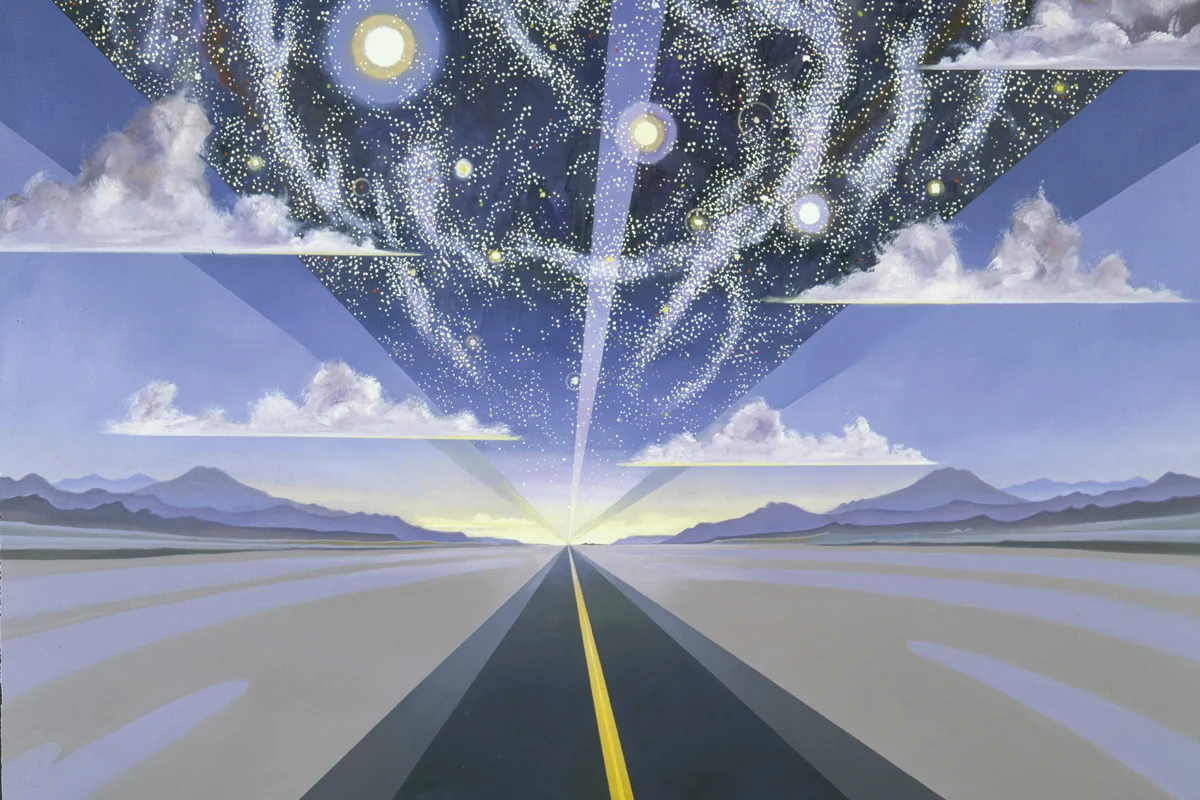
The recent exhibition "A Queer Arcana: Art, Magic, and Spirit" at the Palm Springs Art Museum, alongside similar showcases in Santa Fe and Los Angeles, highlights a burgeoning trend of LGBTQ+ artists exploring themes of spirituality, magic, and alternative belief systems. These exhibitions, spanning over a century of creative output, feature paintings, sculptures, performances, and photography that delve into the intersection of queer identity and spiritual seeking, offering a powerful affirmation of self and community in a world that has often been oppressive. The art presented often draws inspiration from the unique spiritual landscapes of the American Southwest and California, including the desert expanses, boulder fields, and dark night skies that have long attracted those on a quest for deeper meaning.
Many of the artists featured in "A Queer Arcana" maintain strong connections to the Southwest, a region whose natural beauty and perceived mystical energies have inspired generations of seekers. Places like Joshua Tree, Sedona, Arizona, and Crestone, Colorado, with their dramatic geological formations and vast, unpolluted skies, serve as backdrops or direct influences in the artwork. This connection to the land often manifests as body-centric and fantastical imagery that evokes a sense of permeability between the physical and spiritual realms, a concept often described as piercing the "thin veil." This fascination with the liminal space between worlds is a recurring motif, reflecting a desire to transcend conventional boundaries and explore deeper truths.
The exhibition showcases a diverse range of artistic expressions, from the bold and explicit to the subtly evocative. Ingo Swann’s 1986 painting "Proto Adam," for instance, depicts a vibrant, otherworldly figure emerging from a desert river, suggesting a cosmic genesis within a distinctly terrestrial landscape. Clarity Haynes’s 2022 work, "Altar for Laura Aguilar," is a pastel tribute to the late photographer, incorporating imagery from Aguilar’s evocative nude self-portraits taken in the desert, further emphasizing the intimate relationship between the body, nature, and self-exploration. Eric-Paul Riege’s "chestplate [3]" (2026) offers a more understated yet profound exploration, weaving traditional Diné beliefs with his personal experiences of queerness through a black-and-white textile, demonstrating how cultural heritage and contemporary identity can be harmoniously integrated.

Beyond these specific examples, "A Queer Arcana" presents a captivating array of imagery that challenges conventional norms and celebrates radical self-expression. Works within the exhibition incorporate playful yet potent symbolism, such as "cosmic 69s," depictions of occult gatherings, and even fantastical aliens with anthropomorphized appendages that seem to possess their own sentience. Complementing the visual art, archival magazine collections document historical explorations of witchcraft and New Age goddess worship, providing a broader context for the exhibition’s themes. This rich tapestry of artistic and archival material underscores the long-standing human impulse to seek meaning and power beyond established doctrines.
Curator David Evans Frantz articulated the exhibition’s core purpose in a press release, stating, "Queer artists, activists, and cultural producers have long sought spiritual practices outside the mainstream to affirm their identities, build community, and envision new ways of being in an often-oppressive world." This sentiment resonated deeply upon entering the exhibition, where large text on a deep red wall referenced the influential words of Gloria Anzaldúa. The queer Chicana poet and theorist, who described herself as a "spiritual mestiza," understood spiritual seeking as an inherently queer act of engaging with the world and the infinite. Her philosophy underscores the idea that for many in the LGBTQ+ community, the journey of self-discovery and spiritual exploration is intrinsically linked to challenging societal norms and forging new paths.
One particularly arresting piece within the exhibition was Edgar Fabián Frías’s 2017 video, "Give Us Home Spider: Ritual 5: TXI Cement Quarry, Bloomington, CA." As a brujx—a gender-neutral Spanish term for a magic practitioner—and a descendant of the Wixárika people, Frías organized a series of rituals across Southern California aimed at addressing environmental racism and health disparities. The video captured a ritual performance at a quarry near where Frías grew up, a site that had exposed the local community to hexavalent chromium, a known carcinogen. In the footage, Frías and thirteen other healers, adorned in vibrant fluorescent attire, engaged in a powerful ceremony. The ritual involved playing a drone pipe to techno music, digging holes in the earth, cackling, and consuming pomegranates, all potent symbols within indigenous and spiritual traditions. This ritual, performed nearly a decade prior to the exhibition, felt remarkably prescient, especially in light of recent environmental crises, such as the Lineage Fire in Los Angeles’s Boyle Heights, which released toxic fumes from a food-storage facility. Frías’s work serves as a potent reminder of the necessity to confront past harms and their ongoing impacts to foster a more conscious and equitable future. It emphasizes that regardless of one’s spiritual path, acknowledging the damage inflicted upon both people and the planet is a crucial step toward healing and justice, even if it begins with a simple act of remembrance, like honoring the brief life of a desert cottontail.
The presence of "A Queer Arcana" and similar exhibitions is not a spontaneous occurrence but rather a deliberate act of bringing together ancestral wisdom and contemporary community. These gatherings serve as conduits, whispering from the liminal spaces to remind those who are listening today of the importance of connection and the ongoing fight against all forms of repression, not just that which targets the queer community. The exhibition implicitly invites viewers to engage actively in their world, whether by challenging local authorities approving harmful developments like data centers or by establishing personal boundaries through protective rituals, safeguarding creative spirits from the homogenization of AI-generated content. It also encourages forging alliances with nonhuman inhabitants of our planet, recognizing our interconnectedness.

The timing of the visit to the exhibition also coincided with another significant ritual: the Summer Solstice. Within the museum’s displays, queer tarot decks, including those by transgender activist Rachel Pollack, offered guidance for this longest day of the year. The writer’s own spirituality has been deeply shaped by nature, encompassing celestial observations, grounding Qi Gong practices, the study of birdsong, and ceremonial river cleanups. However, as someone with a Libra Sun and Scorpio Moon, the practice of quarterly tarot readings has proven invaluable in navigating chronic indecisiveness and deeply held grudges. The "MotherPeace" tarot deck, a pioneering feminist and queer creation from the 1970s, represents another significant element of the writer’s personal cosmology, having significantly influenced their understanding of divination and self-reflection.
Drawing a card from the deck on the Solstice, the writer revealed the "Son of Cups," a card described by one of its creators as symbolizing "meditative awareness." The imagery on the round, moon-shaped card depicts a naked man floating serenely on the sea, playing a flute, accompanied by singing seagulls. Below him, large datura flowers unfurl like sails, evoking a sense of gentle propulsion and spiritual journeying, a fitting visual metaphor for the exhibition’s exploration of finding one’s path through alternative spiritualities. This encounter with the datura, a plant previously encountered in a personal garden, brought a sense of cyclical connection, linking the mundane and the sacred, the personal and the universal, and the art within the museum to the lived experiences of the viewer.







