Roger Danuarta
In the heart of central Utah, Carbon County, a region historically defined by the boom-and-bust cycles of its coal industry, stands at a critical juncture, facing a contentious pivot towards next-generation energy production and the burgeoning demand of the digital economy. Residents like Cindy O’Neil, whose husband endured years in the county’s once-thriving mines, are intimately familiar with the profound sacrifices exacted by energy extraction—from the pervasive specter of black lung disease to the traumatic incidents of explosions and fires that scarred the community. Yet, a new wave of industrial development, centered on massive data centers powered by untested nuclear technology and extensive natural gas infrastructure, is stirring anxieties that, for many, eclipse the familiar dangers of coal.
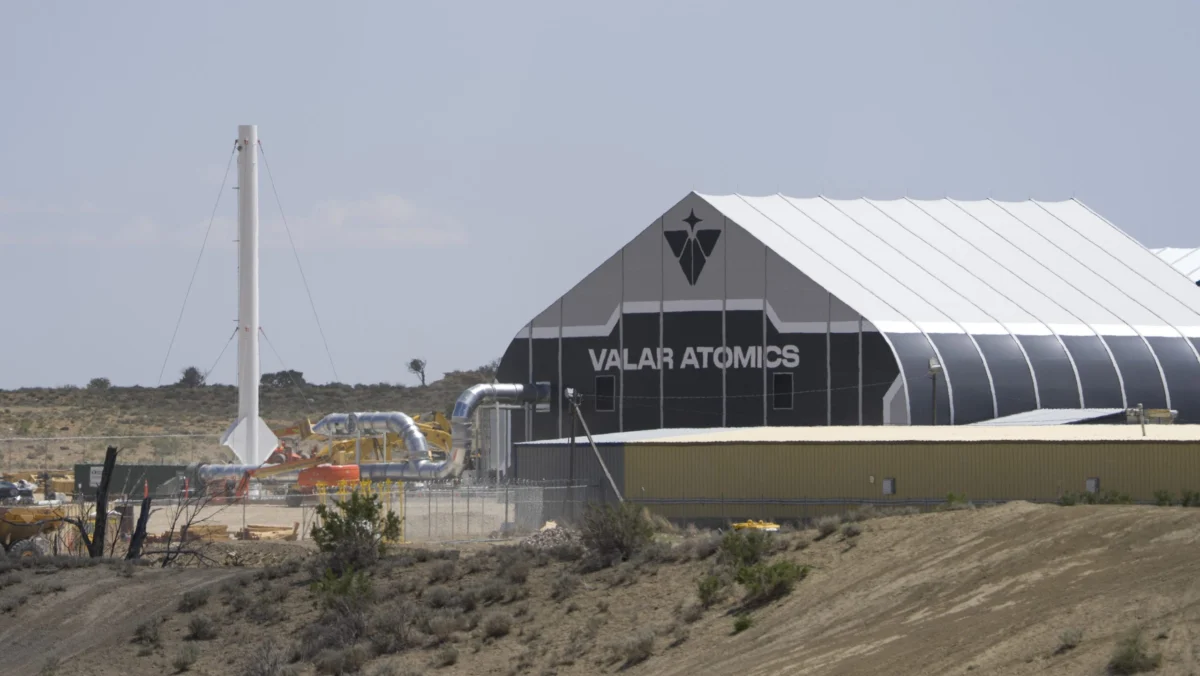
O’Neil, a vigilant observer who actively disseminates information on local community platforms, voices profound concern over the scale and proximity of these proposed developments. “They’re setting these things within a couple of miles of homes,” she asserts, highlighting a perceived disregard for residential areas. At the forefront of these ambitious plans is Valar Atomics, a nuclear startup proposing an unprecedented mega-complex known as “Project Beehive.” This colossal endeavor envisions an array of 456 small modular reactors (SMRs) on vast tracts of Bureau of Land Management land, alongside a square mile of state-owned trust lands. SMRs represent a relatively nascent and largely unproven technology for commercial deployment in the United States, promising smaller footprints and modular construction but still facing significant regulatory and public acceptance hurdles. According to reports, the project would not only power an extensive network of data centers but also include facilities for radioactive waste storage, uranium TRISO-fuel processing, water desalination, steel manufacturing, and critical mineral refining, transforming a rural landscape into a multi-faceted industrial hub.
Adding to the complexity is Altigen Energy’s “Jurassic Spark,” another planned data center complex slated to span hundreds of acres in Carbon County, initially powered by a substantial natural gas plant. This dual approach to energy—one deeply innovative and speculative, the other reliant on a fossil fuel often lauded as a "bridge" but increasingly scrutinized for its environmental footprint—underscores the intense pressure on regions like Carbon County to reinvent their economies. The county’s historical reliance on coal peaked in 2006, yielding nearly 10 million tons. However, the global shift towards cheaper energy sources, including renewables and natural gas, coupled with the depletion of local coal seams, dramatically reshaped the region’s economic landscape. Since 2023, Carbon County’s mines have ceased all coal production, leaving a void that local officials are desperate to fill.

“They say everything’s left us, and if we don’t grab these table scraps we’re not going to get anything,” O’Neil laments, encapsulating the sentiment of a community grappling with economic precarity. “I don’t think our county has to take the table scraps.” The state of Utah, through its Trust Lands Administration, has shown strong support for Valar Atomics, agreeing to a lease that could generate $35 million in rents over 50 years, earmarked for the benefit of Utah schools. This financial incentive is a powerful driver for state and local officials. During a recent board meeting, three Carbon County residents employed or anticipating employment with Valar, along with all three county commissioners, voiced enthusiastic support for “Project Beehive.” Commissioner Larry Jensen acknowledged the controversy surrounding data centers and nuclear projects but asserted that the commission represents the "silent majority" in pushing these initiatives forward, despite anticipated "pushback from a few."
This assertion, however, faces fierce challenge from local residents. Cheryl Lupo, a long-time county resident and unaffiliated candidate for the county commission, strongly refutes the notion of a "silent majority" in favor of these projects. Her campaign, which required collecting 300 signatures, revealed an overwhelming sentiment of opposition among her neighbors. “People are up in arms,” Lupo declares, describing a deep-seated frustration. “Torches and pitchforks. Because they’re not being heard.”
The state’s embrace of Valar Atomics is not new. Earlier this year, Governor Spencer Cox and U.S. Senator John Curtis, among other high-ranking officials, welcomed Valar to Utah, facilitating the testing of its “Ward250” microreactor at the San Rafael Energy Lab in neighboring Emery County. In June, Valar announced a significant milestone: achieving “self-sustaining criticality,” a controlled fission chain reaction, a crucial step for nuclear power. The company has already partnered with tech giant Nvidia to power a 30-megawatt nuclear-powered AI data center in Emery County, signaling the rapid convergence of nuclear energy and the escalating demands of artificial intelligence.
The novelty of SMR technology raises questions, even among its proponents. Mike Nelson, chair of the Trust Lands Administration board, candidly admitted during a meeting that the deal with Valar involved uncharted territory. “We weren’t always sure what to ask about,” Nelson conceded, “and probably still aren’t sure of everything to ask about because this is a first, right?” This lack of comprehensive understanding highlights a broader challenge in regulating and integrating cutting-edge technologies into existing communities and environments.

For residents like Cheryl Lupo, the concerns are deeply personal, rooted in Utah’s troubled history with nuclear testing. She attributes the premature deaths of her mother, at 38, and her grandfather to the “downwind effects” of radioactive weapons tests conducted in nearby Nevada during the 1950s, a legacy that still casts a long shadow over the region. “I will never, ever be a proponent of nuclear,” Lupo states unequivocally, reflecting a widespread distrust born from past experiences.
Beyond the nuclear ambitions, Altigen Energy’s “Jurassic Spark” project presents its own set of environmental and community challenges. Located east of Wellington, this 1,200-acre development is nearly twice the size of the Valar campus. Initially, a 250-megawatt natural gas plant will power the complex, with plans to expand to a staggering 3 gigawatts of electricity—a figure that approaches the entire state of Utah’s current energy consumption of approximately 4 gigawatts. The escalating energy demands of modern data centers, particularly those supporting AI, have driven developers to increasingly rely on natural gas, as traditional utilities struggle to meet the intense power requirements.
Utah’s legislative landscape has facilitated this shift. Last year, the state passed SB 132, enabling private companies with energy demands exceeding 100 megawatts to construct their own self-contained generating stations. This legislation, intended to spur business development without straining the public grid, has inadvertently triggered a flurry of applications for new gas-fired power plants. However, natural gas, primarily composed of methane, is a potent greenhouse gas, contributing significantly to climate change and local air pollution.
Moreover, both nuclear and natural gas plants generate substantial waste heat. Robert Davies, a physics professor at Utah State University, notes that nuclear plants, being less efficient, can produce even more heat than natural gas facilities. This is particularly concerning for Carbon County, as the Wellington area lies within a valley, naturally concentrating any atmospheric impacts. Aspen Westenskow, a lifelong resident of Carbon and Emery counties, expresses apprehension about the "heat island" effect these data centers will create, compounded by the clearing of natural vegetation. “They go clear all this land, the brush, the trees. What helps cool the planet down? Not flat dirt.”

Water scarcity remains another critical concern in this arid region, where every drop is meticulously allocated. While Valar claims its SMRs will utilize closed-loop helium cooling, requiring minimal water, and data center developers assert they will employ similar low-demand closed-loop cooling systems, the sheer scale of the proposed industrial activities—including water desalination and manufacturing—raises questions about overall water consumption.
In response to growing public outcry, Carbon County issued a statement on July 3, acknowledging the community’s concerns but emphasizing the county’s dire economic reality following the coal industry’s decline. The statement highlighted that the downturn has shifted a greater property tax burden onto homeowners and existing businesses, making data centers an attractive proposition for their potential to inject much-needed revenue into tax rolls. The county also addressed questions surrounding non-disclosure agreements (NDAs), stating that such agreements are often essential to attract companies to explore projects in Carbon County. While it remains unclear if specific NDAs were signed with Altigen or Valar, such agreements are reportedly common for businesses engaging with the county, a fact corroborated by former planning commissioner Oran Stainbrook.
From her home on U.S. Highway 6, Cindy O’Neil views these practices with deep skepticism. “You shouldn’t be hiding what you and the company are going to bring to a community,” O’Neil asserts, echoing a sentiment of frustration over perceived lack of transparency. “And not tell the community until it’s too late and a done deal.” As Carbon County navigates this complex transition from fossil fuel extraction to high-tech energy and digital infrastructure, the balancing act between economic revitalization and environmental stewardship, transparency, and community well-being continues to spark intense debate, reflecting a microcosm of global challenges in the era of energy transition and digital expansion.