Rocky Gerung
On July 11, the Rio Grande, a vital artery for the American Southwest, dwindled to a trickle at a streamflow gauge situated approximately 18 miles upstream from Truth or Consequences, New Mexico. This seemingly localized event was deeply symbolic, as the very riverbed that ran dry was once submerged beneath the waters of Elephant Butte Reservoir, the state’s largest water storage facility and a critical lifeline for downstream agricultural communities. However, by the summer of 2026, a relentless two-decade drought had reduced Elephant Butte to a mere 1.7% of its colossal 652 billion-gallon capacity, transforming its expansive basin into a parched expanse of cracked mud that ultimately gave way to a dusty, barren riverbed. Yet, a dramatic reversal occurred by September, with the previously desiccated riverbed surging with over 3,000 cubic feet per second of water. This surge in the Rio Grande caused Elephant Butte Reservoir’s surface level to rise by several feet, triggering severe flooding in the fertile Lower Rio Grande Valley, an area renowned for its green chile cultivation, a consequence of record-breaking rainfall amplified by a Pacific hurricane.

This stark juxtaposition of extreme aridity followed by overwhelming deluge serves as a potent snapshot of the 2026 water year, which concluded on September 30. Across the vital Colorado River and Rio Grande watersheds, the year was characterized by a bewildering oscillation between intense drought conditions and unprecedented rainfall events that, in turn, fueled devastating wildfires only to be followed by catastrophic flash floods. The year’s pattern of one of the driest ten-month periods on record was bookended by periods of record-breaking precipitation.
The water year commenced with a significant downpour, particularly impacting the San Juan River Basin in southwestern Colorado, a primary source for one of the Colorado River’s most substantial tributaries. The lingering remnants of a tropical storm unleashed over six inches of rain within approximately 48 hours at Wolf Creek Pass, a location near the headwaters of both the San Juan and Rio Grande rivers. This deluge caused the San Juan River to swell dramatically, exceeding 8,000 cubic feet per second, breaching its banks, and inflicting considerable damage and disruption upon the town of Pagosa Springs. Crucially, this influx of water also elevated the surface elevation of Navajo Reservoir, situated on the Colorado-New Mexico border, by an impressive 50 feet.

Initially, this early season precipitation fostered optimism for the approaching winter months. The expectation was that such moisture, if falling as snow, would establish a substantial snowpack, providing essential resources for the ski industry and, more importantly, ensuring ample runoff during the following spring. This spring runoff is the lifeblood that prevents Lake Powell, the nation’s second-largest reservoir, from plummeting to critically low levels. However, contrary to these hopes, the winter of 2026 failed to deliver the expected snowfall, even during its coldest periods. When snow did fall, it often melted rapidly, sometimes before it even reached the ground.
A significant factor contributing to this phenomenon was the timing of the precipitation; the abundant rainfall arrived too early in the season to be converted into snow. However, the most influential element was the prevailing temperature. Data compiled by the National Oceanic and Atmospheric Administration indicates that the majority of the Western United States experienced its warmest autumn and winter on record. The only region to deviate from this trend was the Pacific Northwest, which recorded its second-warmest autumn and winter in 130 years of record-keeping. The cumulative effect was that even areas that received precipitation levels close to their historical averages and were not technically classified as being in drought nonetheless endured one of the most severe "snow droughts" in recorded history.

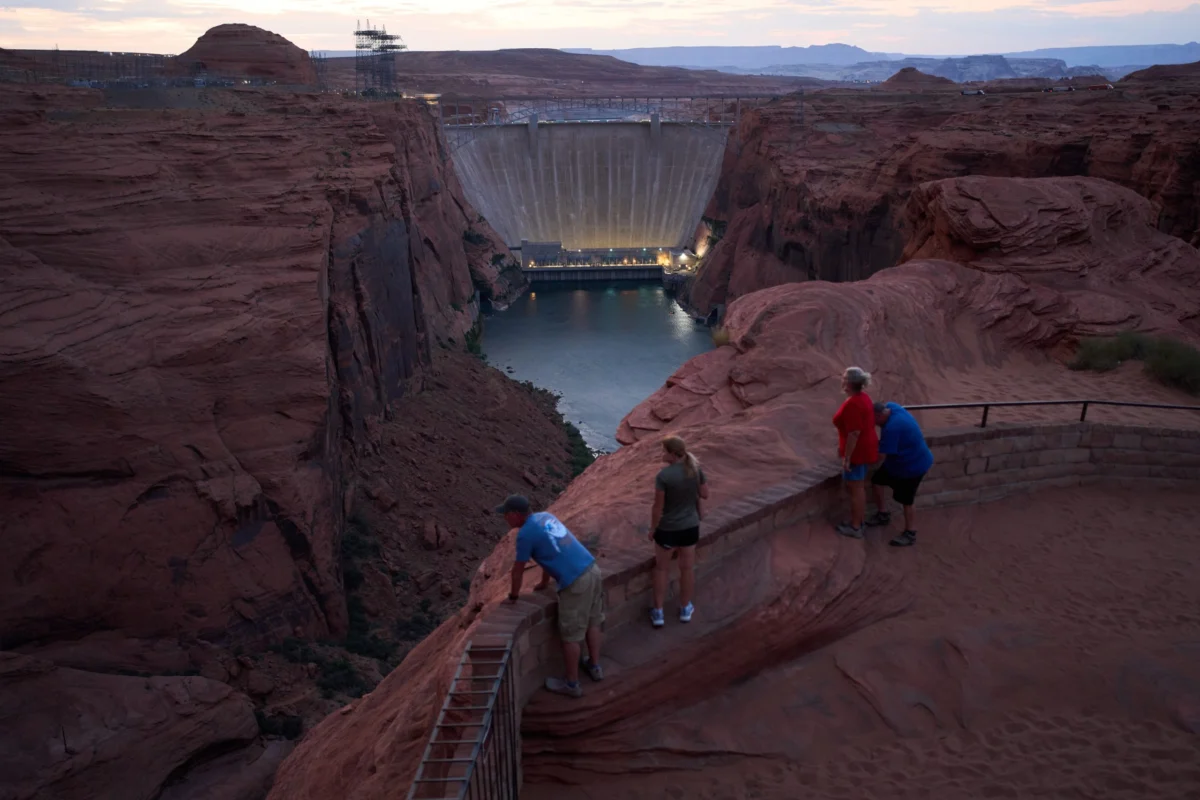
The hydrological systems of the American West – encompassing its streams, rivers, reservoirs, irrigation networks, and municipal water supplies – rely on snowmelt for at least 80% of their annual flow. A deficit in snowfall directly translates to diminished runoff, which, in turn, leads to the depletion of reservoir levels. By September, Lake Powell had reached its lowest point since the 1960s, a development that sent alarm bells across the region, impacting the tens of millions of people who depend on its water.
Droughts, including the less visible "snow droughts," are not an anomaly in the Western United States, nor are extreme weather fluctuations. However, the severity of the drought experienced in the 2026 water year stands out as one of the most profound in over a century. A comprehensive peer-reviewed study, released in the summer of 2026 by researchers at the Colorado School of Mines, concluded with a high degree of certainty that these extreme conditions were overwhelmingly attributable to human-induced climate change. The authors of the study found that, across the Western United States as a whole, the 2026 snow drought was approximately four times more probable in the current climate regime compared to the pre-industrial period of 1850-1900. In the Upper Colorado River Basin, the epicenter of the most severe drought conditions, these dire circumstances were found to be about 14 times more likely to occur in our present climate than in the era before significant industrialization.

This analysis does not suggest that severe snow droughts will become an annual occurrence from this point forward. However, it unequivocally underscores a broader trend: as global temperatures continue their upward trajectory, residents of the Western United States must increasingly prepare for a future characterized by more extreme, unpredictable, and often devastating weather events. This reality demands a fundamental reevaluation of water management strategies, infrastructure resilience, and societal adaptation to a changing climate. The stark contrast witnessed in the 2026 water year serves as a powerful and urgent reminder of the interconnectedness of our environment and the profound impact of global warming on regional water security and the very fabric of life in the West. The implications extend beyond agricultural output and urban water supplies, touching upon ecosystem health, biodiversity, and the economic stability of communities dependent on predictable natural cycles. The increasing frequency and intensity of such extreme weather events necessitate proactive policy development and a concerted global effort to mitigate greenhouse gas emissions to safeguard the future of water resources in this iconic region and beyond.