Rocky Gerung
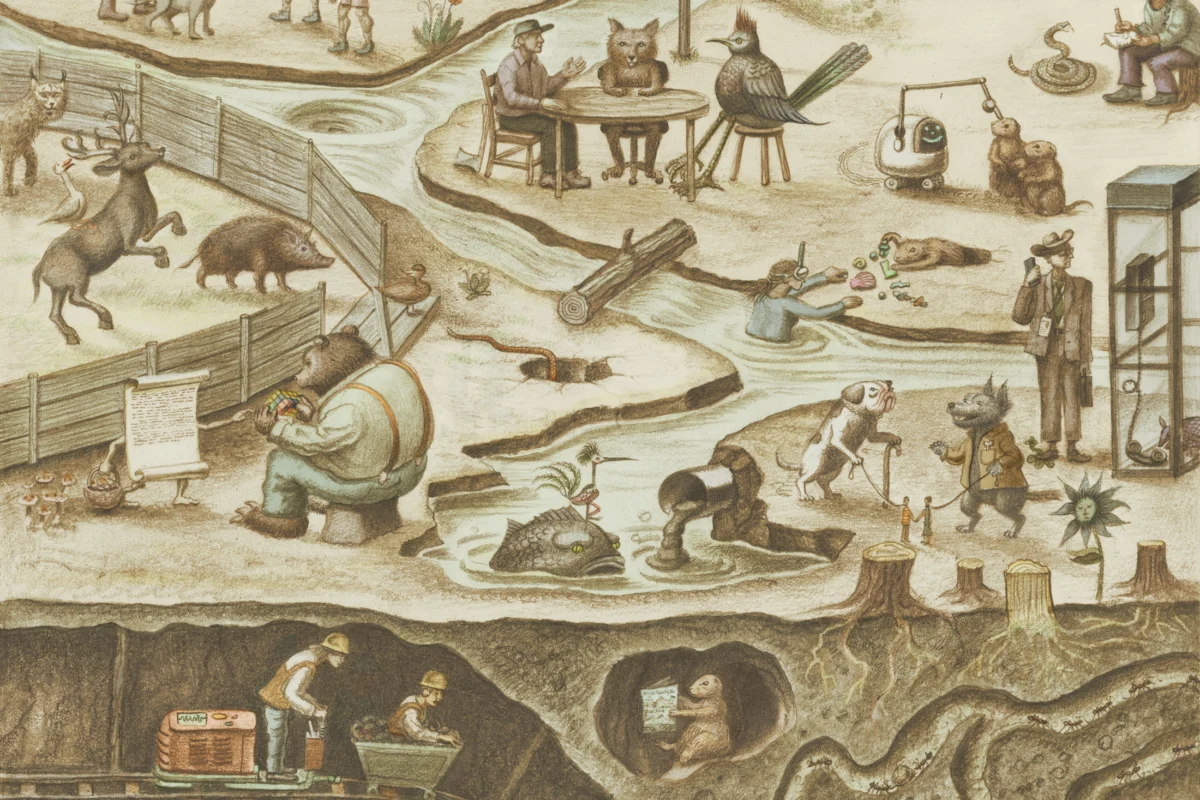
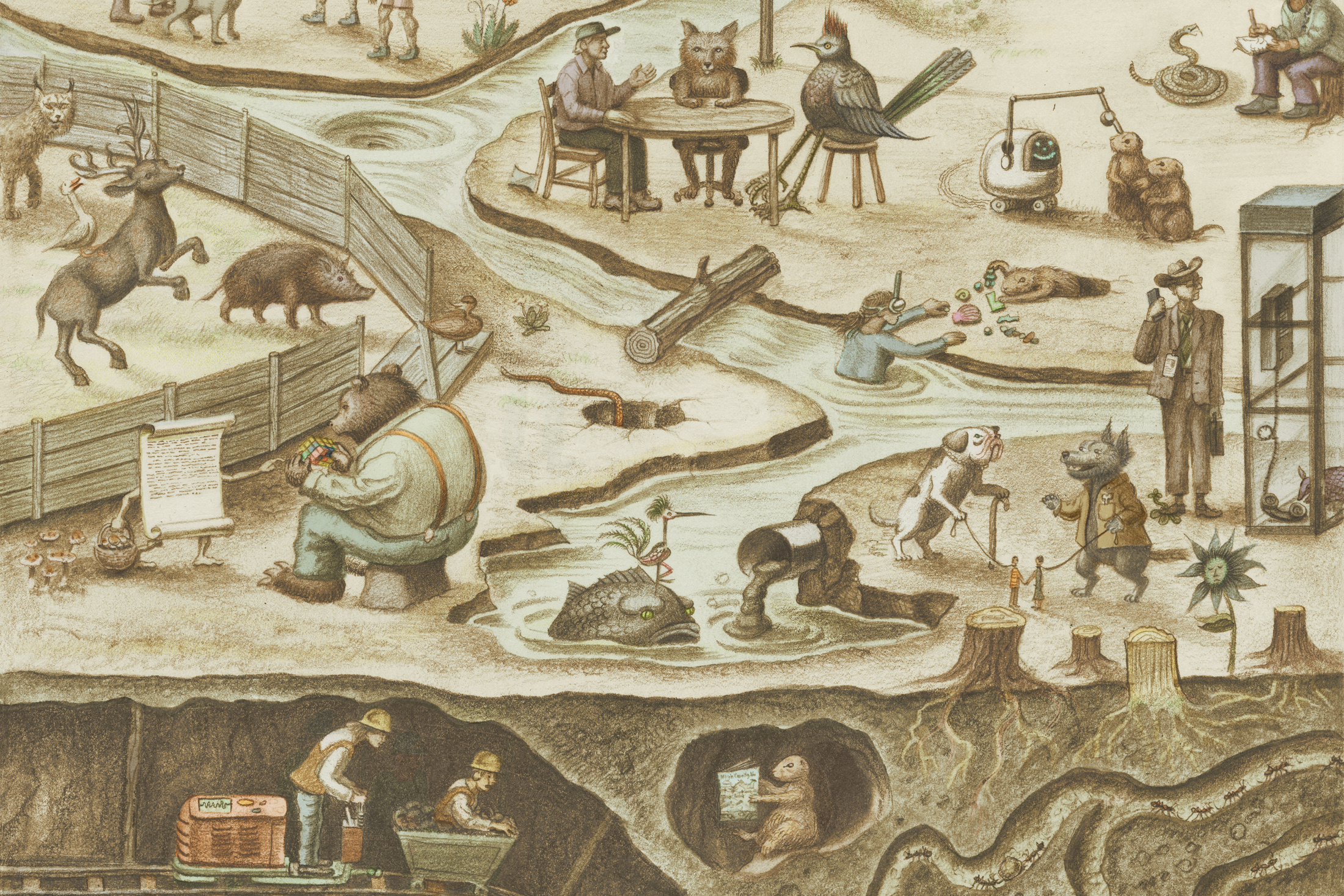
The challenge of visually representing the intricate tapestry of human communication was met with inspired artistry for a special August issue, culminating in a cover that masterfully embodies the complexities of dialogue. Former Visuals Editor Roberto "Bear" Guerra, recognizing the distinct talent of longtime contributor Armando Veve, identified him as the ideal artist to bring this vision to life. For years, Guerra and his colleagues had sought to feature Veve’s unique work on the magazine’s cover, and the theme of "Conversations" provided the perfect alignment, coinciding with Guerra’s final issue at the helm. Veve embraced the assignment with his signature enthusiasm and distinctive stylistic flair, crafting an image that portrays a whimsical array of improbable conversationalists engaged in tense yet amiable exchanges, while also artfully incorporating moments of convivial silence to illustrate the winding nature of effective communication.
Based in Philadelphia, Pennsylvania, Veve’s artistic journey has seen him pass through Paonia, Colorado, the home of the magazine’s offices, a couple of years prior during a road trip that included a visit to a Telluride art gallery. His thoughtful responses about the cover art and his broader artistic philosophy offer a compelling glimpse into his creative process. Veve’s approach to art-making is deeply rooted in his meticulous process, where he primarily works in graphite on paper, a medium he cherishes for its immediacy and its profound connection to the act of writing. He often conceptualizes drawing as a visual form of writing, translating thoughts and ideas into pictorial language. His drawings are built up in sedimentary layers, beginning with graphite, followed by watercolor, and then colored pencil, although for this particular piece, digital coloring was employed due to time constraints, ensuring that even the digital elements remained hand-driven. The final integration of drawing and color, he explains, is ultimately realized on the printed page, which he regards as the definitive artwork in the context of publications like magazines and newspapers.
Inspiration for Veve is not a passive occurrence but an active pursuit, integral to his daily life and his very being. Drawing serves as his primary method for processing the world, a means to center himself amidst chaos, to give form to his inner thoughts, and to meticulously sift through them for elements of lasting value. He is perpetually seeking inspiration, striving to heighten his awareness of his surroundings and to discover details that might otherwise escape notice. In a conscious effort to engage more deeply with the physical world, he is actively reducing his reliance on screens and prioritizing more direct interaction with people. Long walks are a regular part of his routine, serving not only as opportunities for photography but also as crucial periods for mental spaciousness and physical invigoration. More recently, Veve has found himself leaning more heavily on memory rather than solely on reference materials, a shift he describes as invigorating and one that has unlocked new creative possibilities on the page. Drawing, for him, is a conduit to remain in dialogue with both the past and the future, fostering closer observation and novel ways of thinking, but it also fulfills a more primal urge, akin to scratching an itch—a process of peeling back layers, digging deeper in search of symbolic meaning or an unfolding narrative.
Veve’s tenure collaborating on monthly illustrations for the "Heard Around the West" column for several years has clearly infused his work with a recognizable spirit, and astute readers may well identify familiar characters within his latest creation. He fondly recalls his time illustrating for the "Heard" section, highlighting the peculiar and often humorous stories curated by Tiffany Midge, such as the individual who propelled a peanut up a mountain with his nose or the canine named Ghost who famously fled his home to live among coyotes. Indeed, upon closer inspection of the cover art, one can spot "easter eggs" from the column, including Bo the Bear and Ghost, characters who first graced its pages. Veve expresses a particular fondness for remixing older pieces and forging connective threads between them, breathing new life into recycled motifs and characters. He even notes that his cat makes frequent appearances in his work, a subtle detail for observant viewers. He perceives all his creations as part of a single, evolving world, where each new story provides fresh subject matter and thematic avenues, yet all orbit a shared source of creative energy.
His visual vocabulary, comprising objects, symbols, and motifs employed to convey ideas, functions much like characters in a play, appearing when they best serve the concept or sometimes simply out of a desire for an internal joke. He is especially drawn to characters that feel out of place, those plucked from their original contexts, which allows him to explore the theme of displacement and defamiliarize the familiar. This inclination stems from a surrealist impulse, as he views fragmentation and cross-pollination as more apt metaphors for the world as he understands it.
The development of Veve’s distinctive style, characterized by its unique blend of humor and whimsy, is a fascinating journey rooted in early fascinations. Since his first encounter with Disney’s Snow White and the Seven Dwarfs and the comics scattered around his childhood home, he has been captivated by images that tell stories. As a child, he found immense joy in I Spy books and in constructing elaborate, albeit perilous, virtual mansions in The Sims, experiences that fostered a sense of discovery and empowered him to build his own narratives. This participatory aspect, where the viewer navigates the artwork and uncovers their own interpretations, resonates with him, much like the allure of maps and cross-sections, which, in his view, vividly illustrate the interconnectedness of all things.
Veve’s artistic process involves revisiting and building upon works in layers, editing and refining them much like a writer meticulously prunes a draft. He appreciates the peculiar stillness inherent in a drawing, finding it almost an act of defiance against the relentless pace of contemporary life. The dedication of significant time to a single subject, making marks with the elemental stroke of a pencil, feels profoundly elemental, a direct connection to the earth through graphite and cedar. This practice situates his work within a long and venerable tradition of art made by human hands, a tradition he feels is increasingly under threat from artificial intelligence and commercial pressures, tracing its lineage back to the earliest cave paintings, illuminated manuscripts, WPA murals, and the imaginative worlds of pulp science fiction.
He describes "style" as a complex term, one that often overemphasizes surface. For him, style is more akin to a solidified voice, comparable to speech patterns or the way one walks, reflecting a unique manner of understanding and processing the world. Humor is a vital component of his work; if an image elicits laughter, he typically pursues that impulse. Whimsy, he believes, is a potent force that encourages free association and disrupts familiar structures. The humor in his drawings often emerges organically from the natural interactions within the piece or from associations the viewer makes, rather than being a deliberate, pre-planned element, with the drawing serving as the vehicle for these moments.
For the cover art, the genesis of the idea stemmed from his contemplation of how to visually represent conversation. He found a powerful analogy in maps, literal representations of interconnected networks, which led him to envision a "landscape of conversation." This phrase became the driving concept for the entire piece. His research involved studying medieval paintings and maps, elements he admires for their stacked spatial arrangements and their ability to invite viewers on a journey of discovery within the image.
The most significant challenge in visually depicting conversation, Veve notes, lies in striking a delicate balance between inclusion and omission. He emphasizes the critical importance of negative space and moments of repose between visual elements, recognizing that, much like a good conversation, meaning is often built through periods of silence. His initial sketches, he admits, were too crowded and overwhelmingly "loud." To address this, he reduced the scale of elements and opened up the composition, creating literal pathways for the viewer to traverse and incorporating moments of quietude, such as the poignant image of a flower mourning severed stumps.
Among the characters populating the cover, Veve expresses a particular affection for the solitary prairie-chicken, finding its depicted expression of confusion to be a favorite moment. For those wishing to explore more of Armando Veve’s captivating artwork and stay updated on his latest projects, he can be found on Instagram at @armandoveve or through his website at armandoveve.com. News organizations are encouraged to republish quality news, essays, and feature stories for free under a Creative Commons license, fostering wider dissemination of impactful content.