Johny Prima

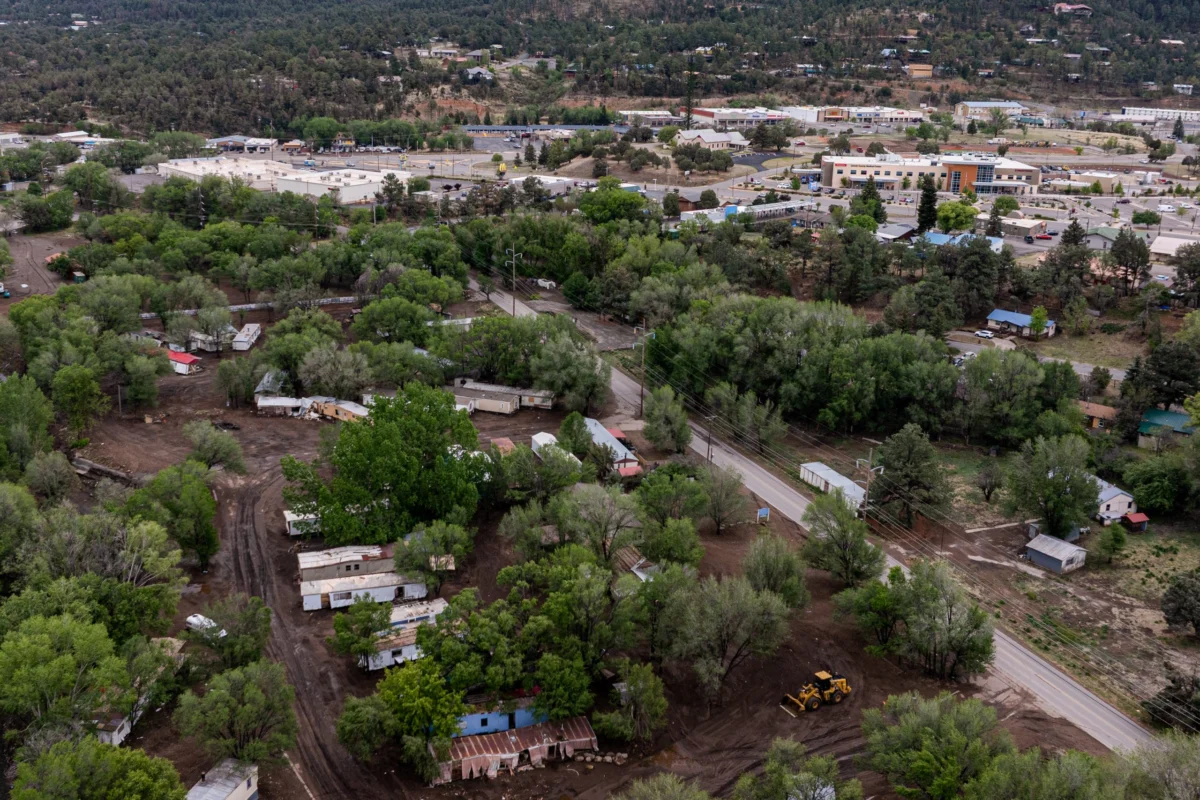
In 2024, a subsidiary of the prominent mining company Energy Fuels reignited its controversial plans to open the Roca Honda Uranium Mine in New Mexico, situated precariously close to Mount Taylor, a sacred landscape holding profound cultural and spiritual significance for over 30 distinct Native American nations, including the Navajo Nation, Acoma, Laguna, and Zuni Pueblos. This renewed push for extraction gained momentum after the company received expedited permitting under the previous Trump administration, a move that bypassed traditional environmental review processes. Now, in a crucial development in mid-September, the U.S. Forest Service has announced it will finally commence its analysis of the mine’s potential impacts, a process mandated under the National Environmental Policy Act (NEPA), a bedrock environmental law designed to ensure federal agencies consider the environmental consequences of their actions. This NEPA review is particularly vital as it necessitates robust tribal consultation, a fundamental mechanism for upholding sovereign Native nations’ inherent ability to safeguard their ancestral cultural landscapes, protect vulnerable wildlife, and preserve essential water resources.
However, the very foundation of this critical consultation and environmental oversight now stands on the precipice of dramatic alteration, driven by a sweeping legislative proposal known as the Bipartisan American Affordability and Jobs Act. This permitting reform bill, championed by a bipartisan group of Western senators including New Mexico’s Democratic Senator Martin Heinrich and Utah’s Republican Senator Mike Lee, is slated for a pivotal vote by the Senate Committee on Energy and Natural Resources shortly after Congress reconvenes on November 9. Proponents argue that the legislation is crucial for streamlining the approval process for a wide array of industrial projects on federal lands, from critical minerals mines and sprawling wind and solar energy arrays to data centers, oil and gas pipelines, and other essential infrastructure projects deemed vital for national energy security and economic growth. They contend that the current permitting framework is overly cumbersome and slow, hindering the rapid deployment of clean energy technologies necessary to combat climate change and maintain global competitiveness.
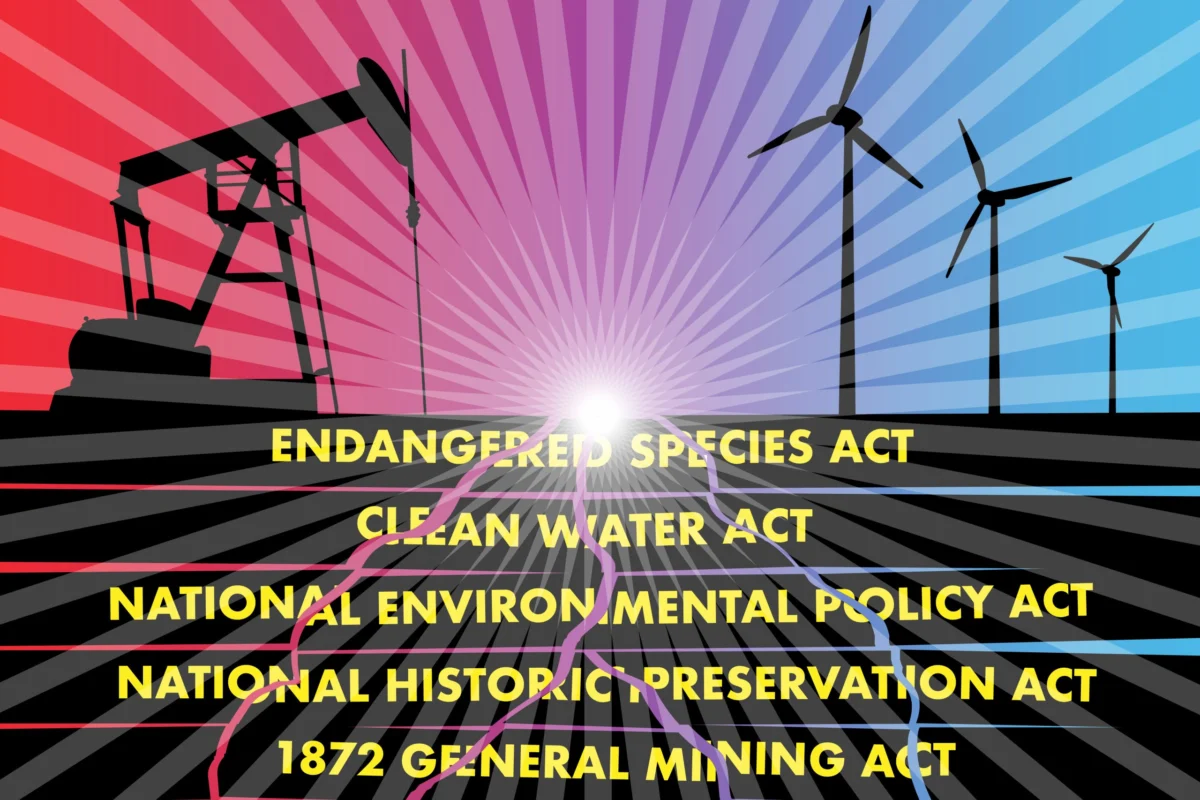
Yet, this legislative initiative has ignited a firestorm of opposition from Native American leaders and tribal organizations across the country, who vehemently argue that the proposed acceleration of development comes at an unacceptable cost to tribal sovereignty and environmental integrity. A central complaint is the glaring absence of meaningful consultation with tribal nations prior to the bill’s introduction, a profound oversight given the profound implications for their lands, cultures, and self-determination. The legislation is not merely a technical adjustment; it proposes extensive modifications that could severely weaken core environmental statutes well beyond NEPA, directly impacting the Endangered Species Act, the Clean Water Act, and crucially, the National Historic Preservation Act (NHPA), which is specifically designed to protect cultural resources.
Mount Taylor in New Mexico, a peak revered as a sacred mountain by numerous pueblos and the Navajo Nation, along with the expansive and archaeologically rich greater Chaco landscape spanning Colorado, Arizona, and Utah, are just two prominent examples of the countless culturally significant areas that would be imperiled by such legislation. These landscapes, often situated outside reservation boundaries, are protected primarily through federal laws that mandate a voice for tribal nations in federal land management decisions. "Many of these places are outside our reservations. Federal law is how we have a voice when a mine, a pipeline or a transmission line is proposed that impacts our cultural resources, our sacred sites and our communities directly," articulated Acoma Pueblo Gov. Charles Riley at a national conference of tribal leaders in October. He starkly warned that "This bill would take away most of that."

Should the proposed legislation pass in its current form, a federal agency could gain the discretionary power to bypass consultation with tribal nations regarding cultural sites at risk of damage from projects like the Roca Honda Mine. While the Acoma Pueblo, following a settlement that involved significant concessions and project alterations by the company, does not oppose the Roca Honda project, the Navajo Nation and Isleta Pueblo maintain their strong opposition, underscoring the diverse impacts and responses within Indigenous communities. The bill further proposes drastically shortened timelines for reviewing complex environmental and cultural impact documents, compressing processes that often require extensive research and community engagement. Moreover, federal agencies would be restricted to considering only the direct impacts of mining activities on federal land, even if a project, like Roca Honda, extends across state and private lands, thereby fragmenting environmental review and potentially overlooking broader ecological and cultural consequences. Collectively, these provisions threaten to significantly distance tribes from federal decision-making processes on their ancestral lands and severely limit their legal avenues should a proposed project infringe upon their inherent rights and resources.
The gravity of the situation resonated deeply within the National Congress of American Indians (NCAI) conference, where Mark Macarro (Pechanga), the organization’s president, declared, "This is one of those extreme, existential threats that’s in front of us right now." He issued a clear ultimatum: if senators fail to enact substantial changes to the bill before the November vote, "this bill needs to be killed." The core of tribal leaders’ alarm revolves around the extensive proposed alterations to Section 106 of the National Historic Preservation Act (NHPA). This vital section currently mandates that federal agencies consult with a tribe whenever a proposed project could potentially impact a cultural site. The suggested changes are far-reaching and deeply concerning: tribal consultation would transform from a mandatory requirement into an optional exercise, the very scope of what constitutes an impact triggering consultation would be drastically narrowed, and critically, cultural sites not formally identified before a review process commences would no longer necessitate consideration. This effectively places the onus on often under-resourced tribal communities to pre-emptively identify every potential site on vast federal lands, a near-impossible task.
"This is a direct assault on tribal sovereignty," asserted Ira Matt (Séliš), executive director for Indigenous Diplomacy and Federal Relations for the National Association of Tribal Historic Preservation Officers (NATHPO). NATHPO, in collaboration with the NCAI and other leading Indigenous organizations, has unequivocally called for the complete removal of the NHPA section from the bill. Matt elaborated that the proposed legislation would fundamentally restrict how tribes define and protect their invaluable cultural heritage, undermining their inherent rights to actively participate in decisions that will profoundly shape their histories and futures. He further criticized the bill for "plac[ing] wholly unqualified federal agencies in the position of making decisions about our sacred places while threatening to assume control over tribal preservation programs developed to reflect each tribal nation’s unique knowledge and lifeways." Matt concluded with a stark warning: "These are not simply changes to a permitting process. They are deliberate attempts to undermine tribal self-determination."
Wesley Furlong, a senior staff attorney at the Native American Rights Fund (NARF) specializing in Section 106 reviews, described the current process as "one of the most powerful tools" tribes possess to inform federal decision-making. Annually, state and tribal staff conduct hundreds of thousands of Section 106 reviews, many concluding without necessitating project changes. However, these reviews provide invaluable opportunities for tribes to educate federal agencies about potential damage to sacred sites and cultural landscapes, many of which remain entirely unknown to federal authorities. Even with a review, protection is not guaranteed, and tribes cannot expect a specific outcome, but it ensures their voice is heard. Furlong characterized the proposed bill’s Section 106 provisions as a "total dumpster fire and an absolute hatchet job," strongly suggesting a profound unfamiliarity with tribal consultation processes. He emphasized that Native nations are being "forced to take the brunt of this ‘compromise.’ It’s permitting reform at the expense of Indian County, tribal rights, and tribal resources."
The critical importance – and occasional inadequacy – of Section 106 for tribal nations was vividly demonstrated during the permitting process for the 550-mile-long SunZia Southwest Transmission Project. This ambitious undertaking aims to funnel wind energy from New Mexico to California. In 2024, tribal nations initiated legal action, citing a severe lack of proper consultation. Courts subsequently sided with the tribes, compelling the Bureau of Land Management to redo the consultation for portions of the project, particularly enabling tribes to mitigate potential harm to irreplaceable cultural sites in Arizona’s San Pedro Valley, despite much of the transmission line already having been constructed.

Tribal advocates further express deep concern that the bill, as currently drafted, could severely limit federal agencies’ consideration of Indigenous knowledge by altering the definitions of information agencies are mandated to consider under the Endangered Species Act. The legislation also proposes shortening public comment timelines, thereby reducing opportunities for thorough review and input from communities and experts. Critically, it could curtail tribes’ ability to pursue NEPA violations through the courts, a vital recourse for ensuring accountability. Furthermore, the bill lessens federal agencies’ mandate to incorporate the most relevant scientific information into their decision-making processes. This could have tangible, detrimental effects on the ground; for instance, the Forest Service might not be required to incorporate any new research published after it commenced its environmental impact statement for the Roca Honda Mine, potentially overlooking crucial data on environmental risks or cultural impacts.
Daniel Cordalis (Navajo Nation), a staff attorney at the Native American Rights Fund focusing on tribal water rights, highlighted that tribes frequently need to introduce their own data and information about a project’s potential impacts after federal analysis has already begun. He recalled his work on the Klamath River, where tribal nations were compelled to challenge federal data governing water flow, which directly impacted the survival of salmon populations vital to their cultures and economies. Across the Western U.S., tribes possess unparalleled expertise in fisheries science, forestry, and hydrology, often deploying their own highly skilled scientists whose data may diverge significantly from federal government assessments. "Tribes often have the best scientists doing a lot of this work," Cordalis affirmed. Yet, rather than acknowledging and integrating tribes’ profound knowledge and rigorous scientific research, the bill offers no "recognition of the role of another sovereign government whose rights and resources may be at stake."
These proposed changes collectively signify that tribal nations risk being inadequately included or even entirely excluded from decision-making processes concerning large-scale federal projects. Moreover, a provision within the legislation termed "project certainty" would significantly impede the federal government’s capacity to modify or revoke a permit once a mine, solar array, or wind project has secured one. This provision directly contrasts with recent historical precedents, such as the Biden administration’s decision in 2021 to halt the controversial Keystone XL pipeline, which had been permitted under the first Trump administration despite widespread objections from numerous Native nations. Similarly, the Trump administration had previously sought to impede Biden-era offshore wind projects, illustrating the political volatility surrounding large infrastructure permits.
As of early November, tribal leaders, alongside a broad coalition of environmental, archaeological, and community organizations, continue their fervent efforts to compel changes to the bill, actively encouraging concerned citizens to contact their senators and voice their opposition before the critical Senate vote on November 9. In an emailed statement, a spokesperson for Senator Heinrich maintained that the senator believes the bill, as written, does not harm tribal consultation. The spokesperson asserted that the legislation "defends against the Trump administration’s efforts to make all Tribal consultation discretionary and eliminate consultation altogether on cultural landscapes. All of this means stronger Tribal consultation protections, lower utility bills, more good-paying jobs, and a path toward unlocking our clean energy future." However, this perspective clashes sharply with the overwhelming consensus among tribal leaders and legal experts. Cordalis underscored that Native nations already possess a limited number of legal instruments to protect their ancestral lands, culturally important wildlife, and precious water resources. He warned that the proposed legislation systematically chips away at every one of these vital protections, concluding, "The positive and the real good things that tribes have been able to protect over the years — probably wouldn’t be able to have been protected under this."