Roger Danuarta
The vast, untamed expanses of the American West, from the towering peaks of the Rockies to the ancient forests of Alaska, owe an immeasurable debt to a rare breed of advocate: the community-based wilderness organizer. In an era increasingly dominated by corporate agribusiness and centralized political lobbying, this hands-on, face-to-face approach to conservation remains vital yet perilously endangered, mirroring the decline of the family farmer. Among the most influential and beloved figures in this crucial field over the past half-century stands Bart Koehler, a man whose tireless dedication has secured protection for millions of acres across the Western United States, and who now confronts his own formidable challenge against Parkinson’s disease.
Koehler’s journey into the heart of wildland advocacy began in the 1970s, a pivotal decade for environmental consciousness, when he joined The Wilderness Society as its Wyoming representative. This was no easy posting; Wyoming, a state deeply rooted in resource extraction and fiercely protective of its economic mainstays in mining, oil, gas, and timber, presented a formidable political landscape. The state legislature had, in a move unique to its independent spirit, passed resolutions explicitly opposing any new wilderness designations, and remains the only state where federal law prohibits the president from unilaterally establishing new national monuments. Such a climate might have deterred lesser individuals, but Koehler was undaunted. He recognized that true conservation success would not come from Washington D.C. alone, but from the very people who lived and worked on the land.
His methodology was decidedly old-fashioned, yet profoundly effective: direct, personal engagement. Koehler didn’t just advocate for more wilderness areas; he worked to deepen the protection of existing ones, challenging the limitations of the 1964 Wilderness Act which, while groundbreaking, still allowed for certain resource extraction activities within designated areas. He traveled extensively, meeting individuals in their homes, at community halls, and around kitchen tables, fostering relationships built on trust and mutual understanding. During these formative years, the author, then a field editor for High Country News and later with the Sierra Club, quickly forged a bond with Koehler, marveling at his encyclopedic knowledge of both the intricate landscapes he sought to protect and the complex legal frameworks governing them. More importantly, he possessed an uncanny ability to connect with people from all walks of life, translating abstract conservation ideals into tangible benefits for local communities.
A significant hurdle for wilderness advocates has always been overcoming entrenched misconceptions among rural populations, particularly ranchers and outfitters, who often viewed wilderness designations as an existential threat to their livelihoods. Many feared that such protections would mean an end to their traditional grazing rights or the cessation of hunting activities. Koehler meticulously debunked these myths, patiently explaining that the Wilderness Act, in fact, guaranteed the continuation of these established uses. He refocused their concerns, skillfully redirecting their anxieties towards the true threats to their way of life: the encroaching industrialization of the landscape through large-scale mines, expansive oil and gas fields, and destructive clear-cut logging operations. By demonstrating a shared interest in preserving healthy, intact ecosystems, he forged unlikely alliances that transcended traditional political divides, building a broad base of local support for wilderness.
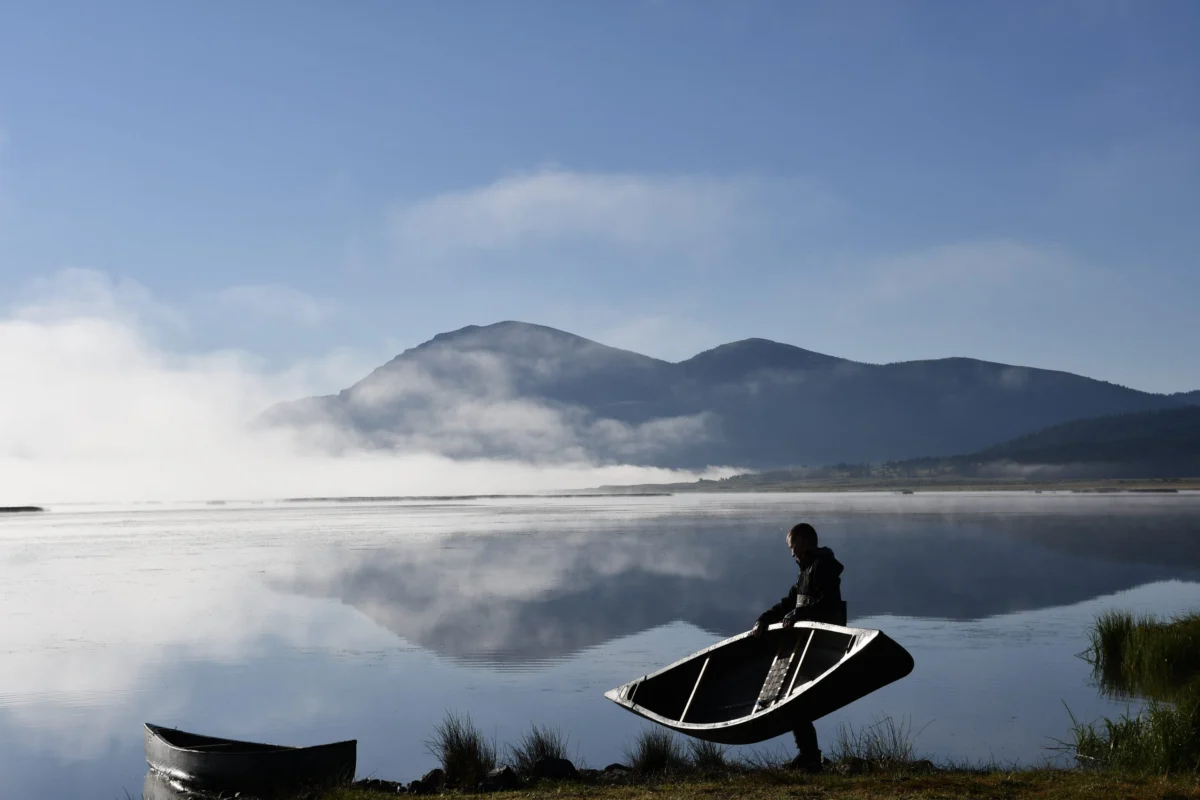
Koehler’s approach was not merely strategic; it was deeply human and often infused with a playful spirit. His frequent stops at the author’s log cabin home, where he would help the children build their treehouse before evenings filled with singing and guitar strumming, exemplified his ability to integrate his advocacy into the fabric of daily life. These personal connections were the bedrock of his organizing. Public-lands hearings, often contentious forums, were transformed by the presence of the diverse, newly inspired wilderness supporters Koehler had cultivated and trained. He brought a lightness to serious campaigns, evident in the formation of "The Strip Mine Patriots," a band he created to rally support against coal extraction. Another memorable event was a whimsical boat race on the Snake River through Grand Teton National Park, where the winner was the last one to cross the finish line, emphasizing slow appreciation over speed. The celebration at the finish line, featuring cookies from Mardy Murie, the revered octogenarian "grande dame" of wilderness protection, and a reading from Dr. Seuss’s ecological fable The Lorax, perfectly encapsulated Koehler’s unique blend of joy, community, and unwavering environmental commitment.

The late 1970s marked a significant shift within the mainstream environmental movement. In 1978, The Wilderness Society, like many other national organizations, began centralizing its operations, shuttering its Western field offices to focus on lobbying and policy analysis in Washington D.C. This strategic pivot, aimed at influencing federal legislation directly, inadvertently created a void for grassroots advocacy. Bart Koehler and other laid-off Wilderness Society staff members saw this not as an end, but as a renewed call to action. They banded together, channeling their collective experience and passion into building state-level groups that would keep grassroots wilderness advocacy alive and locally driven. This period saw the flourishing of organizations like the Wyoming Wilderness Association, the Nevada Wilderness Association, the Utah Wilderness Association, and the California Wilderness Coalition, each rooted in its specific regional challenges and opportunities.
From this fertile ground of localized activism emerged a more radical response to perceived compromises by established D.C.-based groups. Bart Koehler, alongside figures like Dave Foreman, another former Wilderness Society organizer, became a founding voice of Earth First! This new movement, launched with the uncompromising motto, "No Compromise in Defense of Mother Earth!", sought to push the boundaries of environmental activism, challenging the conventional wisdom that incremental gains were sufficient. While Foreman often served as the primary public speaker and rabble-rouser, Koehler embraced the role of movement troubadour, adopting the moniker "Johnny Sagebrush." He became the musical heart of Earth First!, leading crowds and campfire circles in original songs that powerfully articulated the urgency of wilderness protection, lamented its destruction, and celebrated the profound joys of wild country. His melodies and lyrics became anthems for a generation of environmentalists, echoing across protest sites and remote wilderness camps, solidifying his role as a cultural icon within the movement.
Koehler’s influence extended far beyond the continental Western U.S. In later years, he led the Southeast Alaska Conservation Council, a testament to his adaptability and the universal applicability of his community-organizing principles. There, he worked to unite diverse stakeholders—Native Alaskans, rural residents, and commercial salmon fishermen—in a concerted effort to halt the relentless overcutting on the Tongass National Forest. The Tongass, the largest national forest in the United States and the world’s largest intact temperate rainforest, is a global ecological treasure, vital for biodiversity and indigenous cultures. Koehler’s success in mobilizing these disparate groups against powerful timber interests underscored his enduring ability to find common ground in the face of environmental threats. Subsequently, he served as a director of the Wilderness Support Center, an organization dedicated to empowering local communities, particularly those in areas historically resistant to federal land protections, to champion wildland preservation. This role allowed him to disseminate his decades of experience and wisdom, nurturing a new generation of grassroots organizers.
In recent years, the physical demands of relentless travel, hiking, canoeing, and face-to-face organizing have become increasingly challenging for Bart Koehler, as he grapples with Parkinson’s disease. While his physical condition necessitated stepping back from full-time work, his commitment to the cause has never wavered. Now residing in a care facility in Arizona, his fingers may no longer possess the dexterity to strum a guitar, yet his spirit for music and community endures; he joins fellow musicians, beating a drum to keep the rhythm alive. His devoted wife, Julie, remains by his side, and a steady stream of well-wishers and heartfelt notes of appreciation continue to flow, a testament to the profound impact he has had on countless lives and landscapes.
Bart Koehler’s legacy is not merely measured in the millions of acres he helped protect, but in the powerful, enduring community he inspired and empowered. His life’s work serves as a compelling reminder that the most impactful conservation often begins at the local level, forged through personal connections, unwavering resolve, and a deep love for the land. In an era where global biodiversity faces unprecedented threats, the model of the community-based wilderness organizer, championed and embodied by Bart Koehler, remains an indispensable blueprint for safeguarding our planet’s irreplaceable wild places for generations to come.