Rocky Gerung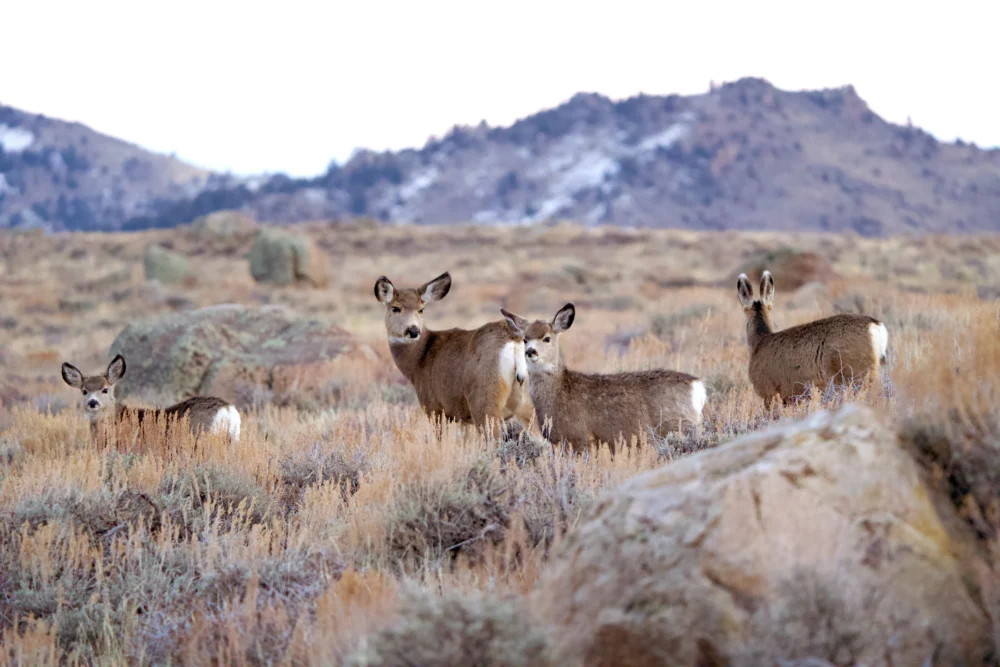
Each winter, thousands of mule deer navigate the expansive, sagebrush-covered terrain of southwest Wyoming’s Red Desert, a harsh yet essential habitat. As spring arrives, a portion of the Sublette herd remains in their wintering grounds, a behavior passed down through generations. Others venture approximately 70 miles into the nearby foothills, while a significant segment embarks on a remarkable journey, traveling up to 150 miles into higher mountain elevations in search of more abundant and nutritious forage. This ambitious migration, a cornerstone of their survival strategy, has now been definitively linked to increased fat reserves, enhanced reproductive success, and longer lifespans, according to a groundbreaking study by researchers at the University of Wyoming and the Wyoming Game and Fish Department.
The findings, published in the journal Current Biology, highlight the critical role of long-distance migrants as the "engine" for the entire mule deer population. "If you sever that migration, you will have far fewer animals," stated Anna Ortega, the lead author of the study. This conclusion stems from an ambitious, nearly decade-long research initiative that involved capturing and studying hundreds of deer seasonally, employing helicopters for access to remote areas. Scientists meticulously measured fat levels, assessed pregnancy rates, and tracked fawn survival to provide irrefutable scientific evidence supporting the long-held regional understanding of the importance of these epic journeys.
The study categorized deer into three groups based on their migratory distances: short-distance migrants (less than 50 km), moderate-distance migrants (50-150 km), and long-distance migrants (over 150 km). While all three strategies were likely employed by the herd in the past, the current environmental realities, particularly a hotter and drier climate, are favoring those that undertake the most extensive migrations. These long-distance travelers are adept at "surfing the green wave," a phenomenon where they follow the progression of nutrient-rich vegetation as it emerges and ascends into the mountains throughout spring and summer. This strategy allows them to access high-protein food sources that are crucial for building substantial fat reserves.

Brandon Scurlock, a Wyoming Game and Fish wildlife biologist who manages the Sublette herd and was not directly involved in the study, acknowledged the significant effort required to reach these scientific conclusions. He noted that while long-distance migration inherently involves risks, such as encounters with fences, vehicles, and predators, the study’s findings suggest these perils are outweighed by the benefits. "It seems like it is," Scurlock commented on whether the risks are worth the rewards.
The research team, led by Matt Kauffman, a U.S. Geological Survey researcher at the University of Wyoming’s Cooperative Fish and Wildlife Unit, meticulously documented these migratory patterns. Their work revealed that as the climate shifts, making desert environments less hospitable year-round due to reduced forage availability, the portion of the herd that remains in the desert is experiencing a decline. Projections suggest this sedentary group could disappear within the next 50 years. This underscores the escalating importance of the migratory segments of the population.
Unlike other ungulates such as elk or pronghorn, which can adjust their movements based on immediate food availability and weather conditions, mule deer exhibit a strong innate tendency to follow ancestral migratory routes. Kauffman explained, "Mule deer are really hard-wired. They’re not like, ‘How are conditions this year? Is this a good year to stay or go?’ They have a strategy and do the strategy." This inherent behavioral rigidity means that desert-dwelling mule deer are unlikely to spontaneously adopt long-distance migratory behaviors, making the preservation of existing migration corridors paramount.
The study’s findings have significant implications for wildlife management and conservation efforts. Ensuring the integrity of these migratory pathways is crucial for the continued survival of the Sublette mule deer herd. In 2020, a portion of the Sublette deer migration received some legal protection through an executive order. However, ongoing threats from development, including housing projects and oil and gas extraction, as well as infrastructure like highway crossings, continue to pose challenges.

Joey Faigl, co-founder and president of the Muley Fanatic Foundation, an organization dedicated to mule deer conservation in southwest Wyoming, emphasized the persistent need for advocacy. "There are so many things they face every year. It can either be housing or oil and gas or highway crossings," he stated. Faigl added, "There is always going to be something. And if people stop fighting for them, populations will continue to decline."
The research provides compelling evidence that maintaining unimpeded access to diverse habitats across varying elevations is not merely beneficial but essential for the long-term viability of mule deer populations facing the pressures of a changing climate. The success of the Sublette herd serves as a critical case study, illustrating how understanding and protecting complex migratory behaviors can be key to ensuring the survival of iconic species. The scientific validation of the long-distance migration strategy reinforces the need for collaborative conservation efforts that prioritize habitat connectivity and mitigate human-induced threats to these vital ecological corridors. The intricate relationship between migration, nutrition, reproduction, and survival demonstrated in this study offers valuable insights for wildlife managers and conservationists across the globe grappling with similar challenges in maintaining healthy wildlife populations in an increasingly fragmented and unpredictable world. The study’s detailed mapping of migration routes and the clear correlation between distance traveled and individual deer health provide a strong scientific basis for land-use planning and policy decisions aimed at safeguarding these crucial natural processes.