Roger Danuarta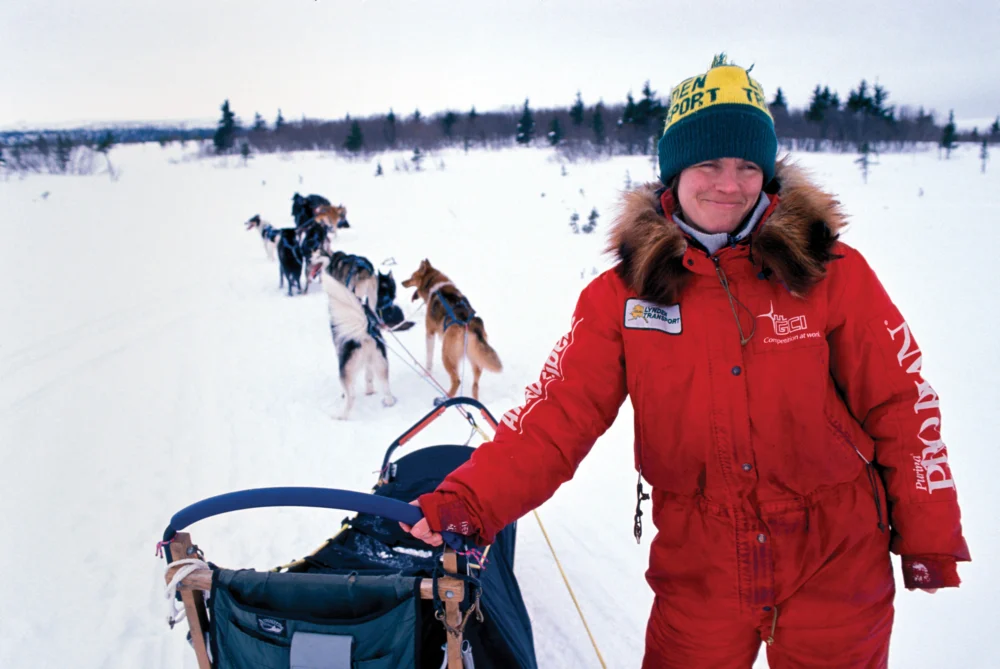
The air in the Unalakleet lodge hung heavy with the inviting scent of sizzling burgers and the owner’s signature freshly cut French fries, a comforting warmth radiating from the wood stove as a crowd pulsed with energy. In this remote Alaskan outpost, deep in the heart of the unforgiving Iditarod Trail, one individual commanded the room, a magnetic force drawing every eye and vying for every moment of her precious time. Her team of powerful sled dogs and their intricate sled, still waiting outside for transport to her host family’s yard, were a testament to the incredible journey she was undertaking. Amidst the buzz, a ten-year-old stood dwarfed by the adults, chin tucked to chest, breathing shallow, casting furtive glances at the icon before her. She spoke, answered questions, and laughed, yet the words were lost to the overwhelming awe and a profound, uncharacteristic shyness that felt akin to standing before a deity.
This indelible memory etched itself into the mind of a young girl in the late 1980s, a pivotal moment during the annual Iditarod Trail Sled Dog Race, often dubbed "The Last Great Race on Earth." My father, after much pleading, had finally brought me on his blue Indy snowmachine to Brown’s Lodge, a rustic log cabin, burger joint, and boarding house owned by his cousin, which served as the crucial Iditarod checkpoint in Unalakleet. The race, by then, had captivated national attention, drawing media personalities like sportscaster Pat O’Brien, who famously signed my aunt’s red Honda three-wheeler. But it was the woman at the epicenter of the lodge’s excitement who truly held the power of inspiration: musher Susan Butcher, a figure of legendary status even then.
That very day, after her brief respite in Unalakleet, Butcher would continue her relentless journey across the frozen Alaskan wilderness to the finish line in Nome, where she would achieve an unprecedented feat: her third consecutive Iditarod championship. Two years later, she would secure a fourth victory, cementing her place in history as one of only two mushers at the time to claim four career titles. She was not merely a champion; she was a cultural phenomenon, a woman who dared to dominate a sport long considered the exclusive domain of men. Her remarkable success, alongside fellow champion Libby Riddles, inspired a now-iconic sweatshirt proclaiming: "Alaska… WHERE MEN ARE MEN and Women win the Iditarod."

During those formative years, I absorbed the world more through observation and listening than through speaking. I understood, even then, that not all men in our community celebrated Susan Butcher’s triumphs. Whispers and outright criticisms circulated: "She babies her dogs," they’d scoff. Decades later, even two decades after her passing, some would still dismissively label her a "witch." The media, too, often amplified these sentiments, framing her compassionate approach as a weakness rather than a strength. It seemed unfathomable to many that an empathetic, nurturing approach to animal care could lead to such unparalleled success in a grueling endurance race. Yet, Butcher’s methodology, rooted in profound respect and understanding for her canine athletes, was nothing short of revolutionary.
Her philosophy was fundamentally about "care"—a concept that, in the harsh environment of the Iditarod, transcended mere sentimentality. It was a sophisticated, intuitive, and deeply perceptive approach that sought to understand each dog’s individual needs, both physical and emotional. Butcher didn’t achieve victory by forcing compliance; she cultivated it through an unbreakable bond of trust and mutual respect, a paradigm that every successful musher today strives to emulate. This profound shift in methodology, from a more hierarchical, dominant approach to one of collaborative care, would ultimately reshape the very fabric of the Iditarod.
Susan Butcher’s pioneering methods fundamentally altered animal welfare standards within the sport. Prior to her era, while care was always a component, her level of meticulous attention to her dogs’ nutrition, rest, paw care, and psychological well-being was groundbreaking. She demonstrated unequivocally that superior care directly translated to superior performance and, crucially, to the long-term health and sustainability of the dog teams. What was once dismissed as "babying" by her detractors is now enshrined in the race’s regulations, with strict veterinary checks and mandatory rest periods designed to ensure the dogs’ welfare. The very survival and credibility of the Iditarod today owe a significant debt to her unwavering commitment to humane treatment, silencing critics who might otherwise argue against the race’s existence.
For my ten-year-old mind, Susan Butcher’s achievements normalized the concept of women competing and excelling alongside men, not just equally, but often surpassingly. Before I even grasped the tenets of feminism, she embodied the power of women to shatter boundaries, demonstrate immense strength, achieve excellence, and succeed against formidable odds. My young heart learned from her that women could not only be equal to men but, in certain arenas, demonstrably superior. And perhaps even more profoundly, she taught me that achieving such heights might invite criticism, even vilification—being called "witches" or worse—yet the path to true greatness lay in continuing to push forward, guided by one’s own convictions, and ultimately, to win.

As an adult, Susan Butcher’s legacy continues to resonate, teaching me that true excellence often springs from following one’s authentic instincts, especially those rooted in care and empathy. In a world that frequently lionizes control, the exertion of power, and even violence as pathways to leadership and success, she demonstrated a more sustainable, more humane, and ultimately more effective alternative. Her life’s work reaffirmed that nurturing, keen observation, and responsive leadership can lead to unparalleled triumphs. Her example stands as a powerful counter-narrative to patriarchal values, urging us to shed what is harmful, unsustainable, and to embrace approaches that prioritize well-being and mutual respect.
The arrival of the sled dog teams in Unalakleet each year during the Iditarod has always been a source of profound excitement. Situated approximately 775 miles into the race, Unalakleet holds a critical position as the first checkpoint along the Bering Sea coast, marking a significant transition in the trail’s environment and challenges. In the race’s earlier days, mushers often relied on the hospitality of local host families for rest, a tradition I fondly recall, though my mother’s fastidiousness often precluded us from housing a "dirty and stinky" musher. Today, while some traditions have evolved, the community’s engagement remains fervent. The first musher to reach Unalakleet is now honored with the "Halfway Award," a prize of $3,000 in gleaming gold nuggets, presented in an outdoor ceremony regardless of the often-harsh March weather, frequently in the dead of night. This event draws a throng of camera crews, reporters, race officials, chief veterinarians, and local residents of all ages, gathered to witness the clinking gold nuggets and celebrate the resilience of mushers and dogs alike.
For many Alaskans, the Iditarod’s passage through Unalakleet serves as an unofficial harbinger of spring, those March days often bringing the first gentle warmth of the returning sun to our cheeks after a long winter. As our part of the planet once again turns towards the sun this year, my thoughts drift back to that shy, awe-struck ten-year-old who missed her chance for Susan Butcher’s autograph. I reflect on how she heard dismissive words about a woman who not only knew her craft but revolutionized it with an unwavering commitment to care. This spring, Susan Butcher’s enduring spirit reminds me that if one woman could fundamentally transform the treatment of thousands of dogs in a thousand-mile race across Alaska, then we, too, can inspire profound change through our work and actions. Through care, through empathy, and through our own authentic instincts, even when the world attempts to label us "witches."