Joko Susilo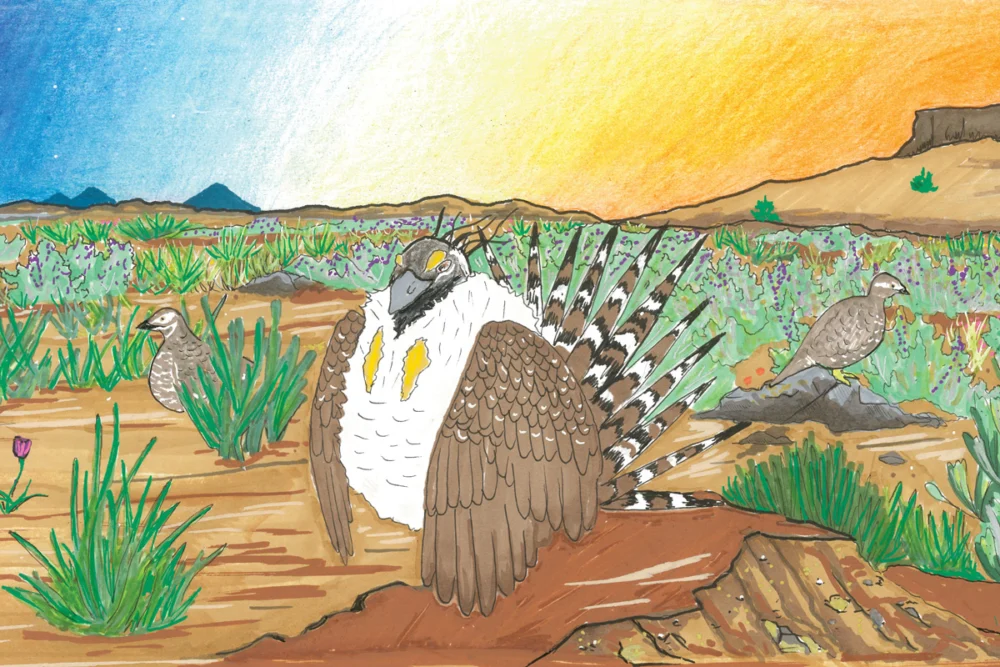
The vast, silver-green expanse of the American West’s high-desert sagebrush steppe, a landscape defined by its subtle beauty and profound ecological significance, is at the heart of a deepening environmental crisis, threatening the survival of its most iconic resident, the greater sage-grouse. For Lytle Denny, a member of the Shoshone-Bannock Tribes, this struggle is deeply personal, rooted in childhood memories of hunting trips on his ancestral homelands in southeastern Idaho. He vividly recalls scouting the rugged terrain, learning the hidden abodes of blue, ruffed, sharp-tailed, and greater sage-grouse, a tradition passed down through generations. These family outings were not just about the hunt; they were immersive lessons in the delicate balance of an ecosystem where the flush of a grouse could signal the presence of larger game like deer and elk.
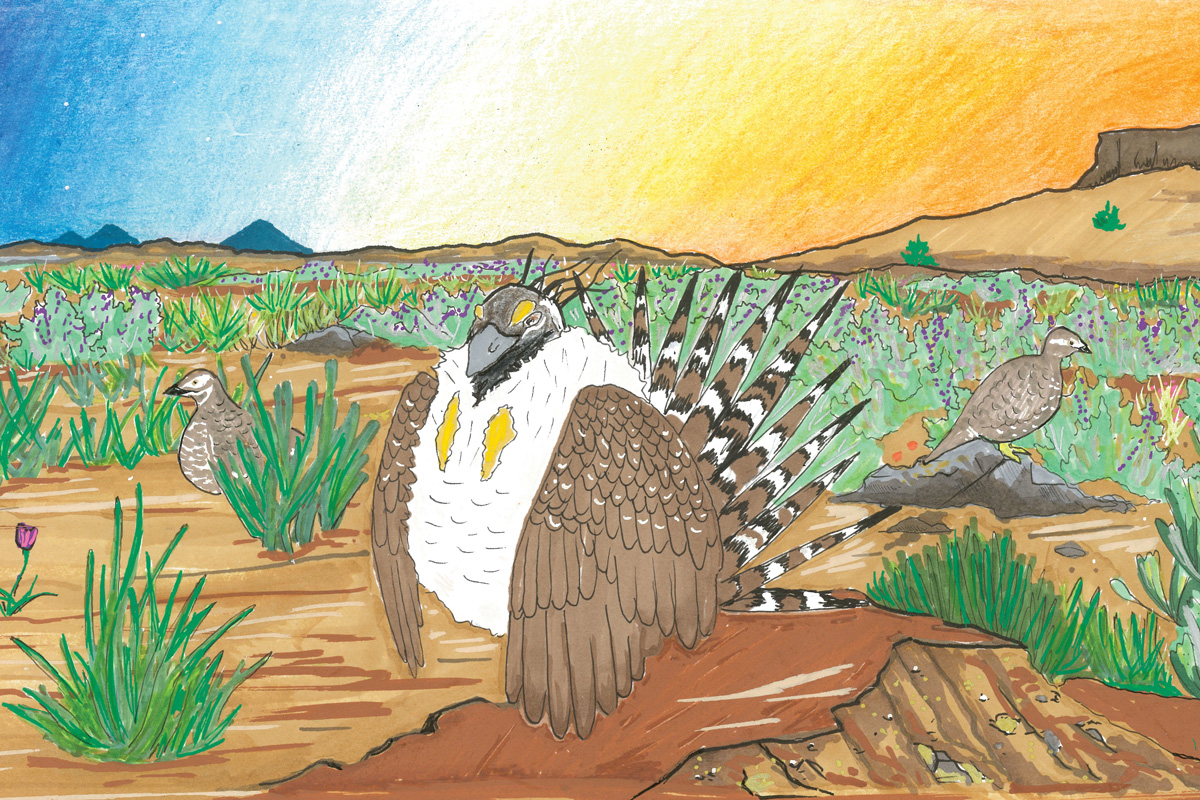
As Denny matured, a concerning shift became undeniable: the once-plentiful greater sage-grouse, culturally revered by the Shoshone-Bannock for its role in song, dance, stories, and sustenance, grew increasingly scarce. These distinctive, chicken-sized birds, known for their striking white chest feathers and sunbeam-shaped brown tail feathers, were vanishing alongside other native species such as ground squirrels and mule deer. The culprit, Denny observed, was the encroaching footprint of human activity: expanding agricultural operations consuming sagebrush habitat, escalating cattle grazing, and a corresponding rise in droughts and devastating wildfires. This firsthand experience solidified his resolve to pursue a career in fish and wildlife biology, driven by a burgeoning understanding of the inherent conflict between the needs of the sage-grouse and the practices of livestock ranching. He witnessed the disruption of the birds’ extraordinary spring mating rituals, where males perform an elaborate courtship dance on open leks, inflating bright yellow air sacs on their chests with inimitable popping sounds, only to be disturbed by ranchers driving ATVs or scattering salt licks for cattle. While sharp-tailed grouse adapted, the more sensitive sage-grouse simply disappeared from these disturbed areas. “Why are we letting this happen?” Denny questioned, recognizing a fundamental clash of values, prioritizing the land’s intrinsic worth over commercial interests. Today, at 46, Denny serves as the deputy executive director of the Shoshone-Bannock Tribes’ Natural Resources Division, dedicating his expertise to confronting these very challenges. He no longer hunts sage-grouse; instead, he pauses to observe them, a testament to their increasingly rare and special presence.
The Shoshone-Bannock, a confederation of Northern Shoshone and Bannock tribes, alongside the Burns Paiute Tribe of southeastern Oregon, find themselves at the forefront of a critical conservation battle across the vast sagebrush steppe, their ancestral territory. This immense biome, stretching across much of the American West, is witnessing a catastrophic decline in greater sage-grouse populations. Since 1965, the species has suffered an alarming 80% reduction across the West, with the Great Basin region—encompassing parts of Idaho, Nevada, Oregon, and Utah—experiencing the most precipitous drops. Once estimated at 16 million birds across 13 U.S. states and three Canadian provinces before European settlement in the mid-1800s, only approximately 350,000 remain, according to the International Union for Conservation of Nature. Half of their original habitat has vanished, supplanted by agricultural expansion, cattle pastures, invasive grasses, mining operations, and oil and gas extraction, highlighting a global pattern of biodiversity loss driven by industrial and agricultural development.
The greater sage-grouse functions as a crucial keystone species; its health acts as a barometer for the overall vitality of the sagebrush steppe ecosystem. Despite decades of litigation and persistent, albeit unsuccessful, efforts to list the species under the federal Endangered Species Act, the primary federal agency responsible for managing the majority of sage-grouse habitat, the Bureau of Land Management (BLM), frequently attributes the decline to habitat loss and degradation from drought, wildfire, and invasive grasses. Conspicuously absent from their public discourse, however, is the acknowledgment of extensive livestock grazing, the most widespread commercial land use by acreage in the West, as a significant underlying factor. Powerful ranching interests, often represented by large agricultural corporations such as the multinational conglomerate J.R. Simplot Co., which supplies potatoes to fast-food giants, exert substantial influence over federal land-management policy. This influence persists despite the fact that cattle grazing on public lands contributes less than 2% to the nation’s total beef supply, yet nearly all remaining sage-grouse habitat remains open to grazing.
Indigenous communities and conservation organizations, including the Western Watersheds Project, vociferously advocate for a fundamental reevaluation of public-lands grazing. They argue that this practice not only imperils the sage-grouse but also threatens the entire sagebrush steppe ecosystem and its myriad other significant species, including sagebrush itself, mule deer, and jackrabbits. Diane Teeman, a Burns Paiute tribal elder and former manager of the tribe’s Culture and Heritage Department, challenges the colonial narrative that framed the sagebrush steppe as inherently "cattle country," asserting that "cows are an invasive species" causing "permanent damage to a lot of things here." This perspective underscores a global indigenous understanding of ecological balance often at odds with Western resource extraction models.
The threat posed by grazing intensified significantly under the previous U.S. administration. In July, a BLM policy mandating prioritized environmental reviews of grazing in critical habitats for at-risk species like the sage-grouse was rescinded. By October, the U.S. Departments of the Interior and Agriculture unveiled a plan to expand grazing acreage on BLM and Forest Service lands. Further solidifying this shift, the BLM finalized new sage-grouse management plans in December for several Western states, including Idaho, Nevada, and Wyoming, easing restrictions on oil, gas, and mining development, and eliminating a previous requirement for ranchers in Idaho, California, and Nevada to maintain grasses at least seven inches tall to protect grouse nests from predators. These policy reversals represent a significant setback for conservation efforts and highlight the political volatility surrounding environmental protection on public lands.
In stark contrast to these federal policies, the Burns Paiute and Shoshone-Bannock tribes are actively demonstrating alternative models for land stewardship. The Burns Paiute Tribe has drastically reduced the number of cattle permitted to graze on tribal lands, while the Shoshone-Bannock Tribes are undertaking a comprehensive reevaluation of herd sizes on their reservation. Early results from these initiatives are highly promising, illustrating the tangible benefits that restricting cattle can have for native wildlife, including the sage-grouse. However, extending such efforts to broader public lands necessitates dismantling generations of entrenched beliefs about grazing’s inherent place in the Western identity. As Denny observes, challenging the dominance of cattle grazing "is to go straight against settler-colonial values," revealing the underlying "battle whose values are getting precedence over whose."

The sagebrush steppe, often misperceived as an empty or barren landscape, actually harbors a rich, if understated, biodiversity. Unlike the towering forests of the Pacific Northwest, its beauty resides closer to the ground, where the understory teems with yellow hawksbeard, purple sagebrush mariposa lilies, and the vital, often overlooked, biological soil crusts. These minuscule crusts, a complex matrix of lichens, mosses, green algae, and cyanobacteria, are fundamental to the ecosystem’s health. They act as organic armor, retaining moisture, cycling essential nutrients, and preventing the establishment of non-native plant species. When these fragile crusts are disturbed or broken, the entire plant community becomes vulnerable, disrupting the delicate balance of the ecosystem. As Teeman emphasizes, "There is a delicate balance."
In a healthy sagebrush steppe, soil crusts form resilient clumps, interspersed with scattered sagebrush and dense bunchgrasses. Sage-grouse find refuge under this modest canopy, laying their speckled eggs in ground nests concealed by tall grasses, which offer crucial protection against predators like ravens and coyotes. Abundant wildflowers support a thriving insect population, providing essential food for both adult sage-grouse and their vulnerable chicks. However, generations of extensive cattle grazing have profoundly altered this intricate landscape. Large herds compact the fragile soils, transforming soft, permeable ground into hard, dry surfaces that struggle to absorb and retain water. This exacerbates drought conditions and fuels the destructive cycle of increasingly frequent and intense wildfires. Boone Kauffman, an Oregon State University ecologist, vividly contrasts the two conditions: "You walk across a grazed area, and it’s like walking on a parking lot. In an ungrazed area, it’s like walking on a marshmallow."
Cattle also play a significant role in spreading invasive cheatgrass, an annual plant that chokes out native grasses and, in spring, paints entire hillsides a maroon hue. Cheatgrass, which began its spread across the West in the late 1800s, thrives in disturbed environments. Its seeds readily adhere to the hooves and hides of livestock, and when these hooves break apart the protective soil crusts in areas already depleted of native grasses by overgrazing, they create ideal conditions for cheatgrass germination. Sage-grouse and most other native wildlife actively avoid areas heavily infested with this invasive species. Furthermore, cows devour native bunchgrasses, removing the crucial cover that protects sage-grouse nests from predators. They congregate near vital water sources, trampling streambanks and consuming wildflowers, willows, and aspens, thereby degrading riparian areas that would otherwise serve as critical oases, providing food, shade, and supporting a diverse array of plant and animal life in the arid desert. Roger Rosentreter, a retired BLM Idaho state botanist, laments, "Every riparian area in the West has been hammered." Beyond direct habitat destruction, human interventions aimed at supporting cattle inadvertently harm grouse: water troughs designed for livestock pose drowning hazards for birds, barbed-wire fences injure grouse, and insecticides intended to protect forage crops for cattle eliminate grasshoppers and crickets, a critical food source for grouse chicks. "Those cumulative effects of grazing," Rosentreter concludes, "are sealing the coffin on so many of our native wildlife."
The historical narrative of ranching in the American West is deeply intertwined with settler-colonial expansion. Beginning in the mid-1800s, powerful cattle barons, often supported by federal policies promoting westward expansion and the forced displacement of Indigenous peoples, established vast ranching operations on tribal lands. Hundreds of thousands of cattle grazed the tall bunchgrasses of the sagebrush steppe, a landscape that newcomers and the government began to refer to as "the range," a term that evolved into "rangeland" and is still widely used today. While some rangeland scientists consider it an ecological term, others, like Nathan Sayre, a geography professor at the University of California, Berkeley, argue that "rangelands are inescapably implicated in the conquest and settlement of North America."

Rangeland science itself developed in close association with the livestock industry. By the early 1900s, unchecked livestock herds had severely depleted native vegetation across the West, prompting ranchers to seek assistance. A 1934 U.S. Department of Agriculture report indicated that only 16% of public rangelands were in good condition. USDA scientists subsequently focused on studying non-native grasses and forage crops suitable for high-desert environments, and Western universities established range-management programs specifically to support the livestock industry. This federally backed research significantly shaped the laws and policies that continue to govern Western rangelands. A major component of these early management programs involved seeding depleted lands with non-native crested wheatgrass, favored by ranchers for its palatability to livestock and resilience to heavy grazing. The federal government also actively eradicated sagebrush across millions of acres in states like Idaho, Oregon, and Wyoming, spraying herbicides and then seeding the ground with crested wheatgrass, transforming vast silver-green landscapes into golden monocultures. This intervention dramatically increased grazing capacity across the region, by as much as 800% in Elko, Nevada, alone, according to a 1954 USDA report.
While contemporary rangeland science has increasingly incorporated ecological considerations, its foundational economic ties to livestock production remain potent. For instance, Oregon State University’s rangeland science extension center in Burns openly states its mission to "maintain a robust and sustainable cattle industry in Oregon." Ecologists like Rosentreter and Kauffman report significant difficulties in securing funding for studies that investigate the negative ecological impacts of grazing. Kauffman recounted that after publishing two studies in 2022 highlighting grazing-induced land degradation, local cattle industry leaders called for his removal from Oregon State University, underscoring "unprecedented pressure… on state and federally funded scientists to not go against the cattle industry." This challenge is further compounded by the industry’s direct funding of some rangeland science. A June 2025 report by the U.S. Geological Survey and the University of Idaho’s Rangeland Center, which concluded that livestock grazing on federal land in Idaho did not negatively impact sage-grouse nesting success, received substantial in-kind donations of equipment from ranching advocacy groups like the Public Lands Council and Idaho Cattle Association. These industry groups proactively urged the BLM to incorporate the report’s findings into its sage-grouse management plans, which the agency subsequently did in its December plans. Kaitlynn Glover, an executive director for both industry groups, claimed in an interview that the report scientifically validated ranchers’ long-held belief that grazing enhances landscape health and sustains sage-grouse populations. However, the BLM’s press secretary, Brian Hires, stated the agency "does not rely solely on any single publication" for habitat management decisions, declining to comment on potential industry pressure.
Today, over 200 million acres—an astonishing 85%—of Western public lands are grazed by livestock, predominantly beef cattle. Industry leaders frequently argue that ranchers are essential partners in sage-grouse conservation, positing that "What’s good for the bird is good for the herd." Skyler Vold, a sage-grouse biologist at the Oregon Department of Fish and Wildlife, echoes this sentiment, stating, "Generally, we think of livestock grazing as being very compatible with sage grouse conservation." The BLM and some rangeland scientists assert that modern grazing practices have evolved to a point where they no longer degrade the landscape. Hires, the BLM’s press secretary, affirmed that "Well-managed livestock grazing is not considered a threat to greater sage-grouse habitat or survival."
However, the definition of "well-managed" grazing is highly contentious. Erik Molvar, executive director of the Western Watersheds Project, a nonprofit dedicated to analyzing grazing’s ecological impact on public lands, asserts, "There is so little well-managed livestock grazing in the American West, I don’t even know why we’re talking about it." Land managers typically classify grazing intensity as light, moderate, or heavy, based on the percentage of vegetation consumed by livestock on a given BLM grazing allotment. Yet, accurately measuring plant consumption across vast allotments, some spanning over 250,000 acres, presents a significant challenge. The BLM often relies on "ocular assessments"—essentially visual estimations—which Molvar describes as "a wild guess." The BLM clarifies that it "employs multiple data collection and assessment methods," with the specific method depending on factors including "the resources available to collect the information."

Crucially, the BLM commonly permits cows to consume 50% of native plants annually on most federal allotments and up to 60% of non-native species like crested wheatgrass. A foundational 1999 paper, still considered relevant by scientists like Rosentreter, concluded that a 50% utilization rate might be deemed "moderate" and sustainable in areas with higher precipitation, such as the Southern pine forests of Georgia. However, in arid ecosystems like the sagebrush steppe, this level of consumption leads to significant land degradation. The study defined moderate grazing in dry regions as 35% to 45% of vegetation, suggesting that improving rangeland conditions in these environments would require even lower utilization rates—30% to 35%, approximately 40% less than the BLM currently permits. The recent University of Idaho study, funded in part by ranching interests, which claimed no harm to sage-grouse, observed an average consumption of just 22% of plants, a level considered light grazing and rarely practiced on public lands.
Research from Oregon State University’s extension center in Burns has explored targeted grazing as a method to reduce invasive grasses. This approach, however, requires ranchers to isolate cattle in small, fenced pastures and move them frequently—a practice more feasible on private lands than on expansive public allotments. Mark Salvo, program director for the Oregon Natural Desert Association, notes that "Sometimes the research is pointing to or identifying tools that are, under our current system, almost impossible to implement." Austin Smith, natural resources director for the Confederated Tribes of the Warm Springs in central Oregon, explains that carefully managed grazing can indeed help control invasive grasses when cattle are introduced in early spring and then promptly removed, allowing native plants to recover. In contrast, he observes, on BLM lands, "they just hammer the heck out of it."
While scientific evidence suggests grazing can both harm and, if meticulously managed, potentially aid sage-grouse habitat, the key lies in effective management, as noted by Nada Wolff Culver, former principal deputy director for the BLM during the Biden administration. For decades, however, the BLM has grappled with insufficient staffing to adequately oversee its vast grazing allotments. Data obtained by the nonprofit watchdog group Public Employees for Environmental Responsibility (PEER) reveals that from 1997 through 2023, 56.7 million acres—approximately 37%—of federal grazing allotments failed to meet BLM land-health standards, primarily due to livestock grazing. A 2023 federal lawsuit filed by PEER and the Western Watersheds Project further alleged that the agency had not conducted environmental reviews for nearly two-thirds of its grazing permits, leading Burns Paiute tribal elder Teeman to conclude, "I think it’s a failed system."
In a poignant illustration of localized conservation efforts, Collin Williams, a non-Native wildlife biologist for the Burns Paiute Tribe, found himself surprised by the dry ground during an early April dawn on BLM land east of Burns, Oregon. Usually, heavy snowmelt creates muddy conditions, a welcome sign of moisture for the arid high desert, promising an abundance of wildflowers and insects vital for grouse and their chicks. Indeed, above-average snowpack earlier that spring had caused flooding on the tribe’s reservation. Williams and his colleague, Matthew Hanneman, the tribe’s wildlife program manager, quietly approached a vantage point to tally sage-grouse, part of a collaborative population tracking effort with the Oregon Department of Fish and Wildlife since the early 2000s. As the horizon burned orange with the first hints of sunrise, they observed approximately 60 male sage-grouse performing their signature mating dances on several leks, their spherical forms and white and brown feathers prominent against the beige bunchgrasses in the near-freezing air. These leks are roughly five miles from Jonesboro, a tribally owned property and former ranch where some sage-grouse spend their summers. The tribe reacquired these 6,385 acres of unceded ancestral lands in 2000, along with a 1,760-acre property called Logan Valley. Tribal officials have since diligently worked to restore both properties for wildlife, including grouse, mule deer, and elk, ensuring tribal members have access for hunting and gathering. Teeman highlights the distinct Paiute approach to ecosystem stewardship: "We don’t just consider the management of things in terms of their value to us… The management is really about how to give everything its due rights and personhood, as opposed to how BLM or any of the other Western-oriented management systems work where everything is a resource."

Before the tribe’s acquisition of Jonesboro, the land suffered decades of livestock grazing, leading to weed proliferation and a decline in native vegetation. Federal fire-suppression policies and overgrazing also facilitated the expansion of juniper trees. Since reclaiming the property, the tribe has actively worked to reverse this colonial legacy, implementing restoration strategies that could serve as blueprints for federal lands. In the early 2000s, some fencing was removed. Tribal staff, including Williams and Hanneman, have overseen projects to cut junipers, creating vital open space for grouse, which avoid forested areas. They have also undertaken planting initiatives for native species like sagebrush, yarrow, rabbitbrush, and buckwheat. Weed removal, particularly of cheatgrass and medusahead, has required intensive efforts involving mowing, burning, herbicide application, and carefully managed grazing.
The Jonesboro site came with extensive BLM grazing allotments (21,242 acres) and state grazing allotments (4,154 acres). While the tribe subleases these permits to local ranchers for some income, beef production is not its primary focus. "Our focus is definitely wildlife and wildlife conservation," Williams asserts. Grazing is strategically employed to target weeds and clear thatch when native grasses are dormant, but the tribe permits only one-third of the cattle allowed under its BLM permit. Williams notes that only certain areas, typically near streams or springs, are suitable for grazing, and these are often critical habitats for sage-grouse and other wildlife. By reducing cattle numbers, native animals benefit from a greater abundance of plants. Furthermore, the tribe ensures regular rest periods for the Jonesboro pastures. Cattle graze in small, 40- to 60-acre fenced pastures on tribal land for about 10 days before being removed. On larger federal pastures subleased to local ranchers, the tribe requires animals to be removed after one to two months. These concerted efforts are gradually transforming the property, with tribal biologists’ photographs from 2007 to 2018 showing a visibly greener landscape, increasing riparian vegetation, and a resurgence of bunchgrasses.
In southeastern Idaho, the Shoshone-Bannock Tribes, under Denny’s leadership, are also assessing ways to mitigate grazing’s impact. Their Natural Resources Division is studying 320,000 acres of rangeland on the Fort Hall Indian Reservation to reevaluate optimal cattle numbers. While much of the reservation is grazed by cattle, only a third of these animals are owned by tribal members, some from long-standing ranching families. Approximately 20,500 acres of the reservation’s rangelands are currently off-limits to grazing, and the tribes own an additional 33,000 acres of conservation land where grazing is prohibited. They are also considering excluding cattle from specific sage-grouse mating sites. Preston Buckskin, the tribes’ land-use director, acknowledges the ongoing challenge of balancing traditional tribal values, which prioritize conservation, with the economic realities of ranching that sustain some families. Tribal cattlemen have historically influenced land-management decisions on the reservation. The tribes’ Office of Public Affairs emphasizes that while grazing’s impact on sage-grouse habitat is significant, "effective conservation outcomes depend on collaboration among producers, land managers, and tribes rather than placing responsibility on any single group."
As a potential compromise, the tribal land-use department is exploring a program to compensate landowners for voluntarily relinquishing grazing rights. This approach mirrors long-standing efforts by non-Native conservation organizations like the Western Watersheds Project to implement similar buyout programs on federal lands. Recently, Democratic Representatives Adam Smith, Jared Huffman, and Eleanor Holmes Norton reintroduced legislation that would enable ranchers to surrender their grazing privileges in exchange for buyouts from private individuals or conservation groups, offering a market-based solution to reduce grazing pressure. Additionally, the Shoshone-Bannock Tribes are developing a land-use plan that would reclassify some areas on the reservation currently zoned as "rangelands" to "wildlands," thereby affirming the land’s inherent value for wildlife and tribal hunting. Denny highlights the power of language in shaping perceptions: "Words shape expectations. ‘Rangeland’ implies that the land is for livestock. It carries a meaning imposed by a different way of thinking. I prefer the term ‘sagebrush steppe.’"

The historical success of the Hart Mountain National Antelope Refuge in southern Oregon provides compelling evidence of nature’s resilience. In the early 1990s, the refuge was severely overgrazed. When then-manager Barry Reiswig made the controversial decision to prohibit cattle, he faced intense local opposition, described in a 2019 documentary as being seen as the "epitome of evil." Reiswig recalled facing "a lot of pressure to compromise, to kind of look the other way" regarding grazing’s impact. Yet, in a remarkably short period, a landscape that had endured 120 years of grazing began to heal itself. Within 12 years, aspen cover increased by 64% and wildflowers by 68%. A 2015 study by Forest Service and Oregon State University researchers found that bare soil decreased by 90% in 23 years, and rushes and willows quadrupled. Today, Hart Mountain is one of the largest ungrazed areas in the Great Basin and a crucial sage-grouse breeding ground, where female grouse and their chicks are a common sight. The study concluded that "Simply removing cattle from areas may be all that is required to restore many degraded riparian areas in the American West."
The highly politicized nature of grazing makes open discussion difficult for scientists and federal officials, Denny observes. "We’ve got to get uncomfortable talking about the truth." He believes tribes can spearhead this crucial conversation, offering their homelands as "the model for how you navigate this." However, ultimate progress hinges on the federal government’s willingness to fundamentally reform its policies. This reality was starkly demonstrated on a spring day on Burns Paiute land. Just north of the Malheur River’s headwaters, in a forest clearing beneath the snowy Strawberry Mountains, a small population of sage-grouse has found an unexpected summer haven in a portion of Logan Valley, now once again tribal land. The birds’ preferred species of mountain big sage thrives on a gentle slope above a nearby creek, and by mid-May, bluebells and yellow groundsels—wildflowers favored by grouse—were beginning to bloom in the mountain meadow. The presence of these grouse remains a mystery, as the open valley is surrounded by lodgepole and ponderosa pines, posing significant danger to the birds from predators. The closest known lek is 10 miles away.
To understand these birds’ movements, the tribe secured a grant from the Oregon Wildlife Foundation for transmitters to track grouse this summer, aiming to inform conservation efforts for their migration corridors. Historically, federal policies prohibiting cultural burning for over a century led to tree encroachment in the area. The tribe has since hand-cut 60 acres of pines to maintain open sagebrush habitat for grouse and other wildlife and hopes to reintroduce prescribed fire to the meadows. Most of the 1,760-acre Logan Valley property has been ungrazed since its reacquisition in 2000. Officials permit cattle only on a 300-acre meadow to control a non-native grass introduced by settlers for hay and forage.
Yet, the tribe’s property abuts federal land, specifically forming a "Y" shape along creeks that merge to form the Malheur River. The Forest Service, which manages the intervening federal land, allows cows to graze from June to October. Trespassing cattle have been a persistent problem due to old fencing. The tribe erects a temporary fence in late May to keep cattle off its land once they return to neighboring federal property in June. However, on a site visit in mid-May, Hanneman, driving a dirt road through the property, slowed abruptly. "I did not know they put cattle out already," he remarked, observing a dozen black cows. It was two weeks early, the temporary fence not yet erected. Despite the tribe’s dedicated efforts, the cattle had gotten in, a tangible symbol of the ongoing battle between ecological preservation and entrenched land-use practices.