Joko Susilo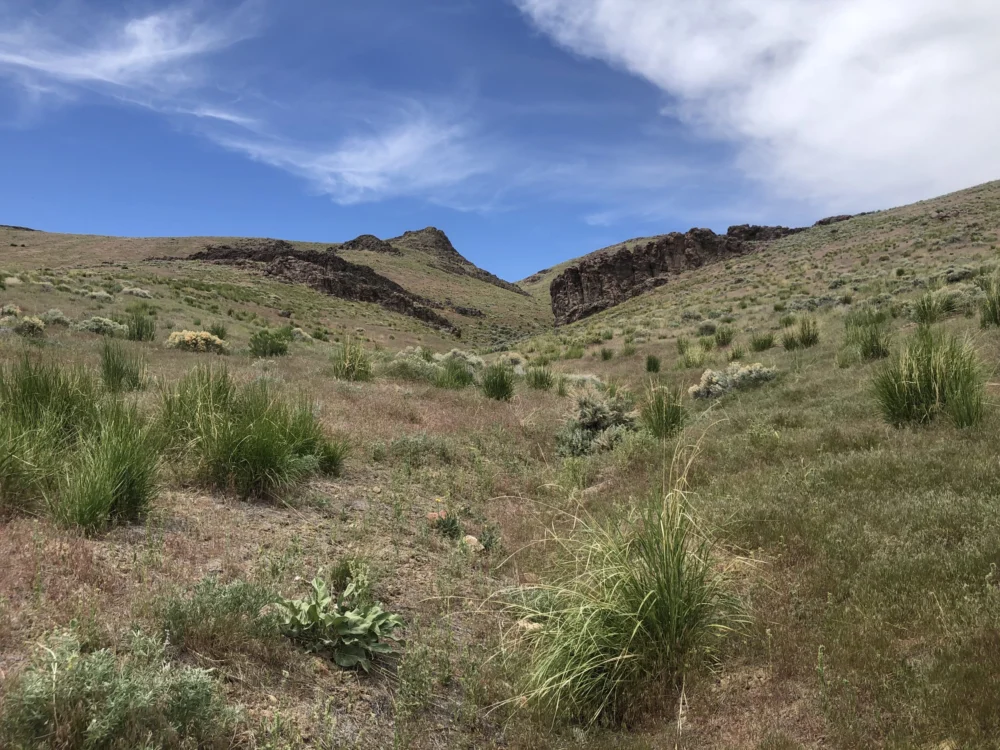
Karen Budd-Falen, a high-ranking official within the Department of Interior, has come under scrutiny following revelations of her family’s financial interests in the controversial Thacker Pass lithium mine in northern Nevada, a project the Trump administration has actively sought to fast-track. This development unfolds as the administration recently acquired an equity stake in both the mine and its parent company, deepening the entanglement of federal policy with private enterprise in the critical minerals sector. The complexities of government service, personal finance, and the escalating global demand for lithium batteries are now at the forefront of a debate over ethical governance and environmental stewardship.
Budd-Falen, who currently serves as Associate Deputy Secretary to Interior Secretary Doug Burgum, a position that bypasses Senate confirmation, also held a senior legal role at the Interior Department during President Trump’s first term. Her financial disclosure, obtained after an unexplained delay, details extensive land holdings belonging to her family, prominently featuring Home Ranch LLC, a Nevada ranching operation valued at over $1 million. Public records from Nevada’s business search database identify Frank Falen, Karen Budd-Falen’s husband, as the manager of Home Ranch LLC as recently as February 2022.

A critical piece of evidence linking the official’s family to the contentious mining operation surfaced in November 2018. Around that time, Home Ranch LLC entered into an agreement to sell crucial water rights to Lithium Nevada Corporation, the company spearheading the Thacker Pass project. While the exact financial terms remain undisclosed, an official Securities and Exchange Commission (SEC) filing explicitly names Frank Falen in connection with this transaction. Further cementing the relationship, a monitoring plan for Thacker Pass, dated July 2021 and submitted by Lithium Nevada to federal regulators during Trump’s initial presidency, indicates the company’s intent to utilize existing stock water wells owned by Home Ranch LLC. These wells were designated to "monitor potential drawdown impacts" stemming from the extensive mining operations, highlighting the direct involvement of Budd-Falen’s family enterprise in the mine’s operational planning and environmental considerations.
The timing of these financial dealings, juxtaposed with Budd-Falen’s official duties, has ignited concerns regarding potential conflicts of interest. Her calendar from her earlier tenure at the Interior Department lists a notable entry for November 6, 2019: "lunch with Lithium Nevada." This meeting occurred precisely when Lithium Nevada, a subsidiary of the Canadian mining giant Lithium Americas, was vigorously pursuing expedited approval for its ambitious Thacker Pass project. The confluence of her family’s financial transactions, her professional calendar, and her influential position within the very department responsible for approving such projects raises significant ethical questions.
The Thacker Pass mine, an ambitious $2.2 billion open-pit venture, is slated to extract lithium from approximately 5,700 acres of public land in Humboldt County, Nevada. Its approval in January 2021 by the Bureau of Land Management (BLM), just days before the end of the first Trump administration, marked a significant victory for the company but ignited a firestorm of opposition. This project represents a cornerstone of the United States’ strategy to secure a domestic supply of lithium, a "critical mineral" indispensable for the burgeoning electric vehicle (EV) industry, grid-scale energy storage, and various high-tech applications. The global race for lithium has intensified, with nations like the U.S. seeking to reduce their reliance on foreign supply chains, particularly those dominated by China, which currently controls a vast share of lithium processing and battery manufacturing.

However, the pursuit of this strategic mineral comes at a steep cost, particularly for local communities and ecosystems. The mine has faced vehement resistance from area Indigenous tribes and environmental organizations, who argue it poses an existential threat to vital water resources in an already arid region, imperils endangered species like the sage grouse, and desecrates sacred cultural sites. For the Paiute Shoshone people, Thacker Pass is known as Peehee Mu’huh, a place of profound historical and spiritual significance. It was the site of a brutal massacre in 1865, where at least 31 Paiute individuals were killed, rendering the land hallowed ground and intensifying the emotional and cultural stakes of the mining project. The proposed mine’s massive water requirements, estimated to be in the billions of gallons annually, raise alarm bells about its impact on regional groundwater levels and the long-term viability of other water users, including agriculture and wildlife.
Budd-Falen’s history underscores her deep involvement in the Western land-use debate. During President Trump’s first term, she was considered for the directorship of the BLM, an agency with immense power over federal lands. However, she reportedly declined the prestigious role, citing the requirement that she and her husband divest their interests in their family ranches to avoid conflicts of interest, a detail she shared with The Fence Post in 2018. This prior decision highlights an awareness of potential conflicts, making her current situation even more perplexing and subject to scrutiny.
Upon the Trump administration’s return to power, the push to advance the Thacker Pass project gained renewed momentum. In a significant move in September, the administration finalized a deal with Lithium Americas, agreeing to release loan money from the Department of Energy (DOE) in exchange for a 5% equity stake in both the Thacker Pass mine and the broader company. This unusual arrangement signifies a direct financial investment by the U.S. government into a private mining operation, reflecting a broader strategy to de-risk critical mineral projects and accelerate domestic production. Proponents argue this intervention is necessary to bolster national security and economic independence, positioning the U.S. as a leader in the green energy transition. Critics, however, view it as an unprecedented level of government entanglement in the private sector, potentially blurring the lines between regulatory oversight and financial interest.

Budd-Falen’s current role at the Interior Department largely operates behind the scenes, making it difficult to ascertain the precise scope of her responsibilities and the issues she has directly influenced since her reappointment. Crucially, the Interior Department has yet to release her ethics agreement, a standard document that would outline any specific companies or projects from which she is mandated to recuse herself. This lack of transparency further fuels suspicions and calls for greater accountability.
Kyle Roerink, executive director of the Great Basin Water Network, a prominent water conservation advocacy group in Nevada, voiced the prevailing sentiment of concern. "Did she have any oversight of the environmental review process regarding Thacker Pass? It is a big question," Roerink stated, emphasizing the critical need for impartial decision-making. "If she didn’t recuse herself, it would fly in the face of the impartial decision-making that Americans expect from government officials." The integrity of federal land management decisions, particularly those impacting such a significant and contested project, hinges on the strict adherence to ethical guidelines and the clear avoidance of even the appearance of impropriety.
The unfolding narrative at Thacker Pass exemplifies the complex challenges inherent in the global transition to a green economy. The imperative to secure critical minerals for renewable energy technologies often collides with local environmental concerns, Indigenous rights, and the ethical responsibilities of government officials. As the world accelerates towards electrification, the balance between strategic resource extraction and preserving cultural heritage and ecological integrity will remain a defining tension, demanding robust oversight and unwavering transparency from those in power. The unresolved questions surrounding Karen Budd-Falen’s financial ties and her role in the Trump administration’s expedited approval of the Thacker Pass mine serve as a stark reminder of these profound and often conflicting priorities.