Rocky Gerung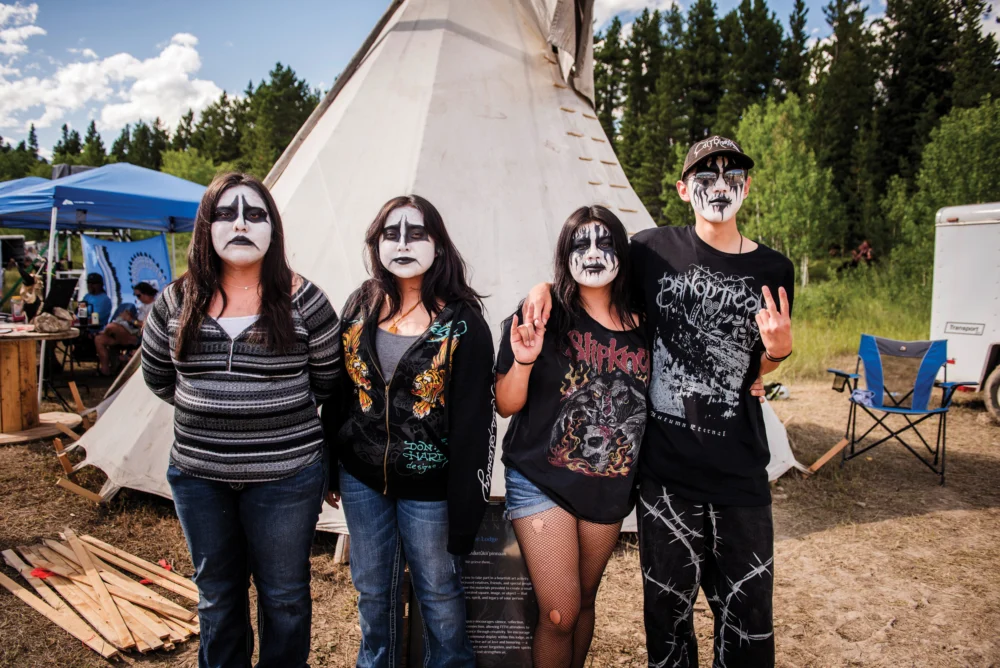
The stark beauty of the Blackfeet Nation in Montana became the unexpected venue for a profound convergence of heavy music and Indigenous culture, as the "Fire in the Mountains" festival transformed a remote landscape into a powerful space for healing, connection, and artistic expression. Set against the backdrop of the Rocky Mountains, this unique gathering sought to address critical issues facing the community, particularly the pervasive impact of suicide, through the cathartic power of metal and hardcore music. This initiative, born from a deep understanding of music’s therapeutic potential, involved a community-wide effort, from a dedicated high school curriculum to a groundbreaking music festival that resonated with attendees on a deeply personal level.

At Buffalo Hide Academy, an alternative public high school in Browning, Montana, the school year culminated not with traditional academics, but with a revolutionary semester-long symposium on heavy music. Under the guidance of educators like Robert Hall (Piikunii), who described Browning as "metal" and acknowledged that "we don’t turn away from the darkness," and Charlie Speicher, a clinical counselor and the school’s director, students delved into the complex world of metal and hardcore. Speicher, a non-Native, envisioned the symposium as a way to foster safety and protection, particularly from suicidal distress, which he stated has affected "every family in Browning." He donned his "battle vest," a symbol of metal subculture, adorned with patches of influential bands, to create a welcoming environment for students who might feel isolated or drawn to darker, more aggressive forms of art. The course, initially enrolling over fifty students, quickly gained popularity, with students from other classes seeking to join, drawn by the promise of community and understanding.

Speicher introduced students to the visceral energy of bands like The Dillinger Escape Plan, analyzing music videos and dissecting musical structures to understand the intricate interplay of instruments and vocals. Students explored how different musical genres could be associated with specific landscapes, from the frozen forests of black metal to the urban grit of hardcore, engaging with the concept of "geographic determinism." Beyond the musical exploration, the symposium emphasized the therapeutic benefits of heavy music, highlighting its role in catharsis, community building, and developing coping mechanisms. Speicher articulated that heavy music teaches individuals that they are not alone in their struggles and that even in darkness, there are pathways toward overcoming adversity. Lessons also incorporated critical media analysis, examining the historical context and problematic elements within genres like black metal, prompting discussions on the separation of art from artist. Students were encouraged to engage deeply with the music, analyzing lyrical content and musical breakdowns, and even participated in creative projects like applying "corpse paint" and staging album cover-style photoshoots.

The festival itself, "Fire in the Mountains," was conceived as a means to extend these therapeutic benefits to the wider community and to foster economic opportunities on the Blackfeet Nation. Spearheaded by the "Firekeeper Alliance," a group including Speicher, Hall, and others like Steve Von Till of Neurosis, the initiative aimed to create a protective "fire" for the youth. The alliance recognized the devastating impact of a series of suicides that struck the Blackfeet Nation in 2020, claiming young lives and deeply affecting the community. They sought to harness the unifying and healing power of music to combat this crisis. The idea of hosting a festival on tribal lands gained traction, with the Blackfeet Tribal Business Council ultimately offering their support, seeing it as a new avenue to engage youth and potentially boost the local economy, which historically has struggled despite its proximity to the lucrative Glacier National Park.

Securing headlining acts like the Norwegian folk band Wardruna proved to be a significant achievement. The Firekeepers traveled to Colorado to personally invite the band, emphasizing the festival’s mission to support Indigenous youth. Wardruna’s lead singer, Einar Selvik, resonated with the vision, seeing the festival as an opportunity to "stand with the Indigenous in a constructive, powerful way" and to create something more meaningful than a typical concert. This collaboration highlighted a shared appreciation for nature, animism, and cultural heritage between Nordic and Indigenous traditions, symbolizing a powerful cultural exchange.

Upon arrival at East Glacier Park, Montana, the festival grounds buzzed with anticipation. Approximately 2,400 fans, a third of whom were estimated to be Native, converged from across North America. The event distinguished itself from typical music festivals by commencing with a traditional Blackfeet Nation welcome and powwow, featuring various Indigenous dance styles. This opening ceremony served as a powerful act of cultural exchange, introducing many metalheads to Indigenous traditions for the first time and fostering a sense of mutual respect. The absence of alcohol, a deliberate choice for the festival, was noted by many as contributing to a more focused and profound experience, encouraging genuine connection and interaction.

The festival lineup showcased a diverse range of heavy music, from established international acts to emerging Native artists. Performers like Sage Bond, an acoustic metal singer-songwriter from the Navajo Nation, captivated audiences with her powerful vocals, drawing parallels between her music and the resilience of her people. The blackened doomgaze duo Liith, also from the Navajo Nation, delivered a scorching set, reflecting the festival’s commitment to featuring Indigenous talent. Bands like Blackbraid, a Native black metal outfit, explored themes deeply connected to the land and Indigenous spirituality, resonating with fans who identified with the "fringe" status shared by both Indigenous peoples and metal subcultures. The music’s raw intensity and exploration of difficult themes provided a cathartic outlet for many attendees, who shared personal stories of loss and healing, often citing music as a crucial coping mechanism.

The festival grounds themselves were designed to foster community and learning, with workshops and panels addressing topics such as Indigenous sovereignty, ethnobotany, the crisis of missing and murdered Indigenous people, and the therapeutic effects of heavy music. Attendees engaged in discussions about the intersection of music and spirituality, with many noting the parallels between the deep cultural roots of some metal subgenres and Indigenous traditions. The festival’s emphasis on "the Native side of things" created a unique atmosphere where artists and fans could connect on multiple levels, sharing experiences and fostering a sense of belonging.

Despite a dramatic thunderstorm that temporarily disrupted performances, the spirit of the festival remained undeterred. The unexpected power outage during Inter Arma’s set led to an impromptu acoustic performance of Black Sabbath’s iconic "War Pigs," uniting the crowd in a powerful singalong that honored the legacy of heavy music. This moment, followed by the return of power and the electrifying debut of Norwegian black metal pioneers Old Man’s Child in the United States, underscored the festival’s resilience and the profound connection forged between the artists, the land, and the audience. The event culminated in a shared experience of catharsis and celebration, with attendees dancing around a bonfire under the starlit sky, a testament to the unifying power of music.

The impact of "Fire in the Mountains" extended beyond the three-day event, sparking widespread enthusiasm on social media. Fans described the festival as "pure magic," "transformational," and "life-changing," highlighting the unexpected tears and profound healing experienced by many. The festival’s success demonstrated that heavy music could serve as a powerful vehicle for social commentary, community building, and personal empowerment, particularly within Indigenous communities grappling with historical trauma and contemporary challenges. The initiative’s organizers and participants expressed hope that this model could be replicated, fostering further understanding and support for Indigenous communities through the shared language of music. The event served as a potent reminder that even in the face of darkness, music can illuminate pathways toward hope, connection, and resilience.