Roger Danuarta
The American West, a landscape defined by its vast open spaces and rugged beauty, is grappling with profound shifts in its cultural and economic fabric. While the disappearance of the family farmer or rancher often draws public lament, another crucial, yet increasingly endangered, occupation quietly fades from the rural landscape: the community-based wilderness organizer. These dedicated individuals, working tirelessly at the grassroots level, form the bedrock of conservation efforts, fostering local support for the preservation of wild places against ever-present pressures. Among the most influential figures in this vital, often unsung, profession over the past five decades stands Bart Koehler, a man whose enduring spirit and profound impact continue to resonate, even as he courageously confronts the challenges of Parkinson’s disease.
Koehler’s journey into the heart of Western conservation began in the 1970s, serving as the Wyoming representative for The Wilderness Society. This was no easy assignment; Wyoming, a state deeply rooted in resource extraction and fiercely independent, presented a formidable challenge. Its legislature had famously passed resolutions vehemently opposing any new wilderness designations, a sentiment so strong that federal law uniquely prohibits the President from establishing new national monuments within its borders without Congressional approval. This political climate could have deterred many, but Koehler was undaunted. He understood that genuine change would not come from distant policy debates but from the ground up, through direct engagement with the very people who lived and worked on the land.
His approach was refreshingly old-fashioned and profoundly effective: face-to-face organizing. Instead of relying on distant directives or abstract appeals, Koehler embarked on a tireless mission to connect with local communities across Wyoming. His objective was not merely to advocate for the creation of new wilderness areas, but also to strengthen protections for existing ones, safeguarding them from the often-overlooked resource extraction provisions that were still permissible under certain interpretations of the seminal 1964 Wilderness Act. This landmark legislation, enacted to preserve some of the nation’s most pristine landscapes, allowed for the continuation of pre-existing activities like grazing and mineral leases in designated wilderness, creating complex management challenges that Koehler sought to address directly with local stakeholders.
During his formative years as the Wyoming-based field editor for High Country News in the late 1970s and early 1980s, and later with the Sierra Club, the author quickly forged a strong bond with Koehler. It was during these collaborations that the depth of Koehler’s knowledge — both of the intricate Western landscapes and the complex tapestry of environmental law — became strikingly apparent. Even more remarkable was his innate ability to connect with people from all walks of life, patiently winning them over to the cause of wilderness preservation.
A significant hurdle Koehler consistently faced was the prevailing misconception among many ranchers and outfitters that wilderness designations would spell the end of their traditional livelihoods, specifically grazing and hunting. He meticulously explained that, far from being a threat, the Wilderness Act explicitly guaranteed the continuation of these established activities where they had historically occurred. He skillfully reframed the narrative, pointing out that the true existential threats to their way of life and the integrity of their working landscapes were the encroaching industrial forces: the open-pit mines, the sprawling oil and gas fields, and the destructive clear-cut logging operations that scarred the land and polluted water sources. By appealing to their shared values of land stewardship and economic stability, Koehler transformed skepticism into support, forging unlikely alliances that would prove crucial for conservation victories.
Koehler’s style was characterized by an infectious lightheartedness and a profound commitment to community. His visits to the author’s log cabin often involved helping the children with their treehouse projects, followed by evenings filled with song, Koehler strumming his guitar. These informal gatherings fostered a sense of camaraderie that extended into their public advocacy. They attended countless public lands hearings together, where the author witnessed firsthand the diverse array of new wilderness supporters Koehler had inspired and trained – individuals who had once been indifferent or even opposed to conservation.

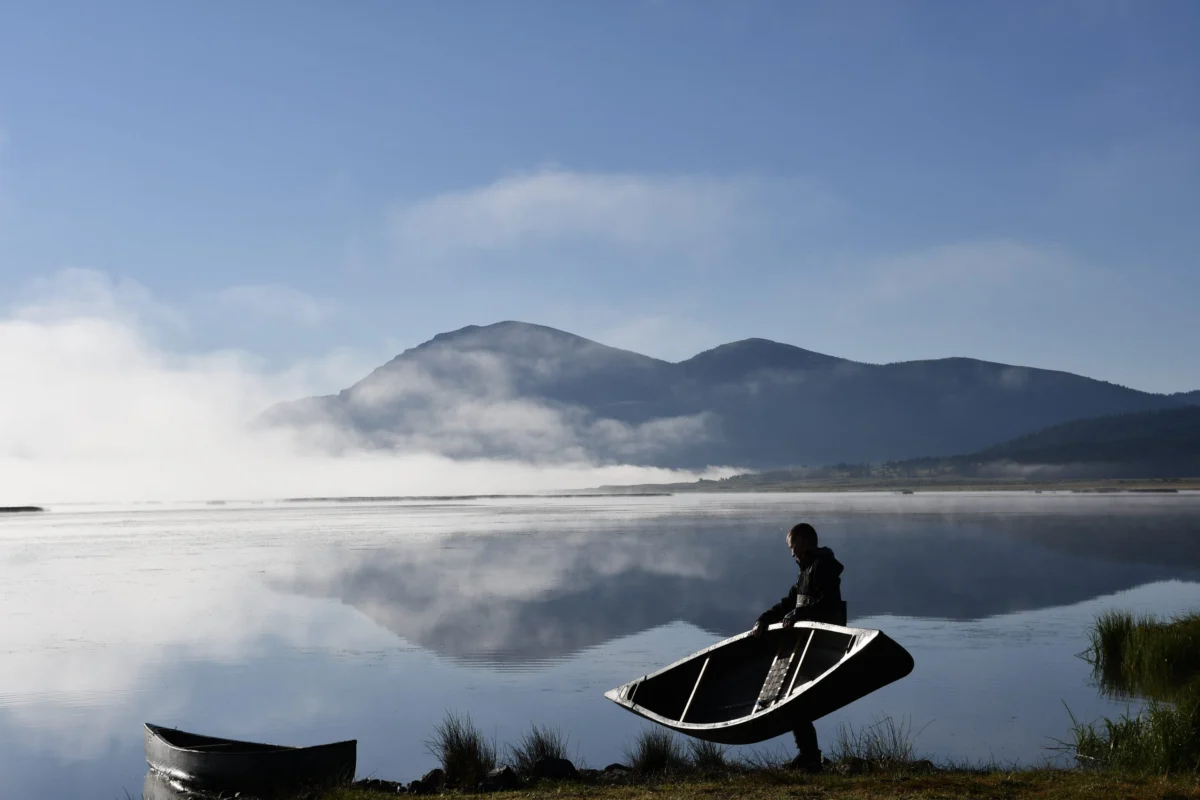
His creative approach to activism was legendary. To inject humor and spirit into their anti-coal campaigns, he formed a band called "The Strip Mine Patriots." He orchestrated a memorable boat race on the iconic Snake River, winding through the majestic Grand Teton National Park, with a whimsical twist: the winner was the last boat to cross the finish line. The event culminated at the finish line with the venerable Mardy Murie, the octogenarian "Grande Dame" of wilderness protection and a pivotal figure in the passage of the Wilderness Act, warmly greeting participants with cookies and reading from Dr. Seuss’s timeless environmental allegory, The Lorax. Such events transcended mere protest; they were celebrations of community, land, and shared purpose.
A pivotal moment in Western conservation advocacy occurred in 1978 when The Wilderness Society made a strategic decision to shutter its Western organizing operations, shifting its focus to professional lobbyists and policy analysts based in Washington, D.C. This move, while perhaps reflecting a broader trend towards centralized, professionalized environmental advocacy, left a significant void at the grassroots level. Unwilling to see the vital work of community-based organizing diminish, Koehler and other laid-off Wilderness Society staff members banded together. Their collective efforts led to the establishment and strengthening of crucial state-level groups, including the Wyoming Wilderness Association, the Nevada Wilderness Association, the Utah Wilderness Association, and the California Wilderness Coalition. These organizations became powerful local voices, demonstrating that effective conservation required both national strategy and unwavering local engagement.
Driven by a growing frustration with what they perceived as excessive compromises made by established D.C.-based groups, Koehler, alongside fellow ex-Wilderness Society organizer Dave Foreman and a cadre of like-minded activists, co-founded Earth First! in 1979. This new movement was born from a radical ethic of "deep ecology," advocating for "No Compromise in Defense of Mother Earth!" Earth First! quickly gained notoriety for its confrontational tactics, including direct action and "monkeywrenching" (ecotage), which challenged the conventional boundaries of environmental protest. Within this more radical framework, while Foreman often served as the primary public speaker and rabble-rouser, Koehler embraced the role of movement troubadour. Adopting the moniker "Johnny Sagebrush," he captivated crowds and campfire circles with original songs that eloquently articulated the devastation of wilderness, the urgent need for its protection, and the profound joys of untamed landscapes. His music became the emotional heartbeat of the movement, inspiring dedication and solidarity.
Koehler’s commitment to grassroots organizing extended beyond the American West. He later assumed leadership of the Southeast Alaska Conservation Council, where he undertook the complex and delicate task of uniting diverse stakeholders in a concerted effort to protect the Tongass National Forest. This vast temperate rainforest, one of the world’s largest intact ecosystems, faced relentless pressure from logging interests. Koehler skillfully organized Native Alaskan communities, rural Alaskans whose livelihoods depended on the health of the land and sea, and commercial salmon fishermen, all of whom recognized the intrinsic value of the Tongass and the direct threat posed by overcutting. His work in Alaska underscored his ability to adapt his organizing principles to unique cultural and ecological contexts, always prioritizing local empowerment. In subsequent years, he served as a director of the Wilderness Support Center, an organization dedicated to providing crucial resources, strategic guidance, and capacity-building assistance to local groups striving to enact wildland protections in often hostile rural areas across the West, thereby amplifying the impact of community-driven conservation.
Over time, the relentless physical demands of his work—the extensive travel, arduous hikes, and strenuous canoe trips—became increasingly challenging due to the progression of Parkinson’s disease. While his physical condition necessitated an end to his full-time organizing roles, Bart Koehler never truly retired from the cause that defined his life. Today, residing in a care facility in Arizona, his fingers may no longer be able to strum a guitar with the same dexterity, but his spirit remains unbroken. He continues to participate in musical gatherings, beating on a drum, keeping the rhythm of his passion alive. His devoted wife, Julie, remains steadfastly by his side, and a steady stream of well-wishers—colleagues, friends, and countless individuals whose lives and landscapes he touched—visit and send notes of profound appreciation.
Bart Koehler’s legacy is not merely etched in the millions of acres of protected wilderness across the West; it is powerfully embodied in the vibrant, interconnected community of activists and advocates he inspired, mentored, and empowered. For a community-based wilderness organizer, a true champion of the wild, leaving behind such a dedicated and capable network to carry on the vital work is, without doubt, the most enduring and profound testament to a life exceptionally lived. His story serves as a powerful reminder of the irreplaceable value of persistent, compassionate, and locally-driven advocacy in the ongoing global effort to safeguard our planet’s precious natural heritage.