Roger Danuarta
Public engagement stands as a cornerstone of democratic governance, particularly when critical environmental policies are debated and shaped. Citizens regularly participate in formal public comment periods, meticulously reviewing proposed federal regulations on issues ranging from the conservation of vast roadless areas and the expansion of offshore drilling to the fundamental protections enshrined in the Clean Water Act and the Endangered Species Act. This process, mandated by the Administrative Procedure Act (APA), aims to ensure transparency, accountability, and the incorporation of diverse perspectives before new rules are finalized or existing ones altered. Submissions, meticulously logged on platforms like the Federal Register, become part of the official record, providing a crucial avenue for individuals and organizations to voice their concerns, contribute data, and advocate for specific outcomes, even as the efficacy of individual comments in a sea of opinions can sometimes feel uncertain. This persistent civic participation underscores a fundamental belief in the democratic ideal: that every voice, however small, holds the potential to influence the trajectory of public policy and safeguard shared resources for future generations.

Yet, a stark contrast emerges when significant environmental policy shifts occur with limited or no public input, raising questions about the democratic integrity of such actions. A notable example involves the weakening or outright repeal of an endangerment finding, a scientific determination by the Environmental Protection Agency (EPA) that specific pollutants pose a threat to public health and welfare. Such a finding, like the landmark 2009 determination regarding greenhouse gases following the Supreme Court’s Massachusetts v. EPA decision, is foundational, legally obligating the agency to regulate those pollutants under the Clean Air Act. When such a finding is rolled back, the EPA, whose core mission is "to protect human health and the environment," effectively reduces its mandate to control emissions from major sources like power plants and heavy-duty trucks. Critics argue that such moves, often driven by a deregulatory agenda, prioritize short-term industrial profits over long-term public health and environmental stability, fundamentally undermining the agency’s purpose and potentially exposing populations to increased risks from air pollution and accelerated climate change. These actions, perceived as unilaterally imposed, bypass the very public discourse that underpins robust environmental stewardship, leaving a broad citizenry feeling unheard and unprotected.
The tangible impacts of a changing climate are becoming increasingly evident, particularly in vulnerable regions grappling with diminishing natural resources. Across the American West, the Colorado River Basin exemplifies this crisis, where a multi-decade drought, exacerbated by rising temperatures and reduced snowpack, has pushed this vital water source to unprecedented lows. The river, which supplies water to nearly 40 million people across seven U.S. states and parts of Mexico, underpins vast agricultural operations, urban centers, and critical ecosystems. Farmers in central Arizona, heavily reliant on allocations from the Colorado River via systems like the Central Arizona Project (CAP), have faced severe and escalating water cuts in recent years. These reductions, necessitated by the shrinking flows into key reservoirs like Lake Mead and Lake Powell, threaten not only agricultural livelihoods and regional food security but also highlight the profound economic and social vulnerabilities embedded in current water management practices. The crisis underscores the urgent need to revisit the antiquated "Law of the River," a complex web of agreements and compacts from the early 20th century, which is increasingly ill-suited to the realities of a warmer, drier future. This regional challenge mirrors global water scarcity issues, from the drying Tigris and Euphrates rivers to the depleting aquifers in India and China, all intensifying under the relentless pressure of climate change.

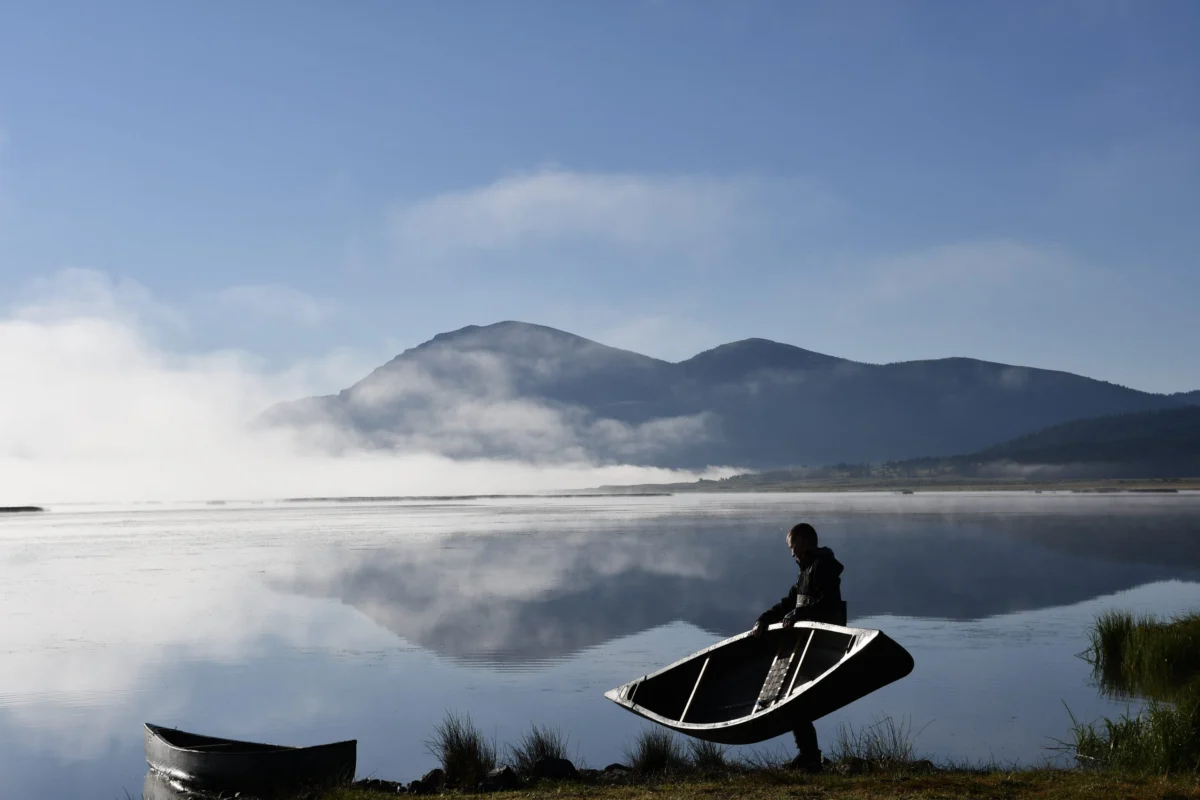
In stark contrast to these struggles, innovative and culturally integrated solutions are emerging from communities leveraging their inherent sovereignty and traditional ecological knowledge. In western Montana, the Confederated Salish and Kootenai Tribes (CSKT) on the Flathead Reservation offer a compelling model for environmental governance. Through the exercise of their tribal sovereignty and treaty rights, the CSKT have implemented unique protections for their rivers and waterways, forging a path that aligns agricultural needs with vital ecological processes. This proactive approach includes designating certain waterways as "primitive areas," accessible primarily to tribal members, thereby preserving cultural practices and fostering ecological restoration away from external pressures. Other areas have been designated as "cultural waterways," where management is guided by generations of traditional ecological knowledge (TEK) – a holistic understanding of the intricate relationships between living beings and their environment. This indigenous-led conservation strategy emphasizes long-term sustainability, community well-being, and a deep respect for natural systems, offering a profound lesson in adaptive governance and self-determination. Their success demonstrates how local control, informed by ancient wisdom and modern scientific understanding, can lead to more resilient and equitable outcomes than top-down, often reactive, policy-making.
The disparate approaches to environmental challenges, from top-down deregulation to community-led conservation, present a critical juncture for societies worldwide. The struggle to reconcile economic growth with ecological preservation, and the tension between broad public participation and swift executive action, define much of contemporary environmental politics. While some policies appear mired in outdated paradigms, struggling to adapt to the undeniable realities of climate change and resource depletion, others embrace forward-thinking strategies rooted in sustainability, cultural reverence, and collective responsibility. The examples from the Colorado River Basin and the Confederated Salish and Kootenai Tribes vividly illustrate this dichotomy: one grappling with the consequences of historical allocations in a new climate reality, the other pioneering a path toward ecological and cultural resilience. Moving forward, the future resilience of our planet and its inhabitants hinges not on short-sighted decisions or narrow self-interest, but on embracing common sense, fostering compassion for all living beings, and actively integrating diverse knowledge systems to build a truly sustainable future. The urgency of climate action and the imperative for comprehensive environmental protection demand a global shift towards policies that prioritize long-term well-being over immediate gain, ensuring a healthy planet for generations to come.