Joko Susilo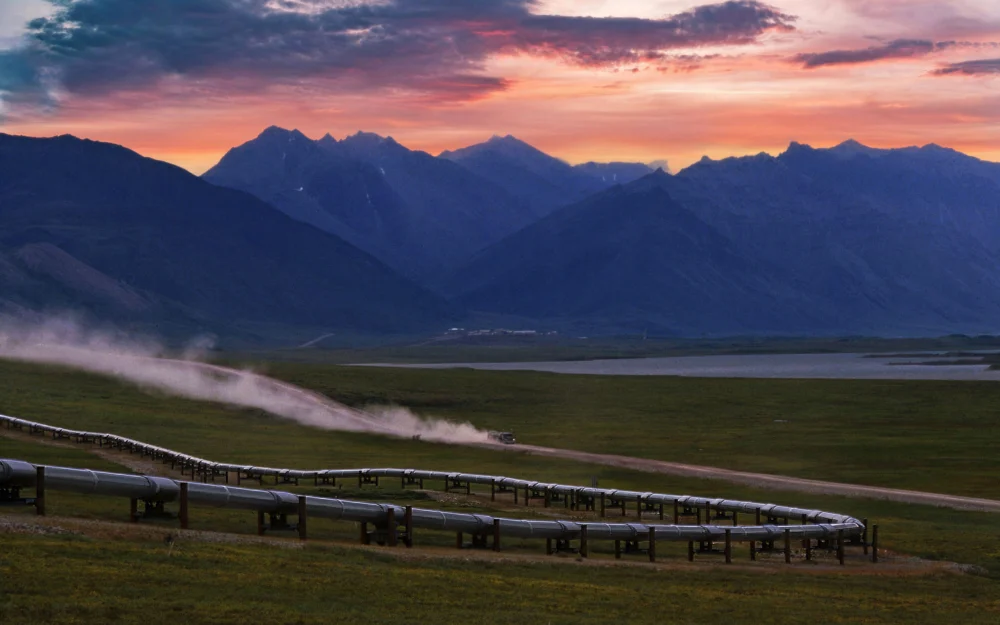
For generations, the federal government has regarded Alaska as a reservoir of abundant natural resources, a perception that has intensified under recent administrations. Following a 2018 meeting with then-President Trump, Governor Mike Dunleavy famously characterized Alaska as "America’s natural resource warehouse," underscoring a prevailing sentiment that views the state’s immense reserves as a strategic asset for national prosperity and energy independence. This current surge of activity echoes a historical precedent, with Philip Wight, an Arctic energy historian at the University of Alaska Fairbanks, noting that Alaska last held such prominent national attention in energy and conservation debates during the late 1970s, a pivotal era marked by the negotiations surrounding the Alaska National Interest Lands Conservation Act (ANILCA). ANILCA, a landmark piece of legislation, sought to strike a delicate balance by protecting vast tracts of Alaskan wilderness while also designating areas for resource development, a compromise that continues to shape land management policies today.
However, Wight emphasizes a crucial distinction in the contemporary landscape: the unprecedented alignment of a unified federal government aggressively pursuing multiple contentious development proposals simultaneously. This concerted effort is compounded by a notable decline in moderate Republican voices willing to challenge such initiatives and a discernible weakening of environmental conservation organizations, often battling systemic funding challenges and coordinated political pressures. While acknowledging Alaska’s historical role as a resource territory for centuries, Wight cautions that this wealth has too frequently flowed to outside corporations, failing to translate into sustained long-term welfare for the state’s residents. Despite its resource riches, Alaskans grapple with some of the nation’s highest energy costs, and the escalating impacts of climate change, from thawing permafrost to coastal erosion, already pose severe threats to existing infrastructure and challenge the viability of proposed new developments. "While Alaska has much to gain from developing our resources, we also have much to lose," Wight starkly concluded, encapsulating the profound dilemma facing the state.

The stakes are particularly high in several high-profile hotspots across the state, each representing a unique facet of this overarching conflict.
One such battleground is the Tongass National Forest, the largest national forest in the United States and the world’s largest intact temperate rainforest, sprawling across nearly 17 million acres in Southeast Alaska. Last summer, the U.S. Department of Agriculture announced its intent to rescind the Roadless Rule, a crucial regulation that safeguards tens of millions of acres of national forest from road-building and industrial logging. This move would open more than 9 million acres of the Tongass to potential development. The rule itself has been a political football, initially rolled back in 2020 during the Trump administration’s first term, only to be reinstated by the Biden administration in 2023. Advocates like Nathan Newcomer of the Southeast Alaska Conservation Council highlight the Tongass’s profound importance, stating, "People depend on it for subsistence, for hunting, for fishing, for a tourism economy, for recreation." Beyond its direct economic and cultural value to local communities, the Tongass plays a critical global role as a significant carbon sink, absorbing vast amounts of atmospheric carbon dioxide, making its preservation vital in the broader fight against climate change. A draft environmental impact statement from the USDA is anticipated in March 2026, aiming to finalize a new rule-making process by the end of next year. Concurrently, reports indicate that former President Trump is actively working to reopen international markets for timber harvested from the Tongass, potentially accelerating logging operations.
Further north, the fate of the Arctic National Wildlife Refuge (ANWR) hangs in the balance. As America’s largest and northernmost wildlife refuge, this 19-million-acre expanse, nestled between Alaska’s established Prudhoe Bay oil fields and the Canadian border, represents one of the planet’s most pristine and ecologically vital wilderness areas. The U.S. Geological Survey estimates its coastal plain, a critical habitat for diverse wildlife including calving caribou herds and denning polar bears, could hold between 4.3 billion and 11.8 billion barrels of oil, alongside substantial quantities of natural gas. Despite these projections, geopolitical complexities, fluctuating economic conditions, profound environmental concerns, and ongoing legal challenges continue to complicate the feasibility of extraction. During his first term, President Trump initiated the process of opening the refuge’s 1.57 million-acre coastal plain to oil and gas leasing. This led to two lease sales, with the state-owned Alaska Industrial Development and Export Authority (AIDEA) securing leases in January 2021. However, a subsequent sale in January 2025 garnered no bids, underscoring the commercial challenges and reputational risks associated with drilling in such a sensitive area. The Biden administration attempted to revoke AIDEA’s leases, but a federal court reinstated them in March 2025. In a January 20 executive order titled "Unleashing Alaska’s Extraordinary Resource Potential," Trump explicitly directed the Secretary of the Interior to "take all necessary steps" to facilitate additional coastal plain lease sales. This directive was followed by an October 2025 Record of Decision, which controversially opened the entire coastal plain to potential development. Most recently, Congress voted to overturn a Biden-era land-management plan that had sought to restrict drilling to a smaller, less sensitive section of the refuge, effectively clearing the path for broader development. The ecological implications of drilling in ANWR are profound, threatening the fragile tundra ecosystem and disrupting the migratory patterns and breeding grounds of species uniquely adapted to the harsh Arctic environment, many of which are already facing immense pressure from a rapidly warming climate.

Adjacent to ANWR, the National Petroleum Reserve in Alaska (NPR-A), a vast expanse of federal land located west of the Prudhoe Bay oil fields, is also experiencing a push for increased resource extraction. While designated primarily for energy development, the NPR-A is also home to crucial wildlife habitats. In October, the Bureau of Land Management began soliciting nominations for areas to be included in a future lease sale. These prospective sales coincide with significant rollbacks of environmental protections within the reserve, potentially opening over 18.5 million acres to leasing. This area includes vital calving grounds for the Teshekpuk caribou herd, a primary food source for local Indigenous communities, and critical habitat for millions of migratory birds that travel from across the globe to breed in the Arctic summer. Earlier this month, former President Trump signed Senate Joint Resolution 80 into law, effectively stripping away restrictions enacted by the Biden administration in 2022 that aimed to protect these ecologically sensitive zones from industrial development. Amidst these policy shifts, construction for ConocoPhillips’ massive Willow project, approved under the Biden administration and representing the first major development within the NPR-A, is well underway. The project, projected to produce over 600 million barrels of oil over its lifetime, has drawn fierce criticism from environmental groups who argue it undermines climate goals and poses unacceptable risks to Arctic ecosystems and Indigenous subsistence practices. Oil production from Willow is anticipated to commence before 2030, further cementing Alaska’s role as a key contributor to global oil supplies, even as the world grapples with the urgency of transitioning to renewable energy sources.
The long-standing plea of King Cove, a remote Aleut community of 750 residents, for a road connecting them to the Cold Bay airport, highlights the tension between immediate human needs and environmental preservation. For five decades, residents have sought this crucial link, primarily for emergency medical access, as severe weather often renders air and sea travel impossible. In late October, the Interior Department signed a land exchange agreement designed to facilitate the construction of an 18-mile, single-lane gravel road. This proposed route would primarily traverse the Izembek National Wildlife Refuge, an area recognized internationally for its exceptional importance to migratory birds, particularly as a vital staging and resting area for millions of waterfowl and shorebirds. The land swap entails moving less than 500 acres of refuge land to the Alaska Native Corporation King Cove Corp., which, in turn, will sell 1,739 acres of its own land to be added to the refuge. Proponents argue that the swap directly addresses decades-long public safety concerns and enhances subsistence access for residents, offering a tangible solution to a critical human welfare issue. However, the agreement swiftly drew legal challenges. In November, several tribal governments, including the Native Village of Paimiut, Native Village of Hooper Bay, and Chevak Native Village, joined environmental groups in a lawsuit against the administration. They aim to block the land trade, citing grave concerns over the irreversible damage the road could inflict on bird habitat. Chief Edgar Tall Sr. of the Native Village of Hooper Bay voiced these concerns starkly in a November 12 press release: "If the Izembek road happens, it will cause a lot of chaos for Alaska Native people in my region who still live off the land and sea. The birds we hunt may not be able to survive." The debate underscores the profound cultural and ecological significance of Izembek, recognized globally for its role in supporting the Pacific Flyway, a major migratory bird route.
Finally, the contentious proposal for the Ambler Road has re-emerged, pitting the strategic need for critical minerals against the preservation of a pristine wilderness and Indigenous way of life. For years, the construction of this 211-mile industrial road, intended to access the remote Ambler Mining District, was ensnared in protracted litigation. In 2024, President Biden’s administration rejected the road plan, citing its anticipated severe impacts on wildlife habitat and crucial waterways. Analysis revealed the project would necessitate an estimated 3,000 stream crossings, directly threatening populations of sheefish and the declining Western Arctic caribou herd, both indispensable subsistence food sources for the Indigenous communities residing in the Brooks Range area of Northern Alaska. However, in a dramatic reversal, former President Trump, on October 6, approved an appeal from AIDEA, thereby authorizing federal agencies to reissue permits for the road. This decision was accompanied by an announcement of a U.S. government partnership with Trilogy Metals, involving a $35.6 million investment to support exploration in the area and making the federal government a 10% shareholder in the mining company. Later that same month, the AIDEA board committed $50 million towards the project’s construction. The road is designed to unlock access to a remote region abundant in deposits of copper, silver, gold, lead, cobalt, and other essential metals. These "critical minerals" are increasingly vital for the manufacturing of modern technologies, including electric vehicles, renewable energy infrastructure, and defense systems, positioning the Ambler Road as a flashpoint in the global competition for secure and diversified supply chains. However, the environmental cost, particularly to the delicate Arctic ecosystem and the cultural integrity of the region’s Native inhabitants, remains a central and deeply polarizing concern.

These interconnected debates in Alaska reflect a microcosm of global challenges, where the demand for natural resources and energy security collides with the urgent need for environmental stewardship and respect for Indigenous rights. The decisions made in the coming months and years regarding Alaska’s future will not only determine the destiny of its unique landscapes and communities but will also resonate far beyond its borders, shaping national policy and international environmental efforts for decades to come.