Rocky Gerung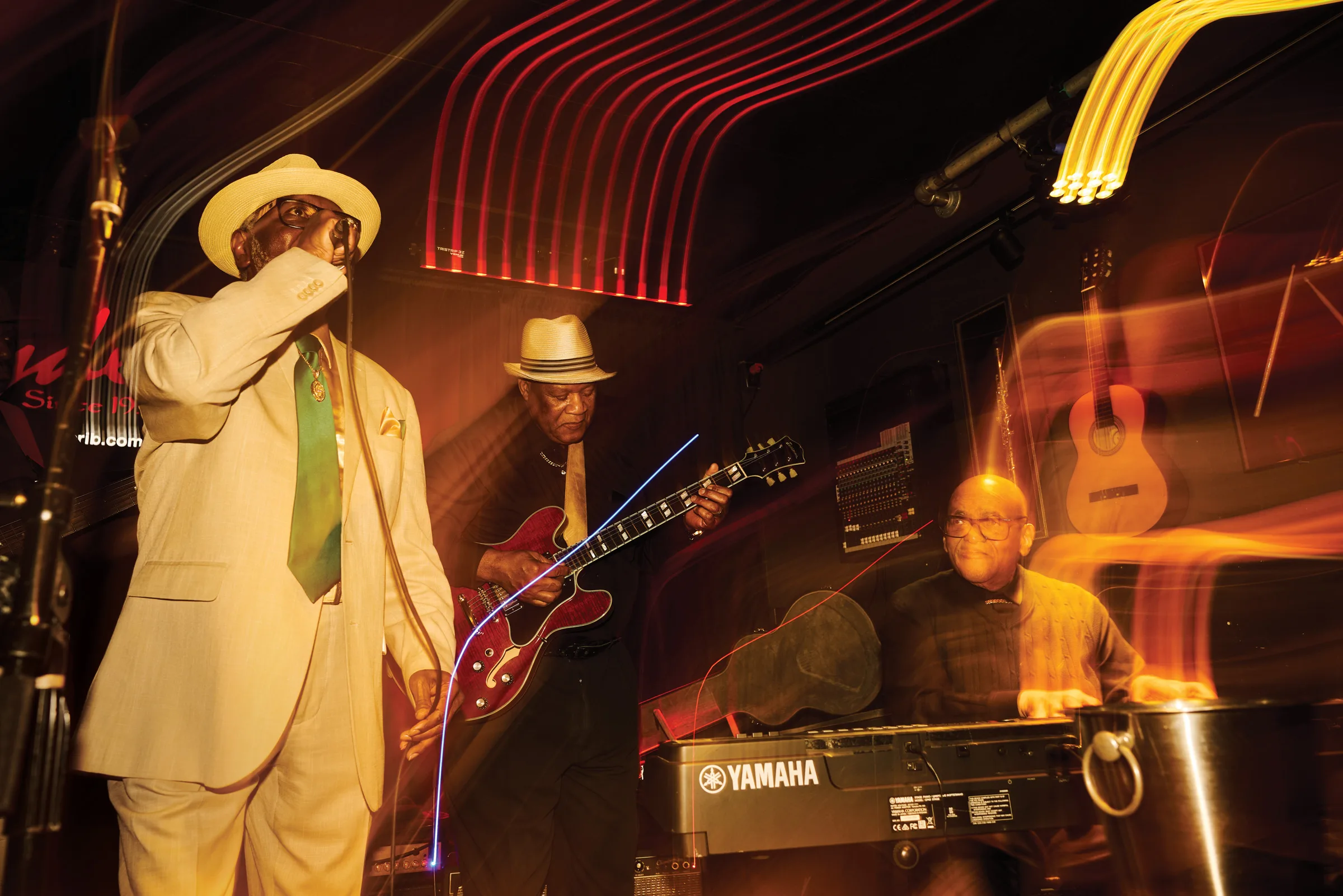
When Norman Sylvester, known affectionately as "The Boogie Cat," was a mere 12 years old, he embarked on a transformative journey from rural Louisiana to Portland, Oregon. His childhood was steeped in the natural bounty of the South—wild muscadine grapes, bayou fishing, and the rhythmic cadence of his grandmother’s gospel hymns as she churned butter. The summons to join his father, who had sought better employment opportunities in the distant West, felt like a departure from paradise. It was the autumn of 1957, a time when Oregon was notoriously unwelcoming to Black families, burdened by a history of discriminatory laws stretching back to 1844, including explicit exclusion acts until 1926 and the denial of land ownership to Black settlers. Oregon’s resistance to ratifying the 15th Amendment and its Supreme Court’s sanctioning of racial discrimination in public spaces, coupled with the presence of a potent Ku Klux Klan chapter by the 1920s, painted a stark picture. Yet, despite this hostile environment, Black pioneers had forged lives and established a vibrant community, evidenced by the Portland chapter of the NAACP, founded in 1914 and the oldest continuously operating west of the Mississippi. Nevertheless, the state’s anti-Black policies significantly limited the African American population; upon Sylvester’s arrival, Black residents constituted less than 1% of Oregon’s population, with Portland’s Black community being the smallest among major West Coast cities, a stark contrast to his Southern roots. Stepping off the train at Union Station, Sylvester was met with profound culture shock.

His first destination in this new city was a barbershop near the bustling intersection of North Williams Avenue and North Russell Street, a pivotal corner in what was then the heart of the Albina neighborhood. As he reached the intersection, the scene that greeted him was remarkably familiar, a vibrant tableau reminiscent of his Louisiana home. African Americans were prominently featured, managing businesses, driving well-maintained cars, and exuding confidence. This bustling corner, with its handsome brick buildings, charming businesses, and the palpable energy of a thriving community, felt like an unexpected echo of his past. Later, he would draw parallels to Harlem, but on that day, the scene simply made him feel at home, enveloped by the comforting scents of Southern cooking and the infectious rhythms of gospel and jazz music. "The place just embraced me," Sylvester recalled, his voice carrying the warmth of cherished memories. "Everybody was singing the same song, if you know what I mean."
The Albina neighborhood, once the vibrant core of Portland’s Black community, began to take shape in the early 1900s as Black Portlanders, many employed as railcar attendants, settled near Union Station. Decades of landlord discrimination and exclusionary housing policies, including a 1919 Portland Realty Board ruling against selling homes in white neighborhoods to non-white buyers, systematically confined Black residents to this area. By 1940, over half of Portland’s modest Black population, just under 2,000 individuals, resided in Albina. The outbreak of World War II dramatically altered the city’s demographic landscape, bringing over 100,000 newcomers, including approximately 20,000 African Americans, to work in the burgeoning shipyards. Among these arrivals were Sylvester’s parents and aunt and uncle, who settled in Vanport, a massive wartime housing development constructed in the floodplain of the Columbia River. Vanport became home to Oregon’s largest Black community, with around a quarter of its over 40,000 residents being African American.

The post-war era saw many residents depart Vanport. While Sylvester’s mother returned to Louisiana, his uncle found employment at a local hospital, and the rest of the family opted to remain in the vicinity, still residing in Vanport due to racial exclusion from other neighborhoods. Their lives were irrevocably altered on Memorial Day in 1948 when the swollen Columbia River breached its embankment, inundating Vanport within minutes. The catastrophic flood claimed at least 15 lives and left over 18,000 individuals, a third of them Black, homeless.
Displaced by the flood, Sylvester’s family, like most African Americans, sought refuge in Albina, the only Portland neighborhood that welcomed them. By the time Sylvester arrived, four out of every five Black Portlanders lived within this district. Despite challenges such as redlining, underinvestment, and substandard housing conditions, Albina fostered a close-knit and lively atmosphere, characterized by thriving Black-owned businesses, churches, and social hubs. "Everything you needed in a community was right there," Sylvester shared. Music, he emphasized, was a vital component of this community life. In the decades following Sylvester’s arrival, Albina pulsed with musical energy. Gospel choirs filled churches with sacred music, while soul bands packed the Cotton Club, a renowned venue for soul music in the Pacific Northwest. Jazz, blues, and funk could be heard nightly in the neighborhood’s numerous clubs, teen centers, and all-ages spaces, with bands frequently forming in informal settings like basements, backyards, and schoolrooms.

At the age of 13, Sylvester received a pawnshop acoustic guitar, purchased by his father who worked two jobs to afford it. His father promised an electric guitar if he learned three songs. Albina provided ample opportunities for musical tutelage; Sylvester learned his initial chords from a Creole neighbor and later honed his blues skills with a high school peer. Music became Sylvester’s refuge and a powerful means of self-expression, particularly for his shyness and stutter among urban youth. "But with my guitar in front of me, I could express myself," he stated. Now 80, Sylvester’s musical journey has been continuous. His first band, Rated "X," was a pioneering soul group in Portland. Despite local success with a 1972 single, a graveyard shift at his trucking job forced him to leave the band. He continued playing, eventually establishing himself as a distinguished blues musician with the Norman Sylvester Blues Band, which has performed for 40 years. He has shared stages with legends like B.B. King, Buddy Guy, and Mavis Staples, and in 2011, he was inducted into the Oregon Music Hall of Fame.
Sylvester’s story is but one thread in the rich tapestry of Albina’s musical heritage, a legacy woven by a community of Black musicians, educators, and advocates who transformed the region into a West Coast musical hub. For too long, this vibrant history remained largely confined to the memories and personal archives of those who lived it, a generation now nearing the end of their lives.

By the early 2000s, Bobby Smith, a young white schoolteacher and occasional music journalist, moved to Albina, finding a neighborhood that bore little resemblance to its past. He was aware of the lively jazz scene of the 1940s and ’50s, documented in Robert Dietsche’s 2005 book "Jumptown," but the public narrative of Black music in Portland seemed to abruptly end in 1957. Driven by curiosity, Smith embarked on a quest to uncover what happened next, scouring used record stores for commercial recordings of Portland’s Black musicians from the 1960s, ’70s, and ’80s, finding very few. The 45 single by Sylvester’s band Rated "X" was one of the rare discoveries from those decades. Concurrently, Smith engaged with the community, frequenting parks and Clyde’s Prime Rib, one of the few venues that regularly featured elder Black performers, listening to stories and soaking in the local music scene.
In 2014, Smith began DJing for XRAY-FM, a nascent community radio station broadcasting from Albina. He started sharing his small collection of regional music and inviting local musicians to discuss it on air. Calvin Walker, a drummer, bandleader, and self-proclaimed "child of Albina," became a frequent and invaluable guest. Their initial 30-minute interview extended to three hours as Walker recounted his life story and mapped out the interconnected ecosystem of musicians and educators who had shaped Albina’s cultural landscape. "If you’re really curious about this, here’s a list of people you need to start talking to," he told Smith, offering his assistance.

Smith’s weekly radio show evolved into a crucial platform for elder Black musicians to share their experiences. Despite systemic barriers to the recording industry, Albina’s musicians had diligently documented their work, leaving behind a wealth of unreleased recordings—demos, reel-to-reels, cassettes, and VCR tapes. This growing collection of music and memorabilia illuminated an extraordinary legacy of Black arts and culture in Portland, an untold chapter of Oregon’s history.
In 2015, Walker, Smith, and Ken Berry, another respected local musician and community leader, established the Albina Music Trust (AMT). Their ambitious mission: to preserve thousands of obsolete and deteriorating media items and make them accessible to the public. They assembled a team of volunteers, with elder engineers donating their expertise and equipment to digitize and catalog the vast collection. By 2024, AMT launched the Albina Community Archive, believed to be the nation’s only community archive dedicated to restoring a Black community’s music culture. This online repository houses over 13,000 items from 180 sources, including music, films, newsprint, posters, handbills, and oral histories. The archive serves as a vital resource, fueling projects that extend far beyond the website. "Wall to Wall Soul," an art installation featuring restored posters and photography, has been exhibited widely and now finds a permanent home at Clyde’s Prime Rib. The AMT record label, also named "Wall to Wall Soul," releases previously unissued music from Albina’s past alongside new works by contemporary artists. "The Albina Soul Walk," an audio tour, guides listeners through the historic neighborhood, highlighting former venues and gathering places, enriched by the voices of musicians and club owners reminiscing about Albina’s vibrant past. This immersive experience brings an unseen dimension of the neighborhood into focus, lingering long after the audio concludes.

One summer morning, Smith, Walker, and Berry welcomed me to AMT’s modest office in Northeast Portland, a space that felt more like a communal living room than a corporate headquarters. Shelves overflowed with labeled boxes, and a diverse array of audio equipment spanned decades. Jazz music filled the air, creating an atmosphere of shared passion and dedication. Our conversation flowed organically, each anecdote leading to another, blurring the lines between professional discussion and personal reminiscence, much like the harmonious interplay of a seasoned band.
Ken Berry, who arrived in Oregon from Kansas in 1953 as a young child, experienced firsthand the exclusionary practices of the time. His family’s initial settlement in Southeast Portland was short-lived due to anti-integration sentiment, leading them to move to Albina. There, he began playing piano at the New Hope Missionary Baptist Church, earning a meager 75 cents a day. He joined the choir at Jefferson High School and, after graduation, became a fixture at Albina’s premier jazz club, The Upstairs Lounge, where he met trumpeter Thara Memory. Memory, en route to Seattle, was captivated by Albina’s vibrant community and decided to stay, forming the group Shades of Brown with Berry, a collaboration that would significantly influence Albina’s music scene for decades.

Around the same time, Walker encountered Memory at another vital Albina hub, the Albina Arts Center. As a teenager, Walker performed with his jazz-infused funk band, The Gangsters. Memory’s arrival and impromptu trumpet performance left a lasting impression, inspiring Walker to focus on drums. Their collaboration exemplified the creative synergy within Albina. In 1970, The Gangsters, along with Memory, famously secured a spot at the state-sponsored Vortex 1 rock concert, an event organized to distract from potential war protests. Their powerful performance, despite initial booking challenges, underscored the talent emerging from Albina.
Despite its historical significance, the Vortex 1 performance and many other crucial aspects of Albina’s musical history were largely absent from mainstream retrospective accounts. When AMT inquired about these omissions, the answer was consistently that researchers simply lacked the information. "The public library and the Oregon Historical Society have existed for over a hundred years," Smith noted, "But in the 10 years we’ve been around, we’ve become the largest digital repository of Black arts and culture in the entire state of Oregon." Walker echoed this sentiment, emphasizing the profound trust placed in AMT by the community: "People are putting their lives in our hands because they trust that their story will be told accurately." AMT is part of a growing national movement of community archives dedicated to preserving marginalized histories, broadening the scope of historical narratives and creating a more inclusive understanding of America’s past.

The Gangsters’ recordings, made in the 1970s, remained unreleased for four decades, a testament to the systemic barriers faced by Black musicians. Even Thara Memory’s daughter, acclaimed vocalist Tahirah Memory, was unaware of these recordings until AMT unearthed them in 2017. Tahirah, who performs extensively and draws inspiration from jazz and soul traditions, grew up surrounded by Albina’s musical luminaries but gained a deeper understanding of their struggles and perseverance through the archive. "The archive fills in a lot of gaps," she shared. "In this country, there hasn’t been a huge invitation for Black folks to have a history." In 2018, AMT released The Gangsters’ album on vinyl, accompanied by a booklet of oral histories and photographs, culminating in a sold-out album-release concert that reunited historic groups and celebrated contemporary artists.
For Tahirah Memory, the work of AMT has been profoundly healing. "The archive is as much about social change as it is about music. It’s a record of how Black people have leaned on art to make a way," she explained. She views Albina’s creative output as a testament to resilience: "Some of the best magic has come out of Albina because it was a place where not-great things happened."

By the 1970s, Albina was undergoing significant transformation. Like many American cities, Portland engaged in "urban renewal" projects, often leading to the demolition of Black and minority neighborhoods under the guise of clearing "slums." James Baldwin famously articulated this reality as "Negro removal." Portland was no exception. In the late 1950s, hundreds of homes in Albina were razed for Interstate 5 and the Memorial Coliseum. Later, in the 1960s, the city secured federal funds to demolish 76 acres for Legacy Emanuel Hospital’s expansion, a project that displaced numerous households and businesses, including the commercial heart of Albina at Williams and Russell. While community organizers successfully halted some demolition projects, advocating for rehabilitation and park creation, others proceeded. Neighborhoods in lower Albina were replaced by the Portland Public School District headquarters and the Water Bureau. The hospital expansion ultimately never materialized, leaving the land vacant for decades. In total, over 1,100 housing units and dozens of businesses were destroyed through "urban renewal" in Albina. Compounding these losses, banks redlined the remaining neighborhood, restricting access to loans and driving further displacement.
As Albina’s commercial and social spaces diminished, racial tensions escalated across Portland following the assassination of Martin Luther King Jr. Black bands faced exclusion from downtown venues, and changing entertainment landscapes, coupled with new laws and police brutality, made it increasingly difficult for musicians to sustain their careers. Despite these challenges, music remained a vital source of connection and spiritual sustenance. Ken Berry co-founded the World Arts Foundation in 1976, a nonprofit dedicated to promoting African American culture through various ensembles and educational programs. Thara Memory, inspired by the need for broader access to Black music traditions, co-created the TimeSound concert series, which featured a 24-piece ensemble at the Civic Auditorium in 1981, breaking down venue segregation.

Building on this initiative, local musicians established YouthSound, a big band and choir program for children that fostered musical development and cross-cultural understanding. This program provided music education to underserved youth, with several alumni, including Grammy-winning bassist Esperanza Spalding, achieving international acclaim. The creators of these programs, however, aimed for more than just musical proficiency; they sought to instill values of social justice, peace, and unity. As Berry articulated in an oral history for an AMT album, "Each person in the choir is an individual, and when we sing, we’re making sure to let one another know that, even though we’re different individuals, we’re all connected. We have to deal with the same things together. I’m talking about social justice. I’m talking about peace, joy, happiness. That’s what the music did for all of us that were in the choir."
The Albina Music Trust’s work is fundamentally forward-looking. "In another 50 years, we don’t want a couple of guys like me and Ken sitting around talking about the good old days," Walker remarked, emphasizing the importance of intergenerational knowledge transfer. AMT actively collaborates with Portland schools and nonprofits to expand arts education and connect young people with Albina’s rich Black music heritage.

At a recent event, "Rhythms of Tomorrow," a collaboration between AMT and Portland Public Schools, the district’s first-ever celebration of Black Music Month, the spirit of Albina’s legacy was palpable. Driving through historic Albina, now a rapidly gentrifying area with a predominantly white, middle-class population, one witnesses the stark transformation from Sylvester’s childhood memories. The once-vibrant community has been reshaped by decades of displacement, yet remnants of its cultural significance persist. The school district headquarters, built on land previously occupied by homes and community spaces, became the venue for an event that brought together generations of Black Portlanders and allies. Norman Sylvester, a living link to Albina’s past, opened the event, his blues-infused guitar playing a testament to the enduring power of dedication and perseverance. His music, he explained, honors the journeys of artists like Muddy Waters and Son House, embodying a commitment to striving for something better.
Following Sylvester’s set, a gospel quartet, featuring members with deep ties to Albina’s musical lineage, captivated the audience. The performance evoked a profound sense of connection, a reminder that music itself serves as a repository of memory and experience. The presence of Janice Scroggins’ daughters, Arietta Ward and Nafisaria Mathews, performing their mother’s compositions, underscored the intergenerational transmission of musical talent and legacy. Scroggins, a virtuoso pianist and educator, represented the often-underrecognized contributions of women in music. Despite facing industry biases and discrimination, female artists in Albina, including Scroggins, Linda Hornbuckle, and Marianne Mayfield, carved out significant roles, their resilience and artistry continuing to inspire.

Ward, now performing as Mz. Etta, embodies this spirit of perseverance. Her dynamic performances and mentorship reflect the values instilled by her Albina upbringing: honoring the music, respecting oneself, and embracing freedom. She actively collaborates with AMT to amplify the legacy of Albina’s female musicians, ensuring their contributions are recognized. The concert’s closing performance by producers Tony Ozier and Jumbo, who remixed archival recordings for AMT’s album "Soul Assembly," highlighted the fusion of past and present. Their modern interpretations breathed new life into classic tracks, bridging generations and fostering a sense of continuity. The album’s title itself references a 1968 musical production by the Black Student Union at Jefferson High, a powerful expression of Black identity and creativity amidst racial unrest.
Ozier, a producer who discovered Portland’s deep-rooted Black music scene through Janice Scroggins, emphasizes the importance of connecting youth with this history. He believes that the music young people engage with profoundly shapes their cultural identity. The re-release of "Searchin’ for Love," originally by Shades Of Brown, and Jumbo’s contemporary remix, powerfully illustrate this connection between past struggles and present resilience. The performance served as a potent reminder of Albina’s enduring spirit, a place where history and dreams coalesce.

The revival of the TimeSound concert series at the newly expanded Albina Library marked a significant moment. Standing at the intersection of Williams and Russell, the site of Sylvester’s childhood arrival, one observes the dramatic changes that have reshaped the neighborhood. Yet, the groundbreaking for a new residential and commercial development, prioritizing those with generational ties to Albina and supported by initiatives like the 1803 Fund, signals a renewed commitment to the community’s cultural heart. This project, along with a recent city settlement for descendants of displaced families, underscores a growing recognition of past injustices and a dedication to fostering a future where culture and community thrive. As Juma Sei of the 1803 Fund stated, "You can have a bunch of buildings, but it doesn’t matter if there isn’t a culture to put people into those buildings." The TimeSound concert, filled with predominantly Black families spanning generations, offered a hopeful vision of Albina’s enduring cultural vitality, a testament to its capacity to rebuild and flourish.