

 Rocky Gerung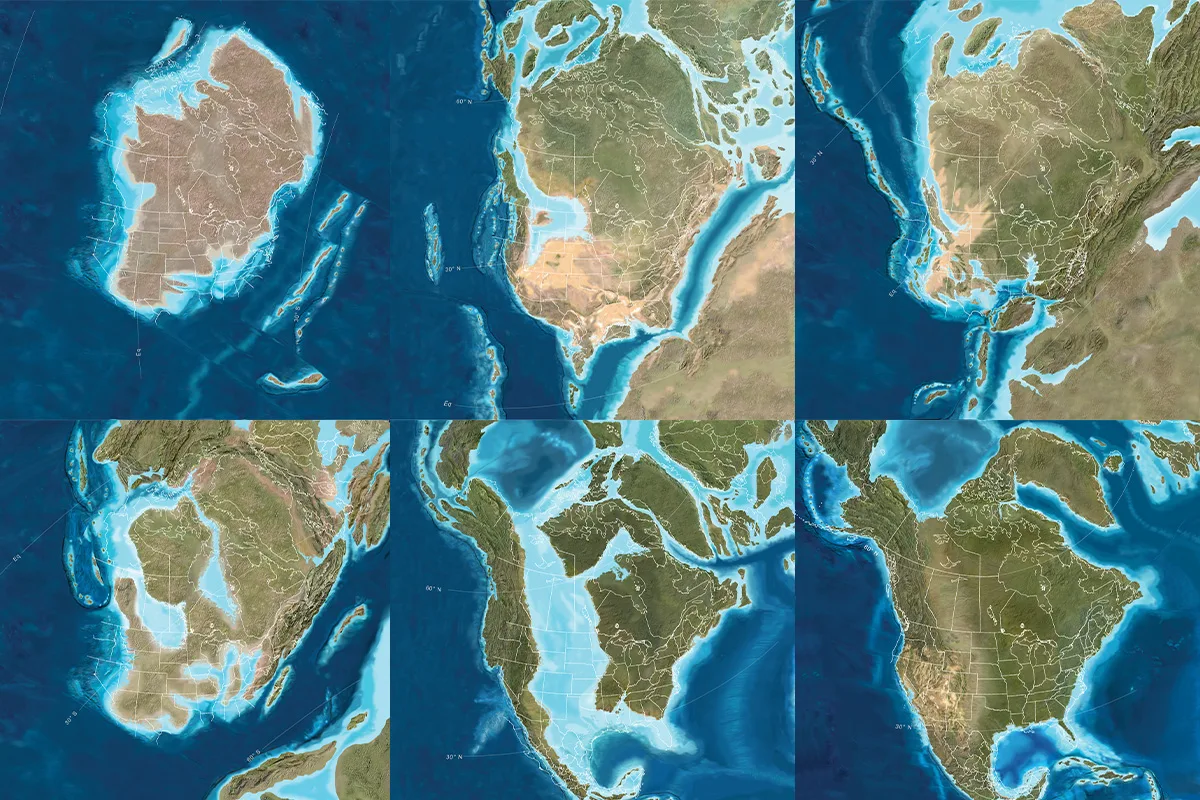
The ceaseless migration of sand dunes in the Gran Desierto de Altar, a stark desert landscape east of the Colorado River’s former mouth, offers a tangible analogy for deciphering ancient geological processes. Just as wind sculpts these shifting sands, it once etched sweeping diagonal lines across formations like the Grand Canyon’s Coconino sandstone, revealing wind directions from 280 million years ago. This principle, encapsulated by the geologist’s adage that "the present is the key to the past," underscores how observable, incremental changes can illuminate epochs long gone. However, the geological record also chronicles profound, often global, cataclysms, most notably the "Big Five" mass extinction events that fundamentally reshaped life on Earth. These pivotal moments, alongside gradual transformations, provide a rich narrative that can profoundly inform our understanding of current environmental challenges and future trajectories. To truly grasp the wisdom held within the Earth’s strata, one must embrace the concept of "deep time"—the vast, almost incomprehensible expanse of Earth’s history, stretching back billions of years. Exploring this deep past, through the lens of scientific inquiry and compelling narrative, offers invaluable perspective on the long-term consequences of our present-day actions. Three seminal books offer distinct yet complementary journeys into this geological realm.
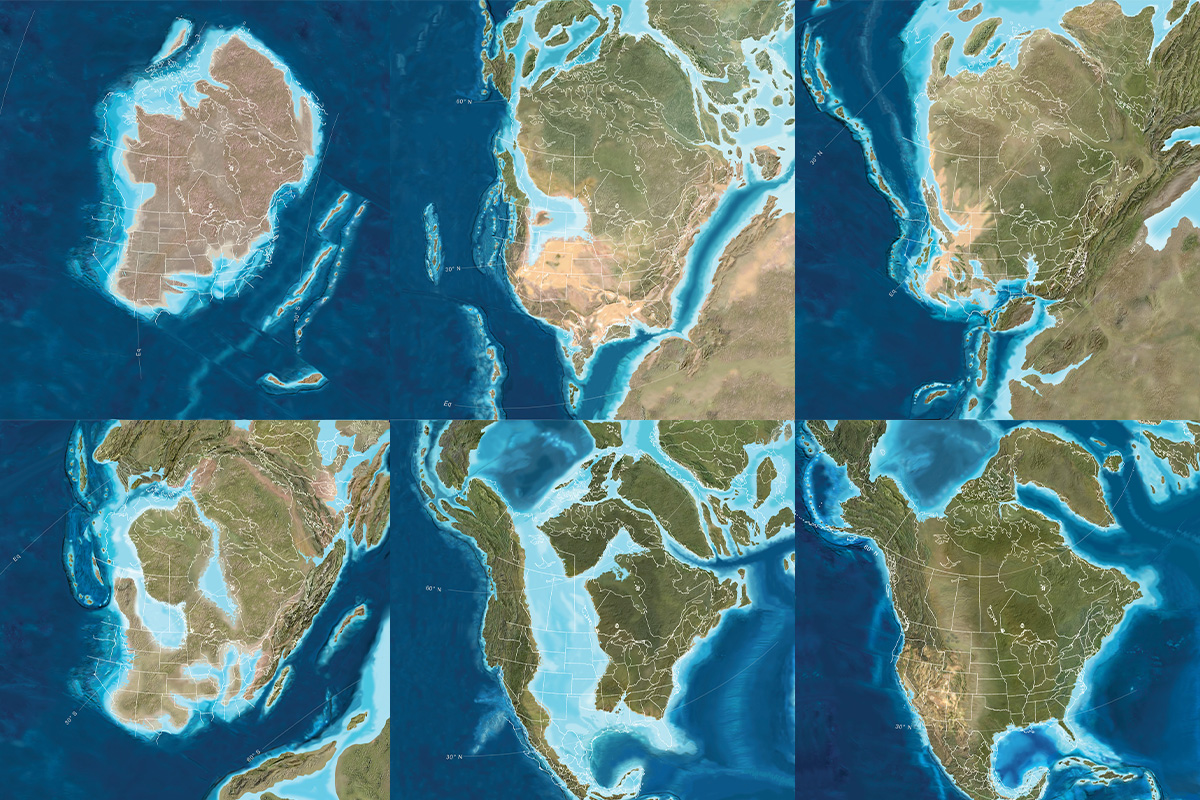
John McPhee, a celebrated writer for The New Yorker, popularized the term "deep time" in his 1981 work, Basin and Range. This foundational text, now available in a lightly updated version within his 1999 Pulitzer Prize-winning anthology, Annals of the Former World, provides an accessible entry point into Earth science. Though originally published during the Reagan administration and revised in the Clinton era, McPhee’s storytelling retains its potent relevance, even as scientific details have been refined. Driven by a desire to illuminate the most compelling aspects of North America’s billions-of-years-old history, McPhee accompanied geologists on a cross-continental expedition along Interstate 80, from New Jersey to Nevada. His narrative method involved immersing himself in the landscapes and geological events that scientists interpret from the rocks.
In the arid expanses of Utah and Nevada, McPhee delves into the geological phenomenon of basin and range topography—the striking alternation of long mountain chains, or ranges, separated by equally elongated valleys, or basins. Geologists explain this dramatic landscape as the result of tectonic forces: "Faulting produced this basin," a geologist informs McPhee, "Sediments filled it in." This simplified explanation belies the immense timescales involved, as this geological drama unfolded over millions of years, a period far younger than the age of dinosaurs. McPhee explores how the North American continent is actively being stretched and torn apart between the Rocky Mountains and the Sierra Nevada, a process that has occurred repeatedly throughout Earth’s history. He recounts how, 200 million years ago, a similar rifting event led to the breakup of the supercontinent Pangea, ultimately ushering in the Atlantic Ocean. This historical perspective prompts a speculative question about the distant future: will the inhabitants of Nevada one day gaze across a new sea towards California?

McPhee’s narrative style is marked by engaging detours, such as a visit to an abandoned silver mine in Nevada with a geologist companion. Following a precarious road overlooking a valley, McPhee reflects on its significance to the Paiute people, akin to the Black Hills for the Sioux. He learns about the historical mining practices that extracted the richest silver veins, leaving behind potentially millions of dollars worth of ore as waste. Beyond these human-driven narratives, McPhee grapples with the sheer immensity of geologic time. He observes that human perception of time is typically confined to a few generations, with a strong focus on the present. Geologists, however, contemplate timescales that challenge human comprehension, measuring deep time not just in years, but in epochs. McPhee’s book serves as an essential primer, a gateway to understanding how geologists can "inhabit scenes that no one ever saw… archipelagos of aching beauty rising in volcanic violence to settle down quietly and then forever disappear—almost disappear."
Science journalist Laura Poppick, in her July 2025 book, Strata: Stories from Deep Time, explores similar geological histories with a meticulous attention to detail that echoes McPhee’s approach. Yet, Poppick’s work, woven with meditative prose, offers a distinct chronological framework, organizing deep time through elemental themes: air, ice, mud, and heat. She investigates rocks dating back 2 to 3 billion years, which hold clues about the initial emergence of oxygen in Earth’s atmosphere. Poppick travels to Minnesota to examine iron-rich rocks from a period of global anoxia, a time when oxygen was virtually absent from the atmosphere—a state that persisted for roughly half of Earth’s existence. This primordial atmosphere laid the groundwork for life as we know it, and crucially, for the formation of iron, a metal indispensable for modern technologies ranging from "steel cars and kitchen appliances and medical devices and airplanes," as Poppick notes.

The fossil record within rock strata also chronicles the dramatic shifts of life, particularly the "Cambrian explosion" around 540 million years ago, when most of today’s major animal phyla first appeared. Paleontologists meticulously study these fossils to trace evolutionary pathways and understand the impact of mass extinction events. Poppick examines two of the "Big Five" mass extinctions: one occurring approximately 250 million years ago, and another roughly 50 million years later. Unlike the asteroid impact that famously wiped out the dinosaurs, these earlier extinction events appear to have been triggered by colossal volcanic eruptions in geologically sensitive regions. "The magma that welled up from the mantle sat directly beneath massive reservoirs of oil, gas and coal," Poppick explains, detailing how this interaction released not only carbon dioxide but also toxic hydrocarbons and ozone-depleting gases. This historical account of past environmental catastrophes offers a potent parallel for understanding contemporary climate change and "how we might find a way out."
Climate modeling suggests that the Mesozoic Era, often characterized as the age of dinosaurs, experienced global temperatures between 14 and 25 degrees Celsius (25 to 45 degrees Fahrenheit) warmer than today. Poppick joins scientists in Wyoming, venturing to a secluded site in search of evidence from the era of Earth’s largest terrestrial animals: the long-necked sauropods, such as Diplodocus, Brontosaurus, and Apatosaurus. These scientists are less interested in the fossilized bones themselves and more focused on reconstructing the environment that sustained these colossal herbivores and how it evolved over time. Their research centers on the Morrison Formation, a vast sequence of sedimentary rocks stretching from New Mexico to Montana, which has yielded more dinosaur fossils than any other formation on the continent. The deposition of these rocks took approximately 9 million years, thus preserving a detailed chronicle of dinosaurian life during that period. Poppick emphasizes the scale of this geological timeframe by comparing it to human evolution: "just twelve million years or so of evolution produced humans, gorillas and chimps from the same common ancestor." By studying the Morrison Formation’s layers, scientists are piecing together how sauropods and other dinosaurs thrived in the Jurassic warmth, deepening our understanding of Earth’s capacity to support life under extreme heat conditions.

To truly immerse oneself in the Jurassic world of the Morrison Formation, one can turn to Riley Black’s February 2025 book, When the Earth Was Green. Black, a science writer and paleontologist, masterfully blends scientific data with artistic expression to evoke the sensory experience of ancient ecosystems. Each chapter is presented as a vignette, accompanied by an appendix that outlines the author’s interpretations, speculations, and creative insights. Black transports readers to Utah 150 million years ago, vividly depicting an Apatosaurus feeding amidst a lush landscape of horsetails and an ancient relative of the ginkgo tree. The sauropod’s immense size and long neck allowed it to access sustenance from both the forest floor and the high canopy, providing a natural defense against predators. Black describes the creature’s existence as a "testament to the strange nature of her habitat," a verdant world of towering conifers and a dense undergrowth of ferns and cycads, essential for supporting such gargantuan herbivores. This dynamic relationship between large herbivores and their plant food sources represents a profound "evolutionary dance." In contrast to her previous work, The Last Days of the Dinosaurs, which meticulously detailed the final moments of the Cretaceous period, When the Earth Was Green focuses on the more gradual processes of co-evolution and adaptation, showcasing the intertwined stories of life preserved within the rock record.
The narrative approaches offered by these three authors provide distinct pathways into deep time. McPhee invites readers on a spirited road trip, guided by a charismatic geologist whose exclamations of "Shazam!" punctuate observations of remarkable rock formations. While some of the geological humor might require a primer, the journey itself is exhilarating. Poppick offers a more participatory experience, drawing readers into the fieldwork, research, and laboratory settings where scientific discovery unfolds, demonstrating that the process of science is inherently engaging. Black, with her vivid prose, plunges readers into almost dreamlike ancient landscapes, employing imagination and scientific knowledge to make deep time palpable. As Poppick aptly observes, "Our planet seems to be telling us to take a look back." These books collectively serve as invaluable guides, illuminating the vast expanse of Earth’s history and prompting reflection on humanity’s place within its ongoing narrative.







