Joko Susilo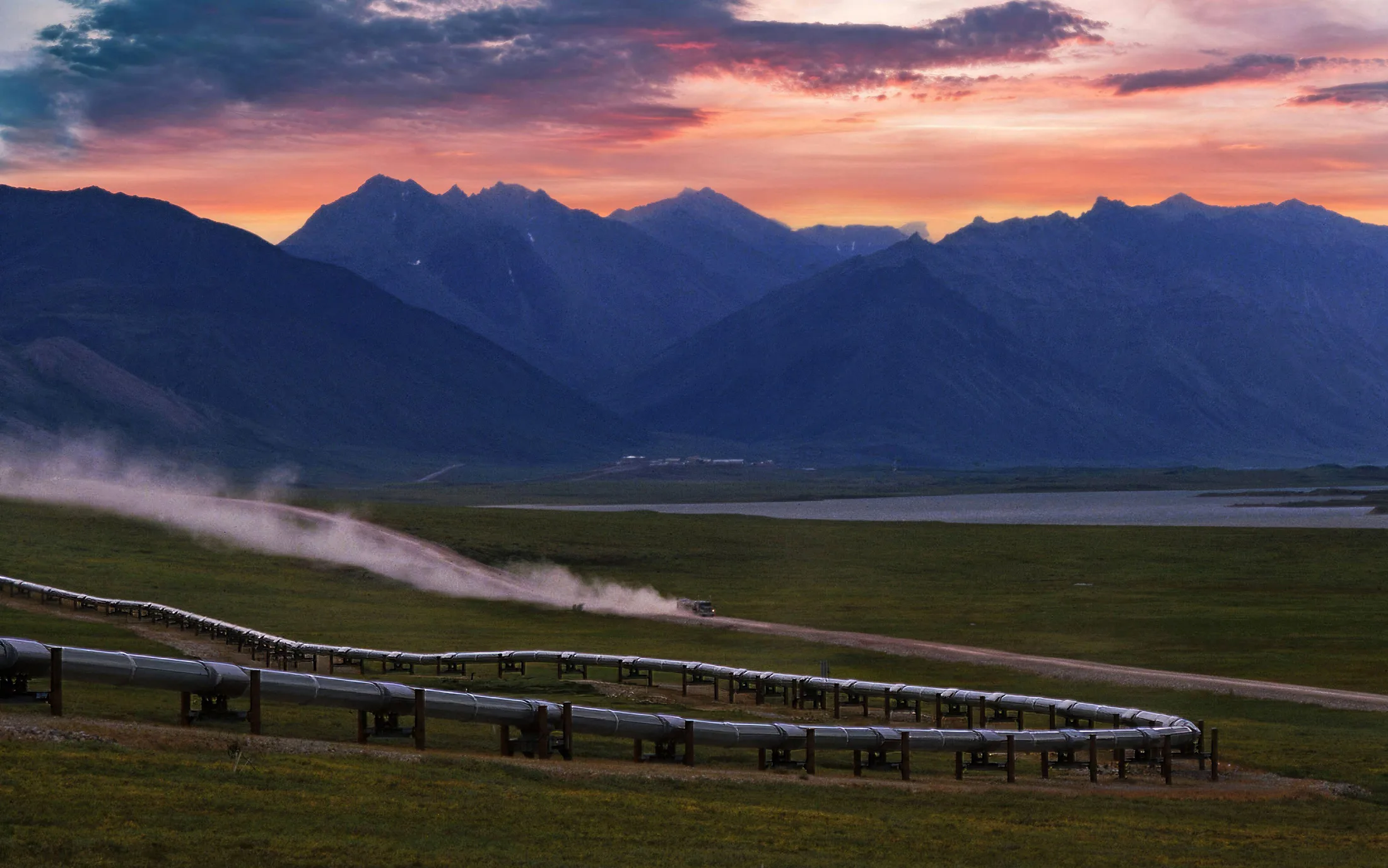
Over the past year, a relentless wave of high-profile development proposals, ranging from ambitious oil field expansions and critical mining roads to extensive timber projects, has fundamentally reshaped the national discourse, placing Alaska squarely at the epicenter of the enduring debate over how to balance crucial energy production with vital conservation efforts. These projects have reignited long-running tensions concerning the ultimate purpose of the state’s vast public lands and the beneficiaries of their immense natural wealth.
For generations, the federal government has regarded Alaska as a reservoir of abundant natural resources, a stance that gained considerable momentum and intensified under the Trump administration. Following a pivotal meeting with then-President Trump in 2018, Governor Mike Dunleavy famously characterized Alaska as "America’s natural resource warehouse," signaling a clear intent to prioritize extraction. However, the last time Alaska occupied such a prominent position in national energy and conservation discussions was during the late 1970s, a period marked by intense negotiations that ultimately culminated in the landmark Alaska National Interest Lands Conservation Act (ANILCA) of 1980. This monumental legislation designated over 100 million acres of federal land as national parks, wildlife refuges, and wilderness areas, fundamentally shaping the state’s conservation landscape.
Today’s political and environmental landscape, however, presents a distinctly different and arguably more challenging scenario, according to Philip Wight, an Arctic energy historian at the University of Alaska Fairbanks. Unlike the ANILCA era, which involved complex bipartisan compromises, the current environment sees a unified federal government actively championing multiple contentious development proposals simultaneously. This aggressive push is met with fewer moderate Republican voices willing to oppose such initiatives, while environmental conservation organizations often find themselves weakened by systemic funding challenges and coordinated political attacks, diminishing their capacity for effective resistance.
Wight acknowledges that Alaska has served as a resource territory for centuries, a legacy deeply intertwined with its history from Russian colonization to American statehood. Yet, this immense wealth has, too frequently, disproportionately benefited outside corporations and distant economic interests, often failing to contribute meaningfully to the long-term welfare and prosperity of Alaskans themselves. Paradoxically, despite being a major energy producer, Alaskans continue to face some of the nation’s highest energy costs, a burden exacerbated by the state’s remote geography and reliance on imported fuels. Moreover, the accelerating impacts of climate change—manifesting as thawing permafrost, coastal erosion, and unpredictable weather patterns—already pose significant threats to existing infrastructure and challenge the viability of proposed developments. As Wight aptly summarized, "While Alaska has much to gain from developing our resources, we also have much to lose."

This delicate equilibrium is currently being tested across several high-profile hotspots throughout the state.
Logging the Tongass National Forest
Last summer, the U.S. Department of Agriculture announced its intent to rescind the Roadless Rule, a move poised to open more than 9 million acres of the Tongass National Forest to extensive road-building, logging, and other development activities. This critical environmental protection, which safeguards tens of millions of acres of national forests across the country, has been a political football, having been rolled back during the Trump administration’s first term in 2020 and subsequently reinstated by the Biden administration in 2023. At nearly 17 million acres, the Tongass stands as the largest national forest in the United States and holds the distinct ecological designation as the world’s largest intact temperate rainforest. Its ancient, old-growth forests are globally recognized for their immense capacity for carbon sequestration, playing a crucial role in mitigating climate change. Beyond its ecological significance, the Tongass supports a vibrant ecosystem vital for the livelihoods of local communities. "People depend on it for subsistence, for hunting, for fishing, for a tourism economy, for recreation," explained Nathan Newcomer, who advocates for the Tongass with the Southeast Alaska Conservation Council. The forest’s abundant salmon runs, in particular, underpin both the region’s commercial fishing industry and the traditional diets of Alaska Native communities. Newcomer indicated that a draft environmental impact statement from the U.S. Department of Agriculture could emerge by March 2026, with the ambitious goal of finalizing a new rule-making process by the end of next year. Concurrently, reports suggest the Trump administration is actively working to reopen the international market for timber harvested from the Tongass, signaling increased pressure on this invaluable natural asset.
Development in the Arctic National Wildlife Refuge (ANWR)
America’s largest and northernmost wildlife refuge, ANWR, spans an immense 19 million acres, stretching between Alaska’s established Prudhoe Bay oil fields and the Canadian border. The U.S. Geological Survey estimates that its highly sensitive 1.57 million-acre coastal plain, often referred to as the "1002 Area," may contain anywhere from 4.3 billion to 11.8 billion barrels of recoverable oil, alongside significant quantities of natural gas. This area represents critical habitat for numerous species, including the Porcupine Caribou Herd, whose annual migration and calving grounds are sacred to the Gwich’in Nation, and threatened polar bears, which rely on the coastal plain for denning. Despite these vast resource estimates, geopolitical shifts, volatile economic conditions, evolving environmental standards, and persistent legal challenges continue to complicate the feasibility of extracting these reserves. During his first term, President Trump explicitly opened the refuge’s coastal plain to oil and gas leasing, culminating in two lease sales. While the Alaska Industrial Development and Export Authority (AIDEA), a state-owned public resource development corporation, secured leases in January 2021, a subsequent sale in January 2025 notably attracted no bids, reflecting industry’s cautious approach amidst legal and public opposition. The Biden administration later attempted to cancel AIDEA’s leases, only for a federal court to reinstate them in March 2025. In his January 20 executive order titled "Unleashing Alaska’s Extraordinary Resource Potential," Trump emphatically called upon the Secretary of the Interior to "take all necessary steps" to facilitate additional coastal plain lease sales. Further escalating the situation, a new Record of Decision released in October 2025 opened up the entire coastal plain for potential development, and just last month, Congress voted to strike down a Biden-era land-management plan that had previously restricted drilling to a much smaller section of the refuge in an effort to protect wildlife.

Oil in the National Petroleum Reserve in Alaska (NPR-A)
The National Petroleum Reserve in Alaska (NPR-A) constitutes a colossal 23 million-acre expanse in northernmost Alaska, situated immediately west of the established Prudhoe Bay oil fields. Originally designated for its strategic petroleum reserves, the NPR-A also encompasses ecologically sensitive tundra landscapes. In October, the Bureau of Land Management began accepting nominations for areas earmarked for a future lease sale. These proposed sales align with significant rollbacks on existing protections within the area, effectively opening up more than 18.5 million acres to oil and gas leasing. This vast territory includes critical habitat for millions of migratory birds that traverse the Pacific Flyway and crucial calving grounds for the Teshekpuk caribou herd, a vital subsistence resource for Indigenous communities. Earlier this month, President Trump signed Senate Joint Resolution 80 into law, a legislative action that explicitly stripped away restrictions established in 2022 by the Biden administration, which had aimed to protect ecologically delicate areas within the NPR-A from industrial development. Amidst these policy shifts, construction for ConocoPhillips’ massive Willow project—a development approved under the Biden administration and marking the first major oil development within the NPR-A—is well underway, with oil production anticipated to commence before 2030. The Willow project itself has been a lightning rod for controversy, criticized for its projected greenhouse gas emissions over its operational lifetime and its potential to fragment pristine Arctic wilderness.
The Road to King Cove
For five decades, the remote 750-person community of King Cove, situated on the Alaska Peninsula, has desperately sought a reliable road connection to the all-weather airport at Cold Bay, approximately 30 miles away. Proponents argue that an 18-mile, single-lane gravel road, primarily traversing the Izembek National Wildlife Refuge, is essential for public safety, particularly for medical evacuations, which are frequently hampered by hazardous weather conditions that render air and sea travel impossible. In late October, the Interior Department signed a land exchange agreement designed to facilitate this road. The swap involves transferring less than 500 acres of refuge land to the Alaska Native Corporation King Cove Corp., which in turn would sell 1,739 acres of its own land to expand the refuge. While proponents champion the agreement as a long-awaited solution addressing critical safety concerns and increasing subsistence access for residents, it has sparked intense opposition. In November, several tribal governments—including the Native Village of Paimiut, Native Village of Hooper Bay, and Chevak Native Village—along with prominent environmental groups, filed a lawsuit against the administration, aiming to block the land trade and protect the globally significant bird habitat within Izembek. Chief Edgar Tall Sr. of the Native Village of Hooper Bay voiced profound concerns in a November 12 press release, stating, "If the Izembek road happens, it will cause a lot of chaos for Alaska Native people in my region who still live off the land and sea. The birds we hunt may not be able to survive." Izembek National Wildlife Refuge is recognized internationally under the Ramsar Convention as a "Wetland of International Importance," providing crucial staging and feeding grounds for millions of migratory waterfowl and shorebirds annually.
Building Ambler Road

For years, the ambitious plan to construct the 211-mile industrial road to the Ambler Mining District in northwest Alaska has been entangled in complex litigation. In 2024, President Biden notably rejected the road plan, citing its anticipated severe impacts on wildlife habitat and vital waterways. The administration’s analysis concluded that the project would necessitate an estimated 3,000 stream crossings, directly affecting species like sheefish and the declining Western Arctic caribou herd—both of which constitute critical subsistence food sources for the Indigenous communities residing in the Brooks Range area of Northern Alaska. However, on October 6, President Trump approved an appeal from AIDEA, the state-owned development corporation, thereby clearing the path for federal agencies to reissue permits for the controversial road. Trump also announced a significant partnership with Trilogy Metals, involving a $35.6 million investment from the U.S. government to support exploration in the area, and making the federal government a 10% shareholder in the company. Later that month, the AIDEA board voted to allocate an additional $50 million for the construction of the project. The proposed road aims to unlock a remote region believed to hold substantial deposits of critical minerals, including copper, silver, gold, lead, cobalt, and other metals essential for modern technologies and the global energy transition. This project thus presents a complex dilemma: while offering potential economic benefits and contributing to domestic critical mineral supply chains, it comes at the cost of irreversible environmental alteration to one of North America’s last remaining wilderness frontiers, profoundly impacting the traditional lifestyles of Indigenous peoples.
These multifaceted debates underscore Alaska’s unique position as a microcosm of global challenges, grappling with the urgent need for economic development and energy security alongside the imperative to protect pristine environments and respect Indigenous rights. The outcomes of these projects will not only shape Alaska’s future but also set precedents for resource management and conservation on a global scale, influencing how nations approach the delicate balance between exploitation and preservation in an era defined by climate change and increasing resource demand.