Joko Susilo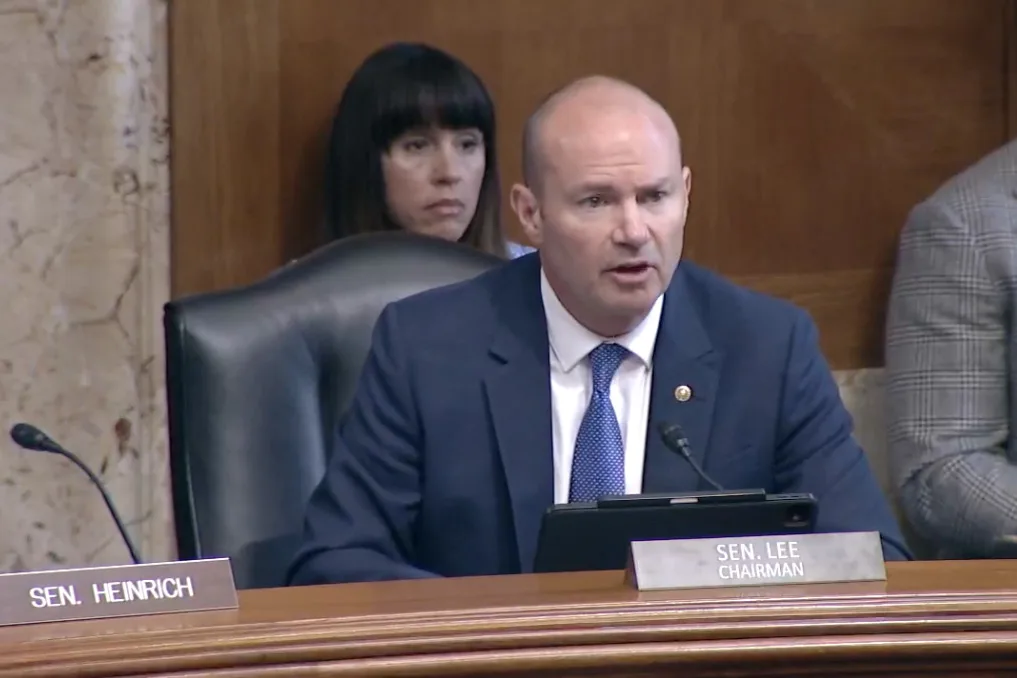
Newly disclosed internal communications reveal a direct and extensive collaboration between Senator Mike Lee’s office and the Trump administration’s Department of the Interior in the days leading up to the Utah Republican’s controversial legislative proposal to divest up to 3.2 million acres of federal public lands across the Western United States. These emails suggest a level of coordination that contradicts later public statements from the administration, painting a picture of deliberate strategic alignment behind an initiative that ignited significant public backlash and conservation concerns.
Senator Lee introduced his contentious measure in June as an amendment to the Trump administration’s annual budget bill, framing it as a pragmatic response to America’s burgeoning housing crisis. While the proposal positioned Lee as a principal advocate for a significant public lands privatization agenda, the revelations indicate that the Trump administration had already initiated its own parallel efforts. Months prior to Lee’s bill, the Department of the Interior had established a task force specifically charged with identifying and studying the potential sale of up to 400,000 acres of federal land for housing development, underscoring a broader, albeit less publicized, administrative objective.
The extent of this collaboration became particularly evident when, amidst escalating public outcry, then-Interior Secretary Doug Burgum sought to distance the Trump administration from Senator Lee’s efforts. Speaking outside the White House in late June, Burgum publicly downplayed the proposal’s significance, stating, "I don’t think anybody is really spending much time thinking about it up there," and adding that it "wasn’t part of the president’s agenda to be part of the bill in the first place." These remarks were notably amplified by former Trump Interior Secretary Ryan Zinke, who, in a social media post, lauded Burgum’s comments, reinforcing the narrative that federal land sales were not a priority for the administration.
However, internal emails unearthed through a public records request tell a starkly different story. Just two weeks before Burgum’s public disavowal, his own team at the Department of the Interior was actively providing Senator Lee’s committee with critical technical data and offering direct feedback that Lee subsequently utilized to contextualize and, crucially, minimize the perceived scope of his proposal. On June 10, Chris Prandoni, a legislative assistant on the Senate Energy and Natural Resources Committee, which Lee chaired, sent draft language to two Interior staffers for their review. The communication explicitly stated, "This is the quote I’ve been working up with your guys to accurately reflect your research," detailing Interior’s estimates of approximately 1.2 million acres of Bureau of Land Management (BLM) land located within one mile of a population center, with an additional 800,000 acres situated within one to five miles. The draft also mentioned dedicating five percent of potential revenue to maintenance backlog.
The subject line of Prandoni’s email—"[EXTERNAL] DRAFT / PRE-DECISIONAL RE: land disposal for housing—new question"—strongly suggests that the engagement between Interior and Lee’s staff extended beyond this specific exchange, involving ongoing discussions about the strategic aspects of land disposal for housing. Later that same evening, Greg Wischer, then-Deputy Assistant Secretary for Land and Minerals Management at Interior, formally approved the proposed language, writing, "Good to go on the quoted content. Thanks for running it by us!" This approved talking point appeared verbatim at the forefront of a Frequently Asked Questions (FAQ) document that Senator Lee publicly released the very next day, coinciding with the unveiling of his public land sell-off proposal.
Further evidence of direct assistance emerged from the same email chain, where Jeremy Arendt, Interior’s Deputy Assistant Secretary of Natural Resources and Infrastructure, advised Lee’s staff to "include a % of total acres this represents for BLM, which is about 0.7% of the total, or about 30% of lands within 5 miles of population centers." This framing was directly incorporated into the committee’s FAQ, which sought to rebut claims of a "massive sell-off," asserting that the proposal "requires disposal of only 0.5%-0.75% of the [Bureau of Land Management] and [Forest Service] estates. It leaves the remaining 99.25% untouched." The communications also indicate that several Interior employees were slated to meet with Lee’s staff on June 11, the day the proposal was officially introduced, further cementing the impression of a closely coordinated effort.

The emails, obtained by The Wilderness Society through a public records request related to the Trump administration’s housing task force and subsequently shared, have sparked sharp criticism from conservation groups. Michael Carroll, BLM Campaign Director for The Wilderness Society, described the documents as painting "a troubling picture." He asserted that "rather than engaging the public or pursuing real housing solutions, the administration appears to have spent that time coordinating messaging with the same members of Congress who pushed large-scale public land sell-offs last summer," characterizing the actions as "laying the political groundwork to sell off America’s public lands."
In response to the revelations, both the Department of the Interior and Senator Lee’s committee defended the internal communications as routine and standard practice. An Interior spokesperson stated that "providing routine, factual briefings to Congress about how these long-standing authorities work is standard, non-partisan practice and does not indicate support for any particular legislation." Similarly, a spokesperson for the Senate Energy and Natural Resources Committee affirmed that "committees regularly seek input from subject-matter experts across the executive branch to ensure proposals are informed by existing law, program experience, and a clear understanding of potential impacts," noting President Trump’s consistent support for utilizing underutilized federal land for housing. However, neither entity directly addressed questions regarding the specific meeting referenced in the emails.
Aaron Weiss, Deputy Director of the Center for Western Priorities, a conservation advocacy group, offered a more scathing assessment. After reviewing the documents, Weiss concluded, "This shows Doug Burgum’s top people were literally writing talking points for Mike Lee’s attempt to sell off America’s public lands." He argued that Burgum’s approach to public lands was solely transactional, viewing them as "dollars on a balance sheet, not a promise to be kept for future generations," and accused the Secretary of being intent on degrading, exploiting, and ultimately selling off these national assets.
Beyond the direct coordination with Senator Lee’s office, the emails also reveal the Interior Department’s engagement with external free-market think tanks advocating for federal land sales. The American Enterprise Institute (AEI), a prominent conservative think tank, was in contact with Interior officials. In May, Ed Pinto, a senior fellow and co-director of AEI’s housing center, shared the institute’s analysis of a House amendment proposing the sale of thousands of acres of federal public lands in Nevada and Utah for home development. AEI projected that selling just 544,000 acres of BLM land in these two states could generate $100 billion for the U.S. Treasury over a decade, framing it as a potential "first step toward further BLM land release in nine other Western states." Ryan Hofmann, an advisor at the Interior Department, acknowledged the analysis, deeming it "very helpful to have on hand, going forward," indicating the administration’s receptiveness to such proposals.
The debate over federal land management in the American West is deeply rooted in the region’s history, marked by ongoing tensions between conservation, recreation, and resource extraction. The Bureau of Land Management (BLM) and the U.S. Forest Service collectively manage vast tracts of land, integral to local economies, biodiversity, and the cultural identity of many communities. Proposals for large-scale federal land sales, often reminiscent of the "Sagebrush Rebellion" era, consistently face fierce opposition from a broad coalition of environmentalists, outdoor recreationists, hunters, anglers, and even many local politicians who recognize the intrinsic value of public access and ecological integrity. Critics argue that selling off these lands, especially those near population centers, would disproportionately benefit private developers at the expense of public access, environmental protection, and potentially exacerbate existing infrastructure challenges, rather than genuinely solve the complex, multi-faceted housing crisis. The "housing crunch" is often tied to local zoning laws, supply chain issues, labor shortages, and speculation, rather than a fundamental lack of available land.
Despite the administrative push and the coordinated legislative efforts, the joint task force launched by the Interior Department and the Department of Housing and Urban Development in March has remained largely opaque. Charged with identifying "underutilized federal lands suitable for residential development," the task force was mandated to submit a report to the White House’s National Economic Council by April 15 (though the year remains ambiguous), detailing identified parcels, potential housing units, infrastructure progress, and policy recommendations. However, little public information has emerged since its inception. An Interior spokesperson stated that information would be shared "once the interagency process concludes and any materials become publicly releasable," leaving the status and outcomes of this significant administrative effort shrouded in uncertainty.
The revelations surrounding Senator Lee’s proposal and the Trump administration’s involvement underscore the persistent political maneuvering around America’s public lands. They highlight a disconnect between public statements and internal actions, raising critical questions about transparency, accountability, and the long-term stewardship of national treasures that are fundamental to the nation’s natural heritage and the Western way of life. The continued push for divesting federal lands, even under the guise of addressing societal needs like housing, suggests an underlying ideological drive that consistently challenges the foundational principles of public ownership and conservation.