Johny Prima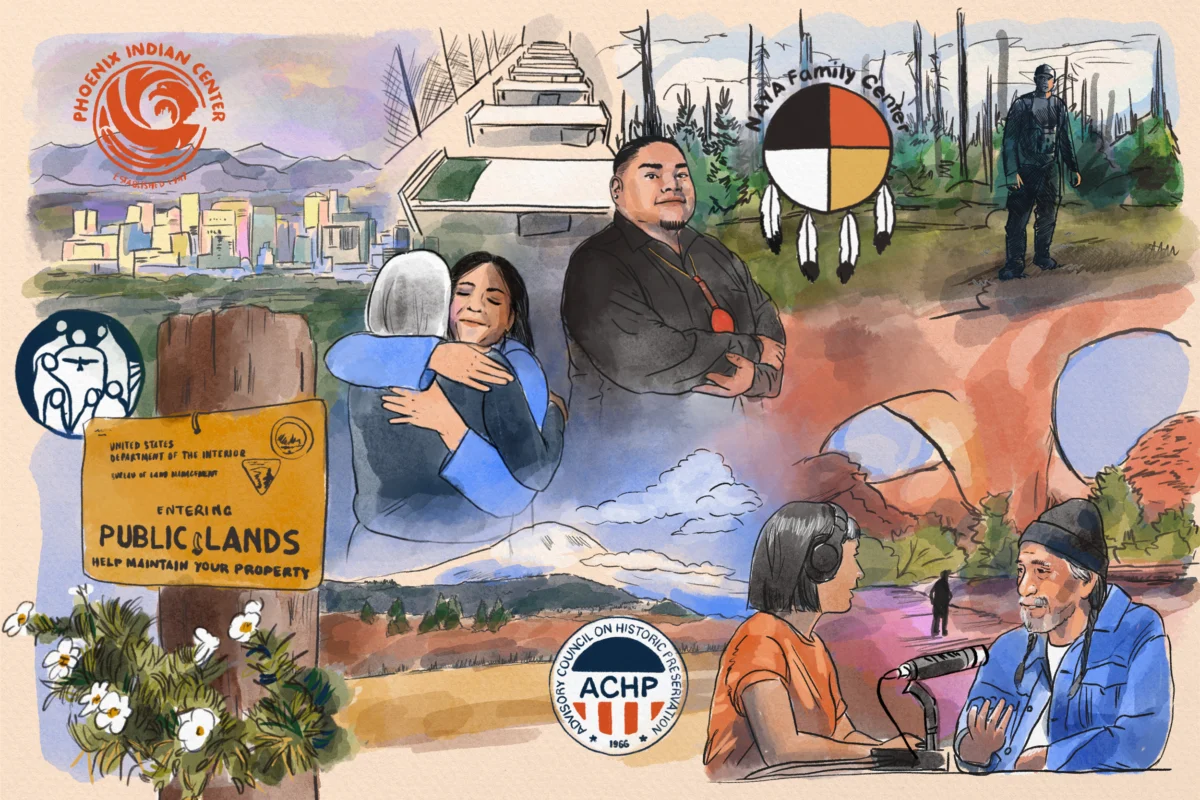
Over a year into the second Trump administration, Indigenous communities across the United States have experienced profound and often abrupt changes to federal policies, impacting everything from land management and climate initiatives to cultural recognition and essential social services, creating an atmosphere of uncertainty alongside a surprising undercurrent of renewed resolve. This period has seen a dramatic rollback of inclusive land-management policies, a substantial reduction of $1.5 billion in climate funding earmarked for tribal initiatives, and even the controversial removal of tribal flags from Veterans Affairs hospitals, signaling a broader governmental approach that frequently bypasses established tribal consultation protocols and dismantles previous collaborative efforts. To gauge the tangible effects of these shifts, leaders from intertribal coalitions, commissions, and Native-run community organizations across the Western U.S. and Alaska have voiced concerns over haphazard changes affecting funding streams, staffing levels, and the fundamental ability to plan for the future. Yet, amidst these challenges, some leaders also discern an unexpected possibility: opportunities to reflect on ancestral wisdom, honor elders, and forge new pathways centered on the well-being of future generations.

The Grand Staircase-Escalante National Monument in Utah exemplifies the ongoing struggle over land stewardship and Indigenous rights. During his first term, President Donald Trump significantly reduced the monument’s size by half, a move that ignited widespread opposition and underscored the vulnerability of culturally significant landscapes. In response, five tribes with ancestral ties to Grand Staircase-Escalante formed an intertribal coalition, proactively advocating for their perspectives and traditional ecological knowledge (TEK) to be integrated into the monument’s management. Autumn Gillard (Southern Paiute), coordinator for this coalition, highlighted their diligent work to influence a new resource management plan approved in January 2025 under the preceding administration, a plan that finally incorporated Indigenous voices after decades of exclusion. However, recent congressional actions by Republican members seeking to repeal this very plan threaten to nullify years of tribal consultation and the invaluable cultural knowledge embedded within it. Gillard expressed deep concern that such repeals would not only undermine the process but also irrevocably erase the contributions of elders who dedicated their lives to preserving this heritage, emphasizing that the loss of this "beautiful cultural knowledge" would be an immeasurable harm.

Beyond national monuments, the broader landscape of natural resource management also faces significant upheaval. Cody Desautel (Colville), President of the Intertribal Timber Council, an organization representing some 50 tribal nations focused on forests, fire, and natural resources, pointed to the Department of Interior’s fire reorganization as a major concern. The restructuring raises questions about how new leadership will grasp the intricacies of Indian Country, particularly their responsibilities for protecting tribal trust resources and navigating contracting with tribal governments. While acknowledging these unknowns, Desautel noted a paradoxical opportunity arising from the downsizing of the U.S. Forest Service. This reduction has seemingly spurred a "renewed objective to partner with tribes," leading to increased legislative activity aimed at expanding tribal co-management authorities on adjacent federal lands and exploring new shared stewardship agreements. For Desautel, tribes possess an inherent adaptability, consistently pivoting to identify opportunities within any administration, leveraging their deep knowledge and capacity to fill gaps created by federal retrenchment. This resilience allows them to maintain momentum on critical issues like forestry and fire management, reinforcing their role as essential partners in land conservation.

The federal government’s commitment to historic preservation and the recognition of tribal sovereignty has also come under direct assault. Amelia Marchand (Colville), who served as the first Indigenous woman appointed to the Advisory Council on Historic Preservation (ACHP), a body advising the federal government on historic preservation, experienced a sudden termination from her post. Her appointment in 2024 was significant, as she held the only seat designated for an Indigenous person, tasked with representing the interests of 575 diverse tribal nations. Marchand’s advocacy for recognizing tribal nations as "rights holders" rather than mere "stakeholders" in federal processes underscored a fundamental difference in how Indigenous sovereignty is understood and respected. This distinction is crucial, as lumping tribal interests with those of the general public or corporate entities often diminishes the unique legal and inherent rights of sovereign nations. Her abrupt dismissal, which came days after she championed a culturally appropriate consultation for the Yakama Nation regarding a sacred site threatened by renewable energy development, left tribes without a dedicated advocate on the ACHP until a new appointee, John Tahsuda III (Kiowa Nation of Oklahoma) – a former Trump administration official and lobbyist – took the seat in January of this year. Marchand’s experience highlights a worrying trend of undermining institutional mechanisms designed to ensure tribal voices are heard in matters of profound cultural significance.

On the ground, community organizations are grappling with direct cuts and increased demands. Oscar Arana (Chichimeca), CEO of the Native American Youth and Family Center (NAYA) in Portland, Oregon, described a challenging environment marked by reduced federal funding, a plateau in economic development programs, and a soaring cost of living. NAYA, a vital hub providing a food distribution center, preschool, high school, and various support services to Portland’s urban Indigenous residents, faces heightened stress within the community. Arana noted a significant uptick in food requests and increased evictions, forcing families to make agonizing choices between basic necessities. Compounding these economic pressures are the chilling effects of intensified immigration enforcement. The presence of Immigration and Customs Enforcement (ICE) has instilled fear, prompting NAYA to organize "know your rights" trainings and enhance building security. These local impacts, Arana warned, are merely the beginning, with anticipated future cuts to essential programs like SNAP benefits and healthcare access poised to further strain already vulnerable Indigenous populations.

The administration’s immigration policies have had an especially devastating impact on Indigenous people from Central and South America. Mincho Jacob (Qʼeqchiʼ), a Mayan Qʼeqchiʼ interpreter for the International Mayan League in Houston, Texas, illustrated the profound confusion and fear gripping these communities. Jacob recounted the story of a respected community leader who, after 18 years in the U.S., chose to return to Guatemala voluntarily rather than face the unpredictable and often brutal process of deportation. For Indigenous immigrants, navigating the U.S. legal system is "utterly, completely different from the reality of rural Guatemala," making "know your rights" workshops crucial for cultural and linguistic interpretation. The expedited removal process, which can lead to detention and deportation even for those who believe their cases are dismissed, creates a perilous legal limbo. Jacob starkly observed that in places like Houston, considered a "border city" due to its proximity to the coast, enforcement agents operate with broad powers, often pushing legal boundaries. The grim reality, as Indigenous people historically understand, is that "the law is only as good as what gets enforced," leaving many in a state of constant vulnerability.

Meanwhile, efforts toward truth, healing, and reconciliation for the legacy of Native American boarding schools have also been obstructed. Samuel Torres (Mexica/Nahua), Deputy Chief Executive Officer of the National Native American Boarding School Healing Coalition (NABS), detailed the significant setback experienced when the administration ordered the cancellation of over $1.5 million in funding from the National Endowment for Humanities. This funding was critical for archival research and for recording the oral histories of boarding school survivors, whose stories are essential to understanding the lasting impacts of these institutions. Torres emphasized that this issue should be bipartisan, highlighting the deep wound inflicted on the progress of truth and accountability for survivors, descendants, and their nations. Despite these challenges, Indigenous people, Torres affirmed, operate with an intergenerational mindset. This long-term perspective views current conflicts not as derailments but as "moments of discernment" that strengthen resolve and foster creative thinking, reminding them that no single president can define the meaning of their inherent sovereignty.

Conservation efforts backed by broad support are also under threat. The Chuckwalla National Monument in California, established in the final days of the preceding administration with significant bipartisan backing, now faces an uncertain future. Zion White (Quechan), a Quechan tribal commissioner on the Chuckwalla Intertribal Commission, affirmed that any attempt to reduce or rescind the monument will be met with resolute opposition from the tribes. For the Quechan, their connection to the desert Southwest extends far beyond current reservation boundaries, evidenced by their language, songs like the urav lightning songs, and sacred places within the monument that are living knowledge, not relics of the past. White stressed that to have no say in the care of this land is an "injustice to the landscape and to the ancestors." The commission’s mission is to honor both those who came before and the future generations, ensuring they know and can connect with this vital place. They anticipate a protracted struggle over the next three years, even as they hope for opportunities to collaborate with the Bureau of Land Management and the Department of the Interior on co-stewardship plans that incorporate their shared values.

The ripple effects of federal policy shifts extend to the very infrastructure of tribal historic preservation. Ira Matt (Confederated Salish and Kootenai Tribes), Executive Director for Indigenous diplomacy and federal relations at the National Association of Tribal Historic Preservation Officers (NATHPO), highlighted the severe impact of funding freezes and budget cuts on tribal historic preservation officers (THPOs). Early in 2025, federal funding for THPOs was frozen during a review of diversity, equity, and inclusion initiatives, despite clarifications that federal obligations to tribes fall outside this scope. This lack of communication and subsequent budget reductions led to staff departures and program suffering, exacerbating the pre-existing underfunding of THPO roles. Matt, who previously worked for six years as a THPO for the Confederated Salish and Kootenai Tribes, underscored the critical role these officers play as the "voice for their tribal nation." Without them, federal agencies struggle to conduct proper outreach or cultural surveys, leading to the irreversible damage and destruction of cultural locations. The "intangible impacts" of these decisions will be felt by the preservation field for years to come, further eroding the protection of sacred sites and cultural heritage.

Even basic recognition of tribal contributions has been challenged, as evidenced by the removal of tribal flags from Veterans Affairs hospitals, a move that deeply disrespected Indigenous veterans and their families. Jolyana Begay-Kroupa (Navajo), Chief Executive Officer at Phoenix Indian Center, a non-profit serving urban Indigenous people with vital job training, cultural programs, and community engagement, described the removal of flags from a VA hospital just down the street from their center as "really disrespectful." Beyond this symbolic slight, the Phoenix Indian Center also faced directives to alter language in federal grant narratives, specifically requiring the removal of "diversity and inclusion" terminology, with "Native American" even appearing on a list of proscribed terms. These mandates forced the organization to broaden its language to ensure continued access to critical funding for programs and services. Despite these pressures, Begay-Kroupa emphasized an elder-inspired approach, focusing on sustainability and adapting while maintaining an unwavering commitment to serving their relatives.

Finally, the rescission of the Public Lands Rule, established under the previous administration to elevate conservation and provide clearer pathways for tribes to protect cultural sites on public lands, further underscores the policy reversals. Ray Watson (Orutsararmiut Native Council), an executive board member for the Bering Sea Interior Tribal Commission in Bethel, Alaska, voiced strong opposition to this rescission, urging the agency to uphold its trust responsibility to tribes. For his community, the responsibility to protect the land, ocean, river, and tundra—from which they derive their sustenance and culture—spans generations. Watson lamented that the administration’s expedited approval of regulatory rulings for mines and mineral extraction, often without tribal consultation, directly contradicts this sacred trust. Such actions risk dividing communities and eroding cultural practices tied to subsistence gathering. In Alaska, with proposals for vast projects like the world’s largest gold mine, the pace of development is accelerating, but Watson affirmed the steadfast commitment to "fighting every step of the way" to protect what remains. The collective experiences of these Indigenous leaders reveal a complex interplay of systemic challenges and profound resilience, as they navigate an unpredictable federal landscape with an enduring commitment to sovereignty, cultural preservation, and intergenerational well-being.