Rocky Georgio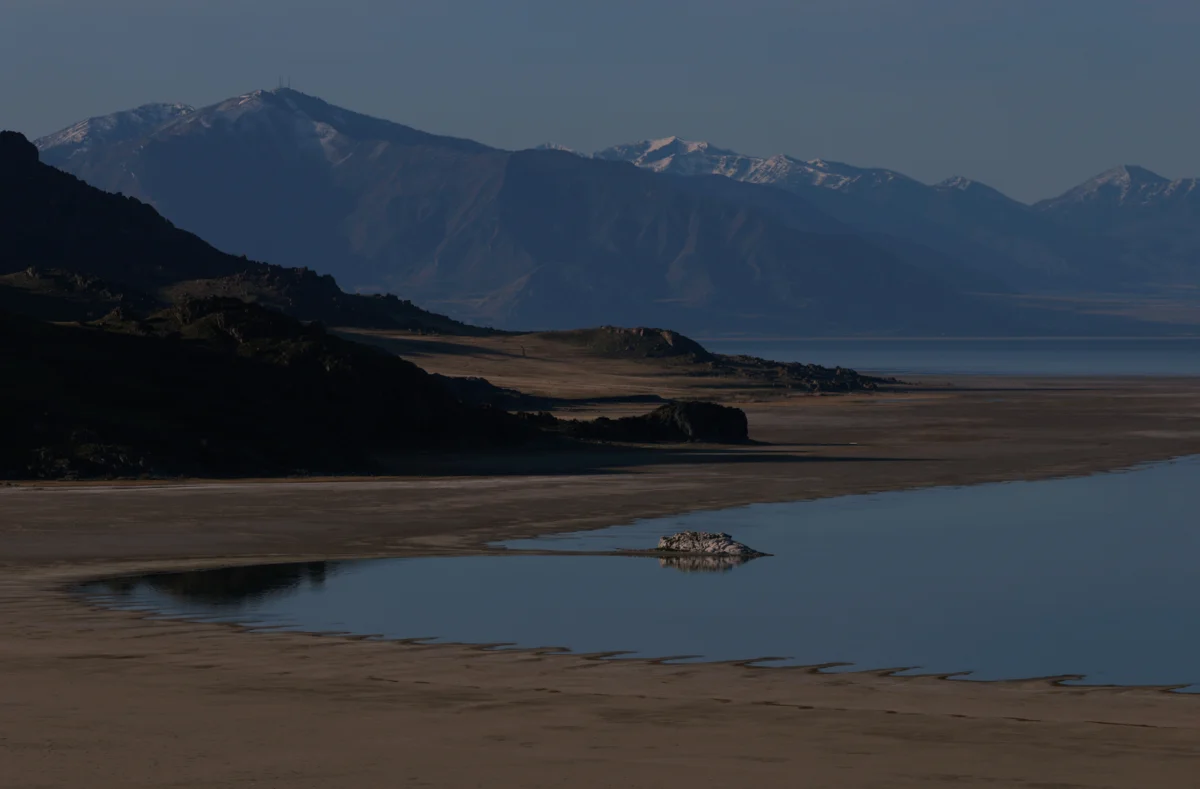
When weary Mormon settlers first glimpsed the expansive Great Salt Lake after cresting the Wasatch Mountains in July 1847, their eyes met a vista that defied the arid landscape they had traversed. This was no illusion; the vast body of water, though undeniably saline, was a testament to the abundant freshwater originating from the snowmelt of Utah’s towering mountain ranges, primarily the Wasatch and the Uintas. They observed creeks tumbling from alpine valleys, converging into a river they christened the Jordan, which ultimately flowed into the immense, salty expanse. Their leader, Brigham Young, surveyed the scene and famously declared, "It is enough. This is the right place."
It was here that the settlers established Great Salt Lake City, later shortened in 1868, and immediately set to work harnessing the creeks through dams and diversions. This ambitious irrigation project transformed a seemingly inhospitable desert into a flourishing agricultural haven, a spiritual "Zion" in a land of scarcity.
The Great Salt Lake stands as the largest natural lake west of the Mississippi River and the grandest saltwater lake in the Western Hemisphere. Historically, its surface area fluctuated between 1,700 and 2,000 square miles, a measure directly tied to annual precipitation patterns, before significant river diversions began in the 20th century. Situated in the heart of the arid Western United States, it serves as a critical hub for the Pacific Flyway, a vital avian superhighway connecting South America to the Arctic. Each year, this ecological nexus supports over 10 million migratory birds representing more than 230 species. The lake’s importance to birdlife is profound, providing habitat for up to 60% of the world’s Wilson’s phalaropes, approximately a quarter of North America’s snowy plovers and pintail ducks, 10% to 20% of its white pelicans, and a staggering 50% to 90% of its eared grebes, which congregate there in late summer to molt and build fat reserves from brine shrimp in preparation for their southward migration.
The Great Salt Lake is a unique and remarkably fragile ecosystem, entirely dependent on freshwater inflows to sustain its brackish wetlands, which are renowned biodiversity hotspots. Any significant degradation, let alone its complete disappearance, would have devastating repercussions not only for avian populations across the Western Hemisphere but also for the $1.9 billion diversified local economy it underpins. Furthermore, it poses a direct threat to the respiratory health of the nearly 2.7 million people residing in the four-county megalopolis known as the Wasatch Front, representing the overwhelming majority of Utah’s total population of 3.5 million.
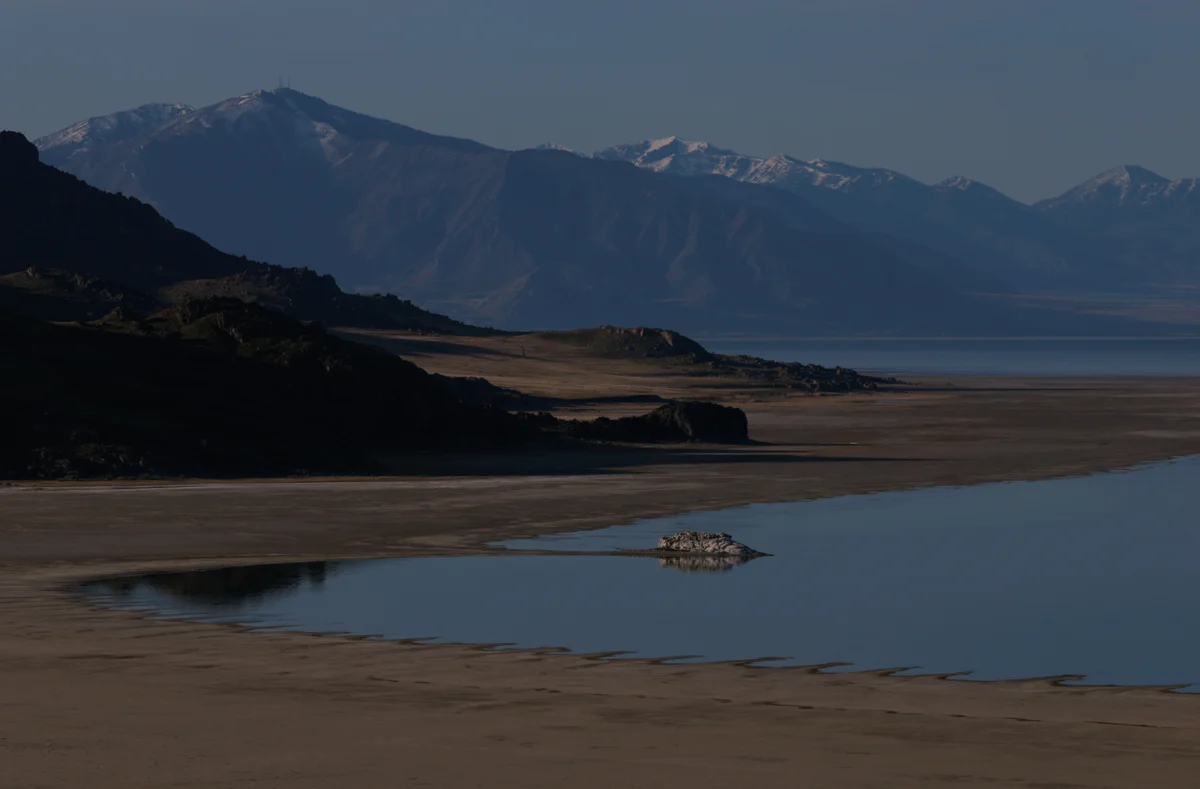
Despite its critical ecological and economic significance, the state of Utah appears to be actively contributing to the lake’s desiccation. The primary freshwater sources feeding the lake are the Jordan, Weber, and Bear Rivers, all of which are subjected to partial diversions before reaching their destination. Consequently, freshwater inflows have diminished by approximately 40% since the late 1980s, leading to an alarming 64% reduction in the lake’s water volume. The lake’s water level has receded by a substantial 11 feet since the 19th century. This dramatic shrinking, leaving nearly half of the lake’s historical average area exposed, not only escalates salinity, thereby jeopardizing its delicate ecosystem, but has also bared close to a thousand square miles of playa, or dry lakebed, to the relentless winds. These winds then whip up dust laden with heavy metals and toxic compounds, a perilous mix of naturally occurring substances and contaminants originating from intensive mining and mineral extraction activities surrounding the lake. A 2020 study published in the journal Atmospheric Environment revealed that air pollution, with a growing portion attributable to the region’s severe dust storms, is responsible for between 2,480 and 8,000 premature deaths annually, reduces average life expectancy by up to 3.6 years, and incurs costs to Utahns ranging from $750 million to $3.3 billion each year. The Wasatch Front, one of the nation’s fastest-growing metropolitan areas, is increasingly hearing residents express desires to relocate due to the escalating air pollution crisis.

In 2022, the lake reached its lowest recorded level in history, covering an area of just 888 square miles. As dust storms intensified in frequency and severity, making them impossible to ignore and intensifying public demand for solutions, Utah Governor Spencer Cox’s response was to advise Utahns to pray for rain.
However, the lake’s perilous decline is not an act of nature or divine intervention. While reduced river flows due to global warming are exacerbating the situation, the primary driver is the pervasive overuse of water. This overuse is a direct consequence of decades of policy decisions by Utah politicians, including Governor Cox, and by the public institutions tasked with safeguarding the state’s invaluable water resources – all of whom have seemingly disregarded Brigham Young’s prescient admonition: "It is enough."
Utah, an inherently arid state, exhibits the second-highest per capita water consumption in the United States, trailing only its neighbor, Idaho. A significant portion of municipal water is allocated to irrigating lawns, golf courses, sidewalks, driveways, and streets; indeed, 60% of household water usage is dedicated to outdoor landscaping, a figure starkly contrasting with the national average of 30%. Much of this landscape consists of lawns, with approximately 300,000 acres of grass, predominantly Kentucky bluegrass, requiring 24 to 30 inches of water over its growing season – effectively two or more feet of water simply to maintain verdant growth. Urban Utah, or more accurately, suburban Utah, characterized by its preponderance of single-family homes outside of downtown Salt Lake City, presents a mirage-like green expanse in the desert, a seemingly endless expanse of lawns, an irrigated "Kentucky beyond the 100th Meridian."
This extensive greening is sustained by perverse policy incentives, beginning with the deliberate obscuring of water’s true cost. Utah boasts the lowest municipal water rates in the U.S., incentivizing water wastage as it incurs minimal direct cost to consumers. However, Utah also relies more heavily on property taxes to fund its water infrastructure than any other Western state. A substantial percentage of these taxes – levied on homes, businesses, vehicles, and other property – is directed towards water diversion and delivery systems, effectively subsidizing and masking the actual cost of water. In many instances, property taxes constitute a larger share of a water district’s revenue than water sales, with some rural districts deriving 75% to 100% of their income from these taxes, rendering the cost virtually invisible to the end-users.
This pattern of high water consumption, in turn, is cited to justify the necessity of further water development projects. Astonishingly, despite the evident shrinking of the Great Salt Lake and its dire associated consequences, the state is proceeding with plans to divert an additional 200,000 acre-feet of water annually from the Bear River through a 90-mile pipeline. This ambitious project is primarily intended to supply water for more suburban lawns, a quantity exceeding the annual consumption of the 4 million residents of the City of Los Angeles. The water is demonstrably not needed, and the substantial cost – amounting to billions over several decades – will ultimately be borne by future generations of Utah taxpayers.
If the Bear River Development project proceeds, it will effectively seal the fate of the Great Salt Lake. The prevailing question is how Governor Cox and other elected officials believe they can circumvent accountability. The answer lies within the state’s deeply entrenched and dysfunctional institutional framework.

Even more opaque than the hidden cost of water is the intricate network of vested interests that champion and profit from water projects: legislators, often possessing business ties to the project areas, water district employees, lobbyists, and project contractors. By law, water districts possess unfettered authority to lobby and fund lobbying efforts, operating with considerable insulation from public scrutiny. The Water District Water Development Council, effectively the lobbying arm of the water industry, enjoys exemption from all open government laws mandating open meetings and the dissemination of minutes, a privilege shared by only a select few Utah entities.
A pivotal piece of legislation, the Water Conservancy District Act, passed by the Utah Legislature in 1951, enabled the establishment of independent water conservancy districts. While a majority of these districts do not directly sell water to consumers, they instead provide wholesale water to municipalities or other retail water suppliers. Nevertheless, all possess the authority to issue bonds and levy property taxes, even without approved project expenditures. Crucially, these taxes are not subject to "sunset" provisions, often accumulating in substantial "slush funds" that become targets for project proponents and lobbyists.
Further compounding the issue, in February of this year, the Utah Legislature enacted and Governor Cox signed HB 392. This legislation empowers the state to effectively neutralize lawsuits aimed at curbing its actions by enabling blatant judge-shopping. At its sole and absolute discretion, the state can withdraw a case from a particular district judge and reassign it to a hand-picked three-judge panel, while remaining immune from any challenge or judicial review. This maneuver is designed to obstruct advocacy groups, such as the Utah Rivers Council, which have dedicated years to challenging and blocking unnecessary water projects within the state, from effectively defending the Great Salt Lake.
All of this mismanagement and deliberate obfuscation – which in essence constitutes systemic corruption – creates a direct pathway to the destruction not only of the irreplaceable Great Salt Lake but of all water resources and water-dependent ecosystems within Utah. It is a scenario that would undoubtedly cause Brigham Young to lament from his resting place.