Rocky Gerung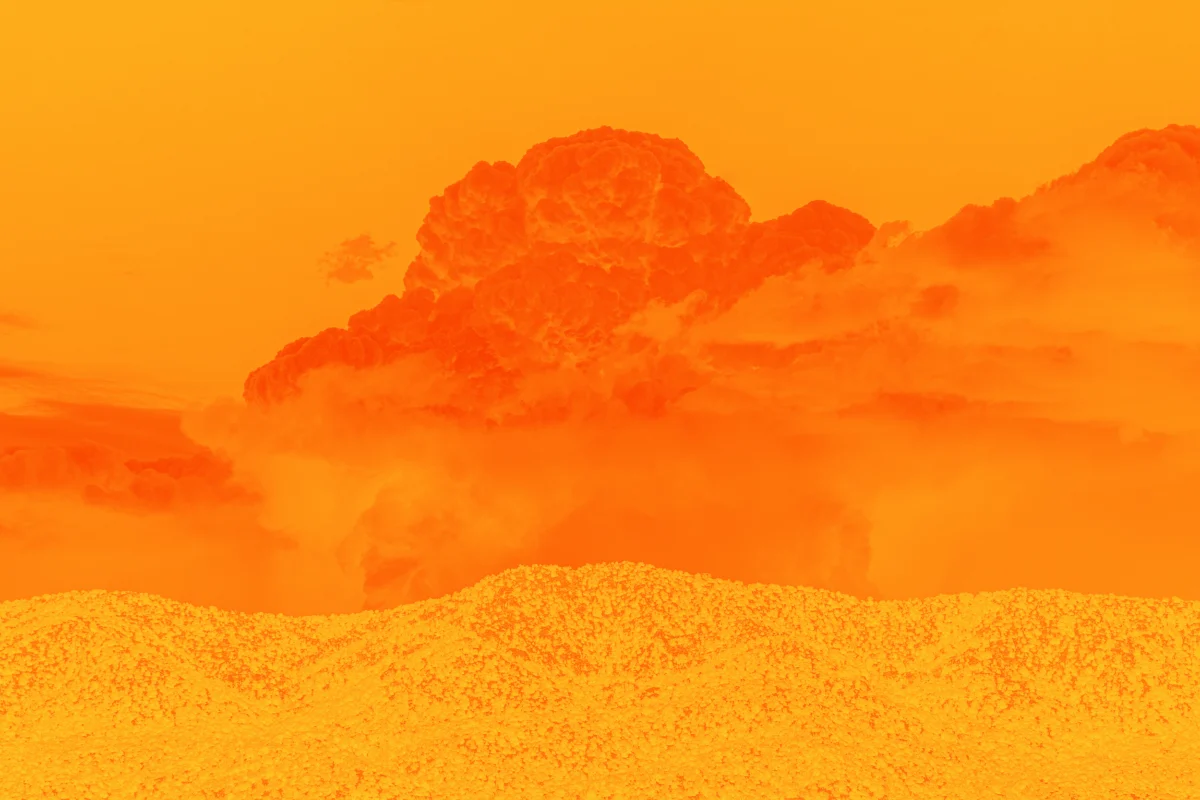
In a series of intimate paintings displayed in a dedicated gallery at the Georgia O’Keeffe Museum in Santa Fe, artist Jason Garcia of Santa Clara Pueblo (Kha’p’o Owingeh) has repeatedly depicted Cerro Pedernal, a prominent mesa in northern New Mexico. Known as “Flint Hill” in Spanish and Ts’í P’ín in Tewa, the artist has rendered this iconic geological feature from a consistent vantage point, exploring its multifaceted essence through minimalist compositions and dramatic plays of light and shadow, including nocturnal interpretations. This sustained focus on a single subject is a powerful act of artistic and cultural reclamation. Garcia, whose Tewa name is Okuu P’ín and who served as a co-curator for the exhibition, harbors an ambitious goal: to have more of his interpretations of Ts’í P’ín displayed in the museum than O’Keeffe herself created during her lifetime. Currently, his installation comprises 19 works, with plans to expand the series to over 30 pieces under the overarching title "Our Private Mountain."
This compelling project is a cornerstone of the exhibition "Tewa Nangeh/Tewa Country," which thoughtfully juxtaposes the works of 12 Tewa artists, scholars, and cultural bearers with those of Georgia O’Keeffe. O’Keeffe’s evocative and widely disseminated depictions of the region have become so deeply embedded in the American consciousness that they often serve as the primary visual representation of northern New Mexico. Throughout her prolific career, O’Keeffe captured a vast array of Southwest subjects, including landscapes, animal bones, flora, and architecture. However, it is her sweeping desert vistas that have achieved the greatest enduring popularity. Much like the landscape genre itself, her paintings characteristically omitted human presence, fostering an impression of the region as remote and sparsely populated. This singular vision has condensed into the ubiquitous descriptor, "O’Keeffe Country." The reality, however, as Garcia emphasizes, is that "Tewa people are still living on this land. We still have our ancestral place names for pretty much all of Tewa country," underscoring a continuous Indigenous presence and connection to the land. He further notes, "We’re still living within our four sacred mountains," referring to the traditional Tewa cosmology that defines their ancestral homeland.

Despite this enduring Tewa presence, O’Keeffe’s artistic legacy continues to dominate the popular perception of New Mexico. In a 1977 interview with Newsweek, O’Keeffe spoke of Ts’í P’ín, which she referred to simply as "the Pedernal," asserting, "It’s my private mountain. It belongs to me. God told me that if I painted it enough, I could have it." This possessive perspective proved influential, leading to a widespread association of the entire region with her artistic vision. This influence persists even in contemporary contexts; in 2021, the New Mexico Tourism Department re-appropriated one of her quotes for an advertising campaign. A commercial featuring horseback riders traversing the region’s ochre bluffs featured a voice-over proclaiming, "When I got to New Mexico, that was mine."
In response to such commercial appropriations and the perpetuation of O’Keeffe’s proprietary claims, the Georgia O’Keeffe Museum itself issued a significant statement. The museum declared its disapproval of using O’Keeffe’s quotes that describe the New Mexico landscape as "her country" or claiming "that was mine." The statement articulated, "While these quotes are from the artist, it is now clear that this is the language of possession, colonization, and erasure." This stance reflects a deliberate path of institutional introspection that the museum had been undertaking. In 2020, it hosted a panel discussion titled "This is Not O’Keeffe Country," which the author moderated. The panel featured prominent voices including Corrine Sanchez, executive director of Tewa Women United; Christina Castro, founder of Three Sisters Collective, an Indigenous and Pueblo women-led collective based in Santa Fe; and Jason Garcia.
The "Tewa Nangeh/Tewa Country" exhibition stands as a vital effort to rectify the narrative gaps and blind spots created by O’Keeffe’s pervasive influence and the institutions that have historically leveraged her image and mystique. It actively seeks to introduce more expansive perspectives on local Indigenous presence, serving as a crucial reminder that despite her considerable fame, O’Keeffe was but one individual within the deep and complex historical tapestry of Tewa Nangeh.

Among the showcased works is "This Land Carries Us," a visually rich and experimental documentary by Charine Pilar Gonzales. Gonzales, a 2024 Sundance Institute Native Lab Fellow and a community-based filmmaker from San Ildefonso Pueblo, demonstrates a remarkable gift for layered imagery and stop-motion animation. One poignant scene opens with a stand of trees ablaze with the orange hues of autumn under a setting sun, overlaid with superimposed Polaroid photographs of elders, children, and pottery. This visual juxtaposition powerfully affirms her artist statement: "The visuals of this film reaffirm what has always been true. You cannot speak of Tewa land without also speaking of Tewa people."
The profound sense of belonging and connection to place is further articulated in "Coming Home," a mural by Eliza Naranjo-Morse of Kha’p’o Owingeh. Naranjo-Morse painted directly onto the gallery walls using clay she gathered from across the region. The mural captures the northward view through the badlands and mesas of Tewa Country, a vista that greeted her upon her return home from Santa Fe. This personal experience inspired her to contemplate, as she notes in her artist statement, "the understated but significant acts that maintain relationship to land, preserve the Tewa language and the values of respect and reciprocity with all life."
Other artworks within the exhibition address perils uniquely specific to New Mexico, including the far-reaching impacts of climate change and the enduring legacy of nuclear weapons. Michael Namingha, of Ohkay Owingeh and Hopi heritage, presents "Disaster #8," a powerful piece depicting a colossal cloud of smoke ominously hanging above a mountainous landscape. While the smoke directly references the Hermits Peak/Calf Canyon Fire of 2022, New Mexico’s largest wildfire on record, its visual resonance also evokes the terrifying mushroom clouds of atomic detonations. Namingha’s work creates a deliberate dialogue with O’Keeffe’s 1945 painting, "Red with Yellow." Notably, 1945 marked the year the first atomic bomb was detonated in a New Mexico desert landscape, a site the military had erroneously deemed uninhabited. Both artists employ a similar fiery palette of intense oranges and reds, but Namingha imbues these colors with contemporary meaning, directly referencing the Air Quality Index chart, a stark reminder of ongoing environmental threats.

Further contributions offer direct critiques of O’Keeffe’s perceived proprietorship over the landscape. In one of Garcia’s "Tewa Tales of Suspense" series, rendered as comic book-style clay tablets roughly the size of iPads and fired using traditional Pueblo techniques with naturally sourced pigments, O’Keeffe herself appears as a character. The artwork depicts her standing before Ts’í P’ín, clad in her signature black wrap dress and hat. A sign behind her, initially reading "Welcome to O’Keeffe Country," has been provocatively altered, with "O’Keeffe" scratched out and replaced with "TEWA," a clear assertion of Tewa sovereignty and ownership over their ancestral lands.
The "Tewa Nangeh/Tewa Country" exhibition emerges at a critical juncture, coinciding with a broader national discourse grappling with competing narratives of the past. Six years prior, the O’Keeffe Museum initiated its internal examination of O’Keeffe’s role in Indigenous erasure. Today, however, the national political climate has increasingly shifted rightward, impacting cultural representation and discourse. Last summer, the U.S. Department of Homeland Security controversially shared John Gast’s "American Progress," a notorious tableau symbolizing Manifest Destiny, alongside a quote echoing white nationalist sentiments: "A Heritage to be proud of, a Homeland worth Defending." Concurrently, federal funding for public art institutions that champion diversity, equity, and inclusion initiatives has faced significant reductions under the Trump administration. Furthermore, Indigenous and minority-serving higher education programs, including the Institute of American Indian Arts in Santa Fe, are reportedly at risk of losing funding, as outlined in the administration’s proposed budget.
"We can and should do better and work from a place of care instead of violence, fear or racism," stated Bess Murphy, the O’Keeffe Museum’s Luce Curator of Art and Social Practice and a co-curator of the exhibition alongside Garcia. Murphy highlighted the collaborative nature of the exhibition, emphasizing that the 12 participating artists were involved in every stage of its development, from selecting which O’Keeffe paintings would be included to writing their own exhibition texts. These texts were subsequently copyedited by Dr. Beverly Singer, an esteemed Indigenous anthropologist from Santa Clara Pueblo. Garcia also noted the collaborative creation of a map delineating the six Tewa pueblos, featuring Tewa place names and ancestral villages, further underscoring the community-driven approach of the exhibition.

Within this framework lies a powerful argument for self-representation—for artist and community-led exhibitions that foster nuanced and instructive dialogues about a region that has for too long been defined by external perspectives. The "Tewa Nangeh/Tewa Country" exhibition champions this approach, offering a vital counter-narrative that centers Tewa voices and reclaims their rightful place in the ongoing story of their homeland.