Rocky Georgio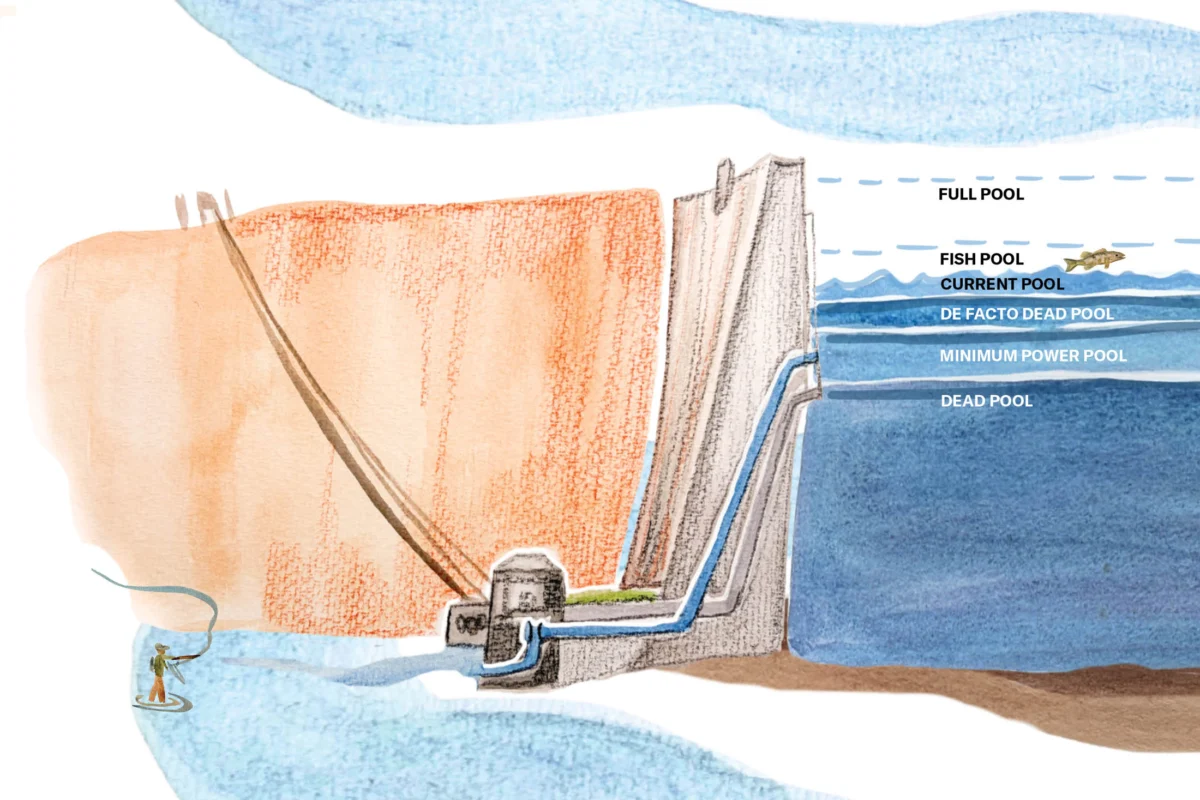
In 1956, the ambitious construction of Glen Canyon Dam commenced, a colossal undertaking designed to harness the power of the Colorado River and reshape its management for the burgeoning American West. While its stated purposes included generating crucial hydropower, fostering burgeoning recreational opportunities, and preventing the silting of the vital Lake Mead, the dam’s primary mandate was the creation of Lake Powell. This expansive reservoir was envisioned as a critical water savings account, a buffer designed to absorb the river’s notoriously erratic flows, ensuring a steady supply by storing water from abundant years for use during inevitable dry spells. This mechanism was intended to enable the Upper Basin states—Colorado, Wyoming, Utah, and New Mexico—to fulfill their obligations under the 1922 Colorado River Compact, specifically the clause guaranteeing that the river’s flow at Lees Ferry, Arizona, would not be depleted below an aggregate of 75,000,000 acre-feet over any ten-year period.
Now, over six decades after its completion, nearly all of Glen Canyon Dam’s intended functions are under severe threat, with the notable exception of its capacity to capture sediment. Ironically, the very infrastructure built to manage and preserve the Colorado River’s water resources now stands on the precipice of causing the Upper Basin states to violate the compact’s fundamental non-depletion clause. This precarious situation stems from a prolonged and intensifying drought that has gripped the region for more than two decades, relentlessly draining Lake Powell’s once-vast water reserves. The exceptionally dry winter that recently concluded has exacerbated the crisis, compelling federal dam operators to implement extraordinary measures to prevent the reservoir’s water level from plummeting below critical thresholds this summer. These emergency actions are aimed at safeguarding the dam’s ability to produce hydroelectricity and preserving Lake Powell’s viability as a water storage facility. However, the necessary reduction in water releases downstream to protect the reservoir could paradoxically lead to the Upper Basin failing to meet its delivery obligations to the Lower Basin states, thereby breaching the terms of the Colorado River Compact.
Both the foundational Colorado River Compact and the monumental Glen Canyon Dam were conceived and constructed during an era when the river was perceived to be far more bountiful than it is today. Historical flow data, upon which these agreements and infrastructure projects were based, painted a picture of a river with significantly higher average flows, a perception shaped by a period of unusually wet years in the early 20th century. However, the escalating impacts of climate change, characterized by rising global temperatures and a persistent shift towards more arid conditions across the Western United States, are now casting serious doubt on the long-term sustainability of both the compact and the dam’s operational framework. The increasingly arid climate is poised to render these established systems obsolete, forcing a reckoning with the harsh realities of a diminished Colorado River and the profound implications for the millions of people and vast agricultural lands that depend on its waters.
The Colorado River, often referred to as the "Lifeline of the Southwest," is a vital artery for Arizona, California, Nevada, Colorado, New Mexico, Utah, and Wyoming, as well as for Mexico. Its waters irrigate millions of acres of farmland, support major metropolitan areas like Las Vegas, Phoenix, and Denver, and provide essential resources for numerous Native American tribes. The intricate system of dams, reservoirs, and aqueducts, including Glen Canyon Dam and Lake Powell, was designed to manage this precious resource equitably among the seven basin states. The cornerstone of this management is the Colorado River Compact of 1922, which divided the river’s water between the Upper and Lower Basin states, stipulating that the Upper Basin would not deplete the river’s flow below a specified amount, measured at Lees Ferry, Arizona. This clause was critical, as it ensured that the Lower Basin states—Arizona, California, and Nevada—would receive a guaranteed supply of water.
Glen Canyon Dam, completed in 1966, was a linchpin in fulfilling the promises of the compact. Lake Powell, formed behind the dam, was designed to store vast quantities of water, acting as a massive insurance policy against drought and fluctuations in river flow. Its capacity of over 25 million acre-feet, equivalent to about two years of the river’s average flow, was intended to be drawn upon during dry periods. The dam’s hydropower facilities, generating electricity for millions, were also a significant economic driver for the region. Furthermore, the reservoir created a world-renowned recreational area, attracting millions of visitors annually to its vast network of canyons and waterways.
However, the long-term climatic shifts have proven to be far more severe than anticipated by the engineers and policymakers of the mid-20th century. The Western United States has been experiencing a megadrought, the most severe in at least 1,200 years, according to scientific studies. This prolonged period of reduced precipitation and increased evaporation has led to a significant decline in snowpack in the Rocky Mountains, the primary source of the Colorado River’s water. As snowpack diminishes, so does the amount of water that melts and flows into the river system. This reduced inflow has meant that the amount of water stored in Lake Powell has steadily decreased, leading to historically low water levels.

The current crisis at Lake Powell is not merely an inconvenience; it represents an existential threat to the established water management framework of the Colorado River. When Lake Powell’s water level drops, several critical functions are compromised. Hydropower generation becomes increasingly difficult and eventually impossible as the turbines are starved of water. The ability of the dam to regulate downstream flows is also diminished, potentially leading to more extreme fluctuations that can damage ecosystems and infrastructure. Most critically, the dwindling water supply puts immense pressure on the allocation system, raising the specter of water shortages for cities, farms, and industries across the Southwest.
The federal agency responsible for managing the dam and reservoir, the Bureau of Reclamation, has been engaged in a delicate balancing act. For years, they have employed various strategies to conserve water, including voluntary reductions in water deliveries and adjustments to release schedules. However, the severity of the drought has pushed these measures to their limits. The decision to reduce downstream releases to protect the reservoir’s minimum operating level for hydropower generation is a testament to the dire circumstances. This reduction, while necessary to keep the lights on and the dam operational, directly impacts the water available for the Lower Basin states.
The implications of potentially violating the Colorado River Compact are far-reaching and complex. Such a violation could trigger a cascade of legal and political disputes among the basin states. Negotiations over water rights, which have always been tense, could become even more acrimonious. The compact itself, a foundational document of Western water law, could be called into question, potentially leading to a complete re-evaluation of water allocation in the region. This could involve protracted litigation, potentially leaving water users in limbo and jeopardizing economic stability across the Southwest.
Beyond the immediate legal and political ramifications, the crisis underscores the urgent need for adaptation and innovation in water management. Climate scientists have warned that the current drought conditions are not an anomaly but a harbinger of a drier future for the West. This reality necessitates a paradigm shift, moving away from an assumption of abundant water resources towards strategies that emphasize conservation, efficiency, and the development of alternative water sources. Investments in water-efficient agriculture, urban conservation programs, and the reuse and recycling of wastewater are becoming increasingly critical.
The situation also highlights the interconnectedness of environmental health and human well-being. The Colorado River ecosystem, including its endangered species and riparian habitats, is under immense stress due to reduced flows and altered water temperatures. The long-term health of these ecosystems is intrinsically linked to the availability of water and the careful management of the river’s flow.
As the Western United States grapples with this unprecedented water crisis, the legacy of Glen Canyon Dam and the Colorado River Compact serves as a stark reminder of the challenges inherent in managing a shared, finite resource in a changing climate. The current predicament demands collaboration, foresight, and a willingness to embrace new approaches to ensure a sustainable water future for the millions who depend on this iconic river. The decisions made today will shape the availability of water and the prosperity of the American Southwest for generations to come.