Rocky Georgio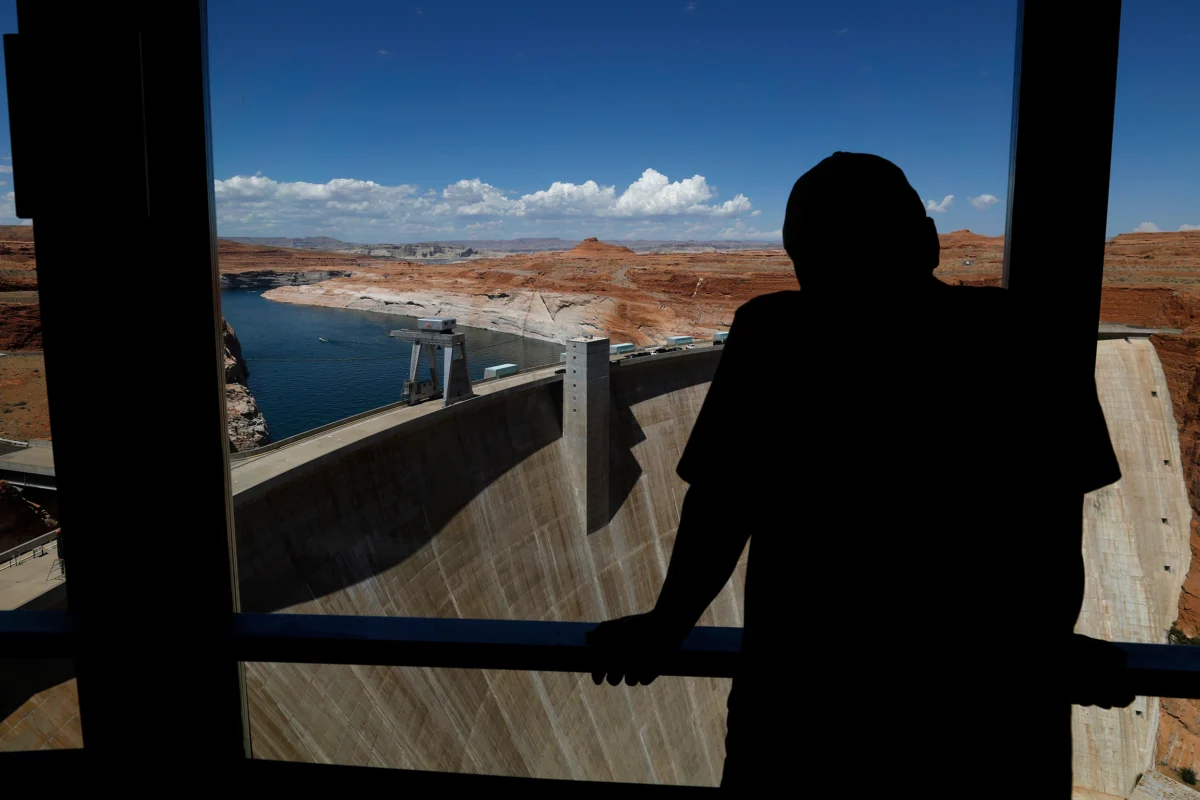
Water users across the American Southwest are confronting the distinct possibility of significant mandatory reductions in their Colorado River allocations, with cities and agricultural operations facing the prospect of curtailing usage by hundreds of billions of gallons. This comes as a new federal management plan for the vital waterway was released, signaling a potential shift in how the river’s dwindling resources will be distributed over the next decade.
The Bureau of Reclamation’s comprehensive document outlines a ten-year operational framework designed to adapt to fluctuating hydrological conditions that directly impact the river’s flow, allowing for adjustments to be made every two years. Notably, the agency has proposed substantial cuts to water allotments previously designated for the Lower Basin states – Arizona, California, and Nevada. In contrast, the Upper Basin states, comprising Colorado, New Mexico, Utah, and Wyoming, are being offered the option of implementing voluntary conservation measures.
This federal intervention arrives at a critical juncture. The interim guidelines and drought contingency plans that have governed the river’s operations, established in 2007 and further refined in 2019, are slated to expire in 2027. Negotiations among the basin states to forge a successor agreement were initially due this year, but these crucial discussions have faltered, with states repeatedly missing consensus deadlines.
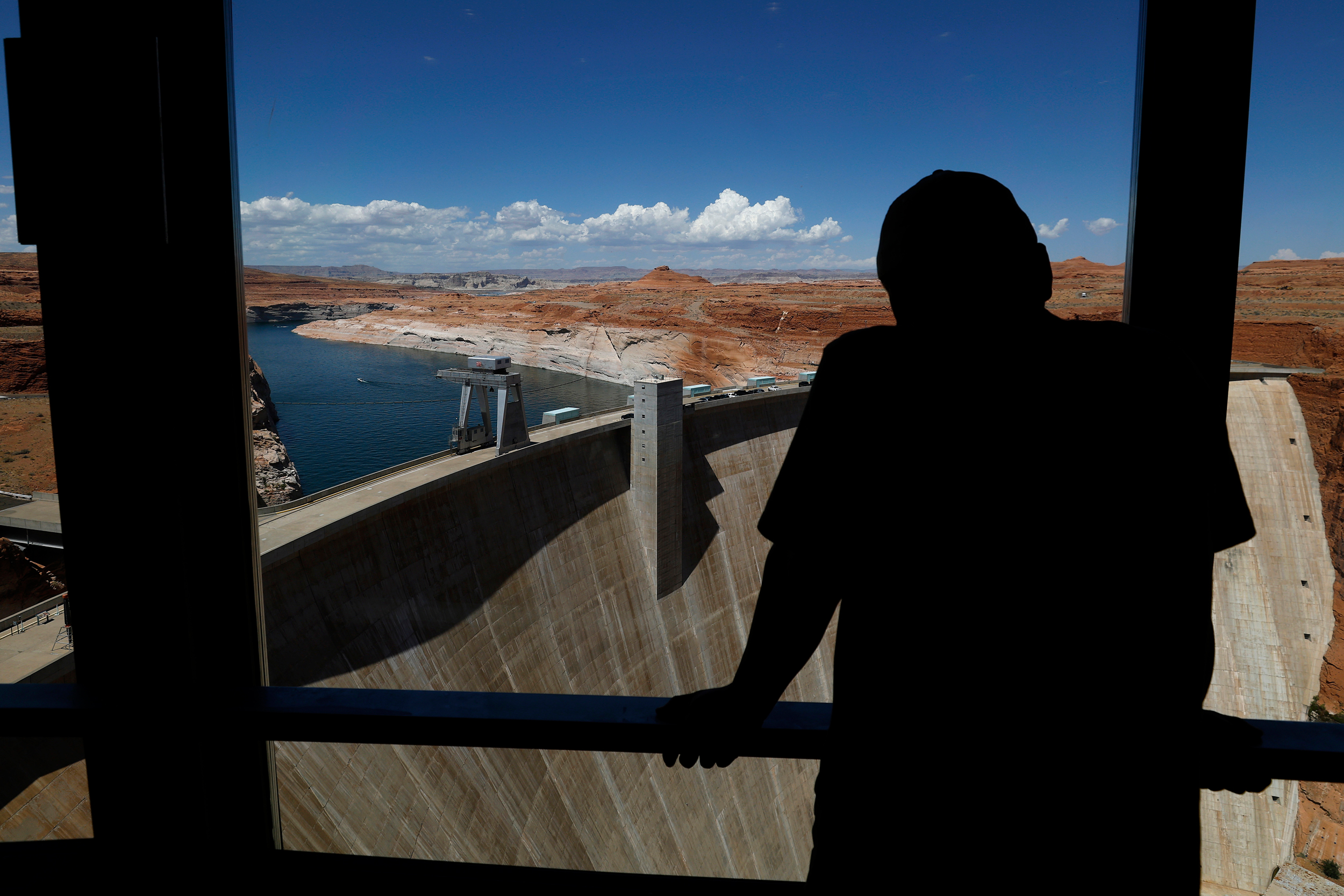
The Bureau of Reclamation holds considerable sway over the river’s infrastructure, managing pivotal facilities such as the Hoover Dam and Glen Canyon Dam. These monumental structures form Lake Mead and Lake Powell, respectively, the two largest reservoirs in the United States and critical components of the Colorado River system. The release of the final environmental impact statement on Friday precedes a federal record of decision, which will formalize the operational protocols for the river over the next two years.
Andrea Travnicek, the Interior Department’s Assistant Secretary for Water and Science, described the plan as striking "a balance between flexibility and predictability for the Colorado River system that is vital to the 40 million people who rely on it given unprecedented hydrologic conditions and the potential for considerable impacts on water users." In a statement accompanying the plan’s release, she emphasized that it "also allows a new flexibility to respond to changing conditions and potential consensus."
Under the proposed framework, the Bureau of Reclamation is contemplating releases from Lake Powell, a reservoir situated near the Utah-Arizona border that serves as a demarcation between the upper and lower basins, ranging from 5 million to 12 million acre-feet destined for downstream states. An acre-foot, a unit of water volume, is generally understood to be enough to supply about two to four households for a year. The Lower Basin, including water rights for Mexico, could face steep reductions in their water allocations, potentially losing 1.5 million acre-feet in both 2027 and 2028.
These proposed cuts, if implemented as outlined by the Lower Basin states themselves, would see Arizona lose 760,000 acre-feet from its river allotment, California 440,000 acre-feet, and Nevada 50,000 acre-feet. However, the specter of even more severe reductions looms beyond 2028, with potential cuts to Lower Basin allocations reaching as high as 3 million acre-feet.
Such figures have already drawn sharp criticism. The Arizona Department of Water Resources declared the proposed reductions "unacceptable" in an online statement, warning that "Such reductions would devastate Arizona’s water users and its economy."
The Bureau of Reclamation appears to be seeking voluntary reductions from the Upper Basin, up to 200,000 acre-feet. Discussions also include the potential for transferring water from federally managed dams within the Upper Basin downstream, contingent on prevailing hydrological conditions.
"The proposal responds to a fundamental reality: the Colorado River no longer reliably produces enough water to support all the uses and expectations built around it," stated JB Hamby, California’s Colorado River Commissioner. He added, "That challenge is shared across the Basin, and addressing it requires specific, measurable reductions in water use by every state."
A spokesperson for the Colorado Department of Natural Resources indicated that the state is currently "analyzing" the released document. Meanwhile, governors from the Upper Basin states expressed optimism, stating in a joint declaration that they were "encouraged that new operating guidelines will better reflect existing water supply, which must underpin any practicable plan going forward."
The Colorado River stands as arguably the most climate-stressed waterway in the United States. It is the lifeblood for an estimated 35 to 40 million people spread across seven Western states, serves 30 Native American tribes, and provides water to two Mexican states as it flows through the arid Southwest, a region grappling with some of the nation’s most severe drought conditions. Millions of Western residents also depend on the electricity generated by the Hoover and Glen Canyon dams, integral to the region’s power grid.
A foundational agreement, the 1922 Colorado River Compact, assumed an annual water availability of approximately 17.5 million acre-feet for the two basins and Mexico. However, historical data reveals that the river’s natural flow has averaged closer to 14.7 million acre-feet. This figure has dramatically declined, averaging a mere 11.2 million acre-feet between 2020 and 2024, according to provisional data from the Bureau of Reclamation. During this same period, the agency calculated average usage and evaporative losses across the basin to be just over 13 million acre-feet, highlighting a significant deficit.
John Berggren, regional policy manager at Western Resource Advocates, views the operational ranges proposed by Reclamation as "the right things that we need to be doing in order to fix the supply and demand imbalance." However, he cautions that "it is just a range, and what they actually do over the next two years or within any given year, that will matter if they’re actually gonna be able to bring the system back into balance." Berggren expressed hope that the short-term predictability offered by this plan might help to break the deadlock in negotiations among the states. "I hope [the basin commissioners] don’t just keep doing what they’ve been doing for the last two or three years, ’cause that clearly hasn’t worked," he urged. "I hope they try and take this opportunity to change things up. Let’s try something new and hopefully get to a seven-state agreement."
The Bureau of Reclamation’s final environmental impact statement was initially intended to codify the management plan that the basin states have yet to finalize. Despite the missed deadlines for state-level negotiations, Reclamation maintains an openness to a negotiated agreement, which is widely considered the most effective pathway to a sustainable, long-term operating strategy for the river.
Negotiations have become entangled in disputes over whether water use reductions should be mandatory across the entire basin. The Lower Basin, which has historically overdrawn from the river, now uses less water than its legal apportionment according to federal accounting. Consequently, it advocates for future cuts to be shared equitably among all seven states. The Upper Basin states, which have never fully utilized their allocated water rights, have strongly resisted calls for mandatory cuts, preferring to offer voluntary conservation measures. Representatives from the Upper Basin argue that variable environmental conditions, such as the current year’s record-low snowpack, naturally constrain their water usage.
The continued absence of a seven-state agreement, even with the introduction of federal management options, amplifies the likelihood of legal challenges. States heavily dependent on the Colorado River could resort to lawsuits, with any disputes ultimately adjudicated by the Supreme Court.
Despite these complexities, the proposal to manage the river in an adaptive manner, responsive to hydrological fluctuations, is "the kind of agreement that we are going to need to really think about long-term how do we live in this basin with much less water moving forward," according to Celene Hawkins, Colorado River program director at The Nature Conservancy. Hawkins expressed her hope that this federal initiative will serve as a catalyst for a seven-state agreement, enabling "really good work for communities and for the river itself."