Rocky Georgio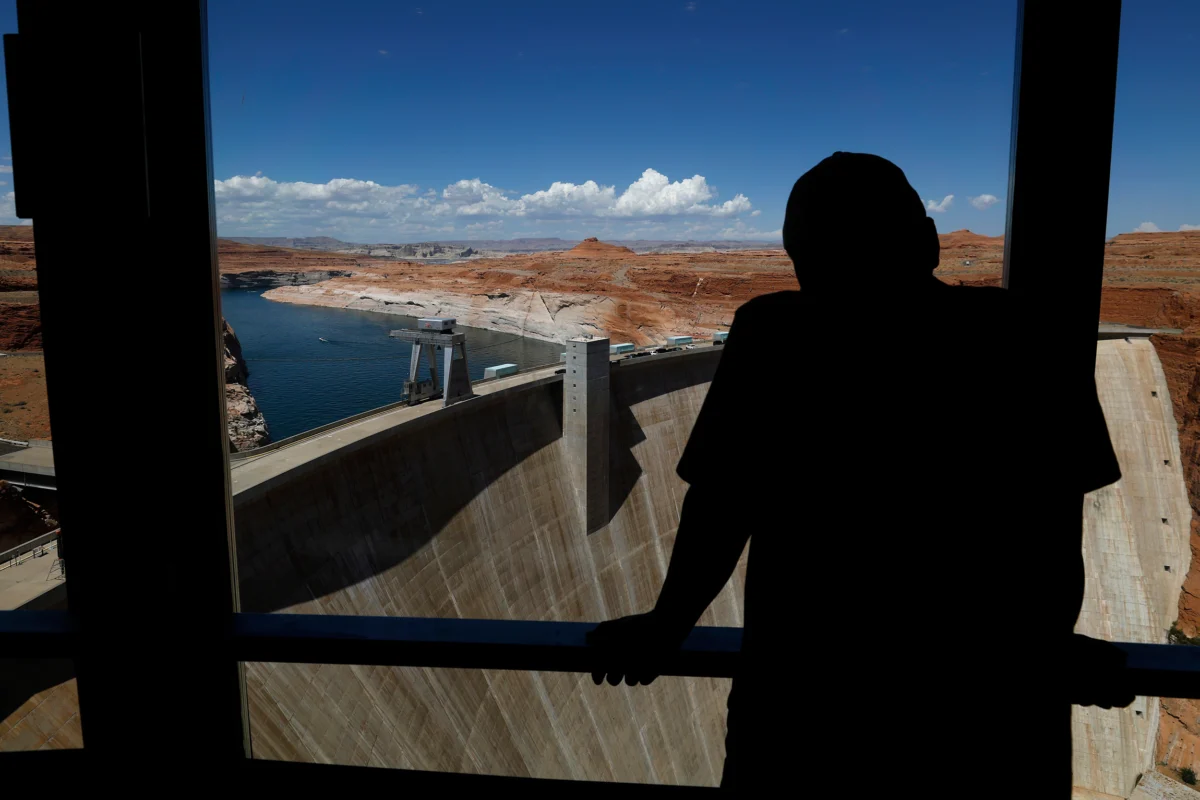
Water users across the American Southwest are confronting the stark reality of potentially drastic reductions in their Colorado River allocations, as the federal government released a new management plan that could mandate billions of gallons in cuts for cities and agricultural operations over the next decade. The Bureau of Reclamation’s comprehensive document outlines a decade-long operational strategy designed to adapt to fluctuating hydrological conditions impacting the vital river system, with provisions for adjustments every two years. This federal framework proposes significant curtailments for water allotments in the river’s Lower Basin states – Arizona, California, and Nevada – while offering voluntary conservation measures for the Upper Basin states of Colorado, New Mexico, Utah, and Wyoming.
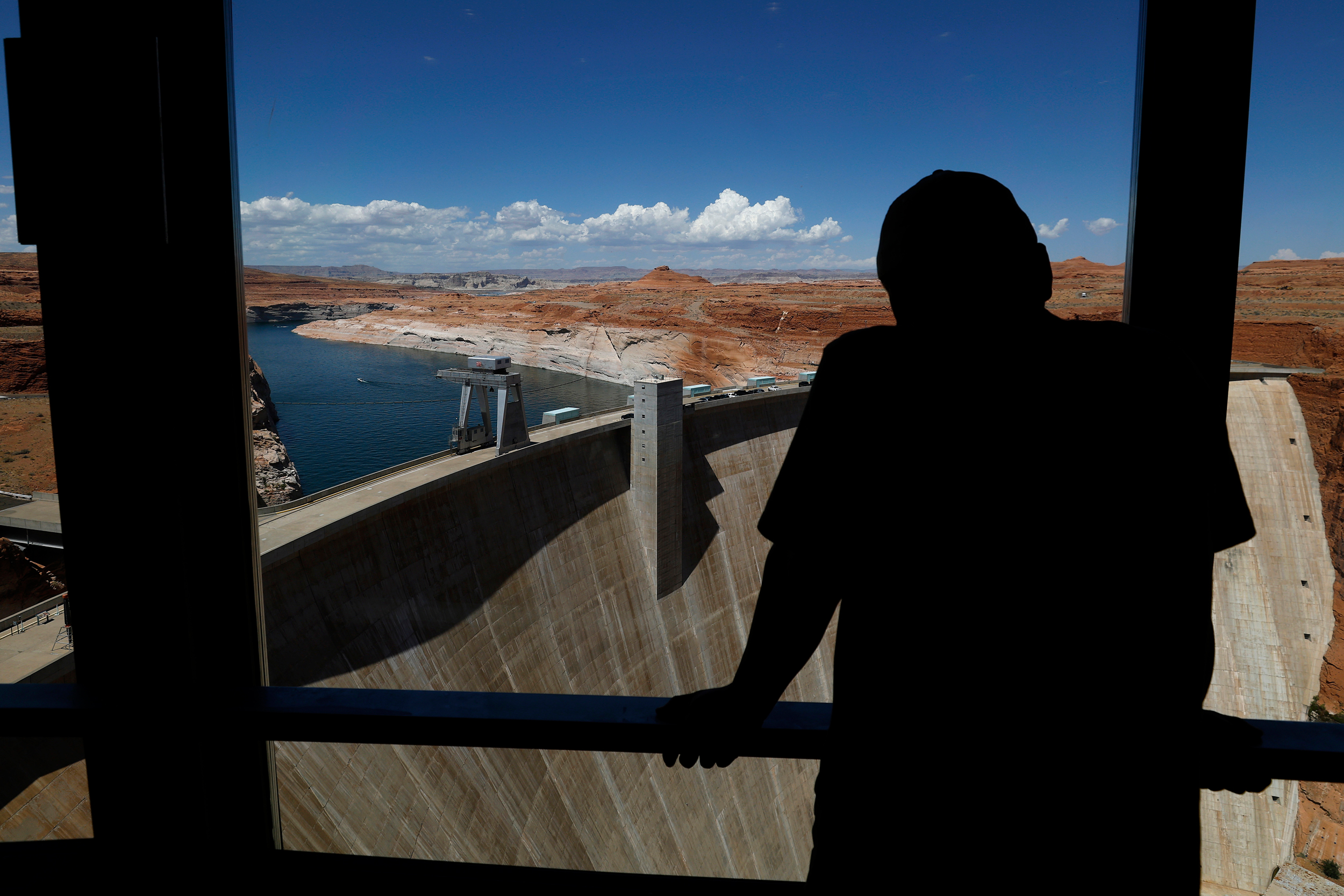
The urgency for a new federal approach is underscored by the impending expiration of existing interim guidelines and drought contingency plans, agreed upon in 2007 and 2019, which are set to conclude in 2027. Negotiations among the basin states to forge a successor agreement have been fraught with difficulty, marked by missed deadlines and a persistent lack of consensus, leaving a critical management vacuum on the horizon. The Bureau of Reclamation, as the operator of essential infrastructure like the Hoover and Glen Canyon Dams, which create the nation’s two largest reservoirs, Lake Mead and Lake Powell, holds significant sway in determining the river’s future operations. The recently published final environmental impact statement, followed by a federal record of decision, will govern the river’s management for the next two years, a crucial period as the basin grapples with an unprecedented water crisis.
"This plan strikes a balance between flexibility and predictability for the Colorado River system that is vital to the 40 million people who rely on it given unprecedented hydrologic conditions and the potential for considerable impacts on water users," stated Andrea Travnicek, the Interior Department’s assistant secretary for water and science, in a release accompanying the plan’s unveiling. She emphasized that the framework "allows a new flexibility to respond to changing conditions and potential consensus," acknowledging the delicate balance between immediate needs and the long-term sustainability of the river.
Under the proposed framework, the Bureau of Reclamation is considering releases from Lake Powell, the critical reservoir marking the boundary between the upper and lower basins, ranging from 5 million to 12 million acre-feet to downstream users. For context, one acre-foot of water can typically supply two to four households for an entire year. The Lower Basin, which includes Mexico, could face substantial reductions in their water entitlements, potentially losing 1.5 million acre-feet in both 2027 and 2028. This scenario would see Arizona experiencing a reduction of 760,000 acre-feet, California 440,000 acre-feet, and Nevada 50,000 acre-feet, according to a proposal submitted by the Lower Basin states themselves. However, the potential for even deeper cuts looms beyond 2028, with Lower Basin reductions potentially reaching up to 3 million acre-feet.
The Arizona Department of Water Resources swiftly condemned these figures as "unacceptable," warning in a published statement that "such reductions would devastate Arizona’s water users and its economy." The agency’s strong reaction highlights the profound economic and social implications of such water scarcity for communities heavily reliant on the river.
Meanwhile, the Bureau of Reclamation is exploring voluntary reductions from the Upper Basin, potentially up to 200,000 acre-feet, and has discussed the possibility of reallocating water from federally managed dams within the basin to downstream areas, contingent on hydrological conditions. JB Hamby, California’s Colorado River Commissioner, articulated the dire situation, stating, "The proposal responds to a fundamental reality: the Colorado River no longer reliably produces enough water to support all the uses and expectations built around it." He stressed that "That challenge is shared across the Basin, and addressing it requires specific, measurable reductions in water use by every state."
Officials from the Colorado Department of Natural Resources indicated they are "analyzing" the federal document, suggesting a cautious approach to the proposed changes. Governors from the Upper Basin states expressed cautious optimism, noting they were "encouraged that new operating guidelines will better reflect existing water supply, which must underpin any practicable plan going forward." This sentiment reflects a desire for management strategies grounded in the river’s current, diminished reality.
The Colorado River, a lifeline for the arid American Southwest, is widely considered one of the nation’s most climate-stressed waterways. It is indispensable to the daily lives of an estimated 35 to 40 million people across seven Western states, supports 30 Native American tribes, and provides water to two Mexican states. This region, characterized by some of the country’s most arid landscapes, also depends heavily on the hydroelectric power generated by the Hoover and Glen Canyon Dams, integral to the region’s energy grid.
The foundational agreement governing the river’s use, the 1922 Colorado River Compact, was based on an assumption of approximately 17.5 million acre-feet of available water annually for the two basins and Mexico. However, the historical average natural flow of the river has consistently fallen short, averaging only around 14.7 million acre-feet. This deficit has dramatically worsened in recent years, with provisional data from the Bureau of Reclamation indicating an average flow of merely 11.2 million acre-feet between 2020 and 2024. Compounding this scarcity, the agency calculated that average water use and evaporative losses across the basin during the same period exceeded 13 million acre-feet, creating a significant and unsustainable deficit.
"The operational ranges that Reclamation put forward, they’re the right things that we need to be doing in order to fix the supply and demand imbalance," commented John Berggren, regional policy manager at Western Resource Advocates. He tempered this by noting, "But it is just a range, and what they actually do over the next two years or within any given year, that will matter if they’re actually gonna be able to bring the system back into balance." Berggren expressed hope that the short-term certainty provided by this federal plan might finally catalyze a resolution among the states. "I hope [the basin commissioners] don’t just keep doing what they’ve been doing for the last two or three years, ’cause that clearly hasn’t worked," he urged. "I hope they try and take this opportunity to change things up. Let’s try something new and hopefully get to a seven-state agreement."
The Bureau of Reclamation’s environmental impact statement was initially intended to formalize a management plan agreed upon by the basin states. Despite the ongoing impasse and missed deadlines for state-level negotiations, the Bureau maintains an open door for a collaborative agreement, which is widely considered the most viable path toward a durable, long-term operating framework for the river.
The core of the negotiation deadlock lies in the contentious debate over whether water cuts should be mandatory and uniformly applied across the entire basin. Decades of exceeding allocated water rights have led the Lower Basin to currently use less water than its official apportionment, according to federal accounting. Consequently, Lower Basin states advocate for future reductions to be shared equitably among all seven states. In contrast, the Upper Basin states, which have historically utilized less than their full legal entitlement, have strongly resisted calls for mandatory cuts, proposing voluntary conservation efforts as their preferred approach. These states argue that inherent variability in environmental conditions, such as this year’s record-low snowpack, already naturally constrain their water usage.
The absence of a unified seven-state agreement, even with the federal government proposing management options, significantly heightens the risk of inter-state litigation. Such disputes, if they reach the Supreme Court, could lead to protracted legal battles and further uncertainty for water users. Nonetheless, the federal proposal to manage the river adaptively to hydrological shifts is seen by some as a necessary step toward long-term sustainability. "The operational ranges that Reclamation put forward, they’re the right things that we need to be doing in order to fix the supply and demand imbalance," stated Celene Hawkins, Colorado River program director at The Nature Conservancy. She expressed optimism that this federal action might spur the states towards a collaborative agreement, enabling "really good work for communities and for the river itself." The path forward remains challenging, but the new federal plan signals a critical shift toward acknowledging and addressing the river’s diminished capacity.