

 Joko Susilo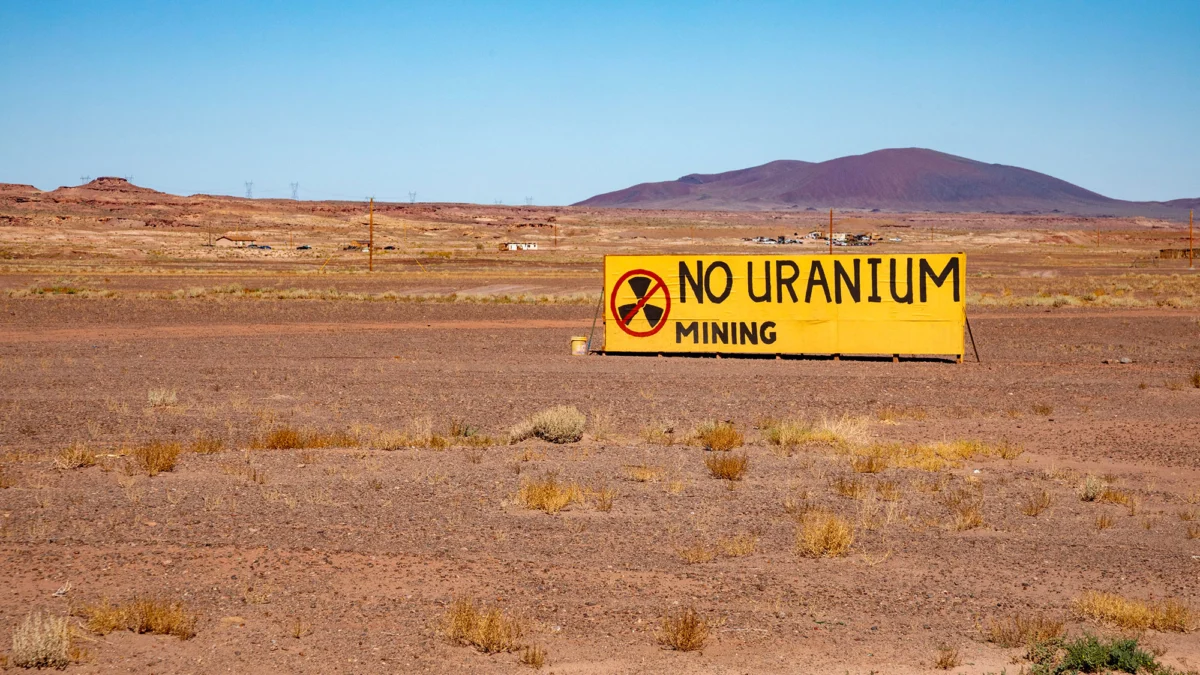
The Denver-based firm, which operates the White Mesa Mill—the last conventional uranium processing facility in the United States—found itself under scrutiny after CEO Ross Bhappu executed the largest insider stock purchase in the company’s history on July 7, 2026, acquiring 74,000 shares. This transaction notably boosted Bhappu’s ownership stake to 41 percent. The very next day, Board Chairman Bruce Hansen also purchased 4,000 shares, according to a news release issued by Democrats on the House Natural Resources Committee. Less than a week after these significant insider trades, President Trump, then in his second term, signed an executive order on July 13, 2026, removing 1.24 million acres from the Bears Ears National Monument. This dramatic redrawing of boundaries effectively reopened vast swathes of protected land, rich in mineral deposits, for potential mining and other resource extraction activities.
The decision immediately drew sharp criticism from Indigenous communities and conservation groups. The Bears Ears Commission, a powerful coalition representing the Hopi, Navajo Nation, Ute Mountain Ute Tribe, Ute Indian Tribe of the Uintah and Ouray Reservation, and Zuni Nation, issued a scathing statement. They asserted that the move constituted "a major setback to one of the nation’s most extraordinary models of collaborative management of public lands between Tribal Nations and federal agencies," warning that it "weakens protections for a living cultural landscape and sacred ancestral homeland that has been cared for by Indigenous peoples since time immemorial." For these tribal nations, Bears Ears is not merely a landscape but a vital cultural repository, holding ancestral sites, traditional resource areas, and deep spiritual significance that predates colonial settlement.
The investigation, formally announced by Representative Jared Huffman (D-CA), the ranking member of the House Natural Resources Committee, and Representative Maxine Dexter (D-OR), ranking member of the Oversight and Investigations Subcommittee, seeks to determine whether the stock purchases were made with foreknowledge of the impending policy change, constituting potential insider trading. In a letter addressed to Bhappu, the lawmakers stated, "We understand that monument boundaries were redrawn in a way that could benefit Energy Fuels," implying a direct correlation between the executive actions and the company’s financial interests.
Energy Fuels has vehemently denied any wrongdoing. A company spokesperson, acknowledging receipt of the congressional letter, stated that the firm takes the allegations seriously but is "unaware of any evidence supporting claims of wrongdoing" and "strongly rejects any suggestion that the Company or its executives engaged in any improper conduct." The company emphasized that its White Mesa Mill has never been situated within the official boundaries of the Bears Ears National Monument, nor does it hold any properties, mining claims, or economic interests directly within the monument. Furthermore, Energy Fuels asserted that it had not actively advocated for any changes to the monument with the current administration. They reiterated their commitment to adhering to all federal, state, and local regulations designed to protect communities and the environment, underscoring the White Mesa Mill’s status as "one of the most highly regulated mineral processing facilities in the United States" and its "critical role in strengthening domestic supply chains."

However, the current controversy echoes a similar dispute from the first Trump administration. Documents from 2017 reveal that Energy Fuels had actively pressured the administration to shrink Bears Ears, which had been originally established by President Barack Obama in December 2016. That initial reduction, enacted by President Trump, was partially reversed in October 2021 by President Joe Biden, who restored the monument’s boundaries to their original scope, highlighting a recurring pattern of political intervention in land use decisions surrounding the culturally and ecologically sensitive region. The White Mesa Mill, located less than a mile east of Bears Ears’ former boundary, is strategically positioned to benefit from access to the monument’s sandstone deposits, which are known to contain valuable uranium and vanadium.
The timing of these events also aligns with a broader strategic push by the second Trump administration to accelerate domestic mining of critical minerals. Just prior to the monument reduction and the executive stock purchases, on June 18, 2026, the Department of Defense issued a substantial $725 million loan to Energy Fuels to support the development of rare earth elements, vital components in modern technologies ranging from electric vehicles and renewable energy systems to advanced robotics and defense applications. Energy Fuels itself highlighted "strong government support" as one of its competitive advantages in an investor presentation filed with the U.S. Securities and Exchange Commission in early July. Adding to this momentum, President Trump announced a massive $3 billion investment in the mining of critical minerals and the development of battery projects just last week, underscoring a national security imperative behind the domestic resource extraction drive.
While the administration champions this aggressive push for minerals like lithium, nickel, and uranium as crucial for both clean energy technologies and national security, tribal nations and environmental advocates offer a starkly different perspective on Energy Fuels’ operations. They accuse the White Mesa Mill of being a detrimental presence, alleging secretive transportation of radioactive materials through tribal lands and raising serious concerns about the stored materials posing significant risks to water quality and public health in Utah’s arid southeastern region. These allegations directly contradict the company’s claims of rigorous environmental and safety compliance, painting a picture of an operation that prioritizes profit over community well-being and ecological integrity.
The Democratic lawmakers, in their letter to Energy Fuels’ CEO, did not mince words, asserting, "Energy Fuels cannot credibly claim to be a responsible operator while the nation’s last uranium mill functions like an unregulated, bargain-bin waste dump on the doorstep of an Indigenous community." They concluded with a scathing indictment: "Instead of respecting the Tribes for whom Bears Ears is sacred, you appear to be enriching yourself from their devastation." This investigation not only scrutinizes the legality of the executives’ stock trades but also casts a harsh light on the ethical dimensions of resource extraction on public and ancestral lands, reigniting a contentious national debate about the balance between economic development, national security interests, and the sacred trust of environmental and cultural preservation. The outcome could have far-reaching implications for corporate accountability, the protection of national monuments, and the rights of Indigenous peoples in the United States.








