Joko Susilo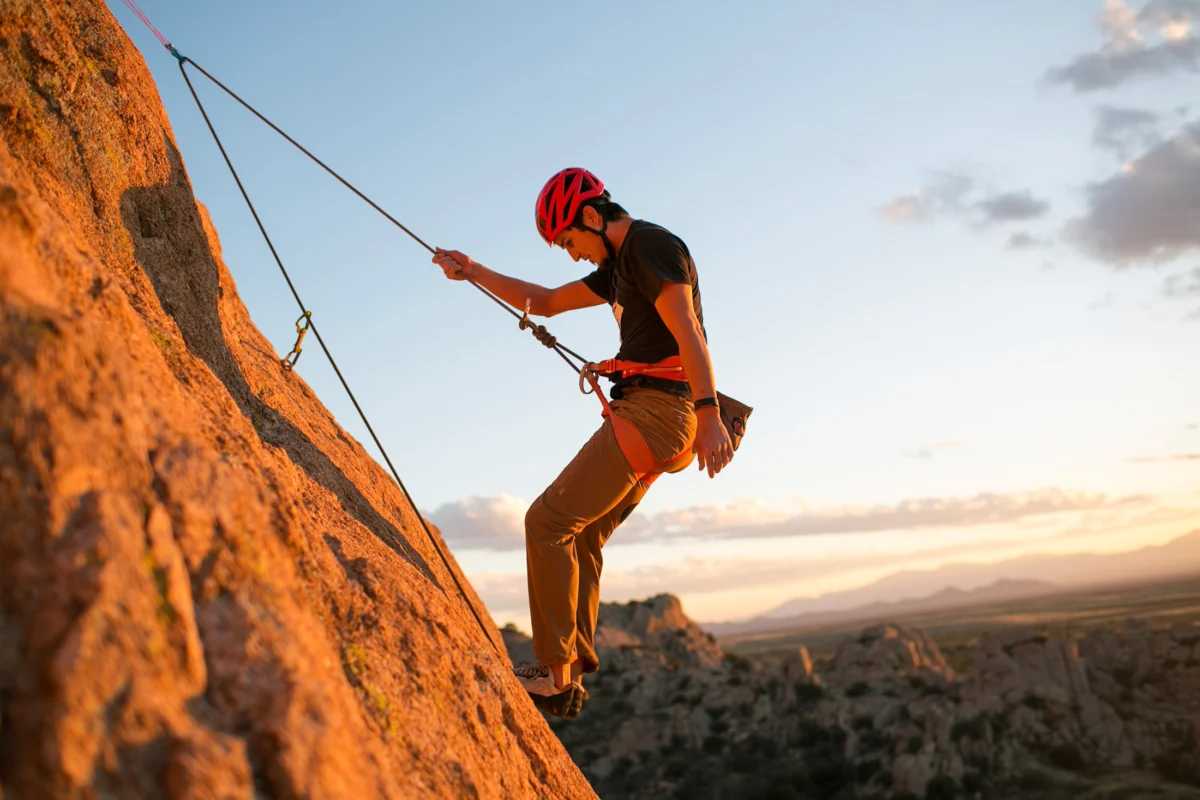
A protracted debate concerning the management of rock climbing within designated wilderness areas appears to be nearing a resolution, as key federal land-management agencies, including the U.S. Forest Service and various bureaus under the Department of Interior, recently unveiled draft guidance on the use of permanent anchors. This pivotal development, released in mid-June, directly stems from the mandate of Congress’s 2025 Protecting America’s Rock Climbing (PARC) Act, which sought to clarify and standardize policies for an activity that has long been intertwined with the fabric of America’s wildest landscapes.
The essence of the conflict lies in the fundamental tension between modern recreational practices and the foundational principles of the Wilderness Act of 1964. This landmark legislation, designed to preserve America’s "untrammeled" wild character, generally prohibits permanent infrastructure, mechanical transport, and commercial enterprises within its designated areas. Yet, climbing, a pursuit often requiring fixed points of attachment for safety and descent, predates the establishment of many wilderness designations, fostering a complex legacy that has challenged policymakers for decades. Erik Murdock, deputy director of programs, policy, and government affairs at the Access Fund, a leading nonprofit advocating for climbing access and environmental stewardship, articulated the broader context: "A lot of people and user types are vying for the same piece of real estate, and climbers are part of that." He emphasized that the new guidance is crucial for securing climbing’s legitimate place amidst diverse outdoor recreational interests.
Climbing a rock face inherently involves managing risk, and climbers employ various methods to secure their ropes against falls or to facilitate safe descents. Removable protection, such as spring-loaded camming devices or nuts that wedge into natural rock cracks, allows climbers to ascend and descend without leaving a trace. However, certain terrains, especially long, blank sections of rock without natural features, necessitate "fixed" or permanent anchors. These can include bolts drilled directly into the rock, to which metal hangers are attached, or pitons—metal spikes hammered into cracks. Additionally, climbers may establish rappelling stations using slings or ropes secured around natural features like boulders or trees, which, when left behind, also constitute a form of permanent infrastructure. The distinction between these methods forms the core of the regulatory challenge, balancing safety, access, and the imperative of wilderness preservation.

The new draft rules, while broadly welcomed by climbing advocates, reveal varying approaches among federal agencies, reflecting the diverse mandates and ecological contexts of the lands they manage. The National Park Service, known for its stricter conservation ethos, proposes a system requiring climbers to obtain special-use permits or broad permission from a park superintendent before installing new bolts. This approach emphasizes controlled expansion and site-specific evaluation. In contrast, the Bureau of Land Management (BLM), which oversees vast tracts of multi-use public lands, offers a more lenient framework, potentially allowing climbers to place a small number of bolts without prior explicit authorization. The U.S. Forest Service, responsible for managing roughly half of the nation’s public-land climbing opportunities, has outlined a directive for its local offices to collaborate with climbers and climbing organizations. This collaborative model aims to develop tailored management plans for both wilderness and non-wilderness climbing areas, fostering a more localized and adaptive governance strategy. While Erik Murdock and the broader climbing community express some minor reservations regarding specific details, they generally view these proposed policies as "overall workable," representing a significant step toward clarity and legitimacy for the sport.
However, the guidance has not quelled the concerns of wilderness advocates, who fear it may open the door to an unchecked proliferation of fixed anchors in America’s most protected natural spaces. Dana Johnson, policy director with the Montana-based environmental nonprofit Wilderness Watch, voiced these apprehensions, suggesting the rules could precipitate a "climbing free-for-all." A critical factor exacerbating these worries is the recent degradation of federal agency capacity. Over the past 18 months, several Forest Service regional offices have reportedly suffered significant losses in wilderness staff, largely due to deferred resignations and budget cuts enacted by the now-defunct Department of Government Efficiency (DOGE). This depletion of personnel raises serious questions about the agencies’ ability to effectively implement new management plans, monitor existing routes, or oversee the placement of new permanent anchors. Johnson underscored the broader ecological implications, stating, "We’re squeezing wildlife into smaller and smaller pockets of protected space, and we have a lot of people waiting in line for more access."
These concerns echo earlier apprehensions within the Biden administration itself. In 2023, driven by fears of environmental damage from overcrowding and the excessive use of permanent bolts, the administration had initially proposed a national directive. This earlier proposal aimed to prohibit all new fixed anchors in wilderness areas and mandate a comprehensive review of existing climbing routes. However, this course was dramatically altered by the 2025 PARC Act, which effectively reversed the administration’s initial stance. The Act, through its legislative power, explicitly codified recreational climbing, including the use, placement, and maintenance of fixed anchors, as an appropriate and permissible activity within wilderness areas. This legislative intervention underscores the significant influence of climbing advocacy groups and the growing mainstream acceptance of the sport.
Yet, some within the outdoor community argue that the intense focus on permanent anchors, while important, distracts from more pervasive environmental challenges facing wilderness areas. Zach Lentsch, owner of Wyoming Mountain Guides, who regularly guides clients through designated wilderness, contended that the debate over fixed anchors misses a larger, more systemic issue. He pointed out that hikers, backpackers, and other "quiet" recreationists also contribute significantly to wilderness impacts. Lentsch cited the alarming example of Lonesome Lake, nestled near the iconic Cirque of the Towers in Wyoming’s Wind River Range, where dangerous levels of E. coli have been detected due to human waste. He argued that simply banning a narrow use like fixed anchors would never resolve such widespread problems. Instead, Lentsch advocates for a holistic approach, urging agencies to collaborate with all wilderness users to establish effective permit systems to limit use in high-impact areas and to implement requirements for responsible waste management, such as the use of specialized bags to pack out human feces.

Lentsch also sought to dispel common misconceptions about climbers’ ethics. "If you’re not a climber, it might seem like climbers are going out there willy-nilly and putting ugly hardware into the walls," he observed. "There are plenty of places in the wilderness where you don’t need a fixed anchor, and typically the ethic has been if you don’t need a fixed anchor, you don’t bring one." This highlights a nuanced internal code within the climbing community, prioritizing minimal impact and traditional climbing methods where feasible, reserving fixed anchors for situations where safety or the nature of the rock dictates their necessity. The image of Aaron Mike, a Navajo climbing guide, ascending a dihedral crack in Idaho’s Sawtooth Wilderness using removable trad gear toward a fixed anchor, powerfully illustrates this blend of traditional technique and modern safety considerations.
The public engagement phase for these critical policy changes is drawing to a close, with the comment period for the Forest Service proposal concluding on July 20. Public input on the proposed guidance from the National Park Service, Bureau of Land Management, and U.S. Fish and Wildlife Service remains open until August 14. This democratic process allows concerned citizens, environmental groups, and recreational enthusiasts alike to voice their perspectives on how best to balance human enjoyment with ecological preservation in America’s cherished wilderness areas. The outcome of these discussions and the finalization of these policies will set a precedent for managing human interaction with wild spaces, impacting not only rock climbers but the broader community of wilderness users and the very future of these irreplaceable natural sanctuaries. As outdoor recreation continues its global surge in popularity, this localized American debate reflects a universal challenge: how to responsibly steward our planet’s wild places for both present and future generations.