

 Johny Prima
The ambitious Painted Desert Power project, poised to become one of the largest solar installations in the United States, has ignited deep skepticism and concern among residents of the Coalmine Canyon Chapter of the Navajo Nation. What began as a proposal to cover approximately 1,000 acres of ancestral rangeland with solar panels rapidly expanded to encompass over 4,000 acres, fueling long-standing distrust of the tribal government and a pervasive sense of being overlooked. This expansion, coupled with perceived communication failures, has left many community members anxious about the project’s true impact and who ultimately stands to benefit.
Tyrel Jones, secretary of the Coalmine Canyon Chapter’s Community Land Use Planning Committee, articulated the profound unease, stating, "That made this whole project, as it kept progressing, more and more like we were being sold down the river. Or being taken advantage of, and not given any real voice." The sentiment reflects a historical pattern of Indigenous communities feeling marginalized in large-scale resource development projects on their lands, often experiencing the burdens while external entities reap the majority of the rewards.
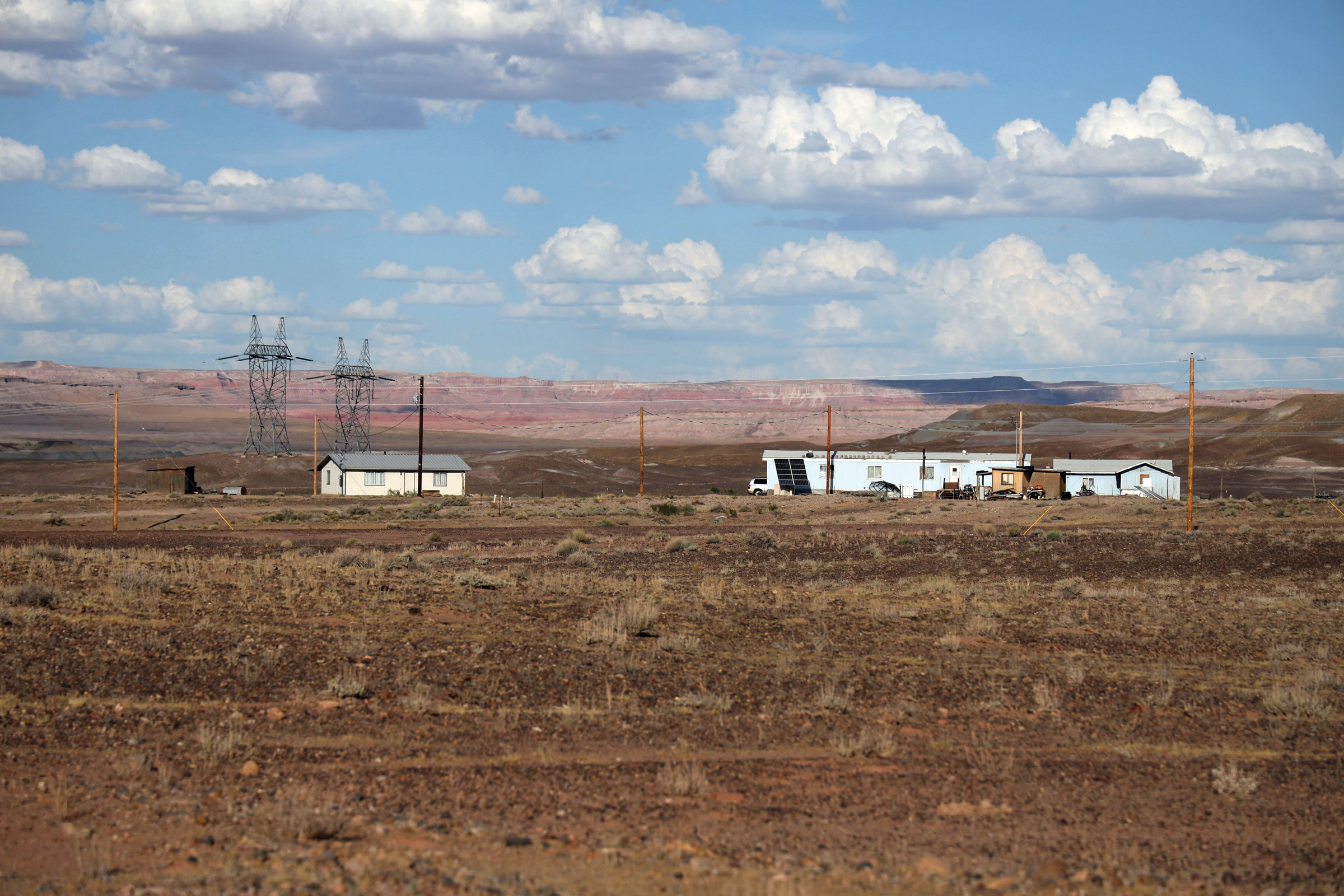
For residents like Freddie Hatathlie, a retired Army veteran, rancher, and lifelong inhabitant of Coalmine Canyon in northeast Arizona, the sheer scale of the proposed development—generating hundreds of megawatts of electricity—proved difficult to conceptualize. Technical presentations, frequently delivered in English, presented a significant barrier to understanding for many locals, whose primary language may be Navajo. Hatathlie emphasized the need for tangible representations: "Make a model, draw models, build a model, so we can see it." His own ability to grasp the project’s scope stemmed from prior experience in a large power plant, a privilege not shared by most in the community.

The unfolding situation at Coalmine Canyon spotlights critical gaps in existing lease and tax policies governing renewable energy projects on tribal lands. It raises fundamental questions about how to ensure equitable distribution of benefits across the vast Navajo Nation and, crucially, how information is effectively and respectfully communicated to its diverse residents. The Painted Desert Power project, developed by Navajo Power PBC—a Navajo-owned, non-tribal-affiliated organization dedicated to bringing renewables to tribal communities—in partnership with Applied Energy Services (AES), a Virginia-based global energy company, offers a stark illustration of the complexities involved when external corporations seek tribal approval for massive energy infrastructure.
The Navajo Nation, like many Indigenous territories globally, is navigating a pivotal energy transition. The closure of revenue-generating coal operations, such as the Navajo Generating Station, has underscored the urgent need for new economic engines and energy sources. While existing solar projects on the Nation currently occupy about 915 acres, the Painted Desert Power project’s proposed 4,500-acre footprint dwarfs these, highlighting its unprecedented scale. AES, which would own and operate the facility through the subsidiary Painted Desert Power LLC, claims extensive community engagement, citing over 70 chapter and community meetings, four chapter resolutions of support, and written consent from affected grazing-permit holders, as required by Navajo leasing regulations. In an email, the project team affirmed, "At AES, we understand that our success as a company is only as strong as our partnerships with the communities where we operate. Community consent is at the core of AES and Navajo Power PBC’s approach to development on the Navajo Nation."

Despite these assurances, a significant disconnect persists. Many residents living in the immediate vicinity of the proposed development remain largely uninformed about its precise nature, operational mechanics, or the specific benefits it would confer upon their community. Jones pointed out that the project’s rapid expansion fundamentally altered the local conversation, shifting it from initial cautious optimism to deep-seated skepticism about who would truly gain. He voiced concerns about AES, a "large U.S. global company that has no affiliation ever with the Navajo Nation," making demands and controlling the generated power. "It’s just another example of a Trojan horse after another Trojan horse after another Trojan horse—which eventually we will have no say-so over any of these major promised entities," Jones asserted, reflecting a history where external projects often prioritize external interests over local needs.
The initial stages of the proposal, presented during the early phase of the COVID-19 pandemic, further exacerbated communication challenges. Chapter members reported receiving minimal formal paperwork, primarily general pamphlets with bullet points. The increasing acreage and vague references to involved organizations fueled questions about the true scope and beneficiaries of the project. A central grievance, articulated by Hatathlie, concerned the distribution of the electricity itself: it would feed into the broader electrical grid, bypassing local homes. He drew a poignant parallel to the defunct Navajo Generating Station, a massive coal plant on the Navajo Nation that powered distant cities, famously providing "zero" electricity to the nearby community of Page. AES confirmed that the Painted Desert Power project would not directly power local Navajo homes.

Recognizing the urgent need for local electricity access, AES stated that Navajo Power PBC co-created Navajo Power Home, a subsidiary dedicated to installing off-grid solar systems for individual households. The company reports over 550 such installations across the Navajo Nation, including more than 80 in the Cameron and Coalmine Canyon chapters, with another 300 planned. While this initiative addresses immediate energy poverty for some, its scale is dwarfed by the main project. Arlando Yellowhair, a Navy veteran and Coalmine Canyon resident who received a Navajo Power Home unit, noted that the 8-kilowatt system provides just enough electricity for a refrigerator and a few lights. "Eight kilowatts is not sufficient for a family to function without being aware of how much you’re using. You really have to pay attention to the amount that you’re using," Yellowhair highlighted, underscoring the limitations of these off-grid solutions compared to the potential of the large-scale utility project.
Construction on the first phase of the Painted Desert Power project is anticipated to begin in 2027, with operations expected by 2030. Upon completion, the facility will incorporate an astounding "1,363,635 solar panels and 816 battery enclosures," according to AES, underscoring its immense scale and potential energy output.

Beyond the energy distribution, significant uncertainty clouds how AES’s lease payments and tax revenues will directly benefit the Coalmine Canyon community. The chapter’s status as an "uncertified chapter"—meaning it lacks the autonomy to manage its own finances—complicates the direct flow of funds. Instead, revenue would be routed through the Navajo Nation Office of the Controller in Window Rock, the Nation’s capital, potentially diluting local control and direct benefits. AES’s lease with the Navajo Nation stipulates annual payments of $545 per acre, increasing by 2% annually over the project’s 40-year lifespan, projected to generate over $310 million in lease and tax payments. The company also committed to "additional community benefits," including "$16.7 million per Chapter over project lifetime," claiming these annual payments would "more than double the Chapter’s FY26 budget." Yet, the mechanism for individual residents to receive compensation or direct benefit remains unclear.
The communication of these complex financial and operational details often occurred through overwhelming 60-slide PowerPoint presentations over brief two-day periods, delivered in technical language and primarily in English. Hatathlie’s frustration grew, sensing that key decisions had already been made by the larger Navajo government, rendering local input largely ceremonial.

Shaun Hudson, Coalmine Canyon Chapter Grazing Official, echoed this concern, explaining that uncertified chapters like Coalmine Canyon lack the financial freedom of certified chapters to directly utilize funds from outside entities. This structural issue exacerbates the feeling of disempowerment. The legislative procedures of the Navajo Nation, involving numerous committees and review stages, add layers of complexity that are challenging for residents to navigate. Shawna Claw, a Chinle Council delegate and member of the Navajo Nation Resource and Development Committee, acknowledged the confusion, noting how residents often conflated concerns about grazing permits and land-use agreements with the project’s tax structure. Letters were submitted by residents requesting to rescind their grazing permits, fearing their land was being appropriated without full consent. While appeal processes exist through the Navajo Nation Department of Agriculture, many residents, especially in remote communities with limited access to information, remain unaware of these avenues.
The controversies surrounding the Painted Desert Power project highlight a broader systemic issue: the Navajo Nation has yet to establish a comprehensive renewable energy policy framework. This absence leaves tribal leaders grappling with how to effectively tax, govern, and ensure equitable benefit-sharing from large-scale solar developments. Former Navajo Nation Council Delegate Thomas Walker Jr., who represented several chapters including Coalmine Canyon, emphasized that the existing comprehensive land-leasing, legislative, and review processes were designed to include all stakeholders. "If the processes are allowed to be utilized without any shortcuts… if it’s allowed to run its course all the way through, and you know our leaders are there to consider if they’re fully informed and if they have absolutely no questions… then they vote on it," he stated. Walker stressed the public’s right to know if any steps were skipped or shortcuts taken, particularly for projects involving such extensive use of tribal land. However, for residents like Hudson, the grazing official, questioning the process can feel futile when local communities already perceive themselves as sidelined. "I think a lot of these decisions are already pre-made in Window Rock," he concluded, "So right now, yeah, these developers, they come in just to follow procedure, you know, just to show their place. So, it doesn’t matter." This sentiment underscores a critical challenge for Indigenous nations globally: balancing the promise of economic development and sustainable energy with the imperative of genuine self-determination and equitable justice for their communities.






