

 Rocky Gerung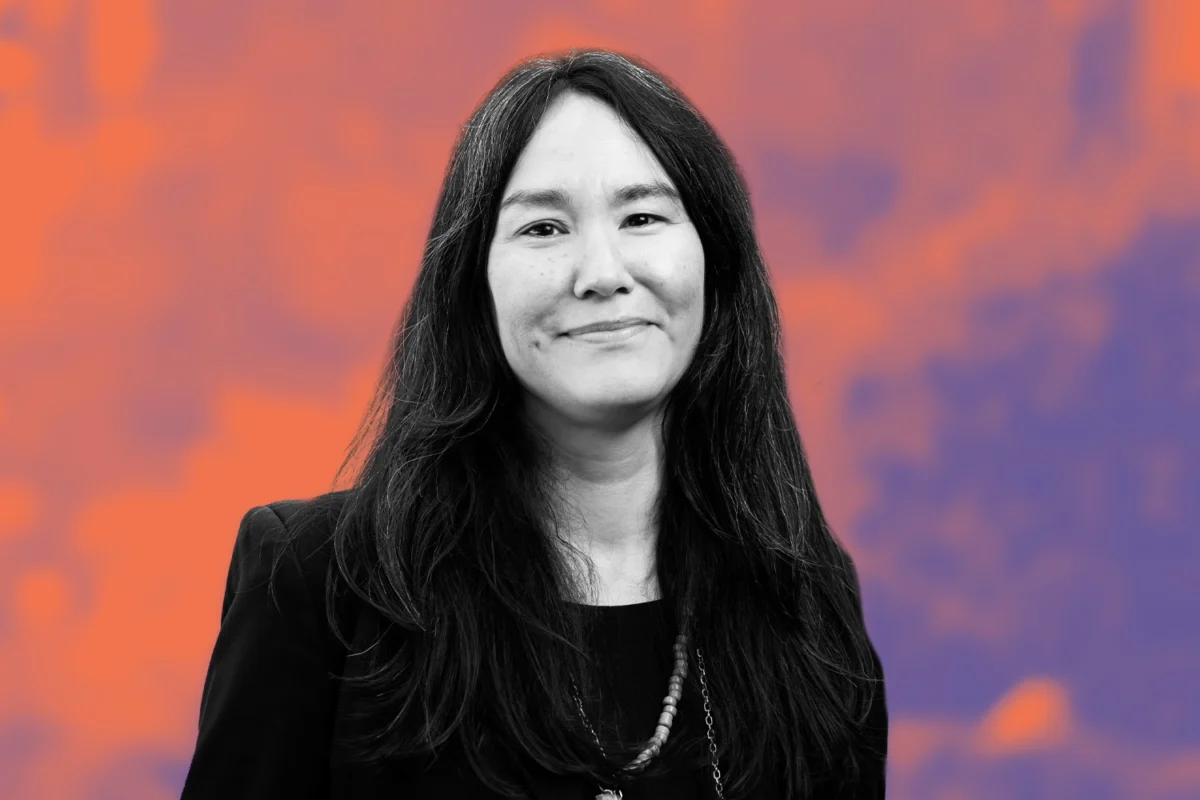
A profound disquiet permeates the contemporary Arctic landscape, not merely from the visible march of environmental degradation but from a deeper, more unsettling erosion of language and memory, as articulated by acclaimed Indigenous poet Joan Naviyuk Kane. Her latest reflections, published in the July 2026 print edition of High Country News, offer a stark and unflinching look at the personal and collective toll of a warming planet, intertwining the physical realities of the Arctic with the spiritual and emotional resonances of its inhabitants. Kane’s words, imbued with a sense of urgent introspection, suggest a deliberate withdrawal from conventional communication, a move towards a form of expression so potent it might render her "indecipherable" to those outside her experience, for to be understood, she posits, is to engage in a form of "hunger" that consumes.
Her language, she observes, has become "smoggy," tainted by the pervasive influence of external forces and the very crises that threaten her homeland. This atmospheric pollution mirrors the broader environmental crisis, where industrial extraction and the warming climate conspire to reshape the Arctic in ways that are both visible and insidious. Kane articulates a chilling fear: the fear of the very inspirations that arise in the "wake of our destroyers." This poignant statement speaks to the paradoxical nature of creativity in the face of devastation, where the forces causing harm also become the grim muse, shaping artistic output born from loss and resilience.
The poet’s visions are haunted by the spectral presence of her "dead peers," individuals whose lives were intimately connected to the land and its traditions. These ancestors, she explains, do not desire "pretty things" or the articulation of pain in conventional terms. Instead, they gesture towards the destructive force of "gold dredges hinging into the earth," symbols of extractive industries that scar the landscape and disrupt ancient ecological balances. As permafrost thaws, a physical manifestation of global warming, these dredges, both literal and metaphorical, "sink down," mirroring a collective descent into a "kind of hell" that encompasses environmental collapse and the unraveling of cultural continuity.
Kane extends an invitation to confront this grim reality, urging readers to "wash ourselves in those waters" of environmental contamination and to "thirst because we cannot drink them," a powerful metaphor for the poisoned and inaccessible resources of their homeland. She invokes the practice of mothers recounting their girlhoods, a tradition deeply rooted in oral history and the transmission of cultural knowledge. These memories, however, are tinged with profound loss, particularly for the "ones they lost when they rolled willow leaves tight in toilet paper." This seemingly simple act, smoking willow leaves, was not an escape into intoxication or a flirtation with death, but a desperate attempt to "see visions of Mary." This "Mary" is not necessarily the religious figure, but a more universal archetype of motherhood and spiritual guidance, a desperate reach for solace and understanding in a world that was rapidly changing.
The context of Kane’s reflections is the rapidly transforming Arctic, a region at the forefront of climate change. The Arctic is warming at a rate significantly faster than the global average, leading to dramatic shifts in ice cover, permafrost stability, and ecosystems. These changes have profound implications for Indigenous communities who have lived in harmony with the Arctic environment for millennia. Their traditional ways of life, deeply intertwined with hunting, fishing, and the seasonal rhythms of the land and sea, are being fundamentally challenged. The thawing permafrost, for instance, not only destabilizes infrastructure but also releases ancient pathogens and alters the very ground upon which communities are built.

Furthermore, the Arctic has become a geopolitical and economic frontier. Increased accessibility due to receding ice opens up opportunities for resource extraction, shipping routes, and tourism, bringing with it a new wave of industrial activity and potential environmental damage. Gold dredges, as mentioned by Kane, represent just one facet of this extractive economy, which often prioritizes profit over ecological preservation and the rights of Indigenous peoples. The tension between these economic interests and the urgent need for environmental protection is a defining characteristic of the contemporary Arctic.
Joan Naviyuk Kane, a 2025 USA Fellow and co-editor of Circumpolar Connections: Creative Indigenous Geographies of the Arctic, brings a rich background to her observations. Her previous poetry collections, including The Cormorant Hunter’s Wife, Hyperboreal, Milk Black Carbon, and Dark Traffic, have explored themes of Indigenous identity, the natural world, and the impact of modernity on Arctic cultures. Her work consistently bridges the personal and the political, the ancestral and the contemporary, offering a vital perspective on the challenges facing Indigenous communities worldwide.
The "Apparitional" theme, as suggested by the article’s original headline, hints at the spectral quality of lost traditions, the ghosts of a past environment, and the disembodied presence of those who have passed. It speaks to a sense of unreality that can accompany profound societal and environmental shifts, where the familiar world seems to recede, replaced by something both alien and terrifyingly real. Kane’s poetry, therefore, serves as an elegy for what is being lost, but also as a call to attention, urging a deeper engagement with the consequences of human actions.
The implications of Kane’s work extend far beyond the Arctic. Her exploration of the intersection between environmental destruction and cultural memory resonates with Indigenous communities and environmental activists globally. As climate change exacerbates existing inequalities and threatens cultural heritage in diverse contexts, her articulation of a language grappling with "smog" and a fear of inspiration offers a powerful model for understanding and responding to these complex challenges. Her emphasis on the need to preserve and transmit cultural knowledge, even in the face of overwhelming adversity, highlights the enduring strength and resilience of Indigenous peoples.
The act of remembering, as depicted through the mothers’ stories of their girlhoods and the yearning for visions of Mary, becomes a form of resistance. It is an act of reclaiming agency and identity in a world that seeks to erase them. The "hunger" for understanding, which Kane initially wishes to escape, can also be interpreted as a hunger for connection, for meaning, and for a future where cultural and ecological integrity are not sacrificed for short-term gain. Her work, therefore, is not just a lament but a testament to the enduring power of the human spirit and the vital importance of Indigenous voices in navigating the profound crises of our time. The ongoing dialogue, facilitated by platforms that allow for the free republication of such vital essays and stories under Creative Commons licenses, is crucial for fostering a global understanding of these urgent issues.









