

 Rocky Gerung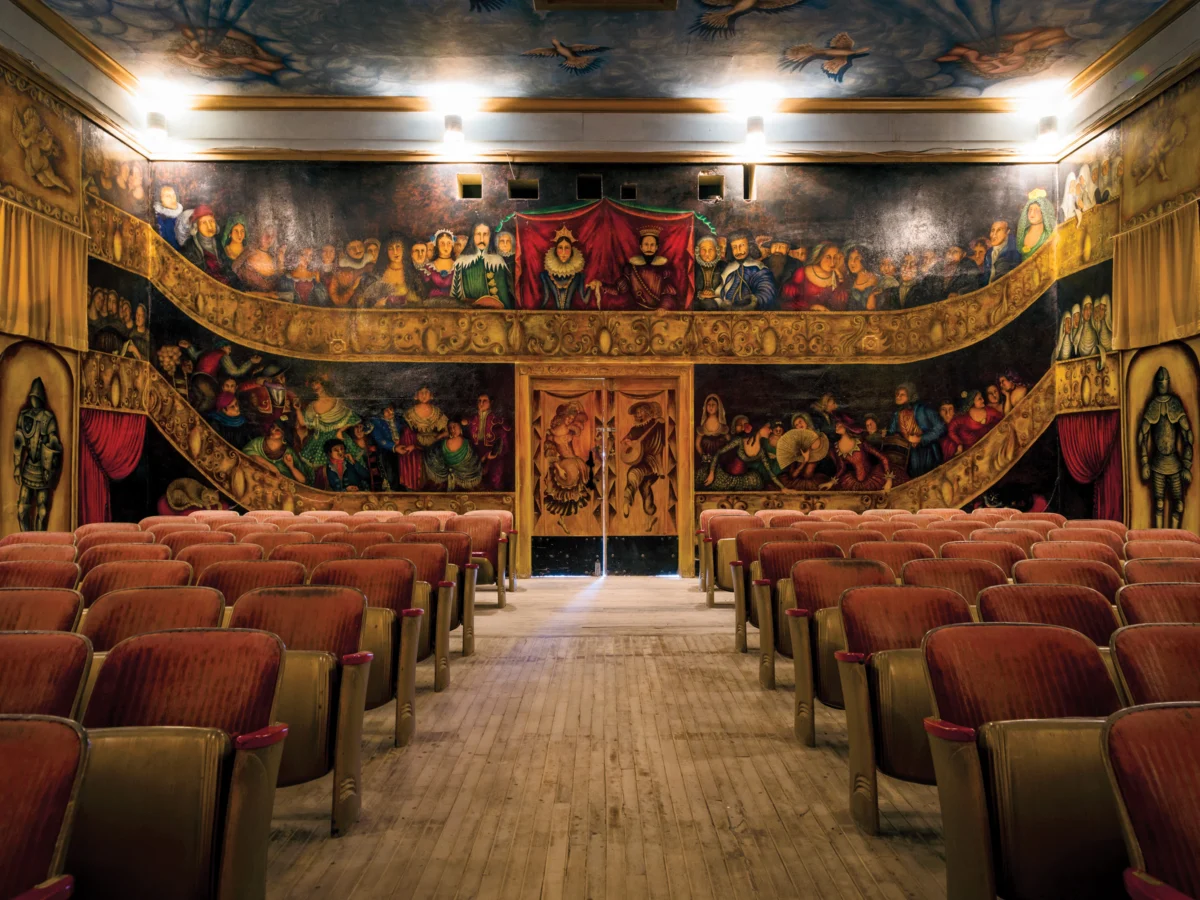
Dry mud tracks are a common sight across the plush red and green carpets of the Amargosa Hotel and Opera House lobby, a constant reminder of the challenges faced by its dedicated staff. Hotel manager Emilee Brown, who has overseen operations in Death Valley Junction, California, since 2022, describes a daily reality of unpredictable issues, from plumbing failures and flooding to crumbling adobe walls. Despite these persistent struggles, Brown finds deep satisfaction in the stories shared by guests, which echo the enduring spirit of this unique desert landmark. The hotel, a 103-year-old adobe structure situated in the unforgiving climate of Death Valley, grapples with ancient plumbing, heating, and roof leaks – a testament to its age and the harsh environment. On the brick fireplace mantel, staff members have lovingly hung pink satin ballet slipper stockings beneath a framed portrait of Marta Becket, the visionary performer and former proprietor whose artistic legacy the current team and board members are fiercely committed to preserving.
The improbable genesis of the Amargosa Opera House and Hotel traces back to 1967 when Marta Becket and her husband, Tom, found themselves in Death Valley Junction due to a flat tire. At the time, the location was little more than a ghost town, with only an auto shop and a gas station operating. This desolate crossroads, however, held historical significance as a vital trade route for the federally recognized Timbisha Shoshone Tribe, whose ancestral lands encompass Death Valley. The Timbisha Shoshone lived in this desert region year-round until their forced displacement in the late 19th and early 20th centuries, a consequence of expanding mining operations and the establishment of Death Valley National Monument in 1933. By the 1960s, the area had largely been abandoned; the borax mill had relocated, the Tonopah-Tidewater railroad was dismantled for wartime materials during the 1940s, and Corkhill Hall – the Spanish Colonial-style adobe complex comprising the hotel, workers’ camp, garage, and theater – had fallen into severe disrepair. The old hotel stood on the edge of the Amargosa Desert, a basin historically vulnerable to the intense monsoon rains that continue to batter the region with increasing ferocity.

Becket, a seasoned touring ballerina seeking a respite during an Easter weekend, glimpsed the locked doors of the old adobe theater at the end of the colonnade and was instantly captivated by its stage. A spontaneous decision to contact the owner and lease the entire complex for a nominal sum and a handshake initiated a transformative chapter for both the ghost town and Becket’s own life. Over the subsequent five decades, she meticulously transformed the derelict theater into a vibrant opera house and revitalized the adjacent hotel. "I longed to find a place where I could dance and dance – creating a new repertoire of beauty," Becket shared with Desert magazine in 1972.
Between 1968 and 1972, Becket dedicated herself to renovating the hotel and painstakingly repainting the theater by hand. She employed trompe-l’oeil techniques to adorn the stage walls, creating the illusion of rich red velvet drapery and elaborately carved, gilded Rococo woodwork. A sweeping mural adorned the theater’s adobe sides and back wall, depicting balconies filled with life-size figures reminiscent of 16th-century Spain. Her beloved cats, an orange and a black one, are depicted resting beneath painted seats, while a celestial ceiling showcases white clouds and cherubic figures floating against a vibrant blue sky. In 1968, she held her inaugural performance for an audience of just twelve people.
Renamed the Amargosa Opera House, the venue became the focal point of Becket’s life. From its reopening in 1972 until 2012, she performed en pointe every Friday, Saturday, and Monday night, regardless of the weather or audience size, sometimes accompanied only by her cats. The theater was conceived as a stage for her artistry, culminating in her final performance on February 12, 2012. In a poignant farewell, all 113 seats were filled, with patrons standing in the aisles to witness the 84-year-old dancer in "The Sitting Down Show," a performance conceived due to her inability to dance on her feet.

"The theater interior looks just the way it did when Marta painted it," confirmed Fred Conboy, a board director of Amargosa Opera House Inc., the nonprofit organization Becket established in 1974 to safeguard her artistic contributions and enduring legacy. Even the theater’s lighting fixtures, ingeniously crafted from old Folgers coffee cans, continue to illuminate the stage. "Conservation of the murals is tied to the conservation of the structure," Conboy emphasized, highlighting the intrinsic link between the artwork and the building’s physical integrity.
Marta Becket, who passed away in 2017, cultivated an artistic oasis in Death Valley, a region where the human population has, at times, dwindled to fewer than a handful of residents. Since her passing, the nonprofit has continued to host occasional lectures and concerts. "We once had a tribal blues band – the vibrations nearly peeled the paint off the walls," Conboy recalled with a chuckle. This past February, the Opera House celebrated its 57th anniversary with a sold-out Valentine’s Day event, featuring community groups like the Desert Players who presented a variety show inspired by Becket’s life and work. Across the street from the hotel, the very stucco garage where the Beckets’ tire was fixed nearly six decades ago still stands, a silent witness to their arrival. Adjacent to it, a small storefront, once an art gallery, now displays Becket’s original costumes in its windows – elegant velvet bodices adorned with metallic braiding and ethereal, bell-shaped skirts of layered tulle, evoking the glamour of a bygone era.
However, maintaining such a unique arts complex in the challenging environment of Death Valley presents formidable obstacles. The 1972 Desert magazine article already alluded to the area’s precarious climate, particularly the seasonal rains that posed a significant threat to the century-old adobe structure. In recent years, these challenges have intensified; the region has experienced at least four "1,000-year rain events" annually since 2022, and the summer monsoons of the preceding year caused significant flooding within the theater. November 2025 marked the wettest month in 115 years for California, with rainfall accumulation in that single month nearly equaling a full year’s average. Consequently, Becket’s artistic legacy and the very existence of the Amargosa Opera House and Hotel are at risk; without substantial repairs, the complex faces potential closure or, more critically, the physical collapse of its historic buildings.

Following the extensive flooding in 2025, the hotel staff and the small board team, numbering about five dedicated individuals, launched "Campaign Amargosa" to secure vital funds for repairs and preservation. According to Conboy, the immediate priority is addressing the aging infrastructure, including the plumbing, electrical systems, and the notoriously leaky roof, which has been dislodged by strong winds on multiple occasions. Private donations and contributions channeled through Campaign Amargosa form the foundation’s secondary revenue stream, while the hotel itself, operating on a thin margin, remains the primary source of operating income. As one of the few lodging options available when Death Valley experiences peak visitor numbers, particularly during the spring wildflower season, the hotel is a critical economic driver. By late fall, as the holiday season approaches, every room in the hotel is typically booked, underscoring its importance as a desert destination.
Patricia Fernández Carcedo, an artist based in Los Angeles who has been visiting the hotel since her teenage years, credits Becket’s pioneering project with profoundly influencing her own artistic journey. She recounted a Thanksgiving gathering where she brought friends to camp and share a meal near the hotel. "A couple of bikers came through, and they knew about Amargosa; there was this sense of magic in knowing that someone could love this strange and quiet and beautiful place as much as I did," Carcedo shared, reflecting on the shared appreciation for the unique locale. She added, "I haven’t returned to Amargosa for a few years now, as a way of preserving my own dreams and memories of this place." Carcedo further commented, "Standing at a junction, the site of Marta’s Opera House will always be part of the desert’s very layered and complex historical landscape. It feels very important to remember Marta as an artist and visionary whose life was unpredictable in many ways."
The current situation at the Amargosa Opera House and Hotel serves as a poignant metaphor for arts funding in many rural areas across the United States today: a delicate, yet crumbling, adobe arts complex battling the relentless forces of nature, while a devoted team works tirelessly to prevent its dissolution back into the surrounding desert landscape. Even Marta Becket recognized the perpetual challenge of preserving her extraordinary dream. "Even if it’s torn down tomorrow, no one can take away the hours of joy I spent painting it," she stated in the 2000 documentary Amargosa, her eyes reflecting the harsh desert light. "It’s the experience that matters." Within the hotel lobby, a mural painted by Becket presciently depicts the town’s eventual fate: a sun-drenched desert vista framed by a painted archway, as if the wall itself opens to the landscape beyond. Sparse desert shrubs dot the sandy expanse of Death Valley, while the low, colonnaded ruins of the complex recede inward, their repeating arches casting long, rhythmic shadows. Soft brown swirls in the mural evoke the powerful winds that sweep across the valley, and in the distance, above the Black Mountain range to the west, a ghostly silhouette of Becket, adorned in her signature tulle ballet skirt, spirals ethereally into the sky, a lasting emblem of her artistic spirit.









