Rocky Gerung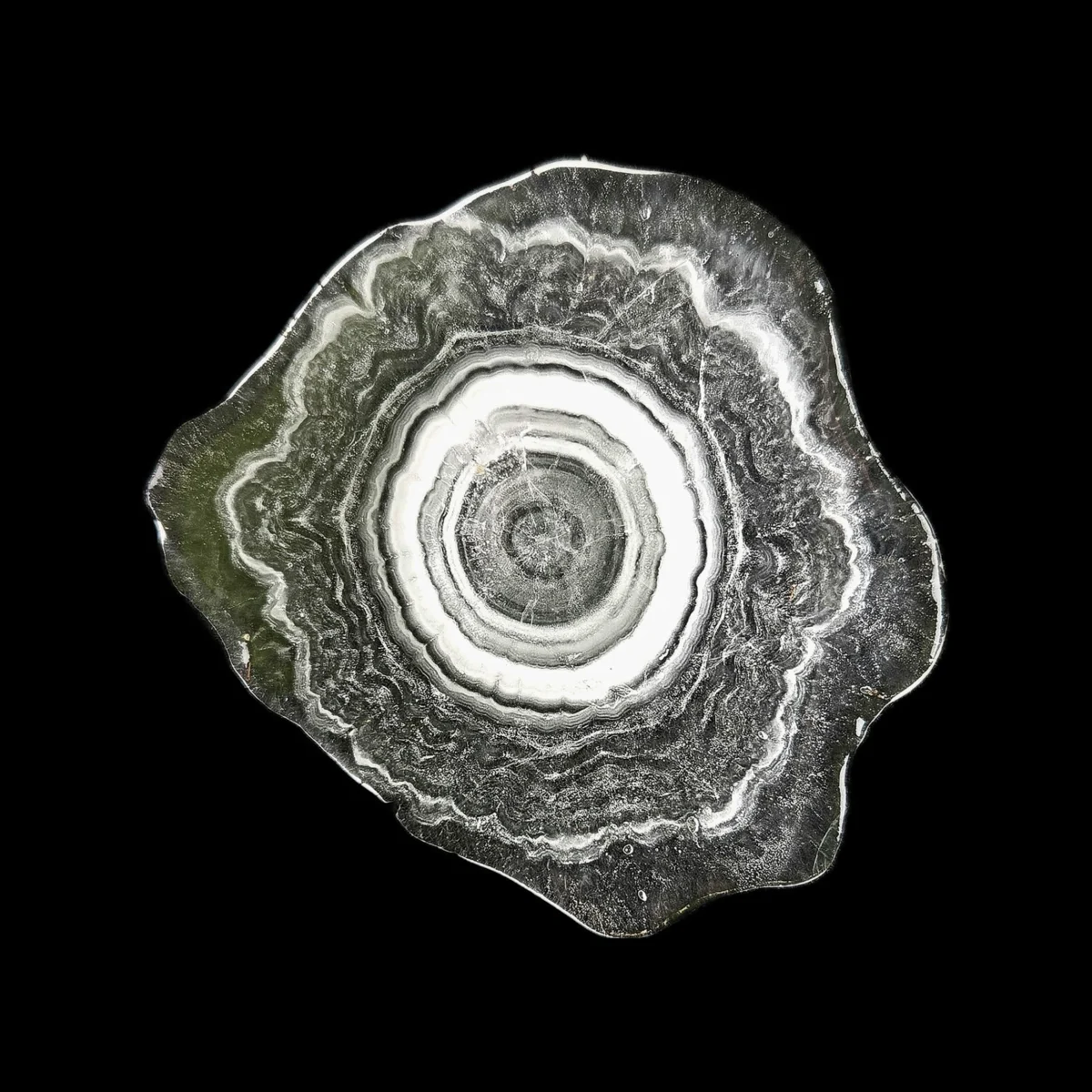
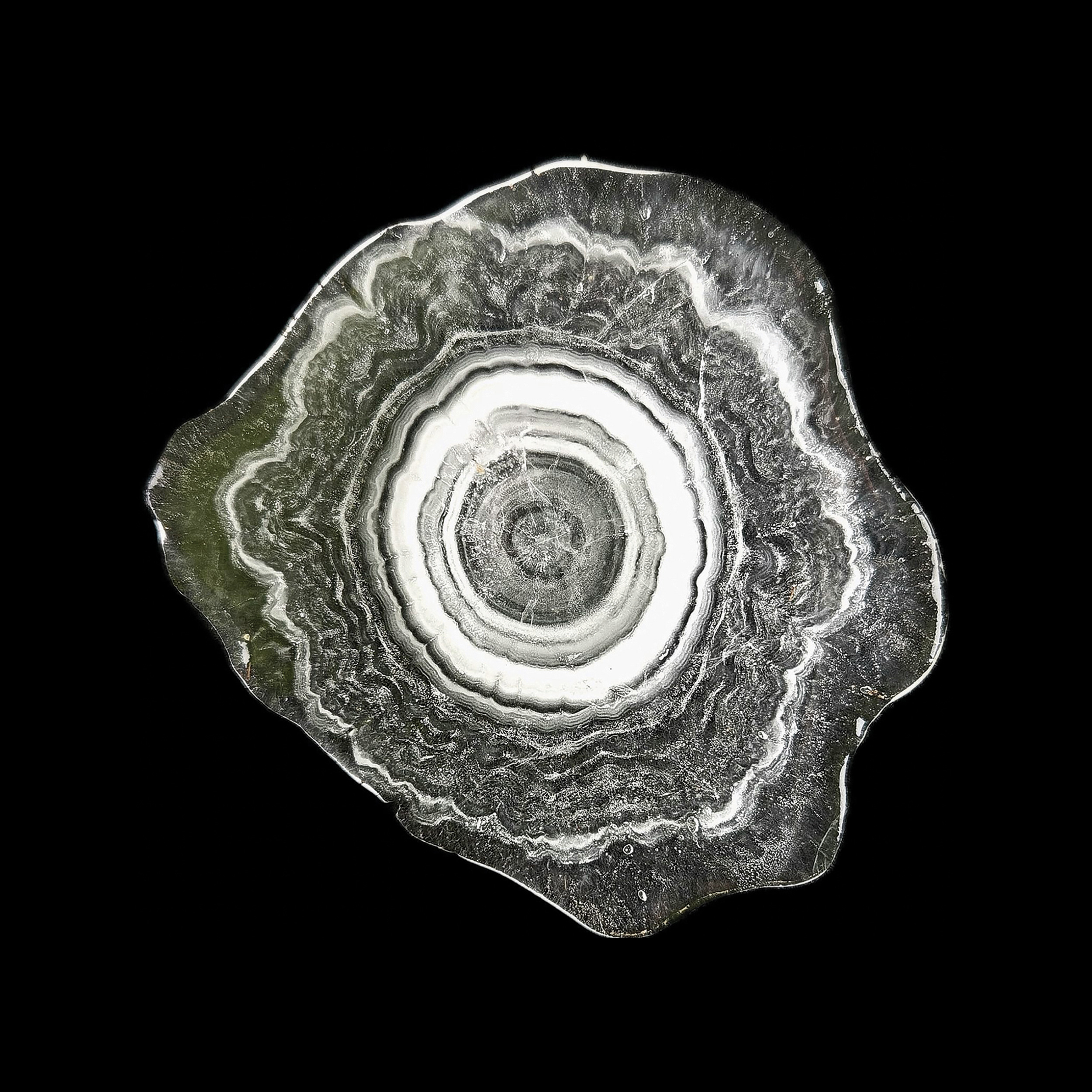
Within a specialized cold laboratory in Boulder, Colorado, where indoor temperatures are maintained at a frigid minus 4 degrees Fahrenheit (minus 20 degrees Celsius), atmospheric researcher Anthony Bernal Ayala meticulously slices hailstones with a band saw, revealing intricate layers of icy growth that mirror the annual rings of a tree. These frozen strata—distinguished by their clarity or opacity, and their varying thicknesses—provide a detailed record of the atmospheric conditions present during the hailstone’s formation. A clear layer signifies slow freezing, allowing ice crystals to form without trapping significant air, while a cloudy layer indicates rapid freezing, which entraps air bubbles, giving the ice its opaque appearance. Bernal Ayala then proceeds to analyze the crystalline structures, embedded particles, and isotopic signatures preserved within these distinct layers. "All that information can tell you a wonderful story of how the hailstone was growing, but nobody—not until now—was able to tap into that history," stated Bernal Ayala, affiliated with Atmospheric and Environmental Research, part of the JANUS Research Group.
Bernal Ayala’s groundbreaking work, conducted at the National Center for Atmospheric Research (NCAR), is a critical component of a significant, long-term initiative aimed at understanding one of the nation’s most destructive weather phenomena. The ultimate goal of this research is to enhance protections for lives and property against the devastating impacts of hailstorms, which can batter roofs, obliterate crops, and inflict widespread damage on vehicles.
Recent data underscores the escalating economic toll of severe thunderstorms. According to the Insurance Institute for Business and Home Safety, annual losses nationwide from these events surpassed $50 billion between 2023 and 2025, more than doubling the figures from just a decade prior. Hail alone is responsible for an estimated 60% to 80% of this damage. In Colorado, a state particularly susceptible to severe hail, the cost of hail damage, rather than wildfire, is the primary driver behind escalating insurance premiums. This trend is projected to worsen as climate change is expected to foster the development of larger and more damaging hailstones. "It’s going to just keep getting costlier and costlier," Bernal Ayala observed, highlighting the urgent need for more comprehensive scientific understanding and mitigation strategies.

Even fundamental questions about hail formation and behavior have historically eluded definitive scientific answers, making them exceptionally challenging to study. However, a renewed surge in research, bolstered by the first major U.S. field campaign dedicated to hail in over four decades, promises to change this landscape. The "In-situ Collaborative Experiment for the Collection of Hail In the Plains" (ICECHIP) initiative received $11 million in funding from the National Science Foundation in 2024, a crucial investment made just before subsequent budget cuts affected the foundation.
Over a six-week period in the spring of 2025, approximately 100 scientists and university students embarked on an ambitious chase across the Central Plains and the Front Range of Colorado, spanning from the Canadian to the Mexican borders, in pursuit of hailstorms. Equipped with mobile radar trucks to track storm development and drones for aerial reconnaissance, the research teams meticulously documented hailstorms. They employed high-speed cameras to capture the intricate details of falling hail, utilized a specialized instrument called a disdrometer to measure impact velocity and size, and recorded hail distribution and size by analyzing imprints left on foam pads. Additionally, researchers deployed specialized funnels to collect hail samples and subjected them to tests to determine their structural strength. Scientists from the Australian Bureau of Meteorology also contributed by launching golf ball-sized, instrumented probes via balloons into the heart of storms. These airborne sensors gathered real-time data on their trajectory, speed, and the rate of ice accumulation, while an integrated microphone recorded the impact of water droplets and hailstones. "This has really been the first time where we’ve been able to do a real comprehensive look at hail on the ground, hail aloft, the storm itself, the environment around the storm—just everything all at once," explained Becky Adams-Selin, ICECHIP’s lead investigator and a principal scientist at Atmospheric and Environmental Research, part of the JANUS Research Group.

The extensive collection of samples gathered during the ICECHIP campaign, comprising 26 cooler-sized boxes, was transported to NCAR. This globally recognized institution, a cornerstone of atmospheric and climate research, has a long history of studying hail, including a notable campaign in the 1970s that investigated claims of hail suppression technologies. The logistical challenges faced by the project were significant; with no readily available alternative storage facilities, the backup plan for preserving ICECHIP’s invaluable samples involved using a walk-in freezer typically found in fast-food restaurants.
Adding a layer of uncertainty to the future of this vital research hub, NCAR’s own operational status is currently under review. In late 2025, the Trump administration announced intentions to dissolve the center and relocate its operations. The University Corporation for Atmospheric Research (UCAR), which manages NCAR, filed a lawsuit in March against the administration, alleging political motivations behind the proposed closure. The lawsuit claims that NCAR is being targeted as retaliation against Colorado for maintaining its mail-in voting system and due to Governor Jared Polis’s initial refusal to extradite Tina Peters, a former Mesa County clerk convicted of election security breaches. In June, a federal judge issued a temporary injunction blocking the White House’s efforts to dismantle NCAR, with the government required to respond to the lawsuit by September 30th. "I can’t even quantify the impact that it would have to our community if we lost NCAR," stated Victor Gensini, a professor of meteorology at Northern Illinois University and a key figure in the ICECHIP project, emphasizing NCAR’s indispensable role, calling it "the beating heart" of atmospheric science.

Previous scientific studies have projected the influence of climate change on hail events. While warmer global temperatures might cause smaller hailstones to melt before reaching the ground, they can also fuel more intense updrafts within thunderstorms. These stronger updrafts can keep hailstones suspended in the atmosphere for longer durations, allowing them to grow to larger sizes, thereby increasing the frequency of the most destructive hail. A record-breaking hailstone, measuring over five inches in diameter, was recovered in Yuma County, Colorado, in 2023. That same year, Colorado recorded 176 reports of hail measuring two inches or greater, significantly surpassing the previous record of 91 reports set in 2018, according to the Colorado Climate Center.
Scientists acknowledge the difficulty in disentangling the precise contributions of increased large hail events versus the expansion of development in hail-prone regions to the overall rise in damage costs. The confluence of a rapidly growing human presence and escalating insured losses has been termed the "expanding bull’s-eye effect." Gensini points to the significant development boom occurring east of the Front Range, particularly along Colorado’s Interstate 25 corridor, which has experienced explosive population growth in recent decades. For instance, the population of the Fort Collins metropolitan area has doubled since 1990, now exceeding approximately 375,000 residents, as reported by the U.S. Census Bureau. This pattern of increased urbanization in previously rural or open areas is becoming a widespread phenomenon across the Western United States, transforming these regions into increasingly densely populated and valuable targets for hail damage. "Colorado is the poster child for what I expect the next 25 years to look like for hail," Gensini remarked, underscoring the state’s role as a bellwether for future hail impacts.

In response to these growing concerns, Fort Collins became one of the first municipalities to implement hail-specific roofing requirements for new construction and renovations in 2019. Marcus Coldiron, the city’s chief building official, noted that this initiative was partly prompted by the substantial volume of shingles and roofing materials that ended up in landfills following a catastrophic hailstorm in 2018. While the effectiveness of these new regulations is still under evaluation, Coldiron reported a decrease in permits issued for roof replacements and a reduction in shingles destined for landfills. However, it is also important to note that Fort Collins has not experienced a hailstorm of the same severity as the 2018 event since the new codes were enacted. A growing number of communities along the Front Range have since incorporated impact-resistant shingles into their building codes, and Colorado legislators recently passed a law establishing a grant program to assist residents in installing more resilient roofing materials.
Researchers involved in the ICECHIP project are also investigating how advancements in building materials can be leveraged to mitigate the impact of increasingly common billion-dollar storm losses. "The dollars are simply piling up so fast," stated Ian Giammanco, a lead research meteorologist at the Insurance Institute for Business and Home Safety, a key partner in the ICECHIP initiative. "We’re still trying to understand how do we get the best materials onto roofs, onto people’s homes, onto businesses to actually start shaving off these losses."