

 Roger Danuarta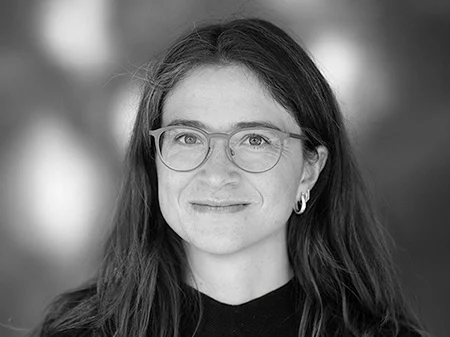
In 1996, a compelling article in High Country News ignited a crucial conversation, charting Santa Fe’s perceived decline from its pedestal as an exclusive, high-end tourist haven. The publication, then still produced on traditional newsprint, featured a striking cover image: a classic Southwestern coyote, mid-howl, gradually disintegrating, a potent visual metaphor for the erosion of identity or authenticity. Within its pages, Debbie Jaramillo, Santa Fe’s outspoken and newly elected mayor, launched a scathing critique against her predecessors, accusing them of prioritizing tourism revenue over the fundamental needs of the city’s residents. Her words resonated with a powerful directness, declaring, "We don’t need any more videos of people getting out of Porsches and women on ski slopes," a clear challenge to the prevailing narrative of luxury and leisure that had long defined the city.
This moment in journalism, vivid and unyielding, left an indelible mark, serving as a formative introduction to the power of the press for many. The enduring relevance of that 1996 piece became strikingly apparent decades later. By 2021, when a journalist moved to Santa Fe to work for a local investigative outlet, the very issues High Country News had explored a quarter-century prior persisted, deeply embedded in the city’s fabric. The vibrant cultural hub, renowned for its unique adobe architecture, thriving arts scene, and profound historical significance, continued to grapple with the complexities of its identity, caught between the demands of a global tourism industry and the welfare of its local population.

Indeed, the enduring resonance of Jaramillo’s tenure was highlighted when the Santa Fe Reporter, another pillar of local journalism, revisited her story in a seminal article provocatively titled, "Was Debbie right?" The headline, concise and impactful, needed no further clarification; Jaramillo’s name had become synonymous with a pivotal era in Santa Fe’s political and social landscape. Despite a single term in office that was, for some, shadowed by accusations of nepotism, her policy decisions and passionate advocacy left an unmistakable imprint on the city. Her administration championed development initiatives aimed at supporting the middle class, and she fiercely articulated the widespread frustration over economic inequality and the lingering impacts of the town’s colonial past and present. This period underscored the constant tension between preserving cultural heritage, accommodating growth, and ensuring equitable development for all residents, not just transient visitors or wealthy newcomers.
This historical lens underscores the profound capability of impactful journalism: to illuminate the present moment by tracing its origins, identifying the key players, and revealing the underlying forces shaping communities. It possesses the unique capacity to show, at a deeply human scale, how the world is perpetually in flux, undergoing significant reshaping. Crucially, it also highlights areas ripe for intervention, where existing paradigms are failing, and where new approaches are desperately needed. This is particularly vital in regions often overlooked by mainstream narratives, where the nuances of local struggles can easily be missed.
The complex tapestry of issues facing Santa Fe — from the pressures of gentrification and an escalating cost of living driven by a booming tourism sector, to the strain on vital resources like water in an arid environment, and the slow erosion of indigenous and local cultures under the weight of commercialization — mirrors challenges found in countless other iconic destinations worldwide. Cities like Venice, Barcelona, and Amsterdam also grapple with the double-edged sword of their allure, where the very beauty and culture that attract visitors begin to fray under the strain of over-tourism. Jaramillo’s prescient warnings in 1996 about an economy overly reliant on luxury tourism resonate with increasing urgency in a globalized world where cultural authenticity can be commodified, and local communities marginalized.

This persistent dedication to understanding regional intricacies is precisely what defines the mission of focused, long-term reporting. The current issue of High Country News, for example, offers a compelling testament to this approach, featuring a curated selection of stories from its extensive archives that provide fresh insights into contemporary challenges. These pieces range from the protracted battles over the designation and protection of national monuments in Utah, such as Bears Ears and Grand Staircase-Escalante, which represent critical fault lines in Western land use policy, to revealing the little-known backstories of key appointees in the Trump administration who significantly influenced environmental and land management policies across the American West. Such deep dives demonstrate how historical context can unlock a richer understanding of current events, offering vital perspectives that are often absent in more ephemeral news cycles.
As the editor-in-chief, my professional journey has always been rooted in reporting, from covering local beats and contributing to public radio to exploring the diverse landscapes of High Country News. This foundational commitment to in-depth reporting will remain the unwavering focus of my leadership. Communities, particularly those across the vast and diverse Western United States, urgently require more comprehensive and nuanced information. This region, despite its immense ecological, cultural, and economic significance, frequently finds itself relegated to the periphery of the national conversation. While iconic locales such as Santa Fe, the Malheur National Wildlife Refuge, or the Grand Staircase-Escalante National Monument may briefly capture the national spotlight, drawing the collective intelligence, creativity, and curiosity of countless journalists, this attention is often fleeting. The challenge lies in sustaining that focus, in maintaining an unwavering gaze on these critical issues long after the national media caravan has moved on. Our commitment, however, endures.
The lived reality of Western communities is invariably far more intricate and multi-layered than the simplified narratives often presented in national media or, at times, even in local papers constrained by resources. My recent deep dive into our archives served as a powerful reminder of how effortlessly one can perceive only the broad strokes of a story, inadvertently overlooking the critical nuances that introduce complexity and profound meaning. This, then, represents the core mission for High Country News and my earnest plea to our dedicated readership: to consciously and diligently seek out the clear, intricate details. We are actively pursuing those elusive, often challenging stories that, despite their apparent simplicity, communicate far more than their mere factual content suggests. We invite you to share your own experiences and perspectives, as they are invaluable to this ongoing endeavor. Your trust in our journalistic integrity is deeply appreciated.







