Rocky Gerung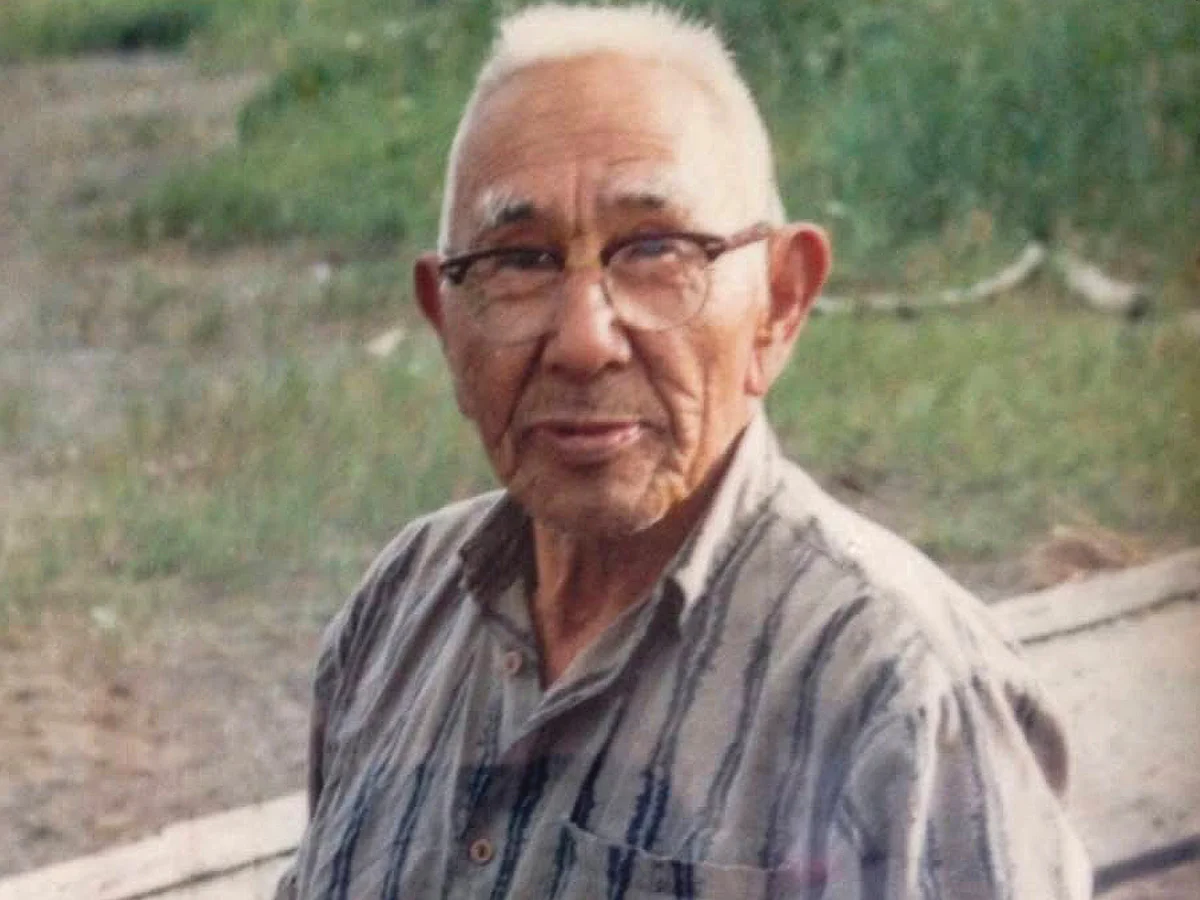
In the quiet hush of winter, Papa would stand by the north-facing window of his home, his gaze sweeping across the open sky and the slumbering garden of his neighbor. "Alapaa," he’d murmur, a phrase in Inupiaq that translates to "it likes to be cold," referring to Sila, the weather itself. During those long January days of my childhood, when our family gathered for supper and the house resonated with the force of coastal storms, and the snow berms in town steadily climbed higher throughout the season, Papa would often utter, "Piqsiuktuq," to my Gram, my mother, aunts, and uncles. This Inupiaq word, meticulously constructed, breaks down into "piqsiq" meaning "stormy," the syllable "uk" signifying "likes to," and "tuq" denoting "it or they." While the cadence of these sounds felt familiar and comforting, I did not then grasp its full meaning: "It likes to be stormy." The profound Indigenous understanding that Sila, the weather, is a living entity, a powerful force that dictates our lives, was woven into these linguistic threads.
Papa and Gram, having endured severe physical and psychological punishment for speaking Inupiaq in the rigid confines of school classrooms during their own youth, consciously chose not to teach my mother and her siblings the language. They sought to shield them from the deep, unjust shame and pain they had carried. Consequently, while my mother and her siblings understood Inupiaq, they could not speak it, and I, growing up without exposure to the language, understood neither its nuances nor its embedded worldview. As a child, adorned with braids and bobbles, I lacked the crucial knowledge that our language carried an intrinsic understanding of Sila as a sentient being, a powerful entity that commands respect and governs our existence.
Papa, however, was born with this profound connection to the natural world. His understanding of the weather was so acute that he served as a traditional forecaster. I envision him learning these intricate signals from his father, who in turn inherited them from his father, and so forth, through generations of ancestors who called Umiak’iq, the southernmost Inupiaq settlement, their ancestral homeland. Settlers later renamed this land Unalakleet. Papa would stand on the beach, his eyes fixed on the vast expanse of the ocean, observing the currents, the shifting clouds, and the subtle colors and movements within them, allowing Sila to orchestrate our days and chart the course for the week ahead. If the winds were predicted to blow fiercely, hunting ugruk (bearded seals) became impossible. If Sila signaled rain, we would postpone fishing for humpback salmon until a sustained period of clear skies allowed for the crucial days of hanging and drying the catch. Sila was our guide, continuously dictating our activities.

Papa was a man of slight, slender, and sinewy build, his head crowned with a full mane of gray hair, his eyes often framed by browline glasses. He moved with an innate sense of purpose, was at ease with silence, never complained, and possessed an almost prescient ability to look ahead. His attire typically consisted of scratchy wool plaid button-up shirts, and he was known to chew snuff, emanating an aroma that blended earth, fresh air, and an unmistakable air of no-nonsense practicality. His face was a testament to a life lived fully, etched with a profusion of wrinkles, his hair cut in a neat crewcut, and his large ears jutting out distinctively. He was the kind of man whose words commanded attention; when Papa spoke, people listened.
Our family suppers were frequently held at Papa and Gram’s modest home, a gathering that encompassed aunts, uncles, and all the cousins. The sheer number of us often meant there weren’t enough chairs around the kitchen table, prompting Papa or my father to retrieve a stack of white five-gallon buckets from the back porch to accommodate everyone. As a child, I harbored a distinct aversion to sitting on those buckets; my legs were too short for my feet to reach the floor, and the raised rims of the lids pressed uncomfortably into my thighs.
On those frigid or tempestuous winter days, Gram would stand by the oven, stirring a pot of fragrant caribou soup. The yeasty scent of baking bread would permeate their small home, a comforting aroma that softened the conversations unfolding around us, as we knew we would soon be indulging in fresh bread slathered with Crisco. The warmth of the oven, combined with the presence of all our bodies, enveloped the room in a cozy embrace. Some of us younger cousins would often retreat to the back bedroom, a space designated for grandchildren who lived with them, seeking an escape from the ostensibly dull adult conversations and the growing stuffiness of the main room. At the time, I was unaware that the passive snippets of conversation I overheard, while I was occupied with my own childish pursuits, were subtly shaping the values and mindset that guide me today.
This time of year, communities across coastal Western and Northern Alaska are keenly focused on preparing for the approaching fall storms. While I recall experiencing fall storms during my childhood, they were of a vastly different magnitude than what we are witnessing today. I grew up hearing stories of a significant flood in the 1960s, an event that saw my father’s father’s house inexplicably float off its foundation, eventually settling in its current location, now home to my uncle and auntie. When it landed, my papa, with characteristic humor, famously asked the bewildered man across the road, "Can I be your neighbor?"

Last fall, Typhoon Halong, which originated in the central Pacific Ocean southeast of Japan, embarked on a northward journey that ultimately led it to batter Alaska’s entire western coastline. The storm unleashed devastating floods, impacting 45 communities and tragically forcing the complete relocation of residents from Kipnuk and Kwigillingok, transforming them into climate refugees. In the wake of this disaster, the governor declared a state disaster emergency, and the president swiftly approved a federal disaster declaration. These catastrophic flood events, once considered rare occurrences happening perhaps once a century, are now a recurring threat, impacting coastal communities annually.
I recently spoke with Rick Thoman, Alaska’s foremost climatologist, to gain insight into the escalating frequency of these storms. He explained that the warming of the oceans, coupled with the relentless melting of glaciers and ice sheets, is creating a "double whammy" that is driving sea-level rise. "Coastal erosion is aggravated by the longer sea-ice-free season," Thoman stated, adding that "warmer oceans can also increase the intensity of storms." This phenomenon was likely a significant factor in the ferocity of the Halong flooding. He further elaborated that in some areas, permafrost is thawing just a few feet above sea level, and the resulting sinking and settling of the land can lead to catastrophic flooding where it might otherwise have been a minor inconvenience.
As we brace ourselves for whatever Sila may bring to us this fall, I find myself frequently contemplating what Papa would say if he were standing at his window today. I wonder what his reaction would be to days of continuous rain, rendering it impossible to dry our fish on the racks as we once did, forcing us to resort to drying them indoors in empty bedrooms, garages, or hallways, relying on fans. I ponder what he would comment on regarding the relentless encroachment of the ocean, which is steadily consuming the coastline where he and Gram used to camp during fishing season. Standing on that sandy beach, gazing west towards the horizon, I question whether he could still discern the messages within the subtle signals of the environment and predict the weather with the uncanny accuracy he once possessed. I also wonder what kinds of conversations I might overhear if I were to sit at that familiar kitchen table, and ultimately, I wonder what Sila would tell him now.