

 Roger Danuarta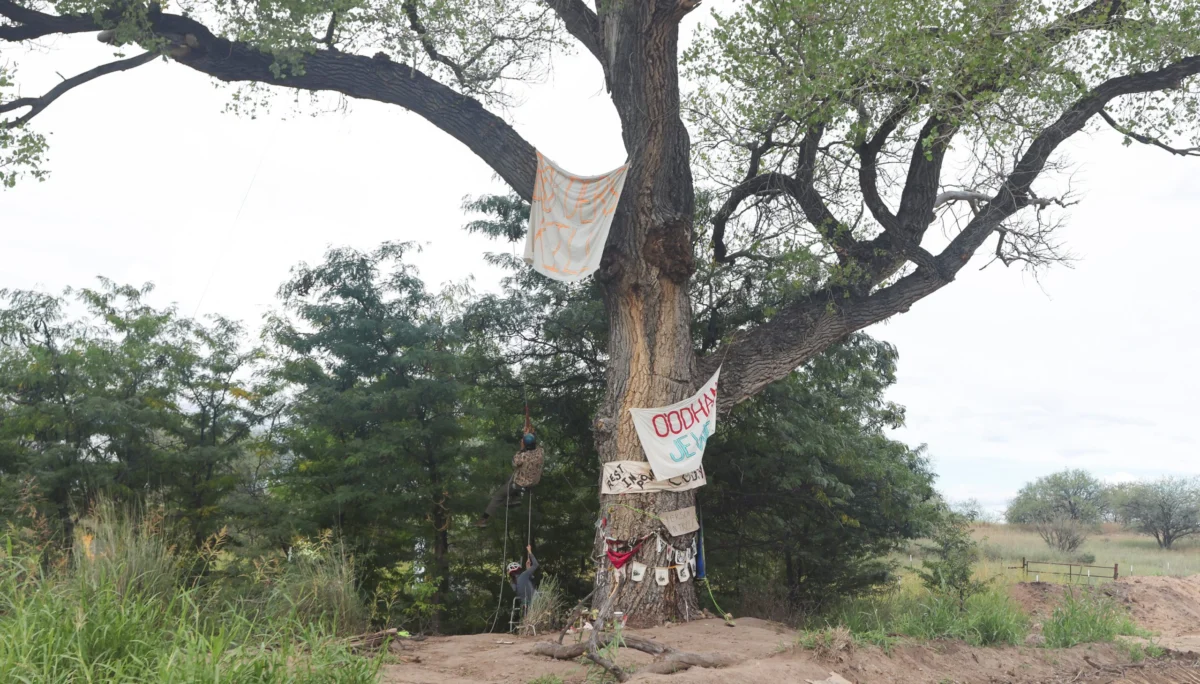
In a pre-dawn operation that culminated over 70 days of sustained environmental and Indigenous protest, armed U.S. Border Patrol agents raided a peaceful encampment in Lochiel, a remote southeastern Arizona community, clearing the way for contractors to fell the last remaining ancient cottonwood tree on Monday morning. Activists on the ground reported at least ten arrests by 8 a.m. as agents, reportedly without presenting warrants, breached private property, dismantled tents, and forcibly removed demonstrators who had maintained a vigil to protect the venerable tree, affectionately known as the "grandmother tree" due to its immense age and significance. The incident marks a poignant moment in the ongoing, contentious construction of a double border wall along the U.S.-Mexico frontier, highlighting deep-seated conflicts between federal security mandates, environmental preservation, and civil liberties.

The cottonwood, a majestic sentinel estimated to be hundreds of years old, stood as a symbol of resistance and ecological vitality. It was one of several riparian giants that once graced the edge of private land bordering the U.S.-Mexico boundary along Border Road, a rugged dirt track winding through the San Rafael Valley, approximately 25 miles east of Nogales. For over two months, a diverse coalition of environmentalists, Indigenous leaders, and concerned citizens had occupied the site, establishing a round-the-clock tree-sit and ground camp to physically impede the tree’s destruction. Their efforts were born from a desperate plea to safeguard a critical ecological anchor in an area renowned for its unique biodiversity.
U.S. Customs and Border Protection (CBP) confirmed Monday that all four cottonwood trees on federal land in Lochiel, designated for removal to facilitate border wall construction, have now been cut down. In a statement, CBP acknowledged "the importance of protecting the environment, wildlife, and cultural resources during border wall construction." However, the agency quickly pivoted, asserting that "illegal immigration itself poses significant environmental challenges," citing "high volumes of unauthorized crossings" leading to "substantial amounts of trash, pollution, and damage to natural resources, including sensitive habitats and agriculture." The statement did not provide specifics regarding the number of protesters arrested or the charges they might face, leaving many questions unanswered for civil rights advocates and the broader public.

The confrontation began around 6:30 a.m. on Monday, as Border Patrol agents, many with faces obscured, descended upon the camp during the group’s customary sunrise prayer ceremony. Videos shared on social media platforms depicted chaotic scenes: agents making arrests, protesters screaming warnings about individuals being pushed into barbed wire fencing, and the collective cries of despair as the colossal "grandmother tree" crashed to the earth. The raid brought an abrupt and forceful end to a sustained act of civil disobedience that had drawn national attention to the environmental and cultural costs of border militarization.
The protest camp had become a vibrant hub of activism since Kate Scott, co-founder of the Madrean Archipelago Wildlife Center, first discovered contractors preparing to fell the cottonwoods in June. Her initial alarm quickly galvanized support, leading to the establishment of the permanent encampment. With the crucial involvement of Indigenous activists, a daily sunrise prayer ritual for the land became a central feature of camp life, a practice that tragically coincided with the final raid. While a recent visit to the camp in late September revealed a quieter atmosphere, with only sporadic Border Patrol presence and no active construction near the tree, Scott recounted earlier, more intense periods where machinery would roar to life as early as 3 a.m., disrupting the nascent protest.

The San Rafael Valley, nestled within the ecologically rich Madrean Sky Islands region, is a biodiversity hotspot. This unique archipelago of isolated mountain ranges, rising from desert plains, serves as a crucial corridor for wildlife, connecting temperate and tropical ecosystems across the U.S.-Mexico border. Species ranging from jaguars and ocelots to diverse bird populations rely on these critical habitats, including the vital riparian areas sustained by cottonwood trees. These towering trees play an indispensable role in maintaining ecosystem health, stabilizing soil, supporting complex food webs, and providing essential shade and nesting sites in an arid landscape. Their removal, critics argue, represents an irreversible blow to an already fragile environment, further fragmenting habitats and disrupting ancient migration routes for numerous species.
The construction of the border wall in areas like Lochiel has faced consistent opposition from environmental groups, Indigenous communities, and human rights organizations. Critics contend that the wall, often reaching 30 feet in height, acts as an impermeable barrier not only to human migration but also to wildlife movement, disrupting natural water flows, and damaging culturally significant sites. The U.S. government, under various administrations, has invoked waivers to bypass environmental and cultural protection laws, including the National Environmental Policy Act and the Endangered Species Act, to expedite wall construction. This practice has been a major point of contention, fueling accusations of unchecked federal authority and disregard for the ecological integrity of the borderlands.

The physical landscape around Lochiel starkly illustrates the impact of this construction. Approximately a quarter-mile east of where the grandmother tree once stood, two formidable rows of 30-foot border panels abruptly terminate, leaving a visual testament to the ongoing work. Stacks of new panels lay waiting on the dirt road, ready to extend the imposing barrier across the rolling hills of this historically serene ranching country. The remote nature of Lochiel, accessible only via more than ten miles of rough dirt roads through the Coronado National Forest, underscores the isolation of the protest and the stark contrast between the natural environment and the encroaching infrastructure. Ranch homes are sparsely scattered across vast parcels of land, with a small white church and a large white cross standing mere feet from the border, where in many places, a simple barbed-wire fence once marked the international line.
The Lochiel protest was not without its moments of escalation and solidarity. In mid-September, three activists, donning bird and jaguar costumes to symbolize the endangered species threatened by the wall, were arrested after entering the construction site. These arrests, far from deterring the movement, catalyzed broader support, drawing participants from across the country to the camp. Demonstrators in Mexico also held a solidarity tree-sit, underscoring the transnational nature of the environmental and humanitarian concerns associated with the border wall. Banners tied to a cottonwood on the Mexican side of the border, proclaiming "From MN to MX resistance is fertile" and "Chinga la Migra," highlighted the shared struggle and international outrage.
Back on the U.S. side, between the protest’s "Casita de la Esperanza"—a rented guest house providing essential support—and the now-felled grandmother tree, the massive trunks of two other cottonwoods lay on the ground, stark reminders of earlier removals. A third had been dragged to what activists grimly termed a "graveyard of grandmothers." The sheer scale of these fallen giants left four-foot-deep craters in the earth where their roots once anchored them. Despite their demise, signs of life persisted; bright green leaves had begun to sprout from one of the cut trunks, a poignant symbol of resilience in the face of destruction.
The forceful removal of the Lochiel protest camp and the felling of the "grandmother tree" represents a significant victory for federal authorities in their push to complete border wall segments. However, for environmentalists, Indigenous communities, and human rights advocates, it stands as a grave loss—a testament to the ongoing environmental degradation and the suppression of peaceful dissent in the name of border security. The incident reverberates beyond the remote San Rafael Valley, echoing broader global debates on national sovereignty, ecological preservation, and the fundamental rights of those who stand to protect the planet’s most vulnerable ecosystems. The fight for these lands, and the vital resources they represent, continues, even as the sound of falling timber gives way to the silence of a landscape irrevocably altered.








