Joko Susilo
Journalists of the era observed the movement’s rapid ascent, noting its blend of fervent celebration and political theater. The election of Ronald Reagan, a self-proclaimed sagebrush rebel, weeks prior to a pivotal convention, imbued the movement with immense optimism about its legislative prospects. Advocates articulated their frustrations, with one Idaho resident lamenting federal land managers’ supposed inclination to “lock up 700,000 acres for 600 birds,” encapsulating a widespread belief that environmental protections unduly restricted access and economic opportunity. While the Reagan administration ultimately did not enact the sweeping land ownership transfers many rebels desired, the underlying resentments persisted, simmering for decades and occasionally erupting into open confrontation.
By 2016, these long-held grievances had intertwined with a broader, more militant anti-government ideology, finding a potent champion in Donald Trump. The occupation of the Malheur National Wildlife Refuge in Oregon, led by Ammon Bundy, underscored the escalating tensions and the increasing radicalization of some elements within the public lands debate. Trump, upon assuming office, echoed the familiar rhetoric of the Sagebrush Rebellion. His administration’s decision to drastically reduce the size and protections of more than 2.9 million acres across Utah’s Bears Ears and Grand Staircase-Escalante national monuments invoked the same "locked up" narrative. Trump inaccurately claimed these lands were inaccessible for hunting, fishing, or even walking, a narrative that resonated with those who felt disenfranchised by federal conservation efforts. These actions, undertaken without significant local or tribal consultation, ignited widespread controversy and legal challenges, reigniting a long-standing debate about the Antiquities Act and presidential power.
The designation of Grand Staircase-Escalante by President Bill Clinton in 1996 exemplifies the enduring friction between conservation and resource extraction. The monument’s creation effectively blocked a proposed 62-billion-ton coal mine, a move that sparked intense opposition from many local communities dependent on traditional industries like mining, logging, and ranching. Yet, even among initial opponents, a nuanced understanding began to emerge. Some recognized that the monument, despite their anger, solidified two undeniable realities: the decline of the region’s extraction-based economy and its burgeoning status as a global public-lands destination. The question of whether local anger and resentment would fade lingered, as communities grappled with the uneasy transition from a fading industrial past to an uncertain tourism-driven future, characterized by its own seasonal boom-and-bust cycles.

Indeed, economic data from 2001 to 2022 showed significant growth in neighboring counties, with jobs increasing by 51% and per capita incomes rising by 41%. Despite these economic shifts, the monument remained a political lightning rod, channeling deep-seated anxieties about the future of rural communities, the optimal use and valuation of Western lands, and, critically, questions of community identity: "Who are we? What do we stand for?" These tensions highlight the complex interplay between economic development, cultural heritage, and environmental preservation in the American West.
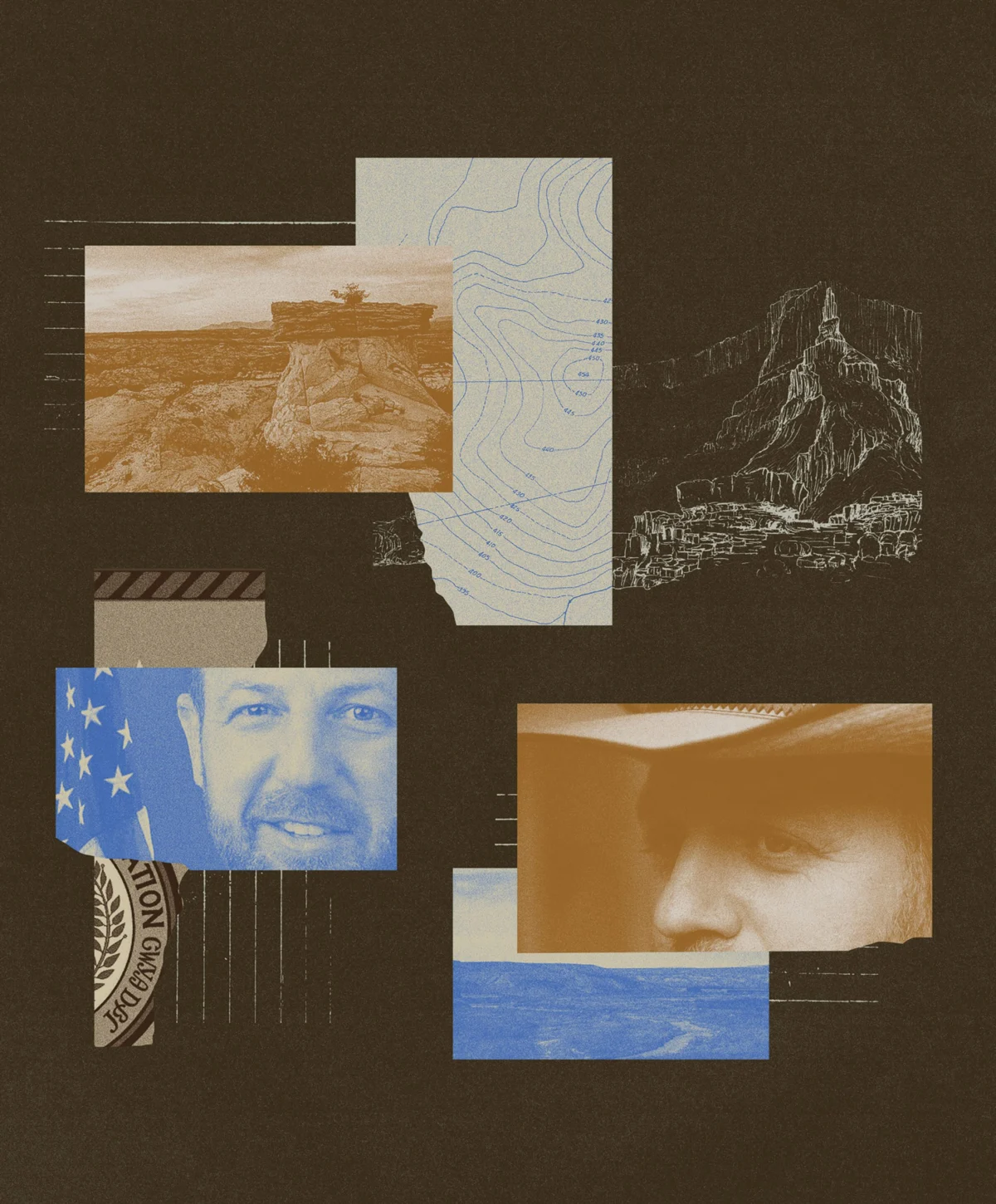
The multifaceted nature of political identity within this landscape is further illuminated by the career of Markwayne Mullin, then an Oklahoma representative, now a U.S. Senator and the head of the Department of Homeland Security. Mullin, a citizen of the Cherokee Nation, defies stereotypical notions of Indigenous identity, both in appearance and legislative approach. His political profile is marked by seeming contradictions: an ultra-conservative lawmaker known for bipartisan cooperation, and a white-passing individual who advocates for tribal sovereignty, even while serving an administration that has actively rolled back measures designed to bolster it.
One poignant example of this complexity is Trump’s drastic shrinking of Bears Ears, a monument that had been co-managed by a tribal land commission, which Trump’s proclamation subsequently eliminated. Since ascending to lead DHS, Mullin has invoked his Native identity to defend his department against accusations of racism, even as DHS has moved to construct new segments of the U.S.-Mexico border wall along the southern boundary of the Tohono O’odham Nation in Arizona, despite the tribe’s vehement objections. This situation raises a critical question: Can Mullin effectively advocate for Indigenous interests from within an administration whose policies have often been perceived as hostile to tribal sovereignty? While some Native Americans hope he will leverage his cabinet position, it remains unclear whether he possesses the willingness or the capacity to meaningfully challenge a president whose actions have frequently undermined tribal autonomy.
Many of the enduring tensions chronicled in these historical accounts remain profoundly relevant in the current election season. The "Sagebrush Rebels" of the 1980s, often portrayed by media as the authentic voice of the West, advanced policy proposals that were, in fact, broadly unpopular. Today, a similar narrative persists, frequently depicting white men in cowboy hats as the quintessential representatives of the region’s inhabitants, a simplification that ignores the West’s rich demographic and cultural complexity. This oversimplified portrayal often marginalizes the voices of Indigenous communities, Latino populations, urban dwellers, and environmental advocates, whose perspectives are equally integral to the region’s identity.

The complex and rapidly evolving demographics of the American West, marked by urbanization and an influx of diverse populations, increasingly challenge these traditional, narrow depictions. This complexity is particularly visible in a number of high-stakes races this fall, where the region could play a decisive role in determining the balance of power in both chambers of Congress. For instance, Alaska’s Senate race pits Mary Peltola, a moderate Democrat and Alaska Native who grew up fishing near the Bering Sea, against Republican incumbent Dan Sullivan, who hails from Cleveland and attended Harvard. This election offers a stark illustration of the cultural, experiential, and political divides that characterize the contemporary West, reflecting broader national debates over resource management, environmental protection, and the recognition of Indigenous rights.
Ultimately, while these historical "origin stories" provide invaluable context for understanding the present moment, they do not dictate the future. Instead, they serve as a powerful reminder that the trajectory of the American West, and indeed the nation, is not inevitable. It is being actively shaped and contested right now, through ongoing political battles, evolving economic landscapes, and the ever-present struggle over identity and values. The outcomes of these debates will determine the future of public lands, rural communities, and the very essence of self-governance in a rapidly changing world.