Joko Susilo
The haunting narrative of Emmett Till, a 14-year-old Black boy brutally lynched in Mississippi in 1955 for allegedly offending a white woman, casts a long shadow over the American landscape, particularly its outdoor spaces. For many Black Americans, his tragic fate, seared into collective memory through vivid historical accounts like the PBS documentary series Eyes on the Prize, serves as a stark reminder of the extreme violence and pervasive racial terror that historically denied Black individuals freedom and safety, even in seemingly benign environments. This profound understanding often begins early, crystallizing how public lands, parks, and natural landscapes, intended as communal havens, became exclusive, unwelcoming, and even deadly for generations of Black people. The weight of this history, the unspoken knowledge passed down through families, underscores a persistent, foundational question that echoes in conversations and quiet reflections: "Will we be safe here?"
Yet, the Black experience in nature is not solely defined by peril. It embodies a duality, a testament to profound resilience and agency that coexists with historical pain. Many families, despite the oppressive realities of the Jim Crow South, cultivated vibrant lives, establishing their own outdoor sanctuaries. These spaces, whether a sprawling hobby farm with fruit trees and a swimming pool in California’s oak-studded hills or a community garden in an urban setting, represented not just refuge but also resistance. Here, the spirit of "can-do" determination thrived, manifesting in acts of tending the land, harvesting its bounty, and sharing it generously with friends and family. This tradition of Black self-determination in nature, fostering hospitality and community, is a powerful counter-narrative to the dominant story of exclusion.
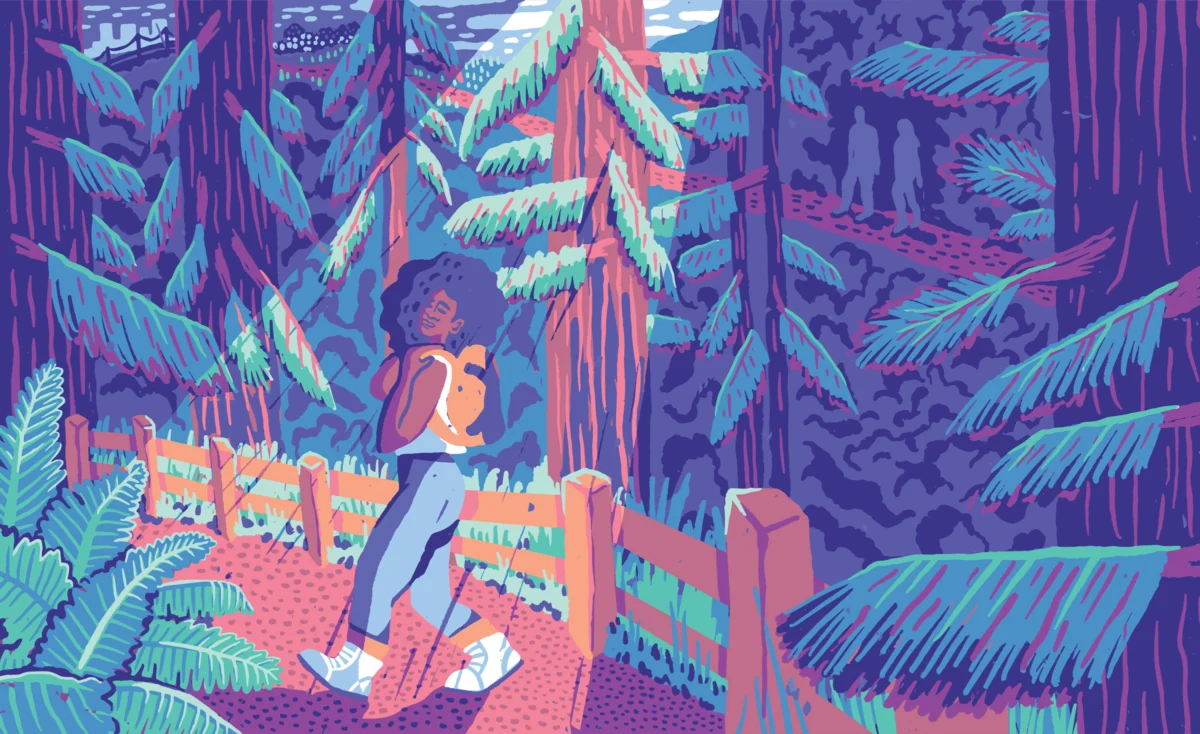
Today, this enduring quest for safety and comfort remains a central theme, particularly for organizations like Outdoor Afro, founded in 2009 with the mission to reconnect Black Americans to nature. Despite significant societal progress and the presence of cheerful interpretive signage at trailheads or the camaraderie around campfires, the fundamental question of security often surfaces, sometimes subtly, sometimes with an urgent intensity. This feeling of being unsafe in the outdoors extends beyond the explicit threat of physical violence; it encompasses the discomfort of lingering stares, pointed questions about one’s presence, or the palpable, unspoken scrutiny that conveys a profound sense of not belonging. A seemingly innocent afternoon spent at a city park in an affluent, predominantly white neighborhood, for instance, can quickly shift from joyful exploration to an acute awareness of being watched, signaling an unspoken command to leave. These silent conversations, conveying powerful messages of unwelcome, often become the most consequential experiences in outdoor settings.
Historically, access to parks, swimming pools, beaches, and even picnic areas was legally, and often violently, prohibited for Black individuals. The chilling reality of "Sundown Towns"—communities where Black people were explicitly unwelcome after dark, forcing meticulously planned road trips and overnight stays—shaped generational memories and habits. Before the Great Migration, when the vast majority of Black Americans resided in the rural South, many tenaciously pursued their connection to nature, often by creating their own destinations. Places like Idlewild, Michigan; Oak Bluffs on Martha’s Vineyard; and Lincoln Hills, Colorado, emerged as vital hubs of enterprise, recreation, and community life. These resorts offered a sanctuary where families could recreate free from the burden of racism, building essential infrastructure like overnight inns, campgrounds, and programming for children, fostering thriving Black economies and social networks.
During this era of rigid segregation, The Negro Motorist Green Book, or simply The Green Book, became an indispensable travel companion for Black Americans. Created by Victor H. Green, a New York postal worker, it leveraged his extensive professional network to meticulously list safe havens along interstates: accommodations, dining establishments, shops, entertainment venues, and outdoor destinations that welcomed Black patrons. Regularly updated, The Green Book was a lifeline, a practical guide to navigating a racially hostile landscape. Its publication ceased around 1964, following the passage of the Civil Rights Act, as its publisher optimistically hoped that the need for such a guide had finally passed.

However, the feelings of being unwelcome persisted, even after legal segregation ended. Many families, wary of testing uncertain territory, opted to stay closer to home. As Black Americans migrated en masse to Western and Northern cities during the Great Migration, many of the old, established Black enclaves and outdoor destinations faded, were sold, or disappeared due to urban development and eminent domain. The uncertainty surrounding safety in outdoor spaces, particularly far from one’s own community or in remote public lands, remained a quiet but persistent concern. This legacy continues to impact participation rates and comfort levels for Black individuals in outdoor recreation today.
Even in contemporary settings, distinguishing between racially motivated hostility and other forms of social friction in the outdoors can be complex. A seemingly unwelcoming encounter, such as being met with a hard, measured gaze by another hunter in a remote California Central Valley field, might initially trigger an instinct of racial bias, especially during periods of heightened social and racial tensions. However, with more experience, one might re-evaluate such moments, understanding that the outdoor world, particularly for activities like hunting and fishing on public lands, can be intensely competitive and territorial. Seasoned outdoorspeople often guard their prime spots—a stretch of river where fish bite, a ridge frequented by elk, or a secluded campsite with an ideal view. This guardedness, born from a desire to preserve cherished experiences and a concern that too much attention will diminish a good spot, can be misinterpreted as coldness or hostility by newcomers, regardless of their identity. While this understanding offers a degree of grounding, acknowledging that some discomfort may stem from outdoor culture’s competitive spirit, it does not erase the historical and ongoing reality of racial exclusion.
There is also a deeper, more subtle dimension to the question of safety that extends beyond potential interpersonal friction. Growing up in diverse urban environments like Oakland, where places like Joaquin Miller Park reflect the city’s rich tapestry of cultures, can foster a natural sense of belonging in the outdoors. Yet, venturing farther afield, into environments where one is the only Black person, can shift the experience dramatically. A mountaineering expedition with Outward Bound, for example, can highlight a profound sense of isolation, a quiet wondering that surfaces when no one around shares one’s history, humor, or unique way of interpreting the world. This feeling of being an outlier, of navigating a space where one’s cultural context is absent, adds a layer of psychological burden, even when surrounded by supportive peers and instructors. It underscores that safety is not merely the absence of threat, but the presence of belonging and cultural affirmation.
In many ways, Outdoor Afro is building upon the legacy of The Green Book, adapted for the 21st century. Victor Green envisioned a world where Black people could move freely and with dignity, providing a vital tool to achieve that. Outdoor Afro is similarly constructing a "living map" derived from shared stories, collective experiences, and supportive relationships, empowering individuals to navigate unfamiliar outdoor places with confidence and joy. While previous generations were often burdened by painful memories of exclusion and limited access, the current era presents an unprecedented opportunity to forge and share narratives of connection, confidence, and profound joy in nature.
Every Black individual who steps onto a trail today, casts a fishing line for the first time, or wakes to birdsong in a tent, carries forward a powerful legacy. They embody the spirit of those who built Idlewild and Lincoln Hills, those who traversed the country with The Green Book, and those who, against all odds, found solace and strength in nature. Each invitation to the outdoors, every guided trip, and every first experience in a natural setting expands the horizon of what the next generation believes is possible, fostering a future where the outdoors truly belongs to everyone. This ongoing movement is not just about access; it’s about justice, equity, and reclaiming a rightful place in the vast, restorative landscapes of America.