Joko Susilo
Congressional Democrats have launched a formal investigation into Energy Fuels, a prominent mining company, following revelations that its chief executive and board chairman acquired substantial shares of company stock mere days before President Donald Trump drastically reduced the boundaries of the Bears Ears National Monument in southeastern Utah. This inquiry, spearheaded by key members of the House Natural Resources Committee, seeks to uncover whether the timing of these significant insider transactions was predicated on foreknowledge of the impending policy shift, a move that could significantly benefit the Denver-based firm.
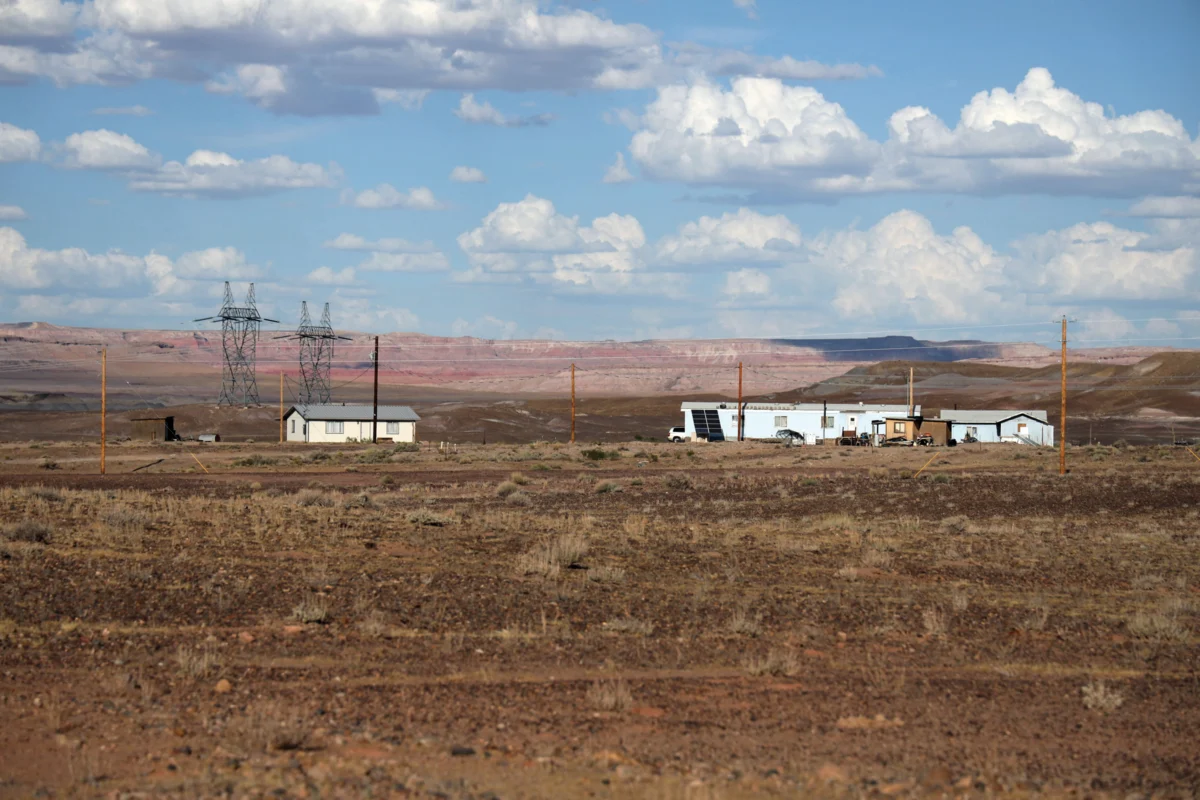
Energy Fuels operates the White Mesa Mill, the sole conventional uranium processing facility remaining in the United States, strategically located approximately one mile from the original perimeter of the Bears Ears National Monument. Before the recent presidential proclamation, which saw President Trump carve out 1.24 million acres from the protected area, the mill’s operations were in close proximity to a landscape rich in both cultural heritage and mineral deposits, including uranium and vanadium. The dramatic reduction effectively opened vast tracts of land that were previously shielded from industrial development, making them once again accessible for potential mining activities.
The sequence of events raising congressional eyebrows began on July 7, 2026, when Ross Bhappu, the Chief Executive Officer of Energy Fuels, executed the largest insider stock purchase in the company’s history, acquiring 74,000 shares. This transaction notably increased Bhappu’s ownership stake to 41 percent. The following day, Bruce Hansen, the company’s Board Chairman, also bought 4,000 shares. Less than a week later, President Trump issued a proclamation that dramatically rescinded protections for the majority of Bears Ears, a decision that immediately ignited outrage among tribal nations and conservationists. Such insider transactions, particularly preceding major policy announcements that could impact a company’s prospects, often trigger scrutiny from regulatory bodies like the U.S. Securities and Exchange Commission (SEC) to ensure compliance with laws prohibiting trading on material non-public information.
The Bears Ears Commission, a coalition representing five sovereign tribal nations – the Navajo Nation, Hopi Tribe, Ute Mountain Ute Tribe, Ute Indian Tribe of the Uintah and Ouray Reservation, and Zuni Pueblo – swiftly condemned the presidential action. In a powerful statement, the Commission declared the decision a severe blow to the safeguarding of a "living cultural landscape and sacred ancestral homeland," emphasizing its profound significance to Indigenous peoples who have stewarded these lands since time immemorial. They further highlighted that the move represented a major setback for what had been lauded as one of the nation’s most extraordinary models of collaborative management between Tribal Nations and federal agencies, a partnership designed to integrate traditional ecological knowledge with modern conservation practices.
Representatives Jared Huffman (D-CA), the ranking member of the House Natural Resources Committee, and Maxine Dexter (D-OR), the ranking Democrat on the Oversight and Investigations Subcommittee, formally announced the commencement of their investigation into Energy Fuels. In a stern letter addressed to CEO Ross Bhappu, the lawmakers stated their understanding that "monument boundaries were redrawn in a way that could benefit Energy Fuels," signaling their suspicion of a direct causal link between the company’s financial interests and the presidential decree. This investigation aims to ascertain whether any improper influence or undisclosed information exchange played a role in the monument’s boundary modifications.
In response to the congressional inquiry, a spokesperson for Energy Fuels acknowledged receipt of the letter and affirmed the company’s commitment to addressing the concerns seriously. However, the spokesperson vehemently denied any wrongdoing, stating that the company is "unaware of any evidence supporting claims of wrongdoing in the referenced letter and strongly rejects any suggestion that the Company or its executives engaged in any improper conduct." The company further asserted that the White Mesa Mill has never been situated within the Bears Ears National Monument, that Energy Fuels holds no current properties, mining claims, or economic interests directly within the monument, and that it had not actively lobbied the current administration for changes to the monument’s boundaries.

The lawmakers’ investigation demands comprehensive communication records between Energy Fuels executives and federal officials, alongside all contracts related to the company’s lobbying activities, to shed light on any interactions that may have influenced the monument’s fate. Energy Fuels, in its public statement, reiterated its adherence to all federal, state, and local regulations designed to protect both communities and the environment, underscoring the White Mesa Mill’s status as "one of the most highly regulated mineral processing facilities in the United States" and its "critical role in strengthening domestic supply chains."
This is not the first time Energy Fuels has found itself at the center of controversy regarding Bears Ears. Documents from 2017 reveal that the company actively pressured the first Trump administration to reduce the monument’s size in a manner that would serve its interests. President Barack Obama had initially established Bears Ears National Monument in December 2016, designating it under the Antiquities Act of 1906, a century-old law granting presidents the authority to protect federal lands and waters of historic or scientific significance. That designation was celebrated by a coalition of tribal nations who had long advocated for its protection, recognizing its archaeological treasures, sacred sites, and ecological diversity. However, in December 2017, the first Trump administration significantly downsized the monument, alongside another national monument, Grand Staircase-Escalante, a move that critics argued was an unprecedented rollback of protections for public lands. In a subsequent reversal, President Joe Biden restored the monument’s original boundaries in October 2021, reaffirming the federal government’s commitment to conservation and tribal sovereignty. The current investigation suggests a recurring pattern of monument boundary changes coinciding with potential benefits for the mining sector.
The strategic importance of Energy Fuels extends beyond uranium. The company recently announced a groundbreaking expansion of its White Mesa Mill, aiming to produce heavy rare earth materials. These critical elements are indispensable components in a vast array of modern technologies, including advanced data centers, electric vehicles, renewable energy systems, and robotics, as well as crucial defense applications. This diversification positions the company at the heart of the global race for critical minerals, a sector increasingly viewed through the lens of national security due to the geopolitical implications of supply chain vulnerabilities, particularly given China’s current dominance in the rare earth market.
Indeed, the second Trump administration has openly championed a concerted push to bolster domestic mining of critical minerals, framing it as an imperative for national security and economic independence. This policy aligns with broader geopolitical strategies to reduce reliance on foreign supply chains. Reflecting this robust government support, the Department of Defense issued a substantial $725 million loan to Energy Fuels on June 18, specifically earmarked to accelerate the development of rare earth elements. Furthermore, an investor presentation filed by Energy Fuels with the U.S. Securities and Exchange Commission in July explicitly listed "strong government support" as a key competitive advantage. This narrative was reinforced last week when President Trump unveiled a proposed $3 billion investment initiative aimed at boosting critical mineral mining and fostering domestic battery project development, underscoring a clear federal commitment to the sector.
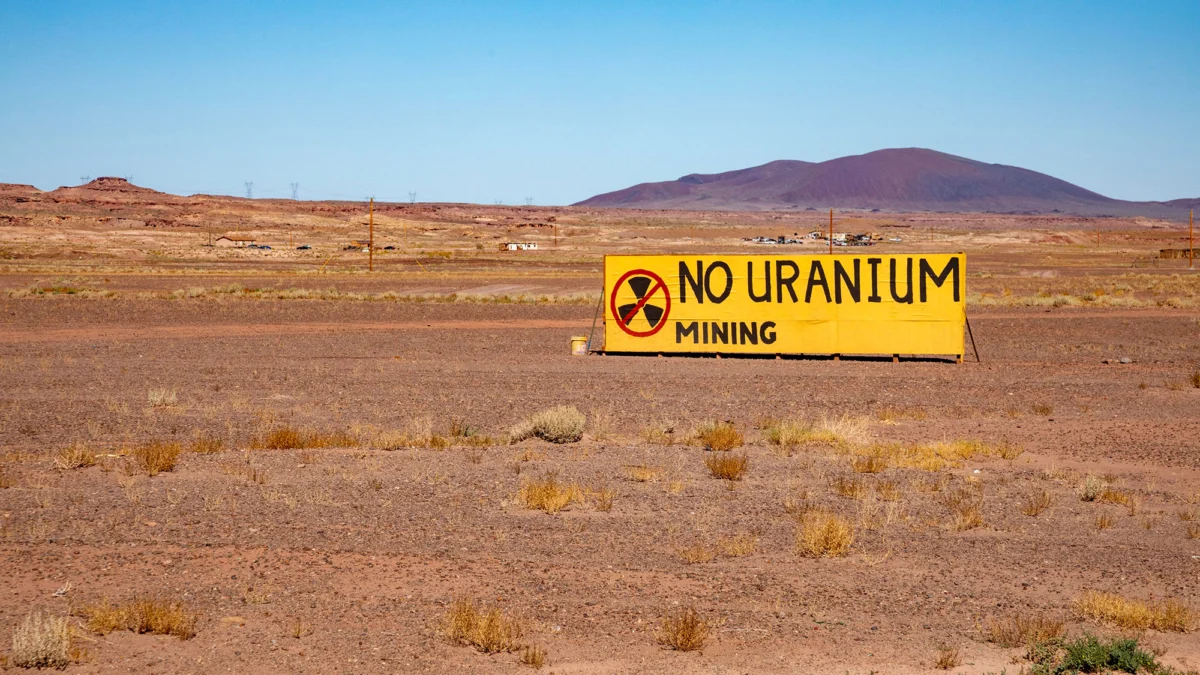
While some critical minerals, such as lithium and nickel, are vital for clean-energy technologies, and uranium is essential for nuclear power generation, the administration’s aggressive pursuit of domestic production is primarily articulated as a matter of national security. However, this agenda stands in stark contrast to the profound concerns raised by the coalition of five tribal nations and various environmental advocacy groups regarding the operations of the White Mesa Mill. These groups have consistently characterized the facility as a "bad neighbor," citing a litany of environmental and public health accusations. Among these are allegations of secretly transporting radioactive material through sacred tribal lands and the assertion that the radioactive and toxic materials stored at the mill pose significant risks to water quality and public health in the already water-stressed region of southeast Utah. The mill’s tailings ponds, which contain hazardous waste, are a particular concern for potential contamination of groundwater and surface water relied upon by local communities, including the Ute Mountain Ute Tribe, whose lands are nearby.
The Democratic lawmakers did not mince words in their letter to Energy Fuels’ CEO, delivering a scathing indictment of the company’s practices. "Energy Fuels cannot credibly claim to be a responsible operator while the nation’s last uranium mill functions like an unregulated, bargain-bin waste dump on the doorstep of an Indigenous community," they wrote. The letter concluded with a powerful accusation: "Instead of respecting the Tribes for whom Bears Ears is sacred, you appear to be enriching yourself from their devastation." This congressional probe underscores the escalating tension between resource extraction, national security imperatives, environmental protection, and the imperative of upholding tribal sovereignty and cultural heritage on America’s public lands. The outcome of this investigation could have significant implications for corporate accountability, public land management policy, and the future trajectory of critical mineral development in the United States, especially as the nation navigates its energy transition and strategic resource needs.