Joko Susilo
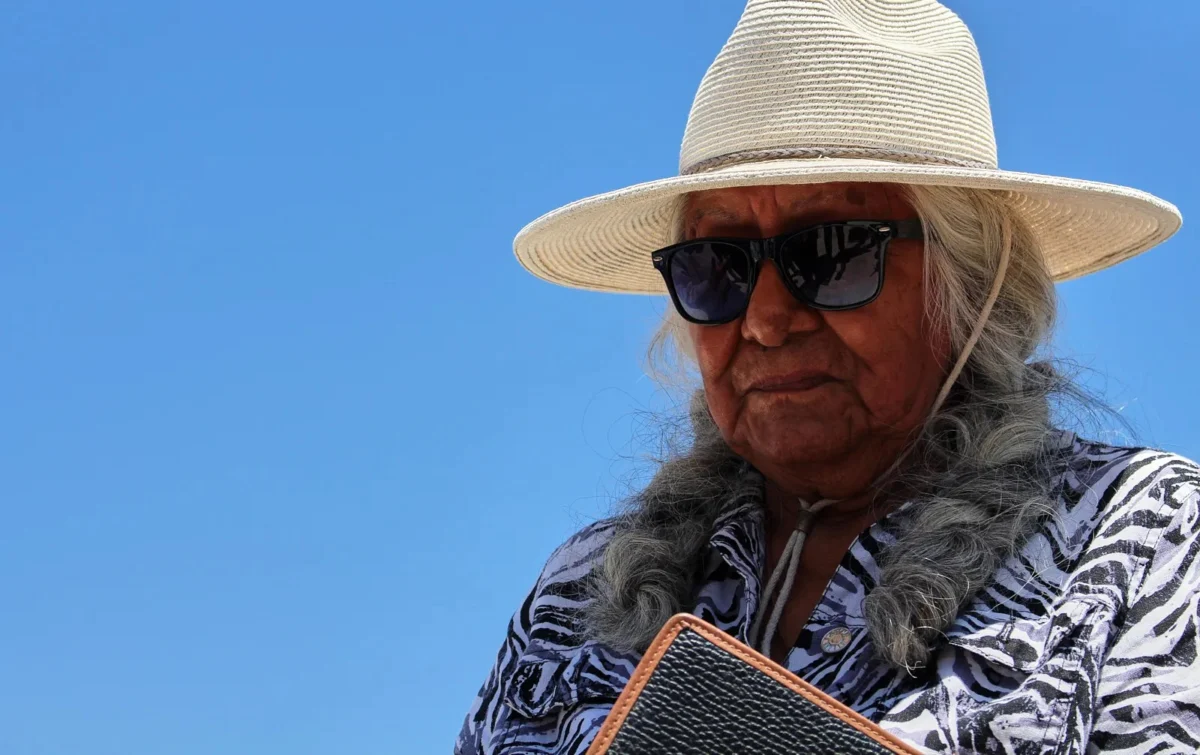
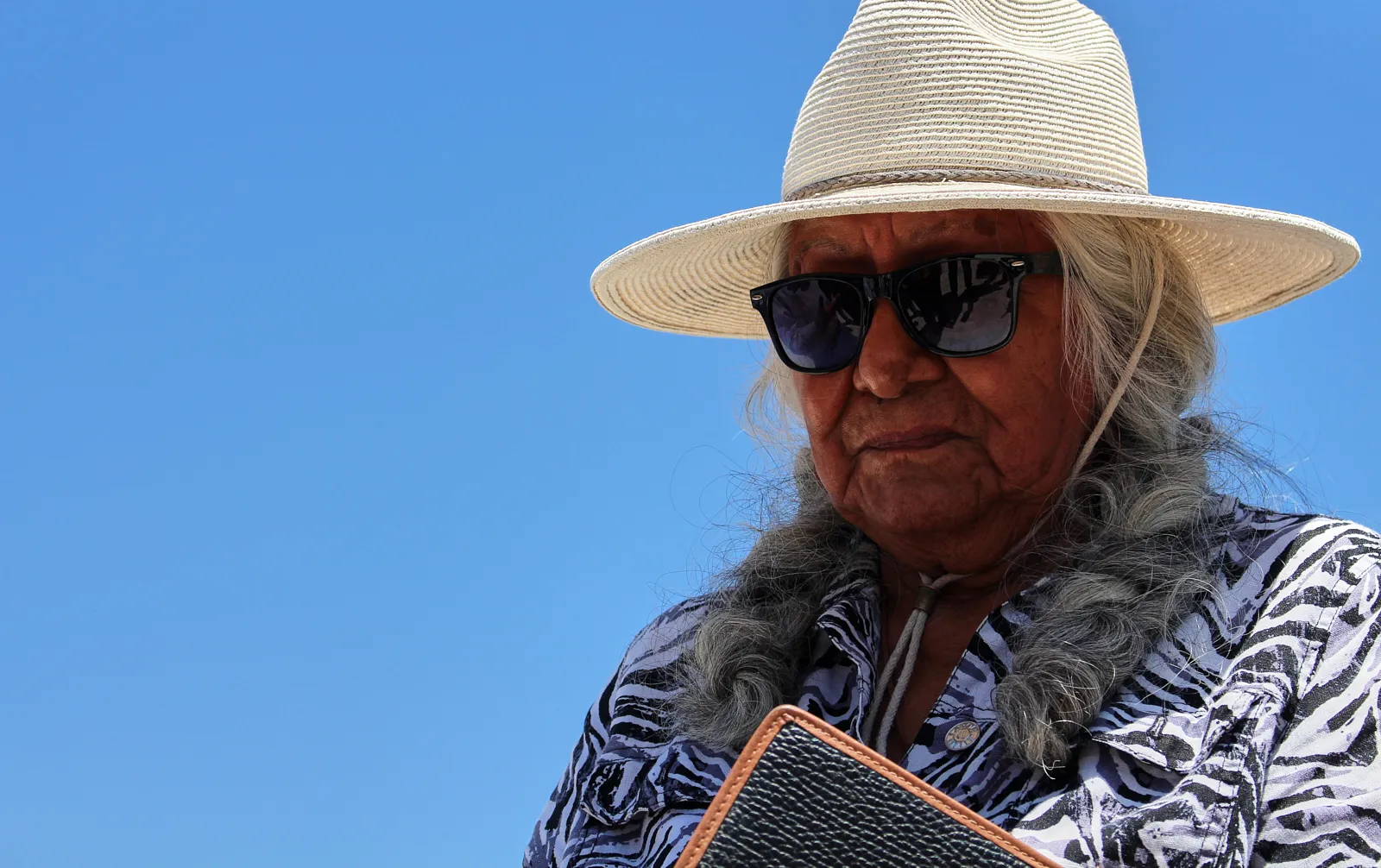
Lorraine Marquez Eiler, a revered Hia-Ced O’odham elder, stood resolutely by the tranquil pond at Quitobaquito Springs, sharing the profound ancestral connection to this vital desert oasis, now perilously close to being bulldozed by the federal government for new border wall construction. This sacred site, nestled within a protected national park in the heart of the Sonoran Desert, represents generations of O’odham spiritual and cultural heritage, a heritage she passionately vowed to protect. On August 24, surrounded by a diverse group including Indigenous leaders and a U.S. congressional representative, Marquez Eiler held up a faded photograph, depicting her great-great grandparents and great-grandparents who undertook arduous 50-mile journeys across the harsh desert landscape to reach these life-giving waters, known to the O’odham as A’al Vaipia. Her voice, firm with conviction, resonated with the weight of history and the pain of potential desecration as she addressed the group condemning the border wall plans.
“All of my lifetime of work has been for the memories of my ancestors, of what they went through. With the incoming wall, should it be disrupted?” Marquez Eiler questioned, referring to her ancestral lands. “That’s just another slap in the face, as far as I’m concerned, to my ancestors. And so I ask: Why?” Her plea underscored the deep spiritual injury inflicted by the proposed barrier, which threatens not only the physical landscape but also the intangible threads of cultural identity woven over millennia. Later that day, at a town hall attended by over 100 community members, Marquez Eiler voiced a hopeful desire for the federal government to halt the border construction, citing a recent precedent where public outcry led to a pause in similar projects in Texas.
Quitobaquito Springs holds immense spiritual significance for the Hia-Ced O’odham, the Tohono O’odham, and other Indigenous peoples across Southern Arizona and Mexico. For countless generations, these communities have journeyed to the springs for religious pilgrimages and sacred ceremonies, relying on its perennial waters as a focal point for their traditions. The construction of a new border wall in this fragile ecosystem, approximately 30 miles west of the Tohono O’odham Nation, raises profound fears among tribal members and environmentalists alike: the spring, a critical lifeline in an otherwise arid region, is at severe risk of drying up, threatening both cultural practices and unique biodiversity.
This unfolding crisis has escalated into a two-front battle for the Tohono O’odham Nation. They are actively opposing the federal government’s plans to erect a new 30-foot border wall directly on their sovereign lands, while simultaneously fighting to protect Quitobaquito Springs on adjacent federal territory, where another new border fence looms. These projects are integral components of the previous administration’s ambitious and costly initiative, which allocated nearly $50 billion in taxpayer funds towards the extensive construction of a wall along the U.S.-Mexico border.
For the citizens of the Tohono O’odham Nation, this struggle is not an isolated incident but rather a continuation of a long and often contentious history with the U.S. government regarding the integrity and division of their ancestral lands. Historically, the O’odham people lived across a vast, uninterrupted territory that recognized no artificial national boundaries. The establishment of the U.S.-Mexico border in the mid-19th century, notably through the 1854 Gadsden Purchase, was enacted without consultation or consent from the Tribal Nation, arbitrarily bisecting their ancestral domain and separating communities and families. To this day, O’odham citizens on both sides of this imposed border continue to travel freely across their traditional lands, upholding their inherent right to cultural continuity and familial ties. While the Nation has engaged with border officials to address genuine security concerns, they have consistently resisted border walls that sever their people and irrevocably damage their sacred lands.

The recent escalation under the previous administration ignited a complex legal battle and a high-profile standoff between federal agents and the Tohono O’odham Nation’s own law enforcement, underscoring a fundamental clash between tribal sovereignty and the U.S. government’s assertion of national sovereignty. The implications of this conflict extend far beyond this specific region, touching upon critical questions of Indigenous rights, land stewardship, and federal-tribal relations across the United States.
Within the Organ Pipe Cactus National Monument, a UNESCO Biosphere Reserve and a designated area of exceptional natural beauty and ecological significance, Quitobaquito Springs lies approximately 13 miles west of the Lukeville port of entry. The proposed 30-foot border fence, slated to run a mere 150 feet from an existing barrier, presents an immediate threat to this delicate ecosystem and the cultural access that has defined O’odham life for centuries. Marquez Eiler’s fear of losing access to lands integral to her Tribal Nation’s religious traditions is palpable, echoing the concerns of countless Indigenous communities globally facing similar encroachments on their heritage.
The history of Organ Pipe Cactus National Monument itself reflects a complex interplay of preservation and dispossession. While parts of the Quitobaquito lands originally belonged to families of Hia-Ced O’odham descent, President Franklin Roosevelt’s 1937 proclamation established the monument to preserve a vast expanse of the unique Sonoran Desert. This initiative, part of a broader U.S. National Park Service effort to safeguard "ecological wonders," nonetheless formalized federal control over lands long inhabited and cared for by Indigenous communities.

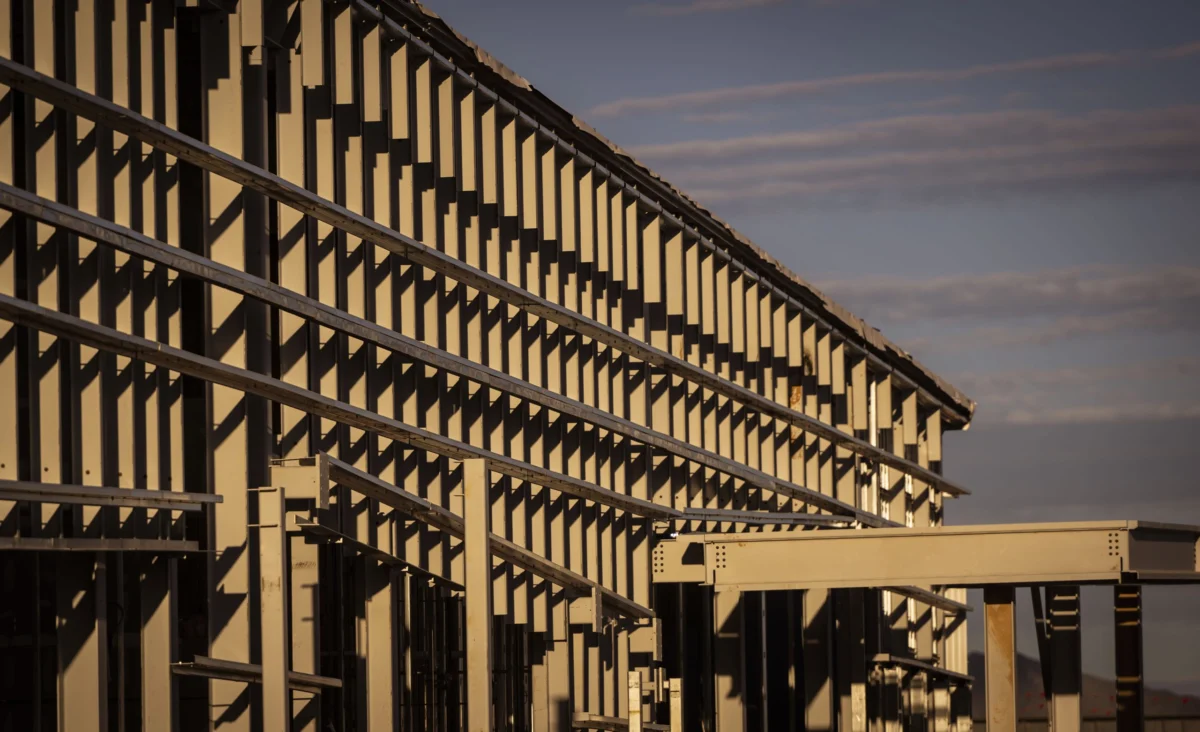
Presently, construction equipment from federal government contractors sits ominously a few miles east of the pond, the surrounding desert already scarred by extensive clearing. Cacti, some legally protected species under state and federal law, are marked with colored strings, and a rope delineates the proposed path for the second border wall. If this line extends westward, Quitobaquito pond, a fragile aquatic ecosystem, lies directly in its destructive path. The bulldozing of these cacti would not only destroy legally protected desert plants but also obliterate flora deeply sacred to the O’odham people, who traditionally view plants and the earth itself as their ancestors, embodying a spiritual connection to the land that transcends mere resource utilization.
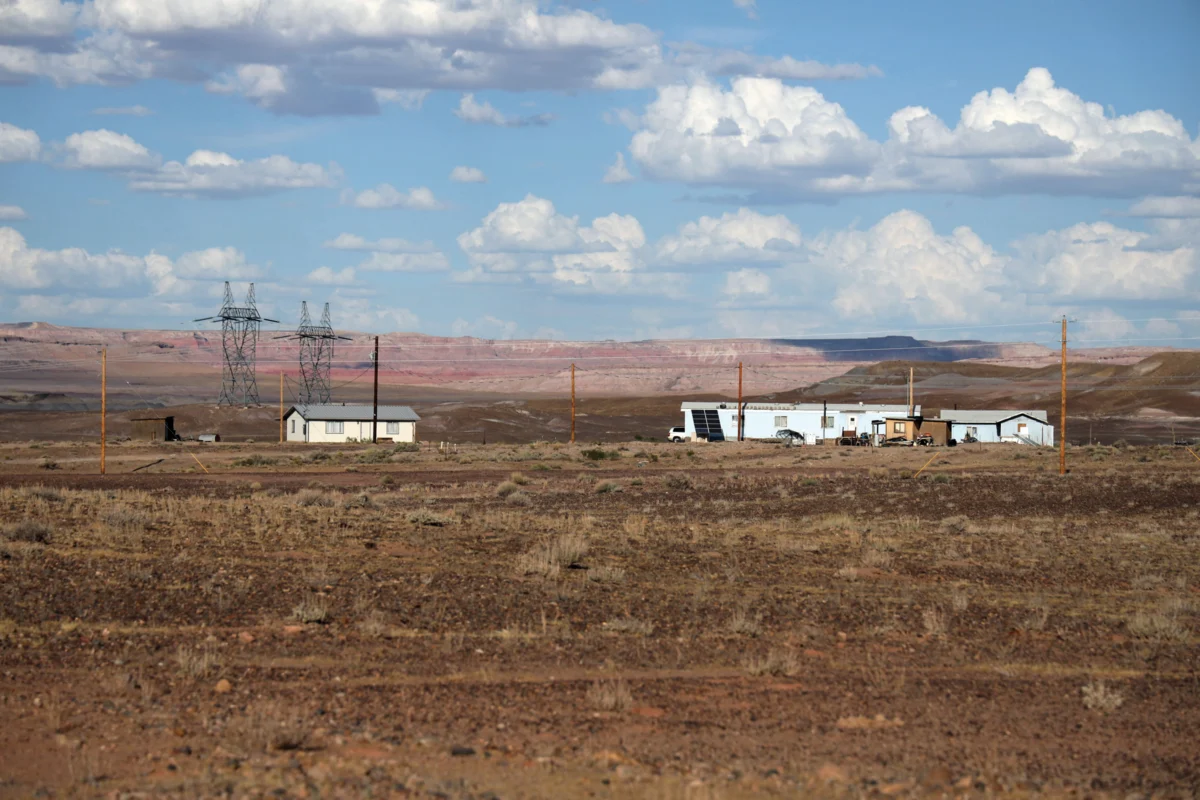
Beyond Quitobaquito, approximately 30 miles to the east, on the Tohono O’odham Nation’s reservation, the administration also proposed constructing a 30-foot fence in three specific areas currently protected by a much lower steel barrier. In June, the Tohono O’odham Nation initiated legal action against the Department of Homeland Security, seeking to block border wall construction on their ancestral lands. The lawsuit explicitly states, "While the Nation values its close relationship with the Department, it has long opposed construction of a border wall on the Reservation." The legal filing detailed the anticipated "significant devastation," including the destruction of mountain peaks sacred to the O’odham, the severe fragmentation of O’odham communities and families divided by the border, interference with religious rituals, and the irreparable loss of culturally significant plant and animal resources. The Nation’s legal challenge highlighted previous instances earlier in the year where federal contractors had already "destroyed ancestral sites of great importance while constructing the wall" adjacent to O’odham land, citing the damaging of the Las Playas Intaglio in April. This 1,000-year-old fish-shaped geoglyph in Arizona’s Cabeza Prieta National Wildlife Refuge, which historically pointed towards the Gulf of California, represents a significant loss of irreplaceable cultural heritage.
In response to the lawsuit, federal government attorneys filed a memorandum asserting that the Tohono O’odham Nation had failed to demonstrate that the border wall construction exceeded the government’s legal authority. The document underscored the U.S. government’s "preexisting right to secure the border," stating, "While the United States has worked — and will continue to work — cooperatively with Plaintiff to promote their shared interest in border security, Plaintiff does not hold veto power over the United States’ sovereign duty to secure its borders." This legal stance highlights the ongoing tension between federal authority and the inherent sovereignty of Indigenous nations.

The situation escalated dramatically. On August 7, tribal leaders posted "No Trespassing" signs on their lands, issuing a news release declaring that any border wall contractors attempting entry would be "illegally trespassing." Despite this, in the early morning hours of August 25, contractors entered the tribal nation accompanied by approximately 20 "masked, armed" Border Patrol agents, according to a news release from the Tohono O’odham Nation, marking a forceful confrontation.
Rodney Scott, U.S. Customs and Border Protection Commissioner, provided a statement asserting that CBP was proceeding with the federal government’s border wall construction project along the 62 miles that traverse the Tohono O’odham Nation. Scott argued that the project would "close one of the most dangerous smuggling and trafficking corridors on the Southwest border: remote desert that has facilitated decades of drug loads, migrant deaths, and cartel activity." A Department of Homeland Security spokesperson, in the same correspondence, clarified that "the worksites are inside the 60-foot Roosevelt Reservation," referring to federal land bordering Mexico that the government manages, implying that the construction was within legally designated federal territory.
During her visit to Quitobaquito Springs, U.S. Representative Adelita Grijalva walked with Marquez Eiler, listening intently as the elder shared further insights into the tribal communities’ struggle. The experience profoundly impacted Grijalva, who later stated, "After standing here today, seeing this land, and directly hearing from the nation, I am more convinced than ever, this is not just a border construction project. This is about tribal sovereignty, it’s about sacred land, it’s about history, culture and spiritual practices of the O’odham people and others." This statement underscores a critical reframing of the issue, moving it beyond mere border security to a fundamental question of human rights and cultural preservation.

Tohono O’odham Chairman Verlon Jose and Vice Chairwoman Carla Johnson spearheaded the trip to Quitobaquito, uniting against the federal government’s unwavering commitment to build the new border wall. Jose passionately articulated that for the Tohono O’odham and other Indigenous peoples, the land itself is their church, the sacred space where ceremonies and prayers are conducted. He highlighted a distressing historical pattern of federal government actions resulting in the destruction of O’odham sacred lands, recalling how, when the initial border fence was erected between 2019 and 2020, contractors callously blasted through O’odham burial sites on Monument Hill. "This is not ours to own. It is ours to protect, to protect for the people. To protect for you and I and everyone the creator has placed here on this earth," Jose declared, emphasizing a philosophy of stewardship over ownership.
A few hours after their visit to Quitobaquito, the International Sonoran Desert Alliance, an organization co-founded by Marquez Eiler, hosted a town hall in Ajo, approximately 40 miles north of the springs. Congresswoman Grijalva, Chairman Jose, and Vice Chairwoman Johnson addressed a gathering of over 100 community members in the Ajo Plaza Rec Hall, outlining their efforts to halt the construction projects and engaging with residents’ pressing concerns. A dominant theme of concern revolved around the fate of the unique wildlife that calls Quitobaquito Springs home, including the endangered Quitobaquito pupfish, the Sonoyta mud turtle, the desert caper plant, and the tiny Quitobaquito tryonia springsnail—all species with a precarious existence dependent on this fragile oasis. Attendees also voiced strong criticism regarding the exorbitant taxpayer cost of the border fence, which had already exceeded $46 billion in federal funding for projects spanning from California to Texas. They urged Representative Grijalva to advocate for comprehensive, humane immigration reform as a more effective and ethical approach.
Sara Mae Williams, Justice of the Peace in Ajo and a proud citizen of the Tohono O’odham Nation, encapsulated the community’s sentiments with a poignant question and answer: "Why do we not want a wall? Because we are not afraid of who is on the other side. It’s us. It’s our people. It pains me when they try to divide us." Her words resonated with the deeply personal impact of a physical barrier that further fragments an already divided community.

On August 25, the day after the Quitobaquito visit, Representative Grijalva, alongside fellow Democratic federal lawmakers representing border regions—Reps. Veronica Escobar of Texas and Raul Ruiz and Juan Vargas of California—sent a unified letter to the Department of Homeland Security and the Department of the Interior. The letter emphatically urged the administration to cease further border wall construction "until meaningful government-to-government consultation has occurred with the Tohono O’odham Nation and Congress has received a full accounting of the project’s impacts on Tribal lands, cultural resources, and surrounding communities." This bipartisan appeal underscores the growing demand for federal accountability and respect for Indigenous rights.
In the ongoing legal battle, U.S. District Judge Richard J. Leon denied the Nation’s motion for a preliminary injunction on August 14. In his written opinion, the judge concluded that the Tohono O’odham Nation was "unlikely to succeed on the merits because the federal Roosevelt Reservation exists along the international border and, in any event, plaintiff has not established that construction of a border wall will indeed alter Reservation boundaries." Despite this ruling, Judge Leon acknowledged the gravity of the situation, writing, "The international border is an area of great significance to both the United States and to the Nation. While I have concluded that a preliminary injunction is unwarranted, I fully expect the Government in the months ahead to follow through on its guarantees of consultation and cooperation with the Nation to address the Nation’s concerns regarding border wall construction."
Undaunted by the initial setback, the Tohono O’odham Nation promptly appealed Judge Leon’s decision to a higher court on August 26. The very next day, the Nation submitted another request to Leon’s lower court, seeking an immediate halt to border wall construction while the appeal process unfolded. As of September 10, Judge Leon had not yet responded to this second motion, and the federal government has publicly declared its intent to vigorously fight both the injunction and the subsequent appeal. Chairman Jose’s powerful words at the town hall serve as a testament to the Nation’s enduring resolve: "We will not let this destroy our sacred sites, our burial sites, our holy places, the places of our ancestors. We will not let it destroy our environment. We will not let it further divide our people. We will not let it divide our reservation." The battle for Quitobaquito Springs and the broader ancestral lands of the Tohono O’odham Nation continues, a poignant symbol of the enduring struggle for Indigenous rights and environmental justice in the face of national security imperatives.