Roger Danuarta
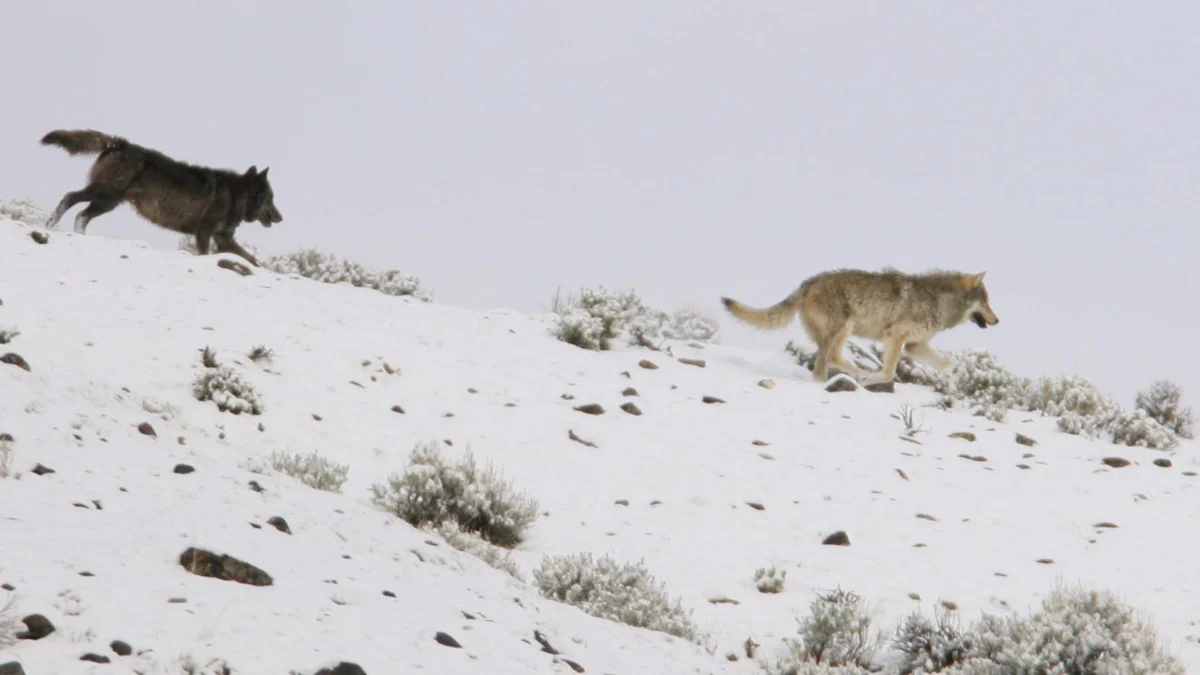
A pivotal legal battle that could significantly reshape the future of gray wolf populations and the interpretation of the Endangered Species Act (ESA) in the American West unfolded on Tuesday before the U.S. Court of Appeals for the Ninth Circuit in Missoula. This hearing marks the latest chapter in a protracted, contentious debate spanning decades, pitting federal conservation mandates against state management prerogatives and deeply held regional interests. The core of the dispute revolves around whether wolves in the Northern Rockies, and potentially across the broader Western U.S., warrant federal protection under the ESA, a designation that dictates how the species is managed, conserved, and allowed to expand its range.
The current legal entanglement traces its roots back to a controversial move in 2011, when a rider attached to a federal Congressional budget bill removed gray wolves from the endangered species list in Montana, Idaho, and portions of other states. This unprecedented legislative intervention sidestepped the scientific review processes typically required for delisting a species, effectively ending years of legal wrangling that had seen wolves fluctuate between protected and unprotected status based on various court decisions. Following this delisting, management authority for these wolf populations transitioned from federal oversight to state wildlife agencies, initiating regulated hunting seasons designed to control their numbers.
However, the 2011 delisting did not quell the fervent debate over wolf conservation. By 2021, a coalition of conservation organizations, led by groups such as the Center for Biological Diversity and others, formally petitioned the federal government for an emergency relisting of wolves in the Northern Rockies. Their urgent plea cited concerns over newly enacted state laws in Montana and Idaho that they argued promoted excessively aggressive wolf hunting and trapping practices, threatening the recovery gains made since the species’ reintroduction. Concurrently, another significant petition urged the federal government to extend ESA protections to wolves across the entirety of the Western U.S., recognizing the species’ expanding presence beyond the initial reintroduction zones.
These petitions ignited nearly half a decade of intensive agency analysis, scientific review, and intricate legal maneuvers, culminating in the recent Ninth Circuit hearing. Central to the U.S. Fish and Wildlife Service’s (USFWS) 2024 determination was a critical re-evaluation of the wolves’ biological status. The agency concluded that as wolf populations had expanded and interconnected across multiple states, those in the Northern Rockies no longer constituted a "distinct population segment" (DPS), a specific biological and legal classification under the ESA that allows for localized protection. Instead, the USFWS argued that wolves in the Western United States now exist as a single, interconnected "metapopulation," with packs distributed across California, Idaho, Montana, Oregon, Washington, and Wyoming, and recent documented presence in Colorado.

While acknowledging this broader distribution, the agency concurrently found that, when analyzed as a collective Western metapopulation, gray wolves did not face sufficient threats to warrant relisting under the ESA. This decision immediately triggered legal challenges from conservation groups, who argued it overlooked significant dangers. Last year, a federal district court sided with the conservationists, ruling the USFWS’s decision "arbitrary and capricious" for failing to adequately assess threats to the species. In response, the federal government, supported by three Western states and various hunting advocacy groups, appealed the district court’s judgment, bringing the complex arguments before the Ninth Circuit’s three-judge panel in Missoula.
During the appellate hearing, Department of Justice attorney Emily Polachek, representing the federal government, contended that the lower court judge had erred by disregarding important legal precedents, selectively interpreting scientific data, and misconstruing several key findings presented by the USFWS. "The judgment in this case must be reversed," Polachek asserted to the panel, emphasizing the government’s position that the agency’s delisting decision was sound and based on the best available science.
Conversely, Margie Robinson, a staff attorney for Humane World for Animals, argued vehemently for upholding the district court’s decision. She maintained that the USFWS had again misinterpreted the law, sidestepped crucial scientific evidence, and inadequately evaluated the genuine threats facing wolves throughout the Western United States. The arguments from both sides frequently converged on several fundamental questions central to endangered species law: what role should a species’ historic range play in determining its present-day recovery status, what constitutes the "best available science" in complex ecological assessments, and how should human-caused mortality – encompassing both legal hunting and illegal poaching – be factored into projections for the future viability of wolf populations across the West.
The debate over "historic range" particularly captured the attention of the judges, with Clinton-appointed Judge Richard C. Tallman expressing skepticism regarding the plaintiffs’ emphasis on this aspect. "Back to the question I’ve been wrestling with all morning," he remarked, referencing an extended discussion on wolf habitat, "Where do we draw the line?" This query highlights a persistent challenge in conservation: defining what constitutes a "recovered" population when a species, once extirpated from vast portions of its historical habitat, has made a comeback in only a fraction of that range. Robinson clarified that conservation groups were not advocating for wolves to be returned to "every square inch" of their former habitat, but rather to "major geographical areas that are biologically important to the species." This distinction underscores the nuanced approach sought by conservationists, focusing on ecological functionality and genetic connectivity across critical landscapes.
Furthermore, plaintiffs raised concerns about the fundamental uncertainty surrounding current wolf population estimates, citing recent data from Montana, which significantly reduced the state’s estimated wolf population size by approximately 34%. Kate Chupka Schultz, senior attorney with the Center for a Humane Economy, emphasized that "When populations of pretty much any species become smaller, uncertainty necessarily increases," suggesting that such reductions should trigger heightened caution and potential federal intervention. However, Robinson also highlighted a perceived paradox: states like Montana and Idaho are driven by a strong interest in maintaining wolf populations at levels that prevent federal relisting, thus preserving state management authority. This creates a delicate balance where states aim to manage populations robustly enough to avoid federal oversight, yet often through methods that conservation groups deem overly aggressive.

The gray wolf’s journey from near extinction to a complex management challenge is a testament to both successful conservation efforts and the enduring conflicts inherent in wildlife recovery. Once widespread across North America, wolves were systematically eradicated from most of the contiguous U.S. by the mid-20th century, primarily due to government-sponsored extermination programs driven by livestock protection and a general fear of predators. Their dramatic reintroduction into Yellowstone National Park and central Idaho in the mid-1990s was hailed as one of the greatest conservation successes, triggering a "trophic cascade" that revitalized ecosystems by restoring a crucial apex predator. Elk populations, previously unchecked, began to behave more naturally, riparian vegetation recovered, and biodiversity, including beavers and various bird species, flourished. This ecological success, however, also brought wolves into renewed conflict with ranchers and hunters, setting the stage for the political and legal battles that continue today.
The judges heard arguments in three separate wolf-related cases on Tuesday morning and did not provide a timeline for issuing a decision, with Trump-appointed judge Daniel Bress noting, "You’ve given us a lot to think about." The outcome of this appeal carries significant weight for the future of wolf conservation. Should the federal government prevail, wolves in the Northern Rockies will remain delisted and under state management, adhering to the USFWS’s previous findings. Conversely, if the lower court’s decision is upheld and conservation groups emerge victorious, the USFWS would be compelled to undertake a comprehensive re-analysis of whether wolves across the entire Western U.S. warrant ESA protections, potentially leading to their relisting.
While the legal process unfolds, the practical reality of wolf management continues on the ground. Wolf hunting seasons are currently underway in Montana, Idaho, and Wyoming, reflecting the ongoing state-led control efforts. In Wyoming’s trophy game management area south of Yellowstone National Park, 17 of the maximum quota of 22 wolves have already been harvested. Elsewhere in Wyoming, there is no limit on wolf harvest. Montana saw a wolf management unit just north of Yellowstone close in late September after meeting its quota of one wolf, with 11 wolves harvested across the state overall. Up-to-date data on the Idaho wolf hunt is not readily available to the public, further complicating efforts to assess the true impact of current management strategies. This intricate interplay of legal, scientific, ecological, and socio-economic factors ensures that the debate over the American gray wolf will remain a defining feature of Western conservation for years to come.