Joko Susilo
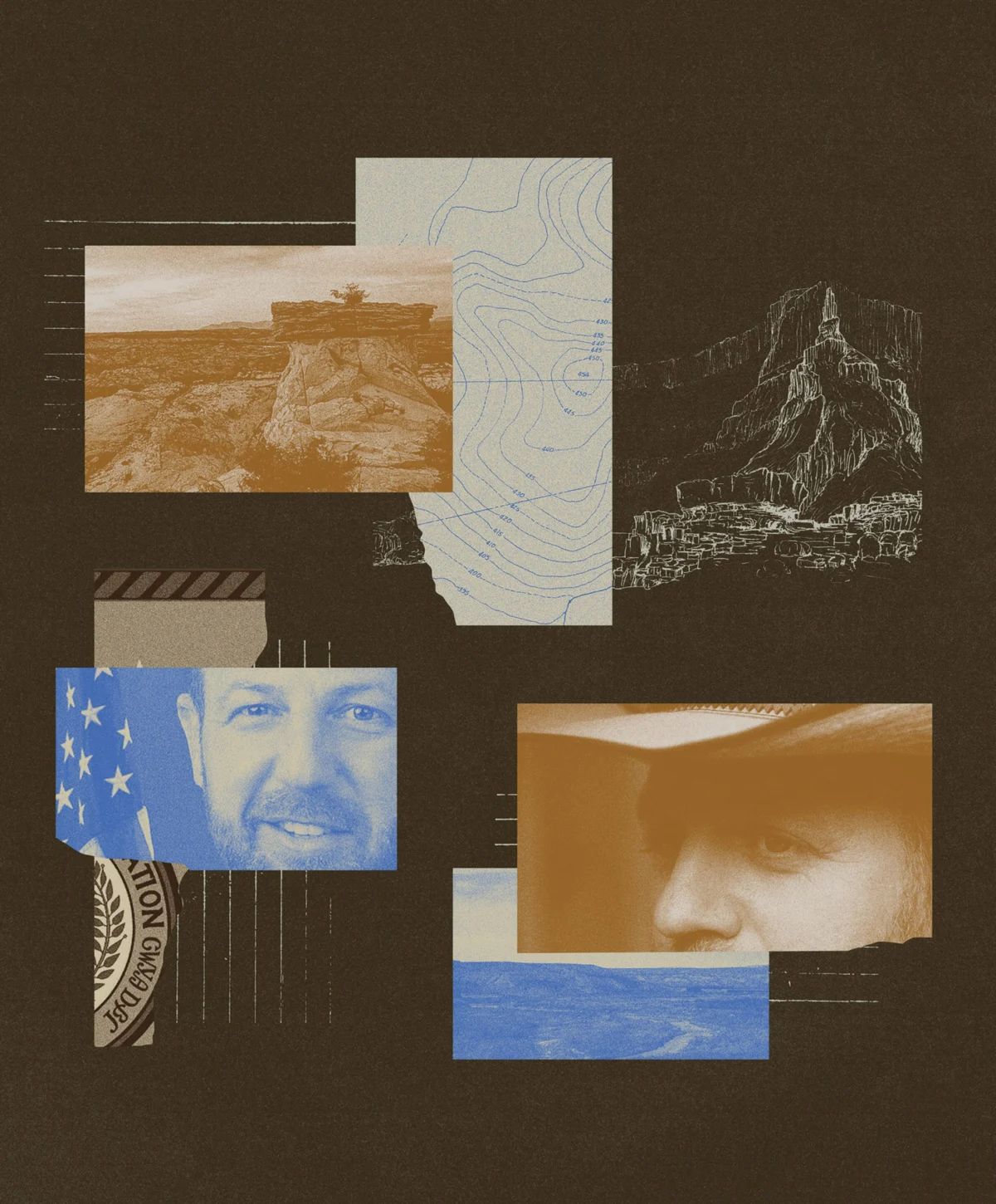
In 1980, a nascent but powerful movement, dubbed the "sagebrush rebellion," captivated the American West, coalescing a diverse group of legislators, industry leaders, and local residents around a singular objective: wresting control of millions of acres of federally managed public lands from Washington’s purview. This convention, vividly chronicled at the time by journalist Joan Nice, marked a pivotal moment, transforming what had been a regional, often fringe, grievance into a national political force. The election of Ronald Reagan, a self-proclaimed "sagebrush rebel," just weeks prior had infused the movement with optimism, anticipating sweeping legislative changes to federal land ownership. Attendees voiced deep-seated frustrations, exemplified by one Idaho resident’s complaint that federal managers aimed to "lock up 700,000 acres for 600 birds," reflecting a broader sentiment that environmental protections stifled economic opportunity and local autonomy. Despite the initial fervor, the Reagan administration did not enact the wholesale transfer of lands the rebels desired, yet their resentments continued to simmer, occasionally erupting into highly publicized confrontations over the ensuing decades.
This simmering discontent ultimately boiled over by 2016, when Ammon Bundy led an armed occupation of the Malheur National Wildlife Refuge in Oregon, an incident that starkly illustrated the evolution of the public lands debate into a more belligerent anti-government ideology. This movement found its most prominent champion in Donald Trump, whose rhetoric echoed the foundational grievances of the original sagebrush rebels. In 2017, Trump controversially slashed protections for over 2.9 million acres across the Bears Ears and Grand Staircase-Escalante national monuments in Utah, invoking the familiar narrative of lands being "locked up, off-limits, closed." His inaccurate claims that these areas prohibited hunting, fishing, or even walking on them further fueled the perception of federal overreach, despite monument designations often allowing for various recreational activities. These actions, largely unprecedented in their scale, ignited a new wave of legal challenges and protests, underscoring the enduring schism between conservation and resource extraction, and federal authority versus local control.

The roots of this modern conflict trace back further, as illuminated by archival reporting. Paul Larmer’s 1997 report, "Beauty and the Beast," captured the immediate aftermath of President Bill Clinton’s 1996 designation of Grand Staircase-Escalante National Monument. This designation, a bold move that effectively halted a proposed 62-billion-ton coal mine, initially sparked fierce opposition within surrounding communities. Yet, Larmer observed a grudging acceptance emerging even among some opponents, who began to recognize an undeniable shift in the region’s economic landscape. The monument, they realized, solidified "two facts of life: Southern Utah’s mining, logging and ranching are in decline; and the region is already a public-lands playground for the world." This observation highlighted a profound tension: a traditional, extraction-based economy was giving way to a burgeoning tourism industry, complete with its own cyclical boom-and-bust patterns, leaving communities grappling with questions of economic viability and cultural preservation. Larmer’s prescient question, "Would the anger and resentment fade?" continues to resonate.
Indeed, the anger did not fade. While neighboring counties experienced significant economic growth between 2001 and 2022, with jobs increasing by 51% and per capita incomes by 41%, Grand Staircase-Escalante has remained a potent political lightning rod. It symbolizes deeper anxieties about the future of rural communities in the American West and the optimal use and valuation of its vast natural resources. These anxieties often manifest as fundamental questions of community identity: "Who are we? What do we stand for?" The debate transcends mere land management, touching upon heritage, economic survival, and the very soul of a changing region, mirroring similar struggles globally where traditional industries clash with environmental imperatives and the demands of modern economies.
This complex interplay of identity and political ideology is further explored in Graham Lee Brewer’s 2019 profile, "Markwayne Mullin is for Trump — and Indian Country." Brewer captured Mullin, then an ascending Oklahoma representative, before his rise to the Senate and his subsequent confirmation as the top official at the Department of Homeland Security under the Trump administration. A citizen of the Cherokee Nation, Mullin presented a paradoxical figure, challenging "stereotypical notions of what it means to be Indigenous, either in how he looks or how he operates as a lawmaker." Brewer described a politician seemingly full of contradictions: an ultra-conservative known for bipartisan deal-making, and a white-passing advocate for tribal sovereignty now serving an administration that had actively rolled back measures intended to bolster that sovereignty.

A prime example of this contradiction lies in Trump’s drastic reduction of Bears Ears National Monument, which had previously been co-managed by a unique tribal land commission, a cooperative framework Trump’s proclamation summarily eliminated. Since assuming leadership at DHS, Mullin has leveraged his Native identity to defend his department against accusations of racism, even as DHS pushes to construct new segments of the U.S.-Mexico border wall directly through the ancestral lands of the Tohono O’odham Nation in Arizona, despite vehement tribal objections. This action threatens sacred sites, disrupts cultural practices, and fragments communities straddling the international boundary. Brewer’s central question — "Is Markwayne Mullin good or bad for Indian Country?" — remains pertinent, highlighting the profound challenge for Indigenous politicians navigating a political landscape where tribal interests often conflict with party lines and administrative policies. The struggle underscores the ongoing fight for tribal self-determination and the complexities of Indigenous identity in modern governance, a global concern for aboriginal communities facing external pressures.
Many of the tensions chronicled in these historical reports are keenly felt in the current election season. The "sagebrush rebels" of the past skillfully positioned themselves as the authentic voice of the West, a narrative often amplified by media outlets despite evidence that their policy proposals lacked broad public support. Today, the enduring image of "white men in cowboy hats" persists as an "authentic" representation of Western inhabitants, a simplification that flattens the region’s true demographic and cultural complexity. The modern West is a vibrant tapestry of growing urban centers, diverse ethnic populations, burgeoning technology sectors, and deeply rooted environmental movements, all vying for influence. This complexity is vividly on display in several high-stakes races this fall, where the West could prove instrumental in determining control of both chambers of Congress. A compelling example is Alaska’s Senate race, pitting Mary Peltola, a moderate Democrat and Alaska Native who embodies the traditional subsistence lifestyle through her upbringing fishing near the Bering Sea, against Republican incumbent Dan Sullivan, who hails from Cleveland and received his education at Harvard. This contest encapsulates the ongoing clash of identities, values, and visions for the future of the American West.
These origin stories provide an invaluable lens through which to understand the present political landscape, offering essential context for the movements and individuals shaping the West today. However, they do not dictate the future. Instead, they serve as a powerful reminder that the trajectory of events is never predetermined; rather, it is actively being shaped in the choices and conflicts of the present moment.