Rocky Gerung
The recent docuseries "High Horse: The Black Cowboy" resonated deeply, offering a powerful reflection on authenticity and history, much like the profound lessons learned from the quiet intelligence of a newly met mustang. The demanding, yet rewarding, process of horsemanship—focusing on steady hands, a deep seat, and quiet legs—underscores a fundamental truth: a thousand-pound animal will always discern genuine confidence from pretense, demanding consistency and fairness from its rider. This inherent honesty in the human-animal partnership is precisely why "High Horse" commands such attention, illuminating the undeniable and continuous presence of Black individuals in the fabric of the American West. The series meticulously demonstrates that Black hands have always guided the reins, breaking horses, managing cattle, patrolling fences, competing in races, and training mounts, yet the persistent surprise at their inclusion in this narrative reveals a collective amnesia, rather than an absence of their contributions.
Executive produced by Jordan Peele’s Monkeypaw Productions and helmed by independent filmmaker Jason Perez, who benefited from the mentorship of Spike Lee, "High Horse" masterfully weaves together compelling archival footage and historical photographs with vivid contemporary scenes of Black cowboy life. The three-part series embarks on a journey through the annals of film, music, and marketing history, exposing how the popular, often romanticized, portrayal of the West frequently diverges from its lived reality. This historical revisionism, often a slow erosion rather than a single dramatic erasure, has gradually narrowed the perception of who truly embodies the spirit and labor of the West. "High Horse" resolutely refuses to relegate Black cowboys to a historical footnote, instead tracing a direct lineage from the skilled horsemanship of formerly enslaved people and the dominance of Black jockeys in early racing, to the contemporary riders, ranchers, and entrepreneurs shaping the modern West. The series effectively brings history into the present moment without succumbing to a didactic tone, allowing the visual and narrative evidence to speak for itself.
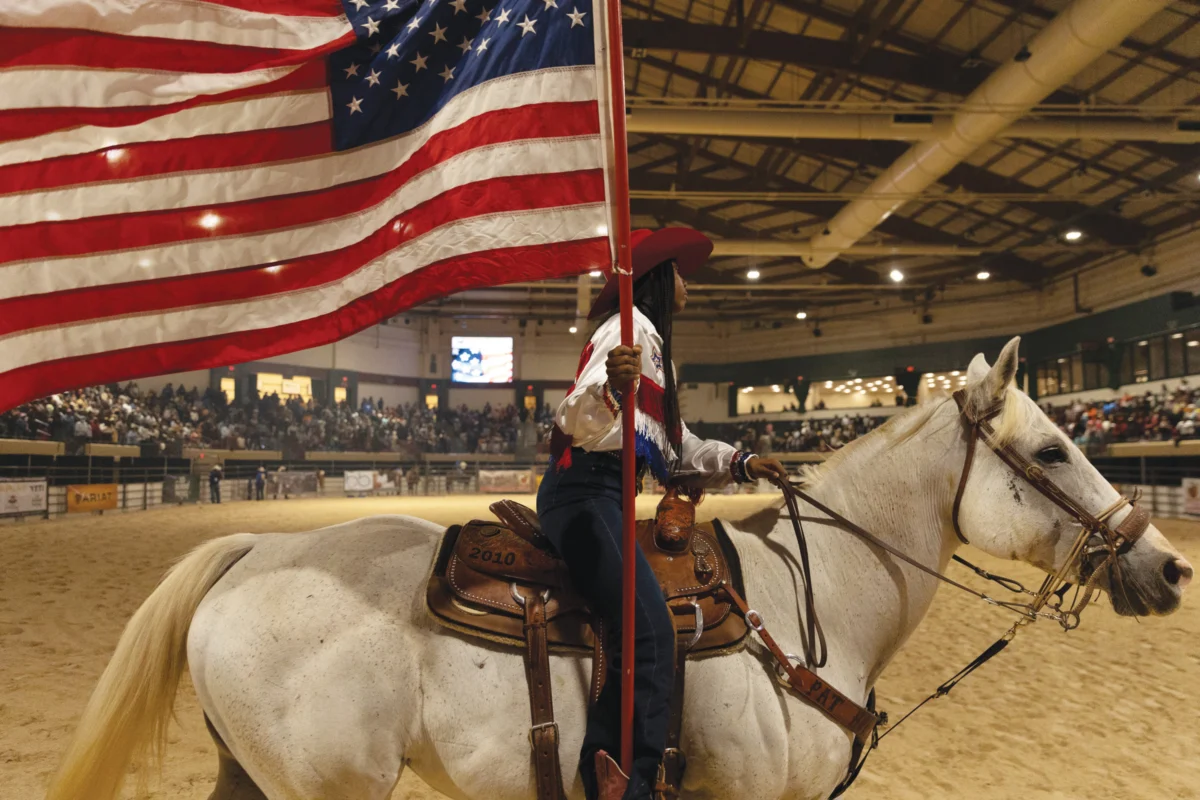
A particularly striking aspect of the series is its deliberate focus on the physical realities of horsemanship—the rider’s posture, the subtle communication through their hands, and the sheer dedication of countless hours spent in the saddle. For those who have experienced riding, these elements are instantly recognizable. The unpretentious truth is that a horse responds not to a rider’s narrative, but to their consistent actions and equitable treatment. This understanding illuminates how frequently the outward aesthetics of cowboy culture are celebrated, while the intricate, demanding work at its core remains largely unacknowledged. "High Horse" captures this by frequently lingering on shots of Black riders, seated with unwavering poise, surveying expansive landscapes or navigating urban environments that bear the indelible marks of the same historical forces. These seemingly simple, quiet images possess a potent energy, particularly for Black Americans for whom land represents far more than mere scenery; it embodies inheritance, loss, the weight of broken promises, and the fundamental distinction between being a transient visitor and a dedicated steward.
This deep connection to land and its legacy is deeply personal. My own father, a rancher from his youth in Texas, later managed land and livestock in California, a background that profoundly influenced my decision to launch Outdoor Afro in 2009. Initially a blog, it served as both a platform and a testament to his enduring influence, aiming to rectify the often-oversimplified narratives surrounding Black people’s engagement with the outdoors. This initiative has since blossomed into a national organization, empowering thousands of Black families annually to connect with nature, not as a fleeting trend, but as a meaningful reunion with their heritage. Now, in midlife, I have returned to horsemanship with an unexpected seriousness. The practice has instilled in me greater patience and a more profound sense of honesty, while also fostering a more nuanced perspective on land. This has, in turn, deepened my sense of responsibility for my own lifestyle choices and their broader impact on both my community and the natural world.
My own mare, True Haven, a mustang from the Twin Peaks Herd Management Area in the high desert bordering California and Nevada, serves as a daily reminder of faith and the pursuit of peace. Horses, by their nature, demand a commitment to fairness and consistency, offering immediate feedback on one’s leadership capabilities. Owning a wild horse, while not conferring expertise on public lands policy, undeniably cultivates an intimate understanding of stewardship and strengthens my resolve to protect our nation’s public lands and wild spaces. The abstract slogans of policy fade in significance when one is holding a lead rope, fully attuned to the immediate needs of another living being seeking safety and clarity.

"High Horse" astutely recognizes that the narrative of Black cowboys is inextricably linked to the history of Black land ownership and access. It moves beyond the romanticized imagery of open spaces to confront the complex realities of acreage, property rights, taxation, and the systemic power structures that have historically dictated who can remain on the land. While not delving into exhaustive policy minutiae, the series pointedly addresses a truth many Westerners are reluctant to confront: the promise of freedom in the West was never universally applied, and its geography is indelibly marked by historical and ongoing violence, both overt and institutional.
However, "High Horse" is far from a somber lament; at its core, it is a vibrant celebration of freedom. The series showcases young riders honing their skills and competing, elders imparting generations of wisdom, and families perpetuating traditions, all united by their passion for horses, mirroring the communal spirit found in other gatherings. It offers a crucial counterpoint to the frequent tendency to present Black history solely through the lens of trauma, instead highlighting excellence, craftsmanship, humor, pride, discipline, and unadulterated joy.
While the series is a powerful and necessary addition to the cultural landscape, its scope, by its very nature, presents limitations. Three episodes, while effective in raising awareness, cannot encompass the full breadth of this complex history. One might wish for more extensive features on Black women riders, a deeper exploration of the economic realities of horse ownership, or a more thorough acknowledgment of the intertwined histories of Black and Indigenous peoples on Western lands. Furthermore, the series could have benefited from allowing its working riders and ranchers to share their stories with even greater autonomy. While the inclusion of well-known celebrities and scholars provides valuable reach and context, their commentary occasionally risks overshadowing the firsthand experiences of Black cowboys and ranchers whose generational narratives of working the land and their horses possess an inherent power that requires little external interpretation.

Ultimately, "High Horse" excels by refusing to frame the Black cowboy as an anomaly. It invites viewers to broaden their understanding of what it means to be "Western" by moving beyond the confines of traditional Hollywood portrayals. For anyone who cherishes the West, this re-evaluation is profoundly timely. Watching the series, I was reminded of those first moments with my mare—her watchful gaze, her patient waiting, her silent questions about who I would be with her, and my own reciprocal introspection. Just as a horse thrives on clarity, consistency, and care, so too should we approach our history. If we aspire to a truly honest West with a resilient future, we must openly acknowledge the complete story and actively protect the land that sustains it. "High Horse" is not, and should not be, the final word on Black cowboys, but it represents a significant stride toward a vision of the West where Black riders are recognized not as guests, but as integral to the region’s foundational identity and its future in conservation.