Roger Danuarta
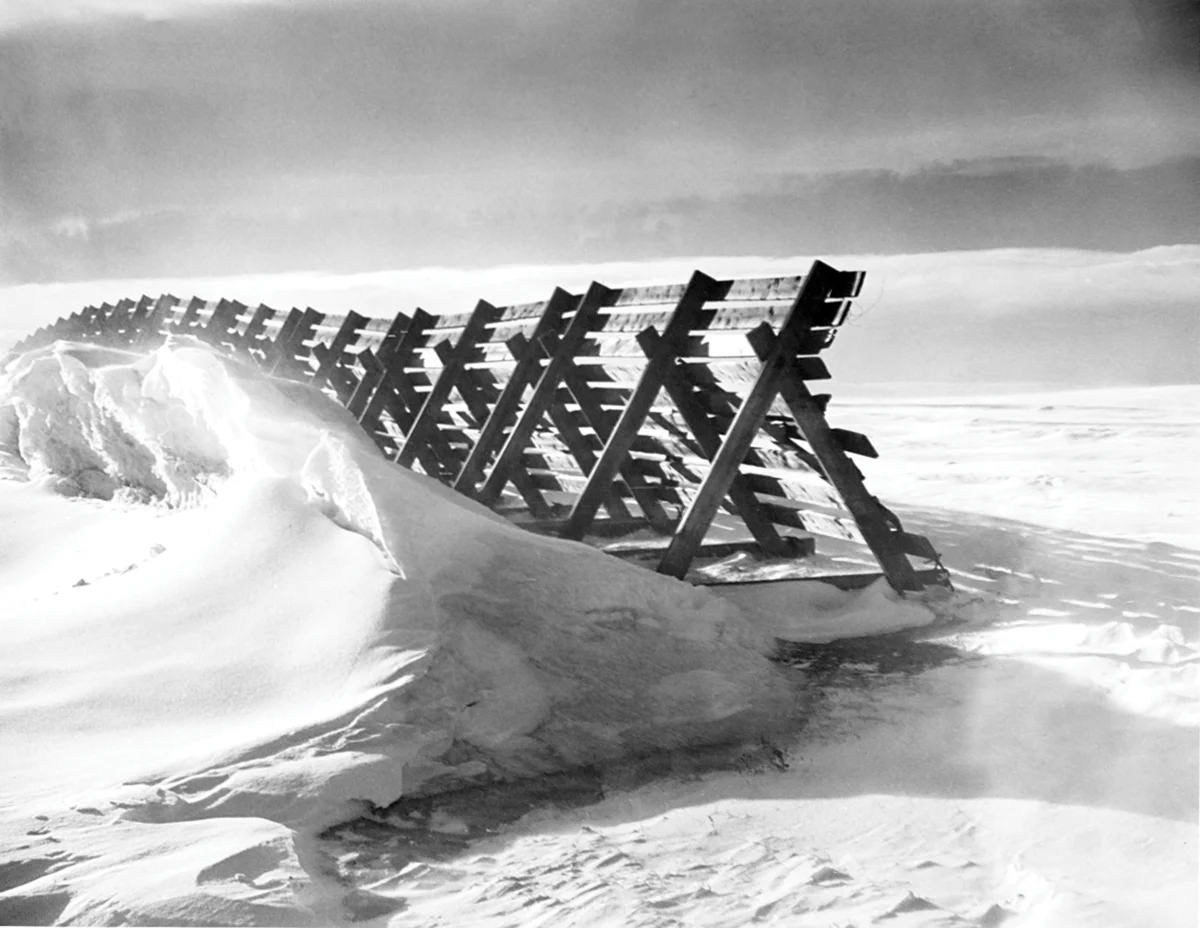
The modern snow fence, often dismissed as a mere utilitarian structure, stands as a testament to human ingenuity against nature’s formidable power, particularly across the vast, wind-swept expanses of the American West. Motorists traversing these desolate, beautiful landscapes seldom ponder the sophisticated science behind these slatted contraptions, yet their existence is rooted in a compelling saga of ambition, unforeseen peril, and groundbreaking engineering along a stretch of Wyoming highway that once earned the notorious moniker, "the world’s foremost testing ground for wrangling blowing snow."
This epic confrontation began in 1944 when the federal Public Roads Administration laid the groundwork for a national system of interstate highways, envisioning a network that would redefine American travel and commerce. In the southeastern corner of Wyoming, officials made a fateful decision regarding Interstate 80: to construct a 77-mile segment closer to the majestic Medicine Bow Mountains. This route promised to shave off a considerable 19 miles from the existing state road, a seemingly pragmatic choice aimed at efficiency. However, local residents, seasoned by generations of life in the unforgiving high country, issued grave warnings. Their concerns centered on the proposed highway’s elevation, which would sit almost entirely above 7,000 feet—making it the highest stretch on the entire transcontinental highway—and its exposure to significantly higher winds and nearly twice the snowfall compared to the alternative, lower-elevation path.
The post-World War II era was marked by an overarching confidence in American technological prowess and a prevailing belief that engineering could, to a significant degree, tame the natural environment. As John R. Waggener, a University of Wyoming archivist and historian and author of Snow Chi Minh Trail: The History of Interstate 80 between Laramie and Walcott Junction, observed, "American engineers really thought that they were starting to be able to kind of control the environment, to a degree." This hubris overshadowed local wisdom. A persistent, though unfounded, rumor among conservatives claimed that Lady Bird Johnson, wife of Democratic President Lyndon B. Johnson and a prominent advocate for highway beautification, had insisted on the aesthetically pleasing but inherently riskier route. Historical records, however, definitively refute this notion.
On October 3, 1970, the new, high-altitude stretch of Interstate 80 officially opened with a celebratory ribbon-cutting ceremony, a high school band, and an audacious promise: "We’ll Keep It Open All the Time!" This bold declaration would prove tragically premature. Just four days later, a brutal snowstorm swept through, triggering at least five crashes and forcing a partial closure of the newly inaugurated highway. This initial incident was merely a prelude to a winter of unprecedented chaos. That first season alone witnessed 151 crashes and 208 hours of closures, according to Waggener’s extensive research. The highway quickly earned its sardonic nickname, the "Snow Chi Minh Trail," a grim reference to Vietnam’s deadly Ho Chi Minh Trail, a symbol of the controversial war that permeated the American consciousness. The moniker resonated deeply, inspiring wry postcards and capturing the public’s imagination. Famed TV journalist Charles Kuralt, known for his beloved CBS Evening News segment "On the Road," dedicated a 1972 story to the highway, branding it "the worst stretch of interstate in the nation." During filming, Kuralt’s crew found themselves rushing an accident victim to the nearest hospital, a stark illustration of the highway’s perilous reality.

When scientists from the University of Wyoming embarked on an investigation into the area’s treacherous conditions, their findings were stark and unequivocal: "Interstate 80 was paved smack-dab in the middle of a wind-tunnel." The unique geography of southern Wyoming plays a critical role in this phenomenon. Interstate 80 traverses a high, wind-scooped basin, flanked by towering peaks, notably occupying the lowest spot on the Continental Divide. This geological configuration creates a natural conduit for air masses. As prevailing winds from the west pour eastward through the Rockies, seeking lower pressure, the path of I-80 becomes the easiest route, functioning much like the spout on a pitcher. This specific topography explains why the Transcontinental Railroad and the historic Oregon Trail also carved their paths through this very corridor.
The winds in this region are relentlessly powerful, regularly gusting at 30 mph and frequently escalating to speeds of 100 mph, strong enough to overturn fully loaded semi-trucks, as Waggener meticulously documented. The area’s extraordinary wind resources were recognized early on, leading to initial tests of energy-producing wind turbines. Today, hundreds of these modern behemoths dot the landscape, harnessing the very forces that once crippled transportation. This consistently strong wind, however, also mobilizes immense quantities of snow. Winter storms in this basin have been known to fill entire highway underpasses, burying them completely. Following one particularly severe blizzard, the highway department resorted to deploying bulldozers to clear dozens of snowdrifts, some towering 16 feet high. Clearly, a robust and innovative solution was desperately needed to ensure the safety and operability of this vital transcontinental artery.
While snow fences themselves are not a modern invention, with origins possibly tracing back centuries to Northern Europe, their critical need intensified with the advent of railroads and then automobiles. In Wyoming, a state perpetually battling the elements, the highway department experimented with as many as seven different varieties of fences to combat the relentless snow, as Waggener noted. However, none proved sufficiently effective against the extreme conditions of the "Snow Chi Minh Trail."
In 1970, recognizing the gravity of the situation, the Wyoming Highway Commission enlisted the expertise of Ronald Tabler, a research scientist from the U.S. Forest Service. Tabler was no ordinary academic; he possessed an almost romantic affinity for severe weather. "The worse the better," recalled Kathy Ahlenius, whom Tabler trained and who now serves as the winter research coordinator for the Wyoming Department of Transportation. Tabler was known to have a highway department radio installed in his personal vehicle, enabling him to venture onto closed roads during blizzards. More than one snowplow driver recounted stories of finding a vehicle stranded on the side of the road during a raging storm, only to discover Tabler inside, meticulously taking measurements amidst the whiteout conditions.
Ahlenius elucidated the core principle behind Tabler’s innovation: a modern snow fence is fundamentally a wind fence. Its primary function is to strategically slow down the wind, compelling it to release the snow particles it carries. These particles then ideally freeze together on contact, accumulating into a stable snowdrift on the downwind side of the fence, safely away from the roadway. Tabler and his dedicated colleagues brought an unprecedented level of scientific rigor and empirical experimentation to the study of wind-transported particles. Their groundbreaking work laid the foundation for modern snow control engineering. Tabler’s meticulous calculations revealed a profound relationship: doubling the wind’s speed increases its ability to transport snow by a staggering 14 times. Conversely, reducing wind speed by half could theoretically diminish snow transport by an astonishing 94 percent. These precise aerodynamic insights revolutionized understanding and design, leading Bob Jairell, Tabler’s longtime colleague, to aptly describe him as "an absolute genius."

The hallmark of Tabler’s work was the development of the signature design now known globally as the Wyoming Snow Fence. This innovative structure stood an imposing 12 to 14 feet tall and was critically tilted at a 15-degree angle downwind. It featured precisely spaced wooden slats, engineered to achieve an optimal 50 percent porosity, a figure determined through extensive field testing. A seemingly minor yet crucial improvement was a calculated gap between the ground and the first slat, typically 10 to 15 percent of the fence’s total height. This ground clearance was vital, preventing snow from accumulating directly in front of the fence, which would otherwise diminish its aerodynamic efficiency and ultimately, its ability to trap snow.
Crews strategically installed these new, scientifically designed fences along the highway’s most persistently problematic areas. The results were remarkably effective. The fences proved incredibly efficient at collecting massive volumes of snow, preventing it from ever reaching the roadway. Tabler once measured a snowdrift behind one of his fences that was an astounding 35 feet deep. In the decades that followed, Tabler continued to refine his designs and perfected the art and science of optimal fence placement. His unparalleled expertise earned him the moniker "the Blizzard Wizard" from a highway department official, while Jairell was affectionately known as "the Snowman."
The impact of Tabler’s work was profound and quantifiable. A comprehensive report co-authored by Tabler in 2006 documented a remarkable 75 percent reduction in crashes on sections of Interstate 80 protected by these fences. Based on the 1.9 million vehicle trips recorded during the winter of 2003-2004, Tabler estimated that the snow fences prevented an average of 275 crashes, 124 injuries, and more than three fatalities annually. Road closures, which had once plagued the highway, were reduced by approximately eight days per year. While the highway remained a challenging route—the wind still howled, ice still formed, and occasional closures were unavoidable—it had been transformed into a significantly safer and more reliable corridor.
Ronald Tabler’s groundbreaking research and practical applications cemented his reputation as the world’s preeminent snow-fence engineer. His innovative principles and designs have transcended the High Plains of Wyoming, finding application in diverse and extreme environments globally. His work now safeguards the approaches to Denver International Airport, protects vital infrastructure on the oil fields of Prudhoe Bay, Alaska, and aids in snow management across the vast landscapes of Siberia. Beyond snow, the company he founded also applied his pioneering work to control blowing sand and dust in arid regions. Tabler passed away in 2010, leaving behind a legacy that continues to save lives and facilitate commerce.
Today, most new snow fences constructed in Wyoming deviate slightly from Tabler’s original angled design, favoring a vertical orientation. While these vertical fences are more expensive to build initially, they offer lower long-term maintenance costs because Wyoming’s incessant winds are less likely to rock them from their moorings, as Ahlenius explained. The state of Wyoming now boasts an impressive network of over 450 miles of snow fence, a combination of the iconic Wyoming Snow Fence and "living fences," where strategically planted shrubbery or trees serve a similar function in mitigating blowing snow. Over 50 miles of this extensive fencing, more than 10 percent of the state’s total, are concentrated along the infamous "Snow Chi Minh Trail," representing what is likely the greatest concentration of purpose-built snow fences anywhere in the world. As John Waggener succinctly put it, "The snow fence is Wyoming"—a seemingly humble device that has played an indispensable role in keeping a vital state, and its critical transcontinental connections, open to the world, a testament to enduring human ingenuity in the face of nature’s relentless forces.