Rocky Gerung
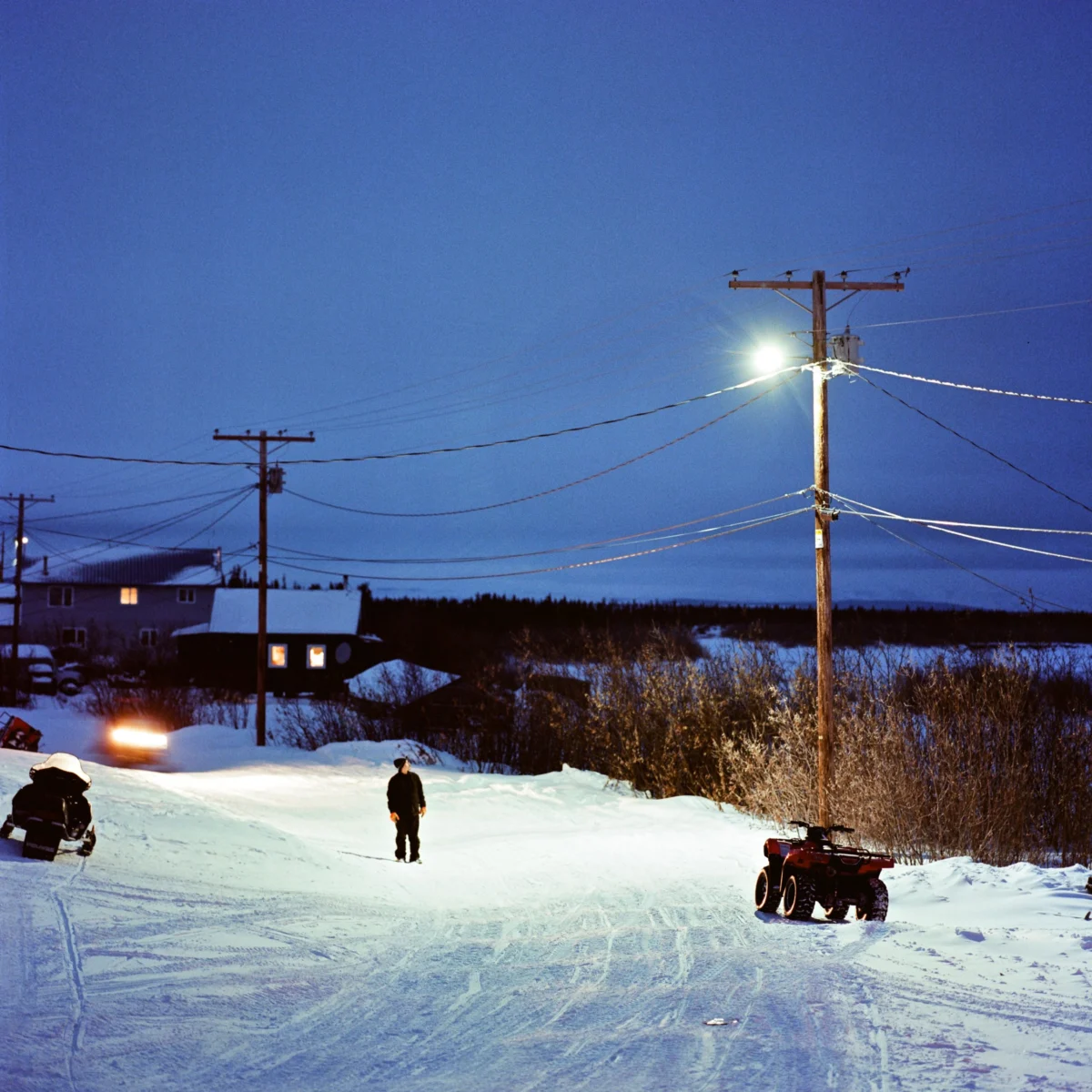
As the frigid grip of winter tightens across Alaska, many residents are confronted with agonizing choices: prioritize groceries, secure gasoline for essential snowmachines, or allocate dwindling funds for heating oil to endure the season’s harsh conditions. These decisions become exponentially more challenging in Alaska’s remote villages, where resources are scarce and the value of a dollar is severely diminished, leaving families struggling to cover basic necessities.
In the most isolated communities of Alaska, the cost of gasoline can be up to four times higher than in the continental United States, with the Iñupiaq village of Shungnak gaining national attention in August when the price of gas reached an staggering $26 per gallon. Alaska’s immense distance from the contiguous U.S. has historically driven up costs for virtually all goods and services. However, the approaching winter presents a particularly dire outlook. Merle Custer, an Iñupiaq Elder and tribal council member from the Native Village of Shungnak, located north of the Arctic Circle in the state’s northwest region, expressed unprecedented concern, stating, "This is the first time I’ve seen it like that. Hard times are hitting us big-time now."
Steve Colt, a research professor of energy economics at the University of Alaska Fairbanks, suggests that the current situation transcends a mere price spike, warning, "I think we’re past the point where you can call this a (price) spike, but that’s the big question. The worst could be yet to come." Winters in Shungnak are notoriously long and severe, characterized by heavy snow, fierce winds, and temperatures that frequently plunge below minus 40 degrees Fahrenheit. While coastal areas may experience slightly milder conditions, especially with the influence of a Super El Niño, much of the state is bracing for what is anticipated to be one of the coldest and most extreme winters on record.
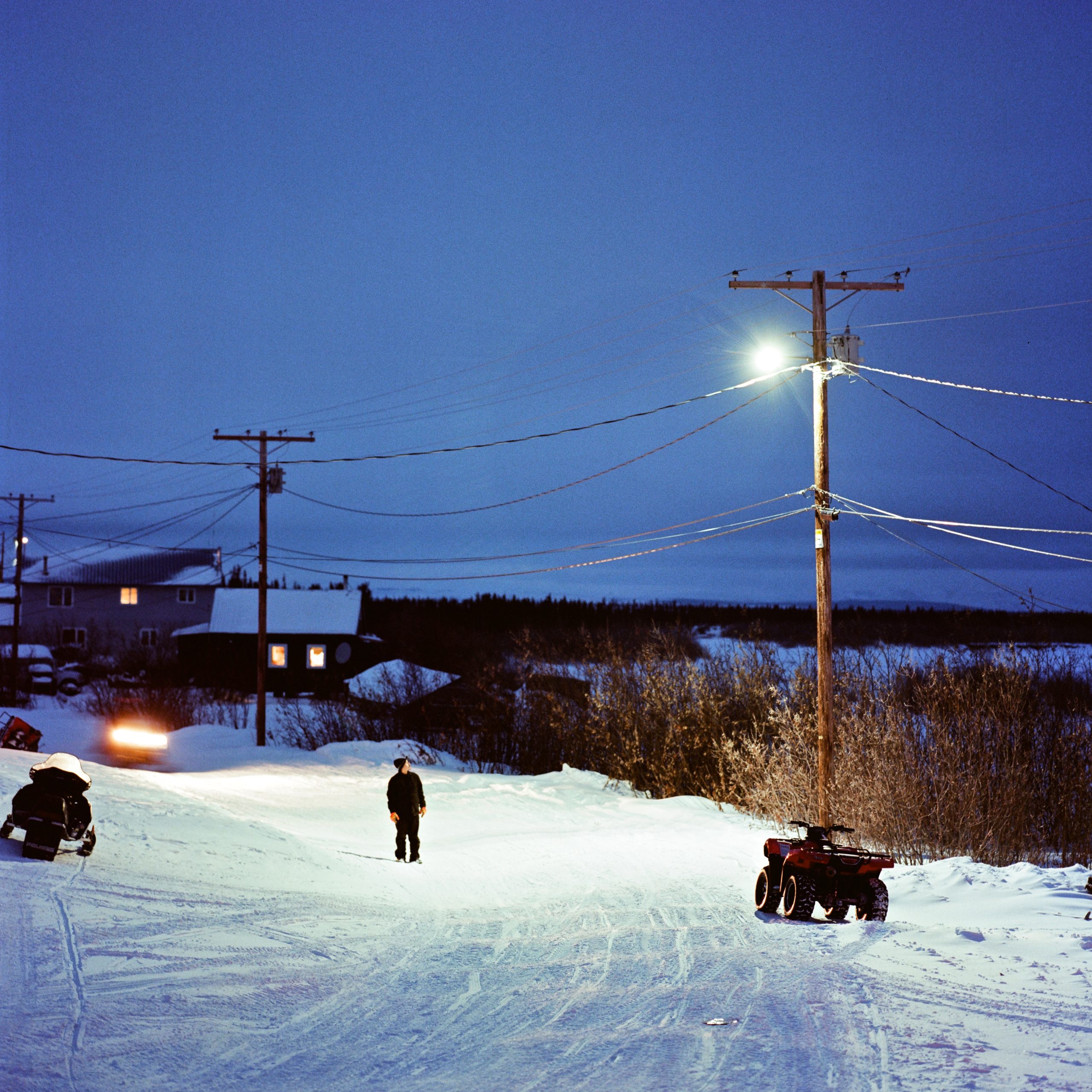
Elder Custer and his fellow council members are facing mounting pressure from residents seeking assistance. "I don’t decide the price of gas," he stated, acknowledging the community’s desperation. In the immediate term, Custer noted that individuals are attempting to curtail non-essential spending, humorously referencing his own cigarette habit: "Twenty-one bucks a pack," he remarked, contemplating a switch to chewing tobacco.
The logistical realities of Alaska amplify these economic pressures. Over 80% of Alaska’s communities are not accessible by road, and Shungnak is one such village, relying on air or barge transport for all food and fuel deliveries. Mary Ann Rainey, a retired mother of six living in Petersburg and a member of the Tlingit Petersburg Indian Association, subsists on her monthly Social Security payments and relies heavily on her children for support. "If I didn’t have my children helping me, I’d be in big-time trouble," she admitted. "An elderly person can’t afford to live on their own unless they have help. At least that’s what I found out."
Rainey’s daughter, Chris Graves, explained the profound impact of transportation costs: "Everything is freighted in on a barge, because the container ships that come up to Anchorage can’t make it into Petersburg." Consequently, food prices in this small Southeast coastal community can be as much as three times higher than in Alaska’s largest city. Adding to these challenges, a changing climate is increasingly disrupting traditional transportation routes. Permafrost degradation along riverbanks is causing soil erosion, making waterways less navigable and preventing barges from making crucial deliveries to dozens of communities.
The vast majority of food sold in Alaskan grocery stores, approximately 95%, is shipped in from out of state, making the rising cost of transportation fuel a direct contributor to higher consumer prices. In Noatak, a village over 160 miles northwest of Shungnak, Hannah Onalik, a 72-year-old Iñupiaq Elder and cashier at the local store, has witnessed prices more than double in the past three years. Ground beef now costs $11 per pound, and a bag of boneless chicken breasts sells for $20. "It’s getting scary," Onalik expressed, her voice filled with anxiety. "I’m so terrified to quit work. We won’t survive."

Historically, a primary strategy for mitigating high grocery costs involved local food sourcing. Custer, Rainey, and Onalik, all Alaska Native individuals, along with their families and communities, have traditionally relied on subsistence hunting, fishing, and gathering for sustenance. This practice is more than just about food security; it is deeply intertwined with the cultural heritage and Indigenous identity of Alaska. However, even these traditional lifeways are being impacted by rising costs. Hunting and fishing expeditions require gasoline for boats, four-wheelers, and snowmachines, further straining already tight budgets. In Noatak, Onalik reported that even when residents can afford to venture out, fewer caribou are being harvested. The Northwest Arctic Caribou herd, a vital food source for the local population, has seen its numbers decline by an estimated 75% since the 1980s. Despite these challenges, Custer mentioned that people in Shungnak are pooling their resources for hunting trips, as caribou represents a primary source of meat for the community. "Everybody’s really concerned about it," he said. "We had a meeting to get the whole town together and see how we’re going to survive the winter again." Similarly, in other regions of the state, salmon populations, which have historically sustained communities through the winter, have also become less abundant.
Surviving Alaska’s long, dark winters necessitates reliable heating. Home heating oil is the primary heat source for Alaskans at a rate seven times the national average. Onalik noted that nearly everyone in her community depends on heating oil, often supplemented with wood. The young men who gather firewood charge approximately $200 for a load, which typically lasts only four to five days. In Bethel, a hub community on the Yukon-Kuskokwim Delta where trees are scarce, 90% of households depend on heating oil, according to KYUK Public Media. In treeless areas further west, near the Bering Sea, residents resort to burning scraps from delivery pallets, leftover lumber from construction projects, and in some dire cases, garbage, to stay warm.
Jeremiah John, a Yup’ik resident from the Native Village of Newtok, which has undergone relocation to Mertarvik, a coastal community more than 90 miles west of Bethel, shared his experience. This past fall, he spent about $400 on 50 to 60 gallons of fuel for his snowmachine to gather driftwood along the Nelson Island coast, covering a 40-mile route. This endeavor was still more economical than attempting to acquire firewood from the treeline, which would have demanded an additional 20 gallons of fuel. The collected driftwood is expected to last his family approximately six months and supplement their home heating oil.
Despite the escalating fuel prices and increasingly severe winters in Alaska, the state lacks the kind of federal assistance readily available to some other U.S. states. For instance, in October, the U.S. Department of Energy authorized the release of up to 315,000 barrels of home heating oil from the Northeast Home Heating Oil Reserve to alleviate the financial burden on residents facing high fuel costs. Alaska does not have a federal fuel reserve, nor does it maintain a state-owned stockpile of fuel or heating oil for emergencies. While Alaska does offer a loan program to assist smaller communities in acquiring bulk fuel and covering shipping expenses, state law mandates that these loans be repaid within a year.

U.S. Senator Lisa Murkowski addressed the dire situation at the Alaska Federation of Natives convention in Anchorage in October, stating, "It is wrong that fuel prices are so high." She attributed the price surge to the war in Iran, a conflict she has consistently voted to end. "We know that high prices are a threat to everyone, from Wasilla to Wrangell," Murkowski asserted, expressing her fear that "many Alaskans will struggle to keep warm this winter." Her stated goal is to "bring down prices for good," though she has not outlined specific plans to achieve this objective, suggesting instead a push for increased federal assistance.
In past years of soaring energy costs, state lawmakers have intervened. In 2008, under then-Governor Sarah Palin, the legislature approved a one-time $1,200 energy relief subsidy for qualifying Alaskan residents who received the state’s annual permanent fund dividend. This year, lawmakers authorized a $200 energy relief payment for Alaskan residents, an amount sufficient to purchase approximately 25 gallons of home heating oil in Anchorage or Bethel. Data from a 2015 survey indicates that a household in Fairbanks consumes an average of about 1,200 gallons of heating oil annually, though usage varies significantly across the state depending on home construction and the availability of alternative heat sources.
Economics professor Steve Colt proposes short-term solutions that include financial aid for consumers and potential taxes on the petroleum industry. For a more sustainable long-term solution, he emphasizes the need to "somehow reduce the amount of diesel that needs to be burned." The most cost-effective and immediate approach, he suggests, involves investing in weatherization and energy-efficiency upgrades for existing homes and buildings. However, with winter rapidly approaching, and already present in some communities, these long-term solutions offer little immediate relief to those facing critical shortages.
Arthur and Frieda Panamaraff, an Alutiiq couple from the Native Village of Larsen Bay, a small Kodiak Island coastal community, are grappling with similar challenges. With no school, no store, and no road access, all supplies must be flown in, incurring freight costs of $1.10 per pound. This added expense significantly inflates the price of every item, from apples to chicken breasts. "We all have to pay it," Arthur stated, emphasizing the stark reality: "Otherwise, we starve." Both retired, the Panamaraffs no longer practice subsistence living. As winter descends on Kodiak, they are paying $9.27 per gallon for heating oil. Frieda mentioned they are economizing by limiting travel: "We just stay home now." The couple continues to support their 18-year-old granddaughter, Katie, who moved to Kodiak for schooling. Though she graduated in May and has worked odd jobs, gas remains her largest expense. Without consistent income, her grandparents are assisting with other financial needs. Arthur added that they also strive to help friends and neighbors when possible, noting, "Sometimes we have to share what we got. It makes it hard when they don’t have any money to order their food, or even go out hunting. They can’t afford shells or gas. The only way we can survive is to share anything we have, if we can."