Roger Danuarta
In the rugged landscapes of Alaska, where traditions are woven into the very fabric of daily life, a structure known as the maqivik stands as a testament to resilience, community, and holistic well-being. A young four-year-old, asked about this traditional Yup’ik sauna, once described it with stark honesty: "It’s dark in there. And really hot. And kind of dirty." While this youthful observation might paint an unglamorous picture, it hints at the raw, unfiltered authenticity that defines these cherished spaces, where the act of getting clean transcends mere hygiene, becoming a profound ritual of inner and outer purification.
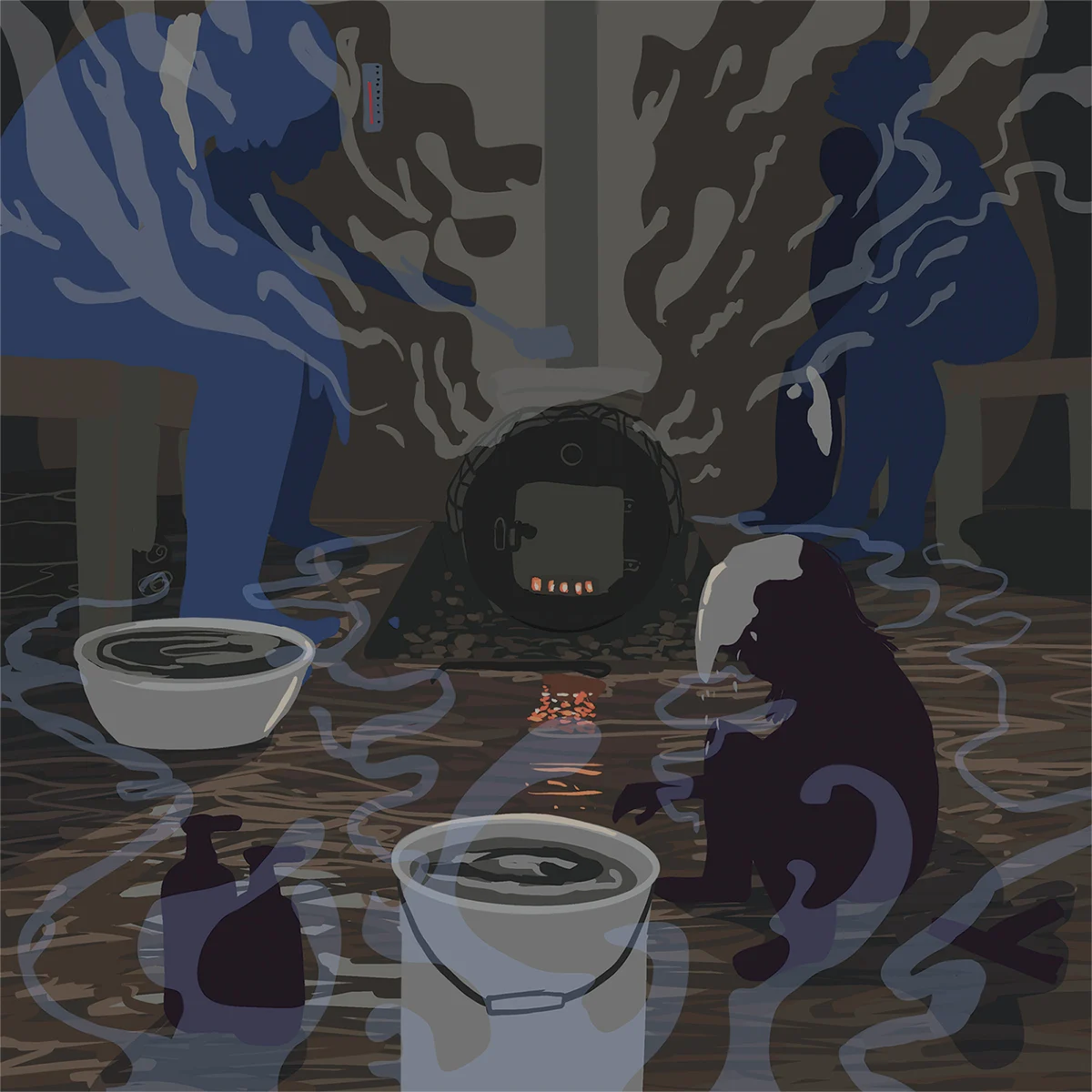
The author’s father, Herb, maintains such a maqivik, a modest 6-by-10-foot wooden structure born from a greenhouse framing kit. Its walls, insulated with plywood, are lined with benches beneath which lie stacks of pallet wood and spruce driftwood – materials gathered with intention from the Unalakleet beaches by Herb and his wife, Heidi. The floor, often dusted with dark brown spruce bark, speaks to a design philosophy prioritizing function and utility over pristine aesthetics. This isn’t a spa; it’s a sanctuary forged from necessity and deep-rooted custom, a place where the intense heat of a woodstove coaxes sweat from the body, cleansing from the inside out.
Inside this unassuming building, the temperature can soar, often reaching a scorching 215 degrees Fahrenheit. In the dim, fire-lit interior, with the rhythmic crackle of burning wood as a soundtrack, individuals surrender to the heat, their bodies glistening with perspiration. It is here, amidst the stifling warmth, that unspoken lessons are imparted. Herb, ever the gentle guide, once advised a visiting friend, Luc, to "Go out to cool off any time you want," dispelling any notion of a competition often found in some sauna cultures where ego can drive individuals to endure discomfort beyond their limits. This ethos of self-awareness and personal comfort is central to the maqivik experience, fostering an environment of support rather than rivalry. Beyond the primary hot room lies a connected space, serving dual purposes: a cooling room during the colder months and a thriving greenhouse where Heidi cultivates tomatoes and squash in the brief Alaskan summers. The condensation dripping from its corrugated polycarbonate roof panels in the autumn is a tangible reminder of the intense thermal shifts experienced during a maqi session.
While the Finns are globally renowned for their sauna culture, indigenous Alaskan communities, particularly the Yup’ik people, have long embraced similar heat-bathing traditions. These practices are not mere imitations but independently evolved systems deeply integrated into local lifeways. Nikki Corbett, a Yup’ik friend and an ardent advocate for the maqivik, grew up in Bethel, a community where access to running water was historically limited, often requiring water to be hauled to a 1,000-gallon storage tank. In such an environment, the maqivik was not just a luxury but a practical necessity, offering an immersive and thorough cleansing experience far superior to the quick, timed showers dictated by water scarcity. "Who wants to take a timed shower twice a week when you can go enjoy an hour and a half to two hours in the maqivik?" she often queries.
Now residing in Soldotna, Nikki, who is also pursuing studies to become a psychiatric mental health nurse practitioner and boasts a significant social media following, continues her frequent maqivik practice, enjoying the sauna several times each week despite having modern plumbing. For her, the maqivik is far more than a place to wash; it is a sacred personal space. "Taking a maqi has always been my space to cleanse my body but also to cleanse my energy," Nikki explains, highlighting its profound psychological and spiritual dimensions. "It’s been a space to spend time with friends and family… a space to leave all the negatives from the day, week, month and imagine it flow down the drain away from my mind and body." This perspective underscores the maqivik’s role as a vital tool for mental health and emotional regulation, a therapeutic sanctuary from the stresses of contemporary life.

The author’s own introduction to the maqivik came at a tender age, perhaps around five, when his father invited him to join an uncle, Jerry, for a session. This early immersion in the family tradition was framed as beneficial, a path to "real clean." The initial experience was overwhelming: the intense heat, the darkness, the difficulty breathing. Yet, through the simple wisdom of his father – a wet washcloth on the head for cooling, a lower position by the door for cooler air – the child learned to navigate the discomfort. These subtle acts of care and guidance transformed a potentially frightening experience into one of comfort and connection. The red glow of the woodstove, the hushed conversations of the men, and the palpable sense of belonging imprinted on the young mind the profound social and emotional value of the maqivik. It was a place where bonds were strengthened, where an uncle’s happiness at his presence was felt, and where a father’s pride in his son’s endurance was subtly conveyed.
Beyond the cultural and emotional benefits, the maqivik offers a wealth of documented health advantages. The intense heat, while challenging, provides a controlled form of stress to the body, often referred to as hormesis, which can lead to significant physiological improvements. Regular heat exposure strengthens the cardiovascular system, akin to moderate exercise, by increasing heart rate and improving circulation. The profuse sweating stimulated by the high temperatures and humidity encourages the lymphatic fluid to flow, aiding in the body’s natural detoxification processes by expelling toxins through the skin. Furthermore, the deep relaxation induced by the heat helps alleviate muscle tension, reduce inflammation, and can significantly lower stress hormones like cortisol. Studies have also linked regular sauna use to improved immune function, better sleep quality, and even a reduced risk of certain neurodegenerative diseases. For many, like the author’s father, these benefits are intuitively understood: "We just know it’s plain good."
The ritual of steam, or "löyly" in Finnish sauna traditions, is a pivotal element of the maqivik experience. The author’s father, a connoisseur of woodstoves, utilizes a custom-welded stove with steel baskets holding volcanic rocks. These porous rocks, carefully selected during annual trips to places like Shorty Cove, absorb and then intensely disperse the heat. When ladles of water are poured onto them, the instant conversion to steam fills the air, creating a dense, humid atmosphere that intensifies the heat and makes breathing momentarily more challenging. This surge of steam, while momentarily burning the thin skin of eyelids and penetrating deeply into the body, delivers a profoundly satisfying sensation. It’s a moment of release, where unnoticed aches dissipate as sweat cascades from the face, signifying a deep internal cleansing.
The journey through the maqivik is often a cycle of intense heat followed by exhilarating cooling. After reaching a point of maximum endurance on the slatted pine benches, individuals push open the plywood door, stepping out into the crisp Alaskan air to gulp ice water. These intermissions are integral, allowing the body to recover before another round of heat. Depending on the season, these cooling moments offer unique sensory experiences: the hoot of an owl in the fall, the cold sting of raindrops on steaming skin, or the ultimate invigorating plunge – rolling in snow, a practice that sends a jolt of extreme contrast through the body, stimulating circulation and invigorating the senses. This hot-cold therapy, a hallmark of traditional heat bathing, is believed to boost immunity and enhance overall vitality.
At the conclusion of a maqivik session, the feeling is universally described as an unparalleled sense of cleanliness and rejuvenation. Nikki Corbett’s conviction resonates deeply: "I’ll always choose a maqi over a shower. You will never get clean by a shower. Trust me." Her words encapsulate the essence of the maqivik: it is not merely a bathing facility but a powerful, ancient practice that nurtures the body, mind, and spirit, leaving one truly purified and connected to a rich cultural heritage, even in the most functional of structures.